
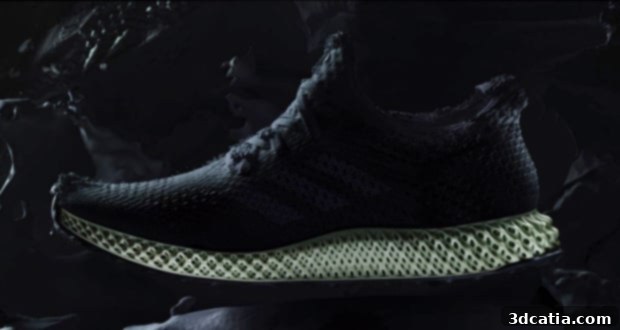
Adidas Futurecraft 4D: Revolutionizing Footwear with Carbon’s Digital Light Synthesis for Unprecedented Performance and Customization
The landscape of athletic footwear is undergoing a profound transformation, driven by an ever-increasing demand for peak performance, unparalleled comfort, and bespoke personalization. In a move poised to redefine the future of shoe manufacturing, sports apparel titan Adidas has unveiled a momentous partnership with Carbon, a visionary California-based startup at the forefront of digital manufacturing technology. This strategic alliance culminates in the creation of a groundbreaking 3D printed shoe: the Futurecraft 4D. At its core, this innovative footwear leverages Carbon’s proprietary Digital Light Synthesis (DLS) process to meticulously craft its intricate and high-performance soles. The collaborative ambition is staggering, with both companies aiming to produce an impressive 100,000 pairs of the Futurecraft 4D before the end of 2019, marking a pivotal moment in scaling additive manufacturing for consumer-ready products.
Adidas is certainly no stranger to the realm of 3D printing, having previously incorporated additive manufacturing into its product development. Notable examples include their pioneering efforts in creating shoes from recycled plastic waste, underscoring the brand’s commitment to both innovation and environmental stewardship. However, the broader industry trend toward advanced digital fabrication is not exclusive to Adidas. Competitors such as Nike and Under Armour have also embarked on similar initiatives, signaling a collective shift within the sportswear sector towards harnessing cutting-edge technology to elevate product design and production capabilities. What truly distinguishes the Adidas-Carbon collaboration, however, is its foundation in Carbon’s acclaimed Digital Light Synthesis (DLS) technology – an advanced iteration of their widely recognized CLIP (Continuous Liquid Interface Production) 3D printing system, celebrated for its capacity to yield parts with superior mechanical properties, isotropic strength, and exceptional surface finish.
Unlocking a New Era: The Transformative Power of Digital Light Synthesis
“With Digital Light Synthesis, we venture beyond limitations of the past, unlocking a new era in design and manufacturing,” eloquently articulated Eric Liedtke, the Adidas Group Executive Board Member for Global Brands. His profound statement highlights the expected paradigm shift this technology will bring, not only to Adidas’s product portfolio but to the entire manufacturing ecosystem. Liedtke further emphasized that this nascent era is “one driven by athlete data and agile manufacturing processes,” pointing towards a future of highly personalized and responsive product creation. Digital Light Synthesis (DLS) itself is an extraordinarily sophisticated additive manufacturing process that shares conceptual similarities with the established 3D Digital Light Processing (DLP) technique. In conventional DLP, ultraviolet light is precisely projected to selectively solidify layers of photopolymer resin, building an object incrementally. DLS innovates upon this by intricately integrating oxygen into the process, working in concert with the projected light. This synergistic combination facilitates continuous liquid interface production, effectively circumventing the traditional layer-by-layer constraints. The result is a dramatic acceleration in printing speed and a significant enhancement in the material properties and consistency of the final 3D printed product, paving the way for truly functional and durable components.
Overcoming Traditional Manufacturing Hurdles and Enhancing Efficiency
While the intricate details of Digital Light Synthesis remain a closely guarded proprietary secret, continuously refined by Carbon, the company has offered significant insights into its revolutionary capabilities. They emphatically state that DLS is engineered to transcend the inherent limitations and persistent defects that have long plagued traditional additive manufacturing methods. These challenges typically encompass relatively sluggish production speeds, formidable difficulties in scaling for genuine mass production, inconsistencies in coating quality, restrictive color palettes, and considerable material constraints. By introducing a truly continuous production process, coupled with the development of advanced, high-performance resins, DLS directly addresses these bottlenecks. Furthermore, Carbon underscores that their method substantially diminishes the overall cost associated with materials per part and dramatically reduces the time expenditure during the often-laborious post-processing stages – a notorious bottleneck in many conventional 3D printing workflows. This confluence of efficiency gains is absolutely vital for making 3D printed footwear not just feasible, but economically viable for large-scale production, extending its utility far beyond mere prototyping or niche custom products to the mainstream market.
Breaking the Mold: A Paradigm Shift in Product Development and Innovation
Dr. Joseph DeSimone, the visionary Co-Founder and CEO of Carbon, succinctly encapsulates the revolutionary essence of their technology. “Despite the influence of technology to improve almost every other aspect of our lives, for eons the manufacturing process has followed the same four steps that make up the product development cycle – design, prototype, tool, produce,” he explains. This entrenched, linear progression, characterized by extensive lead times, substantial capital investment in tooling, and rigid constraints, has historically stifled rapid innovation. DeSimone proudly asserts, “Carbon has changed that; we’ve broken the cycle and are making it possible to go directly from design to production.” This bold declaration signals a profound paradigm shift, empowering engineers and designers to iterate with unprecedented speed and directly translate intricate digital designs into physical products with astonishing fidelity. Such agility not only accelerates the design process but also facilitates the creation of “previously impossible designs,” moving beyond the limitations imposed by traditional molds and assembly lines. For businesses, this translates into the ability to “evolve their offerings” at a pace that was once unimaginable. The Futurecraft 4D, with its uniquely tuned lattice sole structures engineered for optimal athletic performance, stands as compelling “evidence of that,” demonstrating the tangible benefits of bypassing costly tooling and lengthy prototyping phases for faster product cycles, reduced waste, and the imminent potential for true mass customization.
The Future on Your Feet: Unprecedented Customization and Performance Enhancement
The rollout of the Futurecraft 4D is meticulously orchestrated, commencing with an exclusive initial unveiling of 300 pairs within the current month. This limited release is strategically designed to build anticipation, followed by a more substantial batch of an additional 5,000 pairs slated for distribution by the end of 2017. Looking further ahead, Adidas envisions a future where the bespoke capabilities inherent in Digital Light Synthesis can be fully unleashed. The brand harbors aspirations of leveraging this technology to create soles precisely tailored not just for various sports disciplines, but also for the unique biomechanics of individual athletes, or even for highly specialized market segments. Imagine a running shoe where the sole’s cushioning, energy return, and support are flawlessly optimized for your specific gait, body weight, and running style, or a basketball shoe featuring a sole meticulously engineered to provide maximum stability and explosive responsiveness for a particular playing position. This granular level of customization promises to unlock unparalleled possibilities for consumers seeking a truly personalized athletic experience. The ultimate vision extends to a future scenario where customers could potentially visit an Adidas retail location, undergo a sophisticated foot biomechanical analysis, and within a remarkably short timeframe, depart with their own custom-made insoles, or even an entire shoe sole, perfectly designed to fulfill their unique performance and comfort requirements. This ambitious stride towards ‘mass personalization’ represents a significant disruption to the conventional footwear supply chain and fundamentally alters the consumer experience.
Broader Impact on the Footwear Industry and Beyond Additive Manufacturing
The groundbreaking collaboration between Adidas and Carbon, epitomized by the Futurecraft 4D, transcends a mere product launch; it serves as a powerful harbinger of the direction in which the entire footwear industry is irrevocably heading. It heralds a profound transition from the traditional model of standardized mass production to a sophisticated paradigm of mass customization, meticulously powered by advanced additive manufacturing techniques. This synergistic partnership is unequivocally poised to catalyze further innovation among competitors, relentlessly pushing the boundaries of what is conceivable in shoe design, material science, and personalized fit. Beyond the confines of footwear, the demonstrable success of DLS in producing consumer-ready products at scale could very well establish a transformative blueprint for countless other industries eager to implement similar agile, customizable, and efficient manufacturing processes. From intricate automotive components to life-saving medical devices and personalized consumer goods, the inherent ability to rapidly design, prototype, and produce complex geometries with high-performance, functionally optimized materials unlocks a veritable world of possibilities, simultaneously reducing waste, mitigating production risks, and dramatically accelerating product development cycles across the global manufacturing spectrum.
What are your thoughts on the revolutionary Adidas Futurecraft 4D and the promise of Digital Light Synthesis? Do you foresee a future where custom-printed shoes are the industry standard, and would you be eager to own your own pair, precisely tailored to your unique needs and preferences? We warmly invite you to share your valuable perspectives and insights in a comment below! Don’t forget to stay abreast of the latest advancements in 3D printing and cutting-edge manufacturing innovation by following us on Facebook and Twitter!