
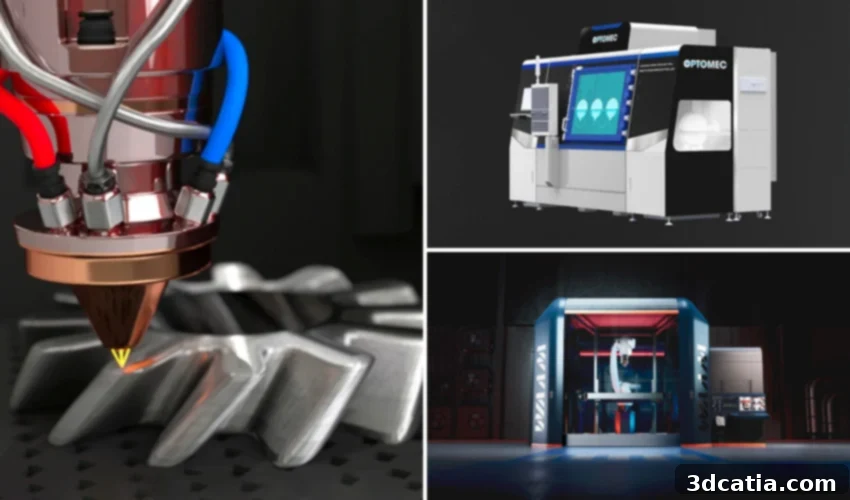
The Ultimate Guide to Directed Energy Deposition (DED) 3D Printers: Advancements in Industrial Metal Additive Manufacturing
Directed Energy Deposition (DED) is a cutting-edge metal additive manufacturing process distinguished by its ability to fabricate and repair metallic components by precisely melting and depositing material layer upon layer. This innovative technology stands out within the broader landscape of 3D printing due to its flexibility in handling various feedstocks—primarily metal powders or metallic wires—and its diverse energy sources, which include powerful lasers, electron beams, or plasma arcs. Unlike some other additive processes, DED offers a unique advantage: it can repair existing, high-value parts by adding new material directly onto the damaged object, effectively extending their lifespan and reducing waste. Furthermore, DED 3D printers are typically equipped with advanced multi-axis robotic arms and sophisticated nozzles, making them exceptionally well-suited for manufacturing large-scale components, developing intricate geometries, and performing in-situ repairs across a wide range of industrial applications. Today, our objective is to provide a comprehensive overview of the leading DED 3D printers currently available on the market, exploring their unique capabilities and the diverse energy sources they leverage to push the boundaries of metal additive manufacturing.
Addilan: Pioneering WAAM for Medium to Large-Scale Metal Production
Addilan, a specialist company based in the Basque region, is at the forefront of metal additive manufacturing, particularly focusing on Wire Arc Additive Manufacturing (WAAM) 3D printing technology. WAAM is a form of DED that uses an electric arc as the energy source to melt and deposit metal wire, offering high deposition rates and cost-effectiveness for larger parts. Addilan’s machines are meticulously engineered to cater to medium to large-scale industrial production, providing robust and reliable solutions. They present two distinct WAAM solutions tailored to varying print volumes: the P1200-4x and the 1000-5X. Both models feature a crucial closed and inert environment, which is vital for preventing oxidation and ensuring the metallurgical integrity and high quality of parts, especially when processing reactive metals. An integrated, specialized loading and unloading system further streamlines the production workflow. A significant advantage of Addilan’s approach is its hybrid production capability, seamlessly incorporating CNC manufacturing for precise surface finishing, thus delivering ready-to-use components. These advanced 3D printers are compatible with a broad spectrum of engineering materials, including various grades of steel, high-performance titanium alloys, specialized superalloys, and robust aluminum alloys. Users benefit from features such as automatic calibration, which enhances accuracy and ease of use, a heated platen for improved adhesion and reduced warping, and an impressive deposition rate of up to 6 kg per hour, significantly accelerating manufacturing cycles for complex and large metal parts.
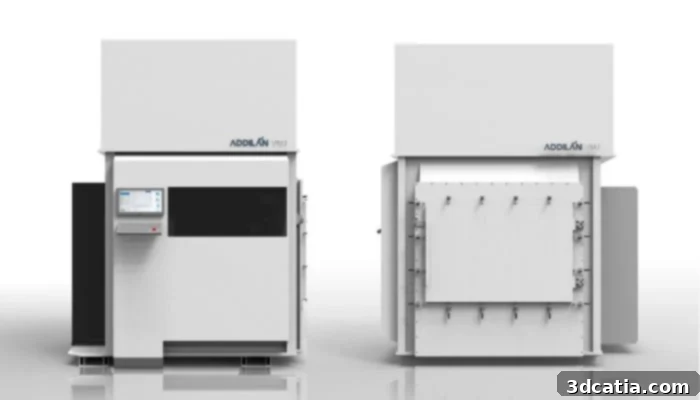
The P1200-4x Addilan (Photo credit: Addilan)
AddUp’s BeAM Magic 800: Precision DED for Demanding Industries
The Magic 800 is a flagship product within AddUp’s Directed Energy Deposition (DED) machine portfolio. This sophisticated 3D printer, originally innovated by BeAM and now proudly offered by the French manufacturer AddUp, represents the pinnacle of DED technology for concentrated energy material deposition. While AddUp provides a range of DED models, including the Modulo 250 and Modulo 400, the Magic 800 distinguishes itself with the largest manufacturing volume, boasting generous maximum dimensions of 1200 x 800 x 800 mm. This substantial build envelope makes it exceptionally suitable for fabricating significant components. The machine employs a powerful 2kW laser coupled with two interchangeable print heads, enabling high-precision material deposition for the most demanding applications, particularly within the aerospace sector where material quality and dimensional accuracy are paramount. Designed with user-friendliness in mind, the Magic 800 allows operators to swiftly change nozzles in mere seconds during the manufacturing process. This flexibility is critical, offering enhanced precision and adaptability for complex geometries and varied material requirements. Furthermore, the Magic 800 features an advanced argon-based inert gas system that effectively purges and maintains the 3D printer’s enclosure. This inert atmosphere is essential for processing reactive powders like titanium and aluminum, preventing oxidation and ensuring the mechanical properties and purity of the finished parts, which is a vital consideration for high-performance applications.
DMG MORI – LASERTEC 6600 DED Hybrid: Combining Additive and Subtractive Manufacturing
DMG MORI, a renowned German multinational, offers the LASERTEC 6600 DED Hybrid, a pioneering solution that seamlessly integrates Directed Energy Deposition with traditional subtractive manufacturing techniques. This hybrid approach is particularly advantageous for producing large, complex components with superior surface finishes and tight tolerances, making it an ideal choice for the demanding aerospace and energy industries. The LASERTEC 6600 isn’t just a 3D printer; it’s a complete manufacturing cell where additive processes lay down material, and immediate subtractive machining (like milling or turning) refines the part, all within the same machine setup. This eliminates the need for multiple machine transfers, reducing lead times, improving accuracy, and streamlining the overall production workflow. The printer boasts an impressive capacity to accommodate workpieces with maximum dimensions of Φ1,010 mm × 3,702 mm, highlighting its capability for truly large-scale industrial parts. This hybrid DED system allows for the creation of intricate internal structures via additive manufacturing, followed by precise external machining, leading to lighter, stronger, and more efficiently produced components. The integration of these two manufacturing paradigms positions the LASERTEC 6600 as a highly versatile and cost-effective solution for advanced industrial production.
Evobeam’s WiLaVAM: High-Vacuum DED for Refractory Metals and Superalloys
Evobeam, a specialized German manufacturer based in Rheinland-Pfalz, excels in additive manufacturing and welding technologies, employing both electron beam and laser sources. Among their impressive lineup, the WiLaVAM stands out for its unique combination of laser in vacuum and wire feeding capabilities. This system features a robust vacuum chamber that generates a high vacuum environment, which is critically important for processing refractory metals and high-performance superalloys that are highly reactive to oxygen at elevated temperatures. The vacuum prevents oxidation, ensuring superior material properties and part integrity. Complementing this, a CNC-controlled wire guide system operates precisely within the vacuum chamber, delivering material with exceptional accuracy. The WiLaVAM is optimally designed for producing medium-sized components, offering a significantly higher build rate compared to powder-based systems due to its efficient wire-based material deposition. This wire-feed approach translates into a substantial reduction in process time and overall manufacturing costs. Evobeam’s expertise extends beyond the WiLaVAM, with other notable machines such as the Evobeam CUBE and Evobeam CELL, all engineered to meet stringent industrial demands for quality and performance in advanced metal fabrication.
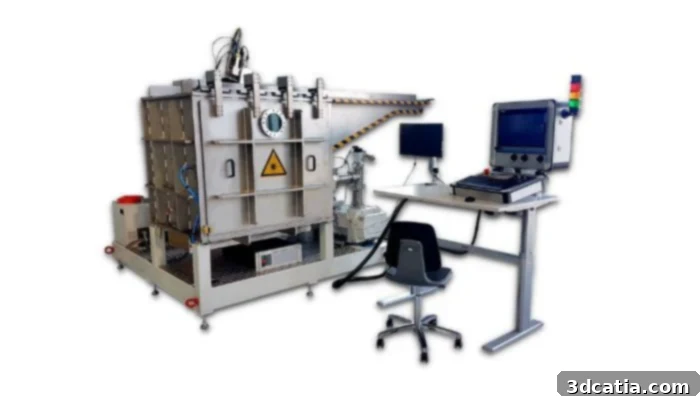
Photo credits: Evobeam
FormAlloy’s X-Series: Modular and Multi-Alloy DED for Integration and Development
FormAlloy, a US-based company, is a dedicated innovator in metal 3D printing solutions, providing specialized hardware for a range of applications including 3D printing, protective coating, and component repair. Their systems are designed for seamless integration into existing industrial production lines, offering flexible and scalable manufacturing capabilities. Among their advanced DED printers, the X5 Series is particularly noteworthy. This series features a versatile print volume of 250 x 250 x 300 mm, making it suitable for a variety of part sizes. A key design philosophy behind the X5 Series is to minimize maintenance requirements and significantly reduce downtime, thereby maximizing operational efficiency. A standout feature of the FormAlloy X5 Series is the Formica, an innovative ADF (Alloy Development Feeder) system. This advanced feeder enables the rapid deposition of up to 16 different alloys, allowing for the creation of functionally graded materials, custom alloys, and bimetallic structures within a single print. The modular design of the X5 Series further enhances its versatility, offering unlimited configuration possibilities and facilitating quick powder changeovers in as little as 5 minutes, which is crucial for agile manufacturing environments. The directed energy deposition systems within the X5 Series incorporate sophisticated closed-loop control for precise process management, utilize variable wavelength lasers for optimized material interaction, and feature advanced powder feeders capable of creating complex gradient or bimetallic structures. This combination of features makes FormAlloy’s X-Series ideal for both cutting-edge research and high-demand industrial applications requiring material flexibility and process control.
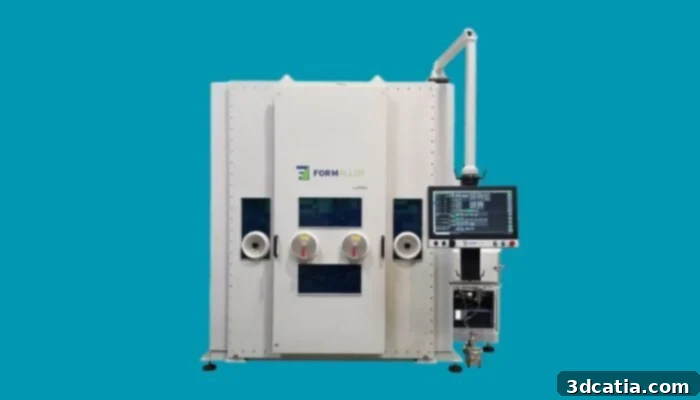
Photo credits: FormAlloys
Gefertec – arc605 and arc603: Robust WAAM Systems for Large Metal Parts
Gefertec, a prominent German company, specializes in providing robust Wire Arc Additive Manufacturing (WAAM) solutions through its ARC machine series, which includes the ARC 605 and ARC 603. In these model designations, the number indicates the number of axes available for machining, signifying the machines’ advanced kinematic capabilities. The ARC series offers exceptional flexibility in motion axes, which is paramount for achieving high-quality metal parts with complex geometries and superior structural integrity. The ARC 603 is engineered to produce impressively large metal parts, with a maximum build volume of up to 3.0 m³ and accommodating a maximum mass of 3000 kg, making it suitable for heavy-duty industrial applications. Its counterpart, the ARC 605, while offering a slightly smaller build volume of 0.8 m³, can still handle substantial parts up to 500 kg. Both machines are lauded for their user-friendly interfaces and ease of integration into existing manufacturing processes, minimizing disruption and maximizing productivity. The Gefertec ARC series boasts several unique features designed to enhance performance and operational safety: an active cooling base plate ensures thermal management during the build process, a soundproofed housing minimizes noise pollution in the workshop, and an integrated camera system allows for continuous monitoring of the manufacturing process, providing real-time quality control and process optimization. These features combine to make the Gefertec ARC series a highly efficient and reliable choice for large-scale metal additive manufacturing.
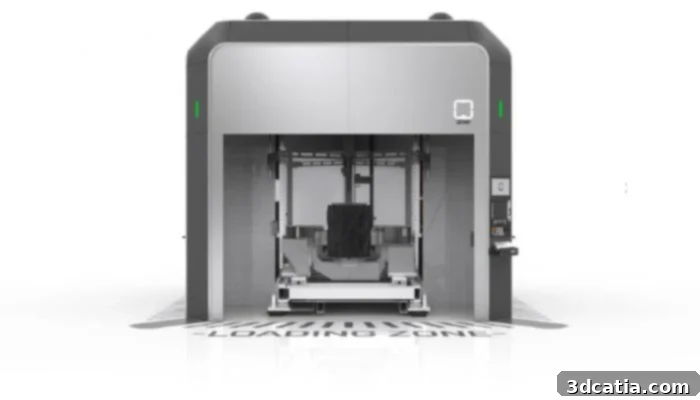
Photo credits: Gefertec
InssTek’s MX-Fab: A Customizable, All-In-One 5-Axis DED Printer with Real-Time Control
The MX-Fab, developed by InssTek, represents an advanced 5-axis Directed Energy Deposition (DED) system, leveraging their proprietary Direct Metal Tooling (DMT) technology. This patented approach falls squarely within the DED category, utilizing a laser to melt and deposit metal powder with exceptional precision. A standout feature of the MX-Fab is its integration of two high-resolution vision cameras, which are crucial for real-time analysis and control of the melt pool’s height. This sophisticated feedback system ensures precise measurement and consistent control over the thickness of each deposited layer, vital for achieving high-quality and dimensionally accurate parts. The MX-Fab is engineered as an all-in-one manufacturing solution, coming fully equipped with essential components such including a powerful laser, an efficient cooling system, an air purifier for maintaining a clean build environment, and a vacuum pump for enhanced process control. Furthermore, it features an independent powder supply tank designed to ensure accurate and consistent powder delivery, which is fundamental for stable and repeatable DED processes. Recognizing the diverse needs of industrial clients, InssTek proudly offers extensive customization options for the MX-Fab, allowing customers to tailor the printer’s specifications and capabilities to their unique application requirements, making it a highly versatile tool for advanced metal additive manufacturing and repair.
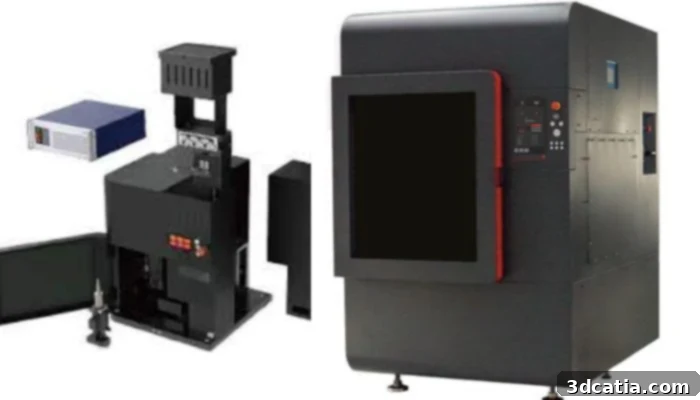
Photo credits: Insstek
M450 by Meltio: Innovative LMD Technology for 100% Dense Metal Parts
Meltio, an innovative Spanish company, specializes in the development of metal 3D printers that harness its unique and proprietary Laser Metal Deposition (LMD) technology. Meltio’s LMD process represents a significant advancement in DED, utilizing multiple lasers (typically 3 to 6) within a single printhead to extrude either metal wire or powder. A key differentiator of Meltio’s approach is the elimination of nozzle changes when switching between wire and powder feedstocks, enhancing operational efficiency and versatility. The advanced nozzle design ensures that the laser energy is precisely focused on the specific printing material, facilitating efficient melting and consistent deposition. This LMD technology effectively combines elements of both Direct Metal Laser Sintering (DMLS) and Wire Arc Additive Manufacturing (WAAM), offering a hybrid approach that yields exceptional results. Meltio’s technology boasts a wide range of applications, capable of producing metal parts with 100% density, which is critical for structural integrity and performance in demanding industries. The M450, one of Meltio’s flagship machines, offers a maximum print volume of 200 x 150 x 450 mm and is compatible with various high-performance metals, including titanium and steel. Meltio’s patented technology is designed to significantly reduce the initial investment cost for metal additive manufacturing while simultaneously improving productivity. The M450 is thus an ideal solution for companies seeking efficient and cost-effective metal fabrication, offering excellent value for money given its advanced capabilities and robust performance.
MX3D M1 Metal AM System: High-Speed WAAM for Medium to Large Components
The M1 Metal AM System, developed by the Dutch company MX3D, is specifically engineered for the efficient production of medium to large metal parts using Wire Arc Additive Manufacturing (WAAM) technology. WAAM, a highly effective form of DED, leverages an electric arc to melt metal wire, enabling rapid deposition and the creation of large-scale structures. To maximize the potential of this technology, MX3D has developed a comprehensive ecosystem comprising the MetalXL software and the MetalXL Control System. This integrated system features advanced sensors for continuous monitoring and precise control throughout the printing process, ensuring optimal print quality and consistency. A key advantage of the M1 Metal AM System is its ability to achieve high production speeds, with deposition rates of up to 1-3 kg per hour for typical parts, and even reaching 5 kg per hour for exceptionally large components, all without compromising the structural integrity or quality of the final product. The machine is versatile in its material compatibility, capable of processing various metal alloys, including commonly used aluminum and copper alloys, among others. Furthermore, MX3D’s WAAM technology offers a significant cost advantage, potentially reducing production costs by up to 50% compared to traditional powder-based metal 3D printing methods, making it an economically attractive solution for industrial applications demanding efficiency and scalability.
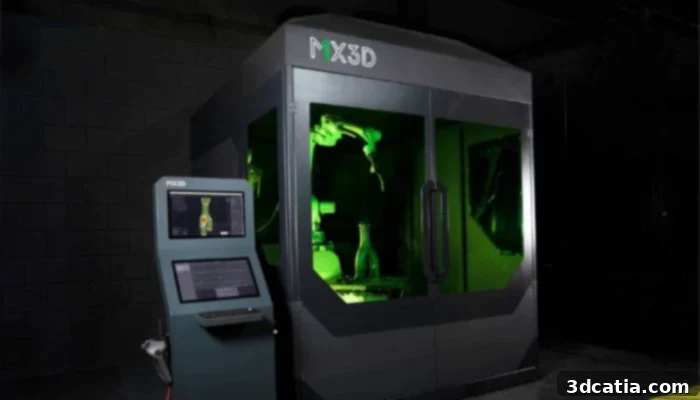
Photo credits: MX3D
Norsk Titanium’s MERKE IV: Rapid Plasma Deposition for High-Performance Metals
Norsk Titanium is a prominent innovator and key player in the field of Directed Energy Deposition (DED) additive manufacturing, recognized for its groundbreaking Rapid Plasma Deposition (RPD) technology. RPD is a patented DED process that uniquely utilizes plasma as the focused energy source to melt and deposit metal wire, offering distinct advantages in speed and material versatility. Building on this core technology, Norsk Titanium has developed its highly advanced fourth-generation production machine, the MERKE IV. This sophisticated 3D printer is capable of producing substantial parts, with a generous build envelope reaching up to 900 x 600 x 300 mm. It achieves this with impressive layer dimensions of 3-4 mm in height and 8-12 mm in length, enabling rapid material build-up. Norsk Titanium proudly highlights the MERKE IV’s exceptional deposition rate, capable of depositing 5-10 kg of material per hour, which significantly accelerates the production of large components. RPD technology is primarily optimized for processing titanium wire, a choice driven by the stringent demands of the defense and aerospace industries, where titanium’s high strength-to-weight ratio and corrosion resistance are critical. However, the technology is also highly effective with other high-performance materials, including nickel alloys and stainless steel. In line with the overarching goals of advanced manufacturing, the MERKE IV was specifically designed to minimize material waste, substantially reduce manufacturing time, and lower overall production costs. Norsk Titanium further asserts that their RPD-produced parts require significantly less post-processing and machining, which further streamlines the manufacturing workflow and contributes to overall cost savings.
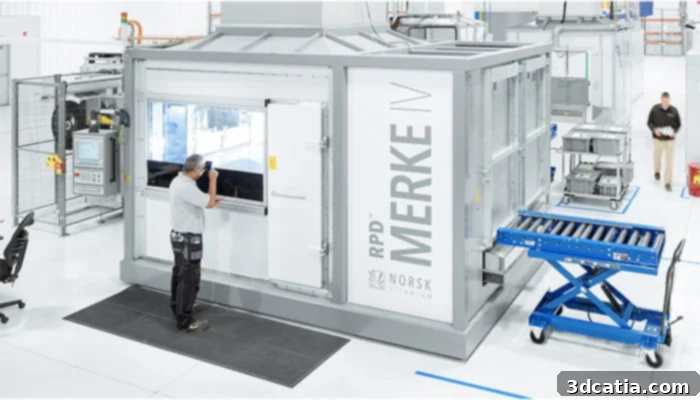
Photo Credits: Norsk Titanium
Optomec MTS 860: Hybrid DED for Medium to Large Non-Reactive Metal Parts
Optomec, a leading American company renowned for its advanced additive manufacturing solutions, presents the MTS 860 as its latest hybrid DED system. Built upon Optomec’s well-established LENS (Laser Engineered Net Shaping) technology, the MTS 860 integrates both additive and subtractive manufacturing capabilities within a single platform. This powerful system is equipped with a high-power 3 kW laser, which significantly enhances deposition speed, thereby reducing both manufacturing and repair times for critical components. The MTS 860 is expertly designed for processing medium to large parts, offering a substantial work area of 860 x 600 x 610 mm. This generous build volume, combined with its hybrid functionality, makes it an ideal solution for creating complex geometries and repairing high-value metallic components. The system is constructed on a robust CNC platform and features a precise 3-axis motion system, ensuring exceptional accuracy and repeatability. It is particularly well-suited for processing non-reactive metals, including common industrial materials like stainless steel, high-performance nickel-based alloys, robust cobalt alloys, tungsten, and various other specialized metals. For operator safety, the MTS 860 incorporates a Class 1 laser enclosure, which is a sealed chamber designed to protect against any potential laser hazards, ensuring a safe working environment. Optomec’s comprehensive DED portfolio also includes other highly capable models such as the MTS 500, CS 250, CS 600, CS 800, CS 1500, and the HC 205 and HC 245 systems, catering to diverse industrial requirements for metal additive manufacturing and repair.
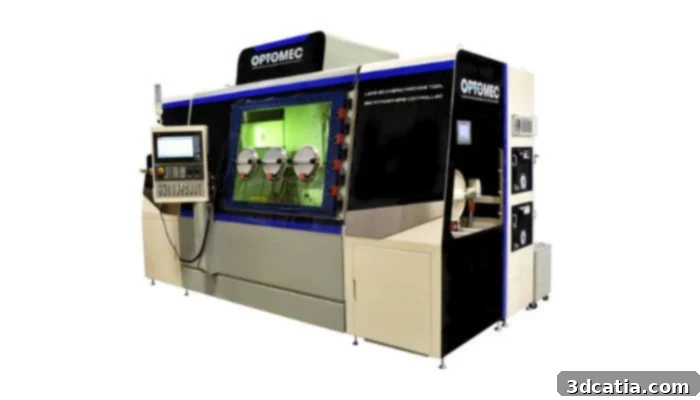
Photo credits: Optomec
Prima Additive’s Laser Next 214: Large-Volume DED for Complex Repairs
Prima Additive, an esteemed Italian company, is a specialist in advanced additive manufacturing technologies, offering robust solutions in both Powder Bed Fusion and Direct Energy Deposition (DED). For its DED technology portfolio, Prima Additive offers a range of innovative machines designed for industrial applications. Among these, the Laser Next 214 machine stands out for its exceptionally large print volume, measuring an impressive 4140 x 2100 x 1020 mm. This substantial build envelope makes it perfectly suited for manufacturing very large components and performing extensive repairs. The Laser Next 214 comes as a comprehensive DED kit, integrating a high-performance printhead, a powerful fiber laser (ranging from 1 kW to 6 kW), and a precision powder feeder, ensuring seamless and efficient material deposition. What makes the Laser Next 214 particularly impressive is its advanced deposition head, which is capable of moving on 3 to 5 simultaneous axes, coupled with a sophisticated 5-axis CNC system. This multi-axis capability enables the creation of highly complex geometries and precise material placement on intricate surfaces. With a maximum deposition rate of 50-70 cubic centimeters per hour, the machine offers remarkable productivity. This DED platform is ideally suited for demanding complex repair and rework applications across a variety of industries, including aerospace, automotive, and energy, where restoring worn or damaged high-value parts is critical for operational efficiency and cost savings.
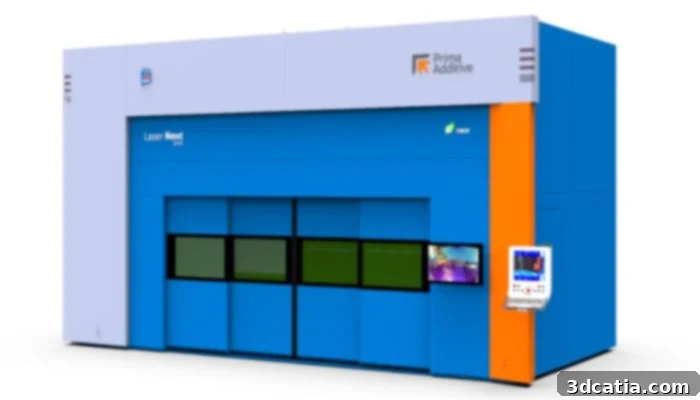
Photo credits: Prima Additive
Relativity Space – Stargate: The World’s Largest Metal 3D Printers for Aerospace
Relativity Space has garnered significant global recognition for developing and operating the world’s largest metal 3D printers, famously known as the Stargate printers. These colossal machines played a pivotal role in the production of the Terran 1, marking it as the first-ever entirely 3D-printed rocket, a monumental achievement in aerospace manufacturing. The latest iteration, the 4th Generation Metal 3D Printer within the Stargate family, employs a unique horizontal printing orientation. This innovative design allows the machine to feed multiple wires into a specialized print head, enabling the creation of extraordinarily large components. By leveraging horizontal printing, this printer possesses the unprecedented capability to manufacture parts up to an astounding 36 meters in length and 7 meters in width. This scale dramatically redefines the possibilities for large-scale aerospace components, such as rocket sections, minimizing assembly steps and increasing structural integrity. Complementing its groundbreaking hardware, Relativity Space has also developed sophisticated proprietary software that orchestrates the intricate processes involved in producing these complex and immense metal parts, ensuring precision, efficiency, and reliability in their additive manufacturing operations. The Stargate printers exemplify the potential of DED technology to revolutionize industries that demand components of extreme size and complexity, pushing the boundaries of what is manufacturable through additive processes.
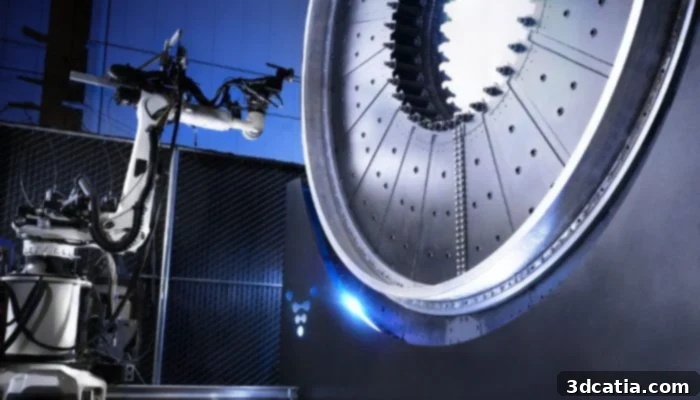
Photo credits: Relativity Space
The RoboWAAM 3D printer from WAAM3D: Robotic Arc Additive Manufacturing Power
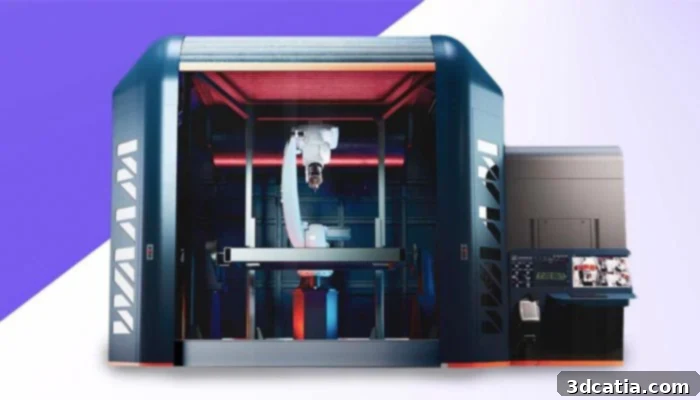
WAAM3D, a British company headquartered in Milton Keynes, is a leader in Wire Arc Additive Manufacturing (WAAM) technology, and their flagship product, the RoboWAAM metal 3D printer, embodies their expertise. The RoboWAAM utilizes WAAM technology to efficiently produce high-quality metal parts from wire-shaped material, primarily focusing on steel, but capable of processing virtually any weldable metal available in wire form. This robust machine is equipped with a versatile robotic arm, providing extensive reach and maneuverability, allowing it to create impressively large parts with a maximum print volume of 2000 × 2000 × 2000 mm. Beyond fabrication, the RoboWAAM is also highly effective at repairing existing metal components, making it a valuable asset for maintenance and restoration applications across various industries. To maximize its potential, the printer comes integrated with WAAM3D’s comprehensive in-house software package, which includes four critical programs: WAAMPlanner for build strategy and toolpath generation, WAAMKeys for process parameter optimization, WAAMSim for simulation and collision detection, and WAAMCtrl for real-time process monitoring and control. This integrated software suite, combined with the powerful robotic hardware, makes the RoboWAAM exceptionally well-suited for the production of advanced, high-performance parts, offering significant advantages in terms of cost, speed, and material utilization.
Sciaky’s EBAM: Electron Beam Additive Manufacturing for Large-Scale Metal Structures
Sciaky is a pioneering force in the realm of Electron Beam Additive Manufacturing (EBAM) technology, providing highly advanced solutions that enable the production of exceptionally large metal parts with unparalleled efficiency. EBAM is a DED process that employs a powerful electron beam as its energy source to melt and deposit metal wire in a vacuum environment. The company proudly states that its 3D printing systems are capable of fabricating structures with colossal dimensions, reaching up to 5.8 meters in length and 1.2 meters in both width and height, positioning them as market leaders for ultra-large-scale metal additive manufacturing. The EBAM machines are compatible with a broad range of weldable metals available in filament (wire) form, including high-performance materials such as titanium, tantalum, tungsten, stainless steel, and various nickel-based alloys. This material versatility makes Sciaky’s systems suitable for diverse industrial applications, particularly where material strength and resilience are paramount. Beyond large-scale fabrication, the EBAM process also demonstrates precision in producing smaller parts with a fine layer thickness of just 1 mm. Sciaky emphasizes that its EBAM systems are ideally suited for manufacturing prototypes, creating production-ready parts, and critically, for repairing high-value aerospace components. The manufacturer highlights the significant economic advantages of its technology, claiming an impressive reduction of up to 80% in material waste and a remarkable decrease of 70% in production times, largely attributed to the machine’s exceptionally high manufacturing speed and efficient material utilization. These benefits collectively make Sciaky’s EBAM a highly attractive solution for industries seeking to optimize their metal manufacturing processes for speed, cost, and material efficiency.
Trumpf’s TruLaser Cell 7040: Versatile Laser Metal Deposition for Complex Geometries
The Trumpf TruLaser Cell 7040 laser system is an exceptionally versatile and robust machine engineered for a wide array of industrial applications, capable of processing both two- and three-dimensional components, as well as tubes. This highly adaptable system offers multiple functionalities, including precision cutting, high-quality welding, and advanced laser metal deposition (LMD), which is a form of Directed Energy Deposition (DED). Its impressive position accuracy of 0.08 millimeters ensures precise material placement and component fabrication, while a maximum laser power ranging from 2000 W to 6000 W provides ample energy for rapid melting and deposition of various metallic powders. The modular setup of the TruLaser Cell 7040 allows for extensive individual adjustments and customizations, ensuring it can seamlessly adapt to evolving customer requirements and dynamic production environments. This flexibility is key for industries with diverse manufacturing needs. From a software perspective, the system efficiently loads 3D CAD data through numerous interfaces, and critically, it features a self-correction capability for 3D laser processing, enhancing reliability and reducing potential errors during complex operations. The TruLaser Cell Series 7040 is celebrated for its outstanding operator convenience and excellent process reliability, providing a stable and efficient manufacturing platform. Its configurable and retrofittable design further ensures long-term utility and adaptability, making it a powerful investment for advanced metal fabrication and repair using DED technology.
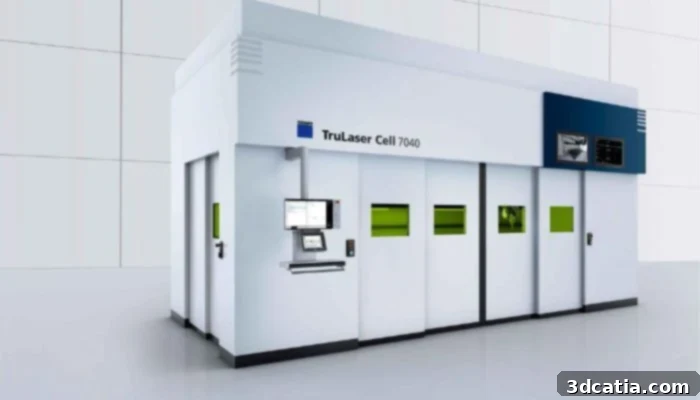
Photo credits: Trumpf
The GICAM 1500 P/W from Sotimeco: A Customizable DED Solution
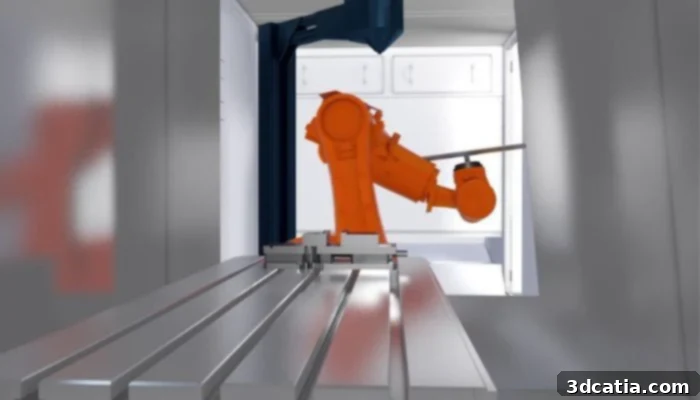
Sotimeco, a French company based in Nouvelle-Aquitaine, stands out for its specialized offerings in Directed Energy Deposition (DED) technology, particularly with its versatile GICAM 1500 P/W machine. This advanced system is unique in its compatibility with both powder and wire deposition processes, providing unparalleled flexibility in material selection and application. The printer boasts a substantial printing volume of 1500 x 500 x 500 mm, making it suitable for a wide range of component sizes, from intricate repairs to the fabrication of medium-to-large parts. The GICAM 1500 P/W is equipped with high-quality components, including a powerful 1 kW PRC-C 1000 fiber laser source for efficient material melting, a robust 6 kW power cooling unit to maintain optimal operating temperatures, and an industrial-grade Kuka KR16 R1610-2 robot with a KRC4 cabinet, controlled by a KCP4 smartPad, ensuring precise and reliable multi-axis motion. The printer is housed within a meticulously designed cabin measuring 6 x 2.5 meters, which incorporates integrated dust removal and filtration systems, crucial for maintaining a clean and safe working environment. Sotimeco also provides a comprehensive software suite that includes a powerful slicer, CAM functionality, post-processing tools, and collision analysis capabilities, often leveraging the intuitive RhinoRobot platform. To support its customers, Sotimeco offers initiation and training services in collaboration with Kinematiq, ensuring users can fully leverage the machine’s capabilities. A significant advantage of the GICAM 1500 P/W is its high degree of customization: the robot capacity can be expanded, and the deposition head can be easily replaced or augmented with additional wire or powder heads, adapting to diverse manufacturing requirements and future technological advancements.
This comprehensive overview highlights the incredible diversity and innovation within the field of Directed Energy Deposition (DED) 3D printing. From large-scale aerospace components to intricate repair work and hybrid manufacturing solutions, DED technology is continuously evolving, driven by specialized manufacturers around the globe. These advanced systems offer unparalleled flexibility in material selection, high deposition rates, and the unique ability to repair existing parts, making them indispensable tools for modern industrial applications. As industries increasingly demand stronger, lighter, and more complex metallic components, DED continues to prove its value as a powerful and transformative additive manufacturing process.
What do you think of this comprehensive list of DED 3D printers? Do you have a preferred material? Let us know in a comment below or on our LinkedIn, Facebook, and Twitter pages! Don’t forget to sign up for our free weekly Newsletter here, the latest 3D printing news straight to your inbox! You can also find all our videos on our YouTube channel.