
Pioneering the Future: Latest Breakthroughs in Additive Manufacturing and 3D Printing
Welcome to your weekly digest of the most significant developments in the world of additive manufacturing. In this edition of #3DExpress, we delve into groundbreaking innovations and strategic expansions that are shaping the industry. We’ll explore SSAB’s monumental launch of the world’s first emission-free steel powder, a major leap towards sustainable production. Next, we examine Sintratec’s impressive expansion into the vibrant East Asian market through a key new partnership. Our coverage also includes Specialized’s innovative 3D-printed bicycle saddle, designed for unparalleled comfort and performance. Furthermore, we’ll look at Stratasys’s establishment of a pioneering Customer Advisory Board aimed at driving industrial AM forward, and Würth’s introduction of transformative digital inventory services. Join us as we uncover these stories, reflecting the dynamic evolution and increasing maturity of the 3D printing sector. Happy reading, and we wish you a fantastic week ahead!
The World’s First Emission-Free Steel Powder: A New Era for Metal 3D Printing
The imperative to reduce carbon emissions has become a defining challenge across countless industries, driven by the escalating urgency of global climate change. While additive manufacturing is frequently lauded for its potential to offer more sustainable production methods, the environmental footprint of its materials has often presented a complex hurdle. This recognition has spurred extensive research and development efforts aimed at ‘greening’ the AM supply chain. In a monumental step forward, SSAB, a prominent Nordic and US-based steel company, has announced the launch of what it proudly presents as the world’s first emission-free steel powder. This revolutionary material is specifically engineered for advanced 3D printing applications.
The core of this innovation lies in its composition and production. The new powder is derived from recycled SSAB Zero steel, a material itself produced using a meticulous process that leverages recycled scrap and exclusively fossil-free energy sources, resulting in virtually zero carbon dioxide emissions. This commitment to sustainability from raw material to final product marks a significant departure from conventional steel manufacturing processes, which are typically energy-intensive and carbon-heavy. The implications for metal additive manufacturing are profound, opening up new avenues for engineers and designers to create components with significantly reduced environmental impact without compromising on performance or material integrity.
Johnny Sjöström, EVP and Head of SSAB Special Steels, articulated the profound impact of this development: “This is a game-changer in the world of 3D-printed steel. SSAB has already proven it’s possible to produce steel without carbon dioxide emissions. Now we’re merging emission-free steel with powder technology to enable sustainable 3D-printed design with unlimited imagination.” This statement underscores not only the technological achievement but also the philosophical shift towards truly sustainable industrial practices. By integrating emission-free steel with advanced powder technology, SSAB is not merely offering a new product but enabling a paradigm shift in how high-performance metal parts can be conceived, designed, and manufactured using additive processes. This breakthrough is expected to accelerate the adoption of sustainable practices across various sectors, from automotive and aerospace to tooling and industrial machinery, where durable and environmentally responsible materials are increasingly demanded.
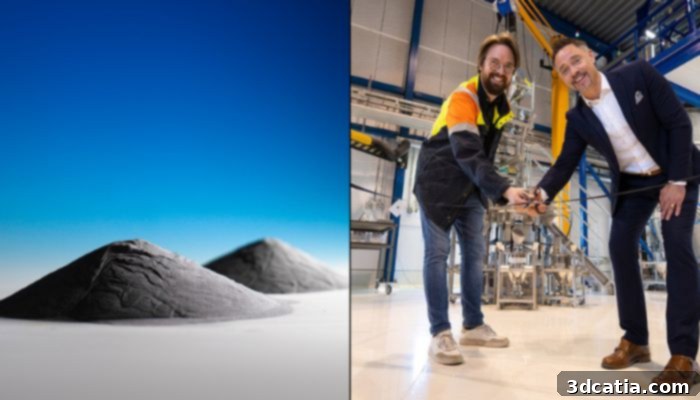
(Left) SSAB’s emission-free steel powder (photo credits: Hugo Leijon); (right) Jesper Vang and Johnny Sjöström in SSAB’s facility (photo credits: Jan Lindblad Jr.)
Sintratec Expands Its Sales Network, Forging Stronger Ties in East Asia
Sintratec, the renowned Swiss pioneer in selective laser sintering (SLS) 3D printing solutions, has continued its remarkable trajectory of success. Following a record-breaking growth period in 2023, largely attributed to the successful market introduction of its innovative All Material Platform (AMP), as highlighted in a previous #3DExpress report, the company is now strategically extending its global footprint. This upward momentum is being solidified through a pivotal collaboration with 3Dprinting Technology, enabling Sintratec to firmly establish itself within the rapidly expanding and highly competitive East Asian market.
The partnership, active since March 2024, sees Sintratec’s advanced SLS printers integrated into 3Dprinting Technology’s comprehensive portfolio. This addition significantly bolsters 3Dprinting Technology’s offerings, which already include leading machines from Nexa 3D, Stratasys, and HP, providing customers in the region with an even broader spectrum of additive manufacturing solutions. 3Dprinting Technology itself boasts an impressive and robust presence across East Asia, with its headquarters situated in Taiwan, complemented by two additional branches in Taiwan and an extensive network of eight branches throughout mainland China. This widespread geographical reach and established customer base make 3Dprinting Technology an ideal partner for Sintratec.
For Sintratec, this strategic alliance represents a prime opportunity to significantly enhance its sales and distribution network within the crucial East Asian market. The region is widely recognized as a powerhouse for manufacturing and technological adoption, with a rapidly growing demand for advanced 3D printing capabilities across various industries, including electronics, automotive, and consumer goods. By leveraging 3Dprinting Technology’s deep local market knowledge, extensive sales infrastructure, and strong customer relationships, Sintratec is poised to capture a substantial share of this burgeoning market. This expansion not only signifies Sintratec’s commitment to global growth but also highlights the increasing internationalization and interconnectivity within the additive manufacturing industry, where strategic partnerships are key to unlocking new market potentials and delivering cutting-edge technology to a wider audience.
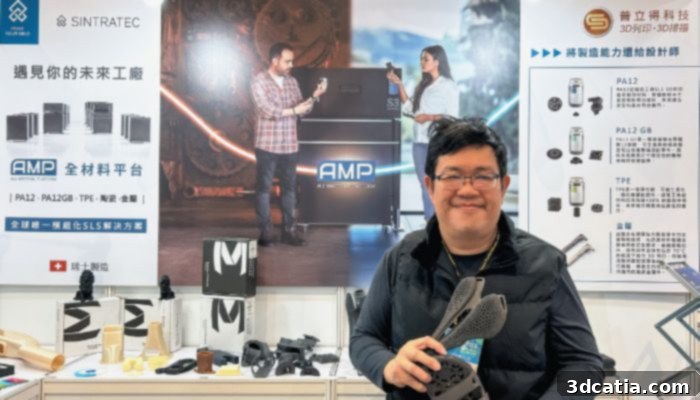
Photo Credits: 3Dprinting Technology / Sintratec
Specialized Revolutionizes Cycling Comfort with New 3D-Printed Bike Saddle
In a move set to redefine rider comfort and performance, Specialized, a leading manufacturer of high-performance bicycles and sporting goods, has recently announced the launch of an innovative new saddle meticulously crafted using additive manufacturing techniques. This latest offering represents a significant enhancement to their popular Phenom saddle line, now incorporating the brand’s proprietary ‘Mirror’ 3D printing process. This groundbreaking technology leverages the power of 3D printing to achieve levels of customization and functional integration previously unattainable with traditional manufacturing methods.
The ‘Mirror’ 3D printing process stands apart from conventional saddle construction, which typically relies on single-density foam padding. Unlike foam, which offers uniform support across the entire surface, Specialized’s 3D printing technology enables infinite density adjustment across different zones of the saddle. This allows for precise control over the material’s elasticity and support characteristics at microscopic levels. The result is a lattice structure that can be engineered to be softer in areas requiring pressure relief and firmer where structural support is essential. This granular control over material properties is a hallmark benefit of additive manufacturing and is expertly applied here to address complex biomechanical requirements for cyclists.
The Specialized team eloquently explains the core benefit: “The 3D printed matrix adjusts to support the sit bones over a larger area, creating a hammock effect that allows the saddle to support your weight, rather than the fabric around your sit bones.” This ‘hammock effect’ signifies a fundamental shift in how pressure is distributed. Instead of localized pressure points common with traditional saddles, the 3D-printed structure cradles the rider’s anatomy more evenly, distributing weight across a broader surface area. In essence, the strategic application of additive manufacturing has empowered Specialized to fine-tune the saddle’s density in specific, critical regions, culminating in vastly improved support, enhanced comfort, and ultimately, a more enjoyable and efficient riding experience for cyclists. This innovation not only showcases the practical advantages of 3D printing in product development but also sets a new benchmark for personalized performance gear in the sports industry.
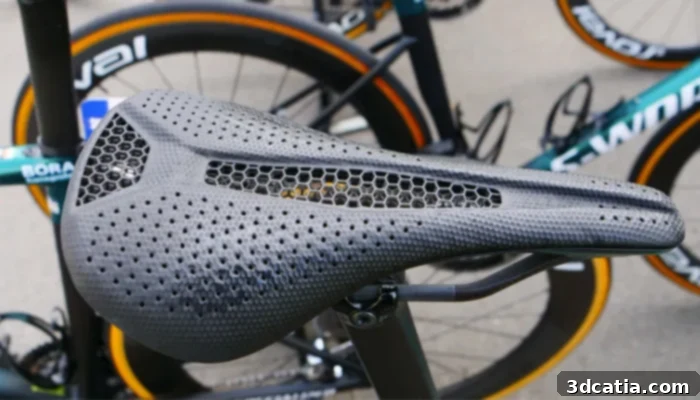
Photo Credits: Specialized
Stratasys Establishes Pioneering Customer Advisory Board to Drive AM Industry Forward
Stratasys, a globally recognized leader in 3D printing solutions, is once again making headlines in our #3DExpress news, demonstrating its continued commitment to innovation and industry leadership. The company has announced the formation of a new Industrial Customer Advisory Board (CAB), a strategic initiative designed to foster deeper collaboration with its industrial clientele and guide the future direction of additive manufacturing. Notably, this marks the first board of its kind within the additive manufacturing industry, underscoring Stratasys’s proactive approach to shaping the sector’s evolution.
The newly constituted Advisory Board is composed of 12 distinguished members, bringing together an unparalleled depth of expertise and diverse perspectives. These members represent a cross-section of leading companies and manufacturers from critical industrial sectors, including aerospace, automotive, and general industrial manufacturing, alongside prominent research and academic institutions. This rich tapestry of participants ensures that the board’s insights are grounded in real-world industrial demands, cutting-edge research, and academic rigor. Among the prestigious organizations contributing to the Advisory Board are industry giants like Boeing and Toyota, representing the pinnacle of aerospace and automotive manufacturing respectively. Additionally, key academic partners include TE Connectivity and universities renowned for their manufacturing programs, such as the National Institute for Aviation Research (NIAR) at Wichita State University, the University of Texas El Paso, and the Milwaukee School of Engineering. The involvement of such high-caliber entities highlights the strategic importance and potential impact of this board.
The primary mandate of the Customer Advisory Board is to provide invaluable input on critical requirements and emerging trends that are essential for the scalable adoption and long-term success of additive manufacturing in industrial settings. Their focus areas will encompass crucial aspects such as enabling scalable production processes, ensuring uncompromising quality control, enhancing overall reliability of AM systems and parts, and developing robust sustainability strategies within the AM ecosystem. By actively soliciting and integrating feedback from these key stakeholders, Stratasys aims to align its product development roadmap, service offerings, and strategic initiatives directly with the evolving needs and challenges faced by its industrial customers. This proactive engagement is expected to not only solidify Stratasys’s position as an industry leader but also to collectively propel the entire additive manufacturing industry towards greater maturity, efficiency, and widespread industrial integration.

Würth Announces Groundbreaking Digital Inventory Services for Additive Manufacturing
At the recent AMUG conference, attendees were given a preview of Würth’s innovative Digital Inventory Services (DIS) platform, a transformative solution poised to revolutionize supply chain management within the additive manufacturing sector. As a leading global entity in supply chain solutions, Würth has engineered DIS to serve as a robust tool for the secure and efficient transfer of intellectual property (IP) across disparate geographical locations. This platform is meticulously designed to uphold stringent quality control measures while ensuring a highly controlled and traceable distribution of digital assets, addressing critical concerns around data integrity and security.
For users operating within the additive manufacturing industry, the introduction of DIS presents a significant advantage. It offers an unparalleled opportunity to seamlessly integrate various elements crucial to their operations—such as different printing machines, diverse business models, and a wide array of applications—into a unified digital supply chain platform. This integration capability simplifies complex workflows, reduces manual intervention, and accelerates the adoption of on-demand manufacturing paradigms. The DIS platform directly reinforces Würth Additive Group’s enduring motto, “Always in Stock,” by facilitating the integration of digital parts into Würth’s existing inventory programs, systems, and software. This synergistic approach ensures that digital designs can be manufactured precisely when and where they are needed, minimizing physical inventory holding costs and lead times.
AJ Strandquist, CEO of Würth Additive Group, articulated an even broader vision for DIS, emphasizing its role in democratizing access to additive manufacturing: “We are committed to delivering reliable and effective solutions for the digital supply chain. With a straightforward implementation process, cost-effective options and comprehensive support, we want to enable companies in the industrial sector to use digital inventory effectively. Our main goal is to make managing the global supply chain a little easier.” This statement underscores a dual objective: not only to optimize current supply chain efficiencies but also to lower the barriers to entry for companies looking to leverage AM. By providing an easy-to-implement, cost-effective, and fully supported platform, Würth aims to empower a wider range of industrial businesses to harness the full potential of digital inventory and additive manufacturing. This initiative represents a critical step towards a more resilient, agile, and accessible global manufacturing ecosystem.
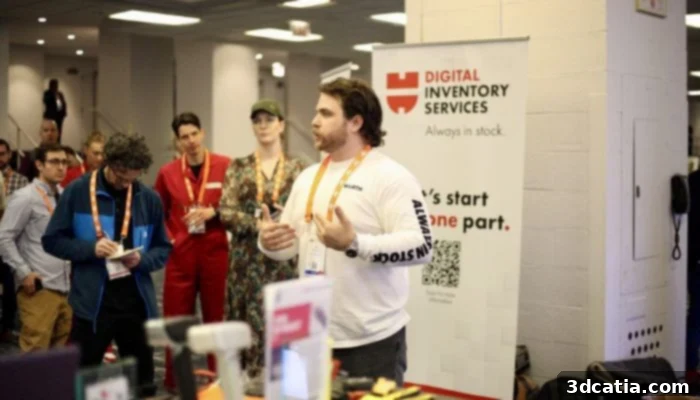
Photo Credits: Würth Additive Group
The pace of innovation in additive manufacturing continues to accelerate, bringing forth solutions that address sustainability, market reach, product performance, strategic collaboration, and supply chain efficiency. From emission-free materials to intelligent inventory management, these developments highlight a maturing industry ready to tackle complex global challenges. What are your thoughts on SSAB’s breakthrough emission-free steel powder and its potential impact on sustainable manufacturing? Let us know your insights in a comment below or engage with us on our LinkedIn, Facebook, and Twitter pages! To ensure you never miss out on the latest advancements and news from the dynamic world of 3D printing, don’t forget to sign up for our free weekly newsletter here, delivering all the essential updates straight to your inbox! You can also explore all our in-depth video content and interviews on our dedicated YouTube channel.