
Unveiling the Future: This Week’s Top 3D Printing Innovations and Insights
Welcome to an exciting compilation of this week’s most compelling 3D printing videos, where we delve into the dynamic world of additive manufacturing. From its fascinating origins to cutting-edge industrial applications and practical post-processing tips, this roundup offers a comprehensive look at the advancements shaping the industry. Each video has been carefully selected to provide valuable insights, whether you’re a seasoned professional or just beginning your journey in 3D printing. We’ll explore how this revolutionary technology is evolving, impacting various sectors, and empowering users with new capabilities. Join us as we uncover historical milestones, military integration strategies, advanced printing techniques, and essential finishing touches for your 3D printed projects. Get ready to expand your knowledge and be inspired by the relentless innovation driving the additive manufacturing landscape.
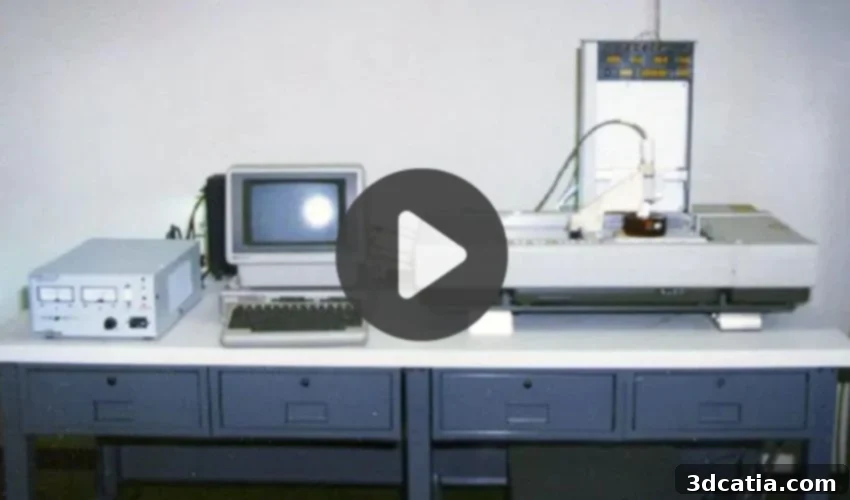
1. A Journey Through Time: The Definitive History of 3D Printing
Our journey into the world of additive manufacturing begins with an enlightening episode from The History Of series, providing an extensive and captivating overview of 3D printing’s rich past. This deep dive starts at the genesis of the technology, highlighting Chuck Hull’s groundbreaking invention of stereolithography (SLA) in the early 1980s, a pivotal moment that laid the foundation for modern 3D printing. The narrative then progresses to explore the subsequent emergence and development of other transformative technologies, such as selective laser sintering (SLS) and fused deposition modeling (FDM), each contributing uniquely to the versatility and accessibility of additive manufacturing. The episode meticulously traces the expansion of these technologies into diverse industrial applications throughout the 2000s, showcasing their impact across critical sectors including aerospace, automotive, healthcare, and consumer goods. It details how 3D printing transitioned from a niche prototyping tool to a vital manufacturing method, enabling rapid innovation and customized production. Finally, the video offers a keen assessment of the current 3D printing landscape, reflecting on its maturity, ongoing challenges, and immense future potential. This historical context is crucial for understanding the trajectory and future directions of this ever-evolving field, offering valuable perspective on how far 3D printing has come and where it might go next.
2. Empowering Marines: Additive Manufacturing Training at MCB Hawaii
Next, we turn our attention to an inspiring initiative highlighted by dvidshub, showcasing CLC-33’s pioneering Additive Manufacturing course aboard Marine Corps Base Hawaii. This innovative program represents a significant stride in integrating advanced manufacturing capabilities into military operations, aiming to equip Marines with crucial, forward-thinking skills. The curriculum is meticulously designed to cover essential competencies including Computer-Aided Design (CAD), hands-on 3D printing operation, fundamental coding, and practical electronics. This comprehensive approach ensures Marines gain a holistic understanding of the additive manufacturing workflow. Through strategic partnerships with leading organizations like Cisco Advanced Manufacturing Systems, the program consistently hosts quarterly classes, each accommodating 12 Marines. Participants are immersed in fundamental concepts of both additive and subtractive manufacturing processes, gaining theoretical knowledge backed by practical application. The ultimate goal is to empower these Marines to swiftly refurbish and repair critical equipment directly in the field, enhancing operational readiness and logistical resilience. By fostering a culture of innovation and self-sufficiency, this course not only addresses immediate logistical challenges but also prepares Marines for the technologically advanced demands of future military engagements, making them invaluable assets in any operational scenario. This initiative underscores the profound impact of 3D printing on defense strategies and personnel training.
3. Precision and Efficiency: Understanding the Benefits of Sequential 3D Printing
Third in our lineup, Chip Monkeys presents an insightful video that thoroughly explores the significant advantages of sequential 3D printing when compared to traditional continuous printing methods. The video effectively highlights prevalent challenges often encountered with continuous printing, such as critical layer adhesion problems that can compromise structural integrity and substantial material waste often resulting from print errors or failed batches. By illustrating these common pitfalls, the video positions sequential printing as a robust and efficient solution. This innovative methodology allows for the individual production of each part within a batch, following a carefully predetermined sequence. This segmented approach vastly improves control over the printing parameters for each component, leading to superior print quality and significantly reduced failure rates. The ability to isolate and manage each part independently means that if an error occurs, it affects only that specific component, preventing the spoilage of an entire build plate and consequently minimizing material waste. Furthermore, sequential printing enhances overall efficiency throughout the entire manufacturing process, offering greater flexibility in scheduling and resource allocation. It’s particularly beneficial for complex builds or when printing multiple parts with varying geometries or material requirements, ensuring higher success rates and more consistent results. This technique represents a valuable advancement for optimizing additive manufacturing workflows, especially in professional environments demanding precision and reliability.
4. Setting New Standards: Meltio Debuts Its Innovative M600 3D Printer
Moving forward, the spotlight shines on industrial machinery innovator Meltio, as they provide an in-depth look at their much-anticipated new Meltio M600 3D printer. This machine is poised to make a significant impact on industrial additive manufacturing, building on Meltio’s reputation for robust and reliable metal 3D printing solutions. The video meticulously showcases the M600’s impressive array of features designed for high-performance production environments. Key highlights include an expansive build volume, allowing for the creation of larger components or batch production with greater efficiency. Integrated smart sensors continuously monitor the printing process, ensuring optimal conditions and proactive issue detection, which significantly boosts reliability and reduces potential downtime. Furthermore, the M600 boasts multi-material compatibility, offering unparalleled flexibility to work with a diverse range of metal alloys, crucial for various industrial applications. Meltio emphasizes that these combined features deliver greatly enhanced reliability and efficiency, addressing the critical demands of modern manufacturing. The company expresses strong confidence that the Meltio M600 will not merely meet but actively set a new standard for industrial metal additive manufacturing, pushing the boundaries of what is possible in sectors like aerospace, automotive, and heavy industry where precision, durability, and cost-effectiveness are paramount. This debut marks a pivotal moment for industrial-scale metal 3D printing.
5. Mastering the Finish: A Beginner’s Guide to Sanding Resin 3D Printed Parts
Finally, we wrap up this week’s video compilation with an invaluable guide from Resin Forge, offering a comprehensive beginner’s introduction to effectively sanding resin 3D prints. Post-processing is a critical step in achieving professional-quality resin prints, and sanding often proves to be the most impactful. The creator candidly shares their initial apprehension about the daunting task of sanding, a sentiment many newcomers to resin printing can relate to. However, they confidently assure viewers that with consistent practice and the right techniques, not only will the final part quality dramatically improve, but the process can also evolve into an enjoyable and meditative aspect of 3D printing. The video thoroughly showcases various essential tools required for effective sanding, from different grits of sandpaper (exploring their specific uses) to specialized sanding blocks and even rotary tools for intricate details. It meticulously details different techniques for both dry sanding and wet sanding, explaining the advantages and disadvantages of each method. Crucially, it covers safety precautions, such as the importance of wearing personal protective equipment (PPE) like masks and gloves, especially when dealing with resin dust. This guide is an indispensable resource for anyone looking to achieve flawless surface finishes and elevate the aesthetic and functional quality of their resin 3D printed models, transforming raw prints into polished, professional pieces.
This week’s collection of 3D printing videos has offered a panoramic view of the industry, from foundational history and military innovation to advanced manufacturing techniques and crucial post-processing skills. Each segment underscored the incredible versatility and ongoing evolution of additive manufacturing. Which video resonated with you the most this week? Perhaps the historical journey sparked new understanding, or the Marine Corps’ commitment to AM inspired you. We’re keen to hear your thoughts on the constantly evolving landscape of 3D printing and the topics discussed. Share your insights and favorite video in a comment below, or engage with us on our LinkedIn, Facebook, and Twitter pages! Don’t miss out on the latest advancements and breaking news in additive manufacturing – sign up for our free weekly newsletter here to receive direct updates to your inbox. You can also explore our full library of insightful content and all our featured videos on our dedicated YouTube channel. Stay connected and continue to explore the exciting world of 3D printing with us!
Cover Photo Credits: Sculpteo