
Revolutionizing UK Railways: Angel Trains Pioneers 3D Printed Components for Enhanced Efficiency and Sustainability
The railway industry, a critical backbone of public transport and national infrastructure, is consistently seeking innovative methods to enhance operational efficiency, reduce maintenance costs, and improve the overall passenger experience. In a significant stride towards modernization, Angel Trains, one of the largest train leasing and asset management specialists in Britain, has forged a pioneering partnership with ESG Rail and the additive manufacturing leader, Stratasys. This collaboration aims to seamlessly integrate advanced 3D printing technology into the production of interior train components, including essential spare parts, thereby setting a new benchmark for railway additive manufacturing.
This strategic alliance leverages the transformative power of digital fabrication to address long-standing challenges within the rail sector. By embracing 3D printing, the partners envision a future where the production of train parts is not only cheaper and significantly faster but also inherently more sustainable and responsive to the dynamic demands of railway operations. This initiative represents a crucial step towards modernizing the UK’s extensive rail network, promising a more agile, cost-effective, and environmentally conscious approach to asset management and component supply chain optimization.
The Growing Adoption of Additive Manufacturing in Transportation
When discussions turn to additive manufacturing, the automotive sector often comes to mind first, given its rapid adoption of 3D printed parts for lighter, more efficient vehicles and faster prototyping. However, the rail industry is swiftly catching up, with a multiplying array of applications and an increasingly serious consideration of this advanced manufacturing method by train manufacturers and operators globally. A notable example is the Dutch company Nederlandse Spoorwegen (NS), which recently revealed the successful integration of over twenty different 3D printed components across its train fleet, clearly demonstrating a global trend toward digital fabrication in railway operations.
Now, the spotlight firmly shifts to Britain, where Angel Trains, a prominent and influential player in the UK’s rail landscape, has officially commenced the production of high-performance 3D printed components. This pivotal move not only signals a substantial investment in cutting-edge technology but also underscores a deep-seated commitment to innovation that is poised to redefine how train parts are conceived, designed, produced, and ultimately deployed across the national rail network. The long-term implications for fleet longevity, minimizing operational downtime, and elevating passenger satisfaction are anticipated to be profound and far-reaching.

3D printed Flip shelves, demonstrating the precision and versatility achievable with additive manufacturing for train interiors.
Precision Engineering with Advanced Materials and Technology
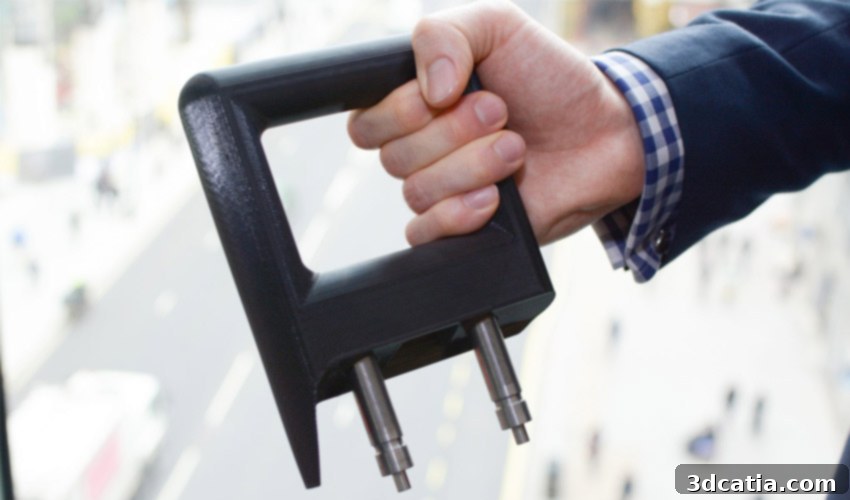
The initial set of components that have received approval for 3D printing includes vital interior elements such as ergonomic armrests, robust grab handles, and functional seat-back tables. These specific parts, which are integral to both passenger comfort and safety within train carriages, are being meticulously manufactured on state-of-the-art Stratasys FDM machines. Fused Deposition Modeling (FDM) is a highly reliable and widely adopted additive manufacturing technology that builds parts layer-by-layer from a continuous filament of thermoplastic material. It is celebrated for its ability to produce strong, functional prototypes and durable end-use parts, making it perfectly suited for demanding industrial applications.
A paramount factor in the successful implementation of this advanced technology within the demanding and highly regulated railway environment is the judicious selection of materials. Angel Trains has specifically chosen to utilize the Stratasys Antero 800NA filament. This high-performance, PEKK (Polyetherketoneketone)-based thermoplastic material has been meticulously engineered to meet and exceed the stringent safety and operational standards mandated by the global rail industry. Antero 800NA offers a superior combination of mechanical properties compared to conventional thermoplastics, including exceptional strength-to-weight ratio, remarkable stiffness, high chemical resistance, and outstanding thermal stability. Furthermore, its compliance with crucial rail certifications, particularly concerning fire, smoke, and toxicity (FST) regulations, renders it an ideal and safe choice for interior train components, ensuring both long-term durability and paramount passenger safety.
Driving Innovation to Overcome Industry Constraints
Mark Hicks, Technical Director of Angel Trains, articulated the profound significance of this groundbreaking partnership, stating, “We are proud to be driving this innovation with ESG Rail and Stratasys and hope that this solution will help to free the industry from technological constraints, and allow our trains to continue to meet passengers’ needs now and in the future.” Hicks’ insightful statement perfectly encapsulates the strategic vision underpinning this initiative: to harness the power of 3D printing to effectively overcome the inherent limitations of traditional manufacturing methods that have historically posed significant challenges to the rail sector.
One of the most pressing and pervasive challenges directly addressed by this forward-thinking partnership is the critical issue of part obsolescence. Given the exceptionally long lifecycles of trains – which can often span several decades – the procurement of spare parts for older fleets can become progressively more difficult, time-consuming, and prohibitively expensive. Traditional manufacturing processes typically necessitate costly tooling and often impose restrictive large minimum order quantities, making it economically unfeasible to produce small batches of legacy parts. Additive manufacturing fundamentally transforms this dynamic, enabling agile, on-demand production of exact duplicates or even functionally improved versions of obsolete components, all without the need for expensive or complex tooling or the burden of maintaining vast physical inventories.
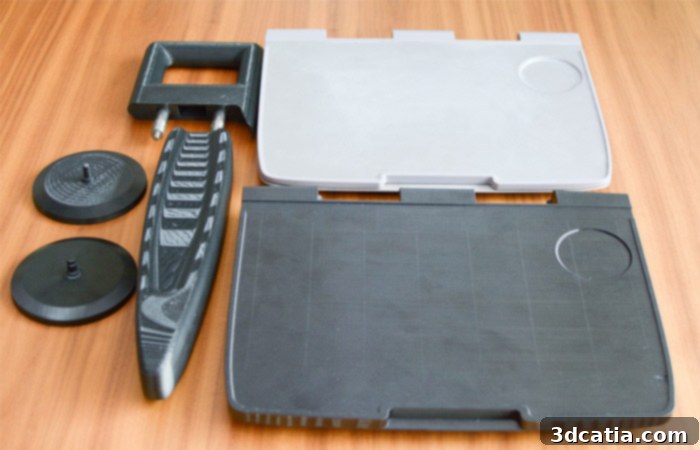
A collection of different 3D printed pieces ready for installation, illustrating the variety of components now feasible for additive manufacturing in modern trains.
The Strategic Advantages of Railway Additive Manufacturing
The primary overarching goal of this groundbreaking partnership is to effectively combat the pervasive problem of part obsolescence, and 3D printing technologies are consistently proving to be the most effective and efficient means to achieve this objective. By digitally manufacturing components, rail operators and maintenance providers can significantly reduce the substantial costs traditionally associated with maintaining and extending the life of older fleets, while simultaneously extending the operational life and utility of their valuable rolling stock. This innovative approach not only optimizes financial expenditure but also substantially enhances the sustainability profile of railway operations by minimizing waste, reducing material consumption, and streamlining logistics.
Furthermore, railway additive manufacturing empowers agile, on-demand production in small, customized series, entirely eliminating the need to manufacture and store large, speculative volumes of parts. This “just-in-time” manufacturing model drastically cuts down on extended lead times, reduces high inventory carrying costs, and frees up valuable storage space, ultimately leading to a more streamlined, responsive, and resilient supply chain. The inherent ability of additive manufacturing to produce complex geometries and lightweight structures also opens new avenues for potential performance enhancements, such as fuel efficiency improvements through weight reduction, although the immediate primary focus of this initiative is on efficient and cost-effective spare parts production.
The initial batch of these innovatively 3D printed parts is slated for rigorous onboard testing within operational trains, commencing in early 2019 and extending through the subsequent summer period. This comprehensive testing phase is absolutely crucial for validating the long-term durability, reliability, and consistent performance of these components under authentic, real-world operating conditions, encompassing varying temperatures, vibrations, and passenger usage. Successful outcomes in these critical trials will undoubtedly pave the way for a much broader adoption of additive manufacturing across Angel Trains’ extensive fleet and will very likely inspire further widespread innovation throughout the global railway industry. For more detailed and in-depth information on this pioneering initiative, interested parties are encouraged to visit the Stratasys website directly, which can be accessed HERE.
The Future Landscape of Rail Innovation and Beyond
This collaborative effort between Angel Trains, ESG Rail, and Stratasys exemplifies a truly forward-thinking and visionary approach to modernizing the railway industry for the 21st century. By wholeheartedly embracing the capabilities of 3D printing, these industry leaders are not merely solving immediate, pressing challenges such as part obsolescence and inherent supply chain inefficiencies; they are actively laying robust groundwork for a cascade of future advancements. Imagine a future where customized interior designs, uniquely tailored to specific routes or passenger demographics, become commonplace. Envision even lighter components contributing to significant increases in energy efficiency and reduced operational costs. Picture dramatically faster turnarounds for essential repairs and vital upgrades—all these possibilities are made tangible by the unparalleled flexibility, precision, and efficiency offered by additive manufacturing.
The journey towards a fully digitized and extensively 3D printed rail ecosystem is demonstrably well underway, with visionary early adopters like Angel Trains leading the charge and setting inspiring precedents. As advanced materials continue to evolve in sophistication and printer capabilities expand exponentially, the scope and impact for additive manufacturing in trains will only grow, promising a future characterized by more resilient, exceedingly cost-effective, and ultimately more passenger-friendly rail services. This initiative stands as a powerful and compelling testament to the truly transformative potential of 3D printing, confidently moving beyond mere prototyping to the production of critical, high-performance end-use components that are essential for ensuring the continued smooth, safe, and efficient operation of our vital national and international transport networks.
What do you envision as the future landscape of railway additive manufacturing? We enthusiastically invite you to share your insightful thoughts, predictions, and unique perspectives in the comments section below, or engage directly with us on our vibrant Facebook and dynamic Twitter pages! Furthermore, don’t forget the opportunity to sign up for our completely free weekly Newsletter, ensuring you receive all the very latest breaking news and most significant developments in the world of 3D printing delivered directly to your inbox!