
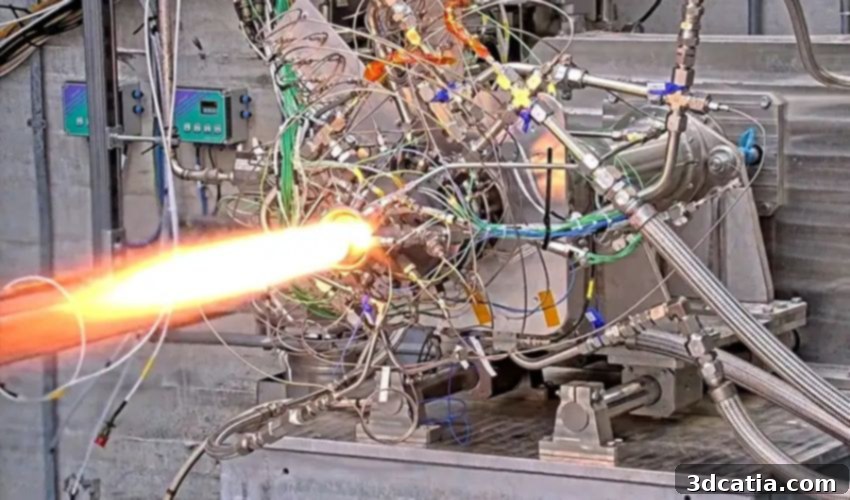
Italian Space Innovation: AVIO’s 3D Printed Green Rocket Engine (MPGE) Successfully Tested
Humanity’s relentless pursuit of unlocking the cosmos continues unabated, and the transformative power of 3D printing is making this ambitious endeavor more accessible and innovative than ever before. Building upon a growing portfolio of projects leveraging additive manufacturing for advanced rocket engines, we witness another significant milestone: Italian aerospace giant AVIO SpA has successfully concluded a rigorous series of tests for its Multi-Purpose Green Engine (MPGE). This groundbreaking bi-propellant rocket engine prominently features Selective Laser Melting (SLM) 3D printing in its core components, signaling a pivotal step forward for sustainable space propulsion.
The development of the MPGE engine is a cornerstone initiative within the Italian government’s extensive PNRR program (National Recovery and Resilience Plan). This strategic program aims to bolster Italy’s growth potential and technological sovereignty across various sectors. Specifically, the MPGE project falls under the critical “Satellite Technologies and Space Economy” theme, representing a key sub-investment dedicated to fostering an robust in-orbit economy. Through such advanced ventures, Italy is strategically enhancing its role and influence in the global Space Race, moving beyond traditional satellite manufacturing to cutting-edge propulsion and logistics. The MPGE, in particular, is designed to significantly augment Italy’s capabilities in the crucial domains of space logistics, enabling more effective Space Situational Awareness (SSA) – the comprehensive monitoring and tracking of objects in orbit – and sophisticated Space Traffic Management (STM), which is essential for preventing collisions and ensuring the sustainability of space operations.
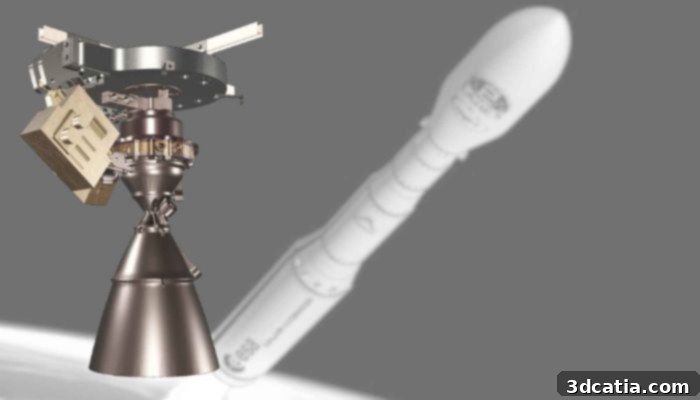
A conceptual image of the MPGE rocket engine, highlighting its innovative design (photo credits: AVIO SpA)
The prestigious MPGE project was entrusted to AVIO under a comprehensive contract from the Italian Space Agency (ASI). AVIO undertook this ambitious development in close collaboration with Sòphia High Tech, a renowned specialist in advanced engineering solutions. This powerful partnership culminated in the successful completion of the bi-propellant rocket’s inaugural ignition tests on February 24, 2025. These tests validated the engine’s design, performance, and overall reliability, marking a critical step towards its eventual qualification for flight. But what advanced manufacturing techniques and materials were employed to bring this high-performance, environmentally conscious engine to fruition?
Harnessing the Power of Hybrid Manufacturing: 3D Printing and Traditional Methods for the MPGE
As previously highlighted, the triumphant testing of the MPGE engine represents a monumental leap forward for Italy’s burgeoning space industry. What makes this achievement particularly noteworthy is the MPGE’s inherent design philosophy centered around environmental sustainability – a core objective to make it significantly ‘greener’ than many conventional rocket engines currently in use. This ecological advantage is primarily achieved through its innovative choice of propellants: a combination of hydrogen peroxide and kerosene. This blend offers a less toxic and more environmentally friendly alternative to traditional propellants, some of which are highly corrosive or produce harmful emissions. Additive manufacturing, specifically 3D printing, played an indispensable role in enabling this advanced and efficient design.
Detailed information provided by Sòphia High Tech, the company responsible for the intricate fabrication of key components such as the combustion chamber, the sophisticated thermal control system, the nozzle extension, and the injection section, confirms the strategic utilization of both cutting-edge 3D printing and precision CNC machining in the MPGE’s development. Sòphia High Tech’s team, with their extensive expertise, employed Selective Laser Melting (SLM) technology. This advanced metal additive manufacturing process has been rigorously qualified to meet and even exceed the stringent ECSS-Q-ST-70-80C standards set by the European Space Agency (ESA). These standards are crucial for aerospace applications, dictating the highest levels of material quality, manufacturing consistency, and component reliability in the extreme conditions of space. The material selected for these critical parts was a high-performance nickel-based alloy, chosen for its exceptional strength, superior heat resistance, and excellent corrosion resistance – properties vital for enduring the intense temperatures and pressures within a rocket engine. While the specific 3D printer model utilized was not explicitly disclosed, AVIO, and the aerospace sector in general, frequently employs the Trumpf TruPrint 3000, making it highly probable that this robust and reliable system was instrumental in fabricating the MPGE’s complex geometries.
The integration of additive manufacturing, while offering unparalleled design freedom for complex internal geometries and lightweighting, necessitated several subsequent stages of meticulous processing and validation to ensure the components met aerospace-grade quality. Beyond the initial 3D printing phase, each mechanical part underwent multiple phases of dimensional control and stringent validation at various stages of its production lifecycle. For instance, critical post-processing steps included specialized heat treatment to relieve internal stresses and optimize material properties, thorough depowdering to remove any residual metal powder from intricate internal channels, and precise mechanical finishing through CNC machining to achieve exceptionally tight tolerances and superior surface finishes. Sòphia High Tech’s commitment to excellence led them to develop their own specialized production cycles. These bespoke processes guaranteed full compliance with the demanding mechanical, geometric, and dimensional tolerances essential for high-performance rocket engine components, ensuring the integrity and reliability of every part produced.
Ultimately, the resounding success of the MPGE project’s testing unequivocally demonstrates the immense advantages of strategically combining additive manufacturing with traditional production techniques to create next-generation rocket parts. This hybrid approach allows for the benefits of 3D printing – such as complex design integration, topology optimization, and rapid prototyping – to be fully realized while ensuring the precision, material integrity, and surface quality that only conventional methods can consistently deliver for flight-critical components. Furthermore, the fact that this entire environmentally friendly engine was conceived, designed, and manufactured within Italy serves as a powerful testament to the formidable strength and innovative capacity of the nation’s advanced manufacturing sector. The MPGE project’s overarching objective is to qualify this innovative propulsion system for a wide range of future space applications, encompassing both primary launch systems for orbital insertion and various orbital and suborbital missions, including in-space maneuvering, satellite de-orbiting, and deep-space probes. Its ‘green’ credentials also align perfectly with the growing global demand for more sustainable and responsible space exploration initiatives.
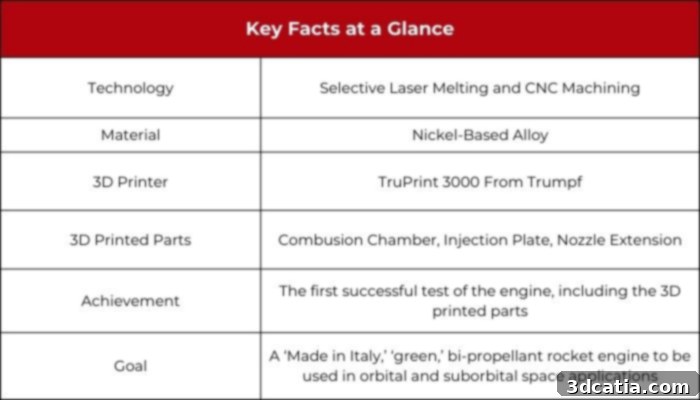
Image Credits: 3Dnatives (depicting conceptual elements of the MPGE)
What are your thoughts on AVIO’s innovative MPGE green rocket engine and its potential impact on sustainable space exploration? We invite you to share your opinions in a comment below or connect with us on our LinkedIn, Facebook, and Twitter pages! Don’t miss out on the latest advancements and news – sign up for our free weekly Newsletter here, delivering the most relevant 3D printing news directly to your inbox every week! You can also explore all our insightful videos and interviews on our dedicated YouTube channel. For more in-depth coverage and breaking news within the aerospace and defense sectors regarding 3D printing applications, we encourage you to check out our specialized page HERE.
*Cover Photo Credits: AVIO SpA, showcasing their visionary work in advanced propulsion systems.