
Top 5 3D Printing Videos: Exploring Groundbreaking Innovations in Additive Manufacturing
Welcome to our weekly dive into the fascinating world of 3D printing and additive manufacturing! Each week, we curate the most impactful and inspiring videos that showcase how this transformative technology is continually evolving and shaping various aspects of our society. From revolutionary developments in additive manufacturing processes to cutting-edge applications across diverse sectors, including medical and automotive, the pace of innovation is relentless. This week’s selection brings you exceptional insights, including Sandvik’s significant investment in titanium powder production for additive manufacturing and much more. Stay informed about the latest trends and breakthroughs by exploring our curated list below. For an even deeper dive into the world of 3D printing, don’t forget to visit our extensive collection of videos on our Youtube channel. We hope you find these innovations as exciting as we do!
1. Sandvik’s New Titanium Powder Plant for Advanced Additive Manufacturing
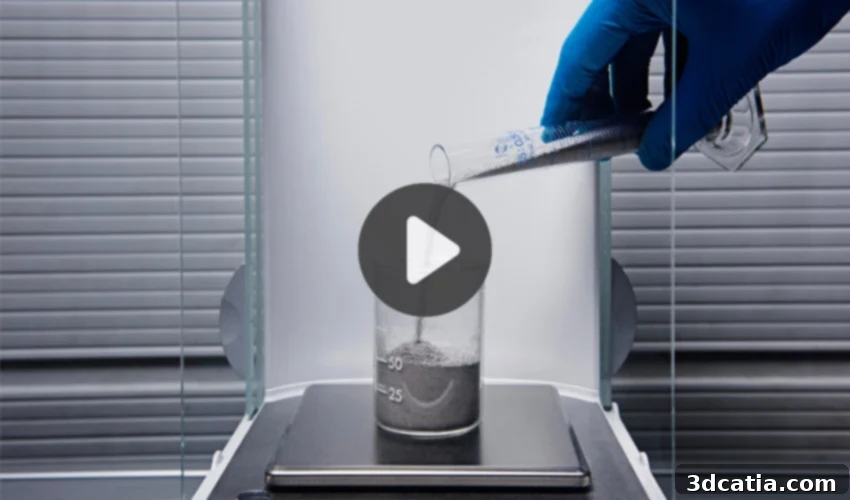
The global leader in advanced stainless steels and specialty alloys, Sandvik, has made a monumental step forward in the metal 3D printing landscape. The Swedish company recently inaugurated its state-of-the-art titanium powder production plant, specifically designed to cater to the demanding requirements of additive manufacturing. This strategic expansion introduces a critical new material to their extensive portfolio, significantly broadening the scope of application opportunities across high-value sectors such as medical, automotive, and aeronautical industries. Titanium is highly prized for its exceptional combination of properties, including its remarkable lightness, superior strength-to-weight ratio, outstanding corrosion resistance, and crucial biocompatibility, making it an ideal material for critical components. The grand inauguration event drew over 150 attendees, who had the unique opportunity to explore a facility meticulously engineered from the ground up to optimize titanium powder production for additive manufacturing. This investment underscores Sandvik’s commitment to advancing industrial 3D printing by ensuring a stable supply of high-quality, specialized powders essential for next-generation designs and components.
2. Exploring Additive Manufacturing at the FHNW School of Engineering
Selective Laser Melting (SLM) stands as one of the most successful and widely adopted production methods within the realm of metal 3D printing. This sophisticated technique utilizes a high-powered laser to selectively melt and fuse metallic powders layer by layer, creating complex and robust metal parts with unparalleled precision. The FHNW Institute of Product and Production Engineering is at the forefront of this technology, boasting extensive expertise and comprehensive know-how that spans the entire development lifecycle of SLM components. Their capabilities extend from the initial conceptual design and advanced simulation, through meticulous production, to thorough material characterization, and ultimately, stringent validation processes. This holistic approach ensures that components produced via SLM meet the highest standards of quality, performance, and reliability. This video offers an exclusive look into the intricate processes and cutting-edge research conducted at FHNW, highlighting their significant contributions to pushing the boundaries of what’s possible with selective laser melting. Understanding each phase of this cycle is crucial for developing functional, optimized parts for various industrial applications.
3. Navigating the Choices: How to Select the Right 3D Printing Technology
In an industry brimming with diverse processes and materials, choosing the optimal 3D printing technology for a specific project can often feel like a daunting task. The myriad of options, particularly within powder bed technologies, requires a deep understanding of each method’s capabilities and limitations. This is precisely where Fast Radius, a leading manufacturing technology company, brings its invaluable expertise to the forefront. Fast Radius specializes in conducting comprehensive project evaluations to determine not only the most suitable additive manufacturing technology but also the most appropriate materials for a given application. Their methodical approach hinges on analyzing three critical factors that profoundly influence this decision-making process. Firstly, the intricate design of the part – its geometric complexity, functional requirements, and intended use – dictates what technologies can even produce it. Secondly, the required properties of the material are paramount; factors like strength, flexibility, thermal resistance, weight, and biocompatibility must align with the application’s demands. Finally, and crucially, the overall cost associated with manufacturing, including machine time, material expenditure, and post-processing, plays a significant role in determining feasibility and scalability. This video provides essential guidance for navigating these complex choices, helping businesses and engineers unlock the full potential of additive manufacturing by making informed decisions tailored to their unique needs.
4. Advanced Manufacturing of Copper Rocket Engines with 3T Additive Manufacturing
3T Additive Manufacturing (3T AM) stands as a prominent production additive manufacturing company, renowned for delivering high-quality 3D printing services to a broad spectrum of industrial sectors. They specialize in producing precision-engineered production parts for end-use applications, alongside providing rapid prototyping services for one-off designs, utilizing a comprehensive range of plastic (polymer) and metal alloys. The aerospace industry, in particular, has seen immense benefits from their expertise, especially when it comes to highly demanding components like rocket engines. In the featured video, you’ll witness a fascinating collaboration between 3T AM, EOS – a leading technology provider for industrial 3D printing – and Launcher, an aerospace company. This partnership aimed to tackle the challenging task of creating a copper rocket engine using advanced additive manufacturing techniques. Copper, with its exceptional thermal conductivity, is an ideal material for rocket engine components that experience extreme heat, such as combustion chambers and nozzles. However, its properties also make it notoriously difficult to process with traditional manufacturing methods. Metal 3D printing, specifically using copper alloys, allows for the creation of incredibly complex internal geometries, including optimized cooling channels that significantly enhance engine performance and efficiency, while simultaneously reducing the part count and lead times. This innovative project highlights the transformative power of additive manufacturing in pushing the boundaries of propulsion technology and accelerating space exploration.
5. Touchable 3D Printed Displays: Empowering the Visually Impaired
Beyond industrial applications, 3D printing continues to inspire groundbreaking innovations that foster accessibility and inclusion. Stanford University researchers have conceptualized and designed a revolutionary touch screen display that aims to make the intricate processes of 3D printing and computer-aided design (CAD) genuinely accessible to individuals who are blind or visually impaired. This project embodies a profound commitment to empowerment, aspiring to grant blind users the unprecedented ability to design and create independently, liberating them from the reliance on visual mediators that often stifle creativity and personal expression. Traditionally, CAD software and 3D printing workflows are heavily visual, presenting significant barriers for those without sight. The ingenious solution developed by Stanford researchers draws inspiration from classic tactile art forms, resembling a modern “Pin Art” display. In this innovative setup, an array of long, rectangular posts dynamically moves from top to bottom, rapidly transcribing a digital 3D shape into a tangible, touchable form within mere seconds. This allows a visually impaired individual to physically interact with and literally “feel” the object they are designing or modifying, providing immediate tactile feedback crucial for understanding spatial relationships and forms. This breakthrough not only opens new avenues for artistic expression and technical design for the blind and visually impaired but also exemplifies how additive manufacturing can be harnessed to bridge sensory gaps and foster a more inclusive technological future.
We hope this week’s selection of top 3D printing videos has provided valuable insights into the dynamic world of additive manufacturing. From industrial breakthroughs in material science and production methodologies to heartwarming innovations promoting accessibility, the potential of 3D printing is truly limitless. We’d love to hear your thoughts on these incredible advancements! Feel free to drop a comment below, or engage with us on our Facebook and Twitter pages. To ensure you never miss out on the latest news, trends, and groundbreaking applications in the 3D industry, make sure to sign up for our free weekly Newsletter, delivered straight to your inbox!