
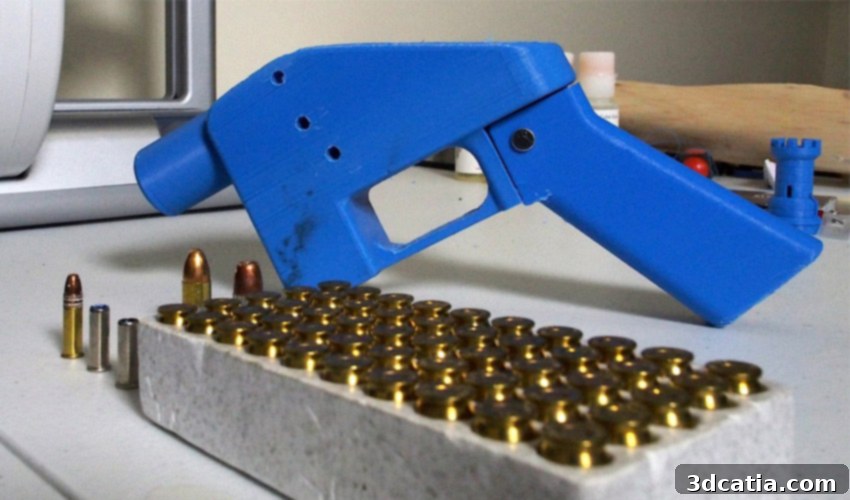
DOJ’s New Regulations Target Ghost Guns and 3D Printed Firearms: Closing the Loophole
The United States Department of Justice (DOJ) has recently unveiled a significant new proposal aimed at modernizing firearm definitions and, crucially, addressing the escalating threat posed by “ghost guns.” This proposed regulation represents a decisive step in the federal government’s ongoing commitment to combat gun violence and enhance public safety across communities. Often assembled from readily available kits or produced using advanced 3D printing technologies, these unserialized firearms have created a substantial regulatory loophole, facilitating their acquisition by individuals legally prohibited from owning guns and complicating law enforcement efforts to trace weapons used in crimes. The Biden-Harris Administration, through the DOJ, emphasizes that this initiative is a vital component of a broader strategy to implement common-sense measures that directly confront the tragic epidemic of gun violence affecting countless American lives. Attorney General Merrick B. Garland underscored this commitment, stating, “taking common sense steps to address the epidemic of gun violence that takes the lives of too many people in our communities.” This move is particularly relevant as the proliferation of these untraceable weapons, combined with the unregulated nature of their production, has led to a concerning rise in their unsanctioned possession and criminal misuse.
The term “ghost guns” refers to privately manufactured firearms that lack the serial numbers mandated for commercially produced weapons. These unmarked firearms are increasingly being recovered at crime scenes nationwide, presenting a formidable challenge for investigators. A primary method for acquiring these weapons involves purchasing incomplete firearm kits, often marketed as “80% receivers” or “unfinished frames,” which can be easily completed at home with minimal tools and technical knowledge. Alternatively, the advent of 3D printing technology has introduced another pathway, allowing individuals to download digital models and print functional firearm components from their own devices. Crucially, both methods often bypass the federally mandated background checks required for purchasing traditional firearms through licensed dealers. This regulatory gap means that individuals prohibited from possessing firearms – including convicted felons, domestic abusers, and those with certain mental health conditions – can readily acquire these untraceable weapons. Attorney General Garland highlighted this critical vulnerability, asserting, “Criminals and others barred from owning a gun should not be able to exploit a loophole to evade background checks and to escape detection by law enforcement.” The Justice Department’s proposed rule aims to rectify this by modernizing the definition of a “frame or receiver,” thereby bringing these privately made, unserialized firearms, including those produced via 3D printing, under federal oversight.
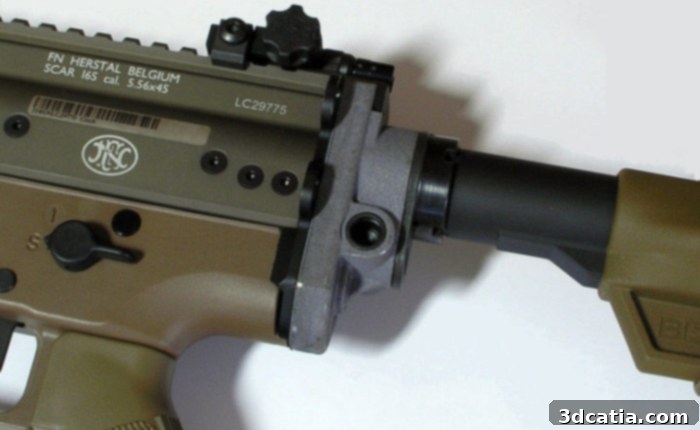
A sintered aluminum SLA (3D printed) of the Reyes adapter MkIV. Photo by Mitch Barrie via Flickr
Addressing the “Ghost Gun” Loophole: Key Provisions of the DOJ’s Proposed Rule
The proposed regulation introduces three fundamental changes designed to curtail the unchecked proliferation of unserialized firearms and enhance public safety. Each provision targets a specific aspect of the ghost gun problem, aiming to close the existing loopholes:
1. Mandating Background Checks for Firearm Kits
The first crucial provision of the proposed rule clarifies that retailers must conduct federal background checks before selling kits that contain the necessary components for an individual to readily assemble a firearm at home. Previously, these kits, often referred to as “80% receiver kits,” fell outside the conventional definition of a “firearm” under federal law, allowing them to be sold without any background checks. This critical aspect of the proposed rule aims to close a significant vulnerability, preventing individuals legally prohibited from owning firearms – such as convicted felons, domestic abusers, and those with specific mental health adjudications – from acquiring weapons through these previously unregulated channels. By mandating background checks for these kits, the DOJ seeks to bring them under the same regulatory umbrella as fully assembled firearms, thereby ensuring that fundamental safety checks are applied consistently across all firearm acquisitions.
2. Requiring Serial Numbers on Firearm Kits
Secondly, the regulation mandates that manufacturers include a unique serial number on the “frame or receiver” component of easy-to-build firearm kits. This requirement is a direct response to the increasing challenge law enforcement faces in tracing ghost guns used in criminal activities. Without serial numbers, investigators hit a dead end, making it nearly impossible to determine the origin of the weapon or its previous owners, which are vital pieces of information in solving violent crimes. By ensuring that even firearm kits contain a serializable component, the rule significantly enhances law enforcement’s ability to trace these weapons back to their point of manufacture or sale. This measure aligns the regulation of firearm kits with that of traditionally manufactured firearms, where serial numbers are a cornerstone of traceability and accountability.
3. Serializing Unserialized Firearms Taken into Inventory by Dealers
Finally, to further reduce the number of untraceable “ghost guns” circulating in communities, the proposed rule sets out requirements for federally licensed firearms dealers. When these dealers acquire an unserialized firearm – whether it’s a 3D-printed gun, a weapon assembled from a kit, or any other privately made firearm without a serial number – they would be legally obligated to engrave or affix a serial number to it before taking it into their inventory. This provision aims to ensure that once a ghost gun enters the legitimate commercial stream, it becomes traceable. This is particularly important for law enforcement agencies who might recover such a firearm and want to track its history if it passes through a licensed dealer. This step closes another gap, preventing previously untraceable weapons from being resold or transferred through legal channels without proper identification.
The Growing Challenge of 3D Printed Firearms
The rapid advancements in 3D printing technology have introduced a new dimension to the ghost gun phenomenon. What once required specialized manufacturing equipment and skills can now, in some cases, be achieved with a consumer-grade 3D printer and readily available online blueprints. These digital files, often shared freely on the internet, provide detailed instructions for printing components that can then be assembled into functional firearms. This accessibility democratizes firearm manufacturing in an unprecedented way, making it incredibly difficult for regulatory bodies to monitor or control. The ability to produce firearms at home, without any interaction with licensed dealers or manufacturers, completely circumvents existing gun laws designed to prevent prohibited individuals from acquiring weapons. This poses a unique challenge: how does one regulate digital information and personal manufacturing without infringing on other rights? The DOJ’s proposed rule implicitly acknowledges this by requiring serialization for any 3D-printed firearm that enters the inventory of a licensed dealer, but the broader issue of purely private 3D printing of firearms remains a complex and evolving area of law and technology.
The Alarming Statistics and Societal Impact
The urgency behind the DOJ’s proposed regulation is starkly underscored by alarming statistics. Between 2016 and 2020 alone, law enforcement agencies across the United States reported the recovery of over 23,000 unserialized firearms from potential crime scenes. This significant figure represents a dramatic increase and highlights the growing presence of these untraceable weapons in criminal activities. More tragically, these firearms were directly linked to 325 homicides and attempted homicides during the same period, illustrating the devastating human cost of this loophole. The inability to trace these weapons not only hinders investigations into violent crimes but also emboldens criminals who understand the difficulty law enforcement faces in tracking their illicit firearms. Beyond the immediate criminal implications, the proliferation of ghost guns erodes public trust in safety measures and creates an environment where illicit firearms can circulate with reduced accountability, directly impacting the well-being and security of communities.
Balancing Safety and Rights: Attorney General Garland’s Perspective
Attorney General Merrick B. Garland articulated the delicate balance the DOJ seeks to strike with this new regulation. He stated, “This proposed rule would help keep guns out of the wrong hands and make it easier for law enforcement to trace guns used to commit violent crimes, while protecting the rights of law-abiding Americans. Although this rulemaking will solve only one aspect of the problem, we have an obligation to do our part to keep our families and our neighborhoods safe from gun violence.” This statement reflects the administration’s acknowledgment that while comprehensive solutions to gun violence require multifaceted approaches, addressing the ghost gun loophole is a crucial and actionable step. The DOJ aims to enhance public safety by limiting access to untraceable weapons for prohibited individuals, thereby empowering law enforcement to more effectively investigate and prosecute crimes, all while safeguarding the Second Amendment rights of responsible gun owners. The emphasis is on common-sense gun safety measures that target specific vulnerabilities exploited by criminals, rather than imposing broad restrictions on law-abiding citizens.
Public Engagement and the Path Forward
Following its publication in the Federal Register, the proposed rule initiated a vital 90-day period during which the public is invited to submit comments. This open consultation process allows stakeholders, including gun rights advocates, law enforcement groups, manufacturing associations, and concerned citizens, to provide feedback, raise concerns, and offer perspectives on the proposed changes. This period is crucial for ensuring that the final rule is well-considered, comprehensive, and addresses a wide range of viewpoints. The input gathered during this phase will be carefully reviewed by the DOJ and the Bureau of Alcohol, Tobacco, Firearms and Explosives (ATF) before a final regulation is issued. This transparency and opportunity for public discourse are fundamental to the democratic process, ensuring that significant policy changes are subjected to thorough scrutiny and public opinion. Those interested in delving deeper into the specifics of the proposal can access the full press release directly from the Justice Department’s website HERE.
What are your thoughts on the Justice Department’s proposal to close the “Ghost Guns” loophole, particularly concerning the regulation of 3D printed firearms and firearm kits? We invite you to share your perspective in the comments section below or engage with us on our social media platforms. Join the conversation on ourFacebook,Twitter andLinkedIn pages! For the latest updates and insightful analysis on 3D printing news, make sure to sign up for our free weeklyNewsletter here, delivered straight to your inbox!
*Cover picture credits: Robert MacPherson/AFP/Getty