
Aurora Labs Secures Pivotal ADF Contract: Pioneering 3D Printed Aircraft Propulsion for Australian Defense
The landscape of modern defense is continually reshaped by technological advancements, and few innovations have proven as transformative as additive manufacturing (AM), commonly known as 3D printing. This disruptive technology offers unparalleled capabilities for rapid prototyping, on-demand production, and the creation of highly complex, lightweight components. Its utility in the defense sector has become a subject of increasing focus globally, with numerous nations exploring its potential to enhance military readiness, optimize supply chains, and foster sovereign capabilities. In a significant development from Australia, Aurora Labs, a leading innovator in metal additive manufacturing, has announced a substantial contract with the Australian Defence Force (ADF). This agreement, valued at $319,000, marks a pivotal step towards developing a cutting-edge 3D printed aircraft propulsion system, further solidifying AM’s critical role in Australia’s strategic defense initiatives.
The ADF’s Strategic Embrace of Additive Manufacturing
This latest partnership is not an isolated incident but rather a testament to the Australian Defence Force’s persistent and growing interest in leveraging additive manufacturing technologies. The ADF has been proactively integrating 3D printing into its operations and strategy for several years, recognizing its potential to revolutionize logistics, maintenance, and equipment development. A notable instance occurred in 2021 when the Australian Army collaborated with SPEE3D to conduct rigorous field tests of 3D printed metal parts for armored vehicles. These tests demonstrated the viability of producing robust, mission-critical components rapidly in challenging operational environments, highlighting AM’s capacity to enhance resilience and reduce reliance on traditional supply chains.
More recently, in a move to foster innovation from within, the ADF has encouraged its service personnel to engage with 3D printing technologies. This initiative materialized through the establishment of a dedicated ‘MakerSpace’ at Latchford Barracks, providing soldiers with direct access to 3D printers and the opportunity to develop their own solutions for various operational challenges. Such programs underscore a forward-thinking approach by the ADF, aiming to cultivate a culture of innovation and hands-on problem-solving among its ranks. The contract with Aurora Labs, therefore, serves as a powerful affirmation of the sustained importance of additive manufacturing within the Australian defense sector, while also spotlighting the impressive growth and specialized capabilities of Aurora Labs itself.
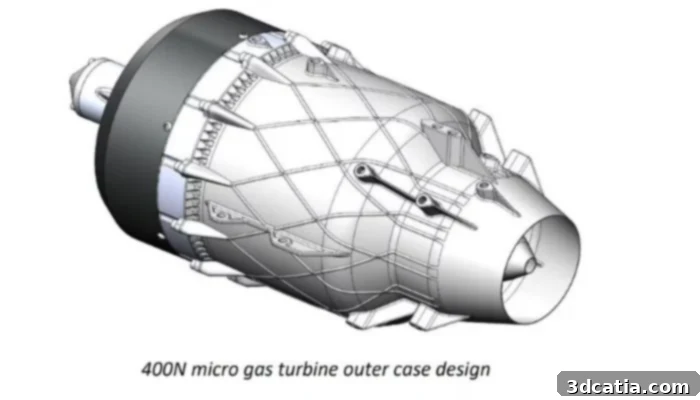
A schematic of the potential 3D printed design from Aurora Labs (photo credits: Aurora Labs)
The Aurora Labs Contract: Strengthening Sovereign Capabilities
The details surrounding the contract between Aurora Labs and the ADF illuminate its strategic significance. According to a statement released by Aurora Labs, the core benefits of this agreement extend far beyond the financial remuneration. Key highlights emphasize the profound ability to strengthen Australia’s sovereign defense capabilities. This means developing and manufacturing critical technology domestically, reducing dependence on foreign suppliers, and ensuring a secure, localized supply chain for vital defense components. This aspect is particularly crucial in an era of complex global geopolitics, where technological self-reliance is a strategic imperative for national security.
Furthermore, the contract is poised to significantly accelerate defense innovation through rapid prototyping. Additive manufacturing inherently allows for quick design iterations and the production of functional prototypes in a fraction of the time and cost associated with traditional manufacturing methods. This agility is invaluable in the fast-paced world of defense technology, enabling faster development cycles for new systems and more responsive upgrades to existing ones. A particularly advantageous clause for Aurora Labs is the retention of intellectual property (IP) rights for potential future commercialization. This not only incentivizes innovation but also positions Aurora Labs to expand its market reach and contribute further to the broader aerospace and defense industries, both domestically and internationally. This forward-thinking approach to IP management ensures that Australian-developed technology can generate long-term economic benefits and foster a vibrant local advanced manufacturing ecosystem.
Aurora Labs’ Expertise in Advanced Propulsion Systems
The focus of this landmark contract is the development of an advanced aircraft propulsion system, building upon Aurora Labs’ significant prior advancements in micro gas turbine technology. This is an area where Aurora Labs, also known as A3D, has demonstrated remarkable success and garnered considerable attention in recent months. Their expertise in designing and manufacturing high-performance, compact turbine engines positions them uniquely to tackle the intricate challenges of modern aircraft propulsion. The company has invested heavily in research and development, particularly in metal additive manufacturing processes, to achieve these breakthroughs.
A notable achievement came back in July, when Aurora Labs proudly announced the maiden flight of its 200 Class 3D printed micro gas turbines. This milestone was a clear demonstration of their technical prowess and the viability of their additive manufacturing approach for critical aerospace components. These turbines, fabricated using sophisticated metal laser powder bed fusion (L-PBF) techniques, showcased an impressive thrust capability of 22kg. This level of performance from a 3D printed unit underscores the potential for AM to deliver lightweight yet powerful propulsion solutions with complex internal geometries that are difficult or impossible to achieve with traditional methods. With the new funding secured through the ADF contract, Aurora Labs is expected to not only replicate this success but also to significantly enhance and optimize the performance of these engines, pushing the boundaries of what is achievable with additive manufacturing in aerospace applications for defense.
The Transformative Potential of Additive Manufacturing in Aerospace Propulsion
The decision by the ADF to invest in additive manufacturing for propulsion systems through Aurora Labs is a strategically insightful one, highlighting the unique and transformative capabilities of this technology within the aerospace and defense sectors. Traditional manufacturing methods often face limitations when it comes to producing the intricate geometries, internal cooling channels, and complex lightweight structures essential for high-performance turbine engines. Additive manufacturing, however, excels in these very areas. It allows for design freedom that was previously impossible, enabling engineers to create parts with optimized topology, reducing weight while maintaining or even increasing structural integrity and thermal efficiency. This capability is paramount for components operating under extreme conditions, such as those found in aircraft engines.
For aircraft propulsion systems, this translates into several critical advantages. Lighter engines contribute directly to increased fuel efficiency, extended range, and greater payload capacity for aircraft, which are vital for military operations. The ability to integrate complex internal features means improved cooling, leading to higher operating temperatures and, consequently, greater engine performance and durability. Furthermore, AM can consolidate multiple parts into a single, complex component, reducing assembly time, simplifying supply chains, and minimizing potential points of failure. This ‘parts consolidation’ is a game-changer for intricate systems like jet engines, where dozens or hundreds of individual components might traditionally be machined and then painstakingly assembled. With AM, many of these can be printed as one integrated unit, leading to fewer interfaces and enhanced reliability.
Moreover, the rapid prototyping capabilities inherent in AM are invaluable for developing and iterating on propulsion system designs. The ability to quickly test and refine new designs significantly shortens the development cycle, allowing the ADF to field advanced technologies faster and maintain a competitive edge. This contract, therefore, not only showcases the growing adoption of additive manufacturing in Australia’s aerospace and defense landscape but also underscores a clear understanding of AM’s distinct advantages in pushing the boundaries of propulsion technology. It positions Australia as a leader in leveraging this advanced manufacturing technique for critical defense applications.
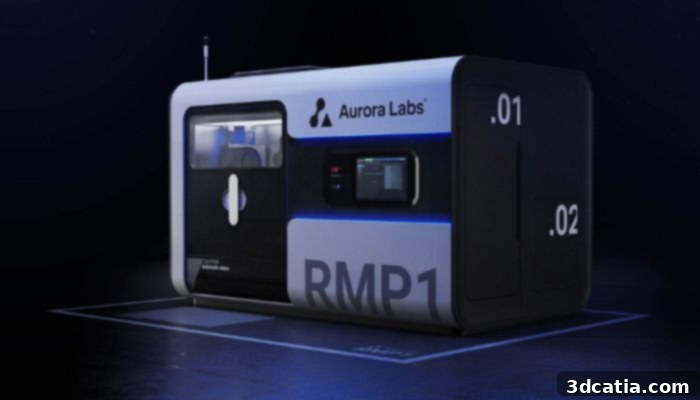
The RMP1 metal AM solution from Aurora Labs, one of the company’s offerings (photo credits: Aurora Labs)
Future Horizons and Strategic Implications
With the contract term extending until June 30th, 2025, Aurora Labs has a clear roadmap to advance its propulsion system capabilities. The company anticipates that this development program will not only lead to the successful creation of the specified aircraft propulsion system but also significantly broaden the scope of propulsion solutions it can offer to its diverse customer base. This strategic expansion is expected to unlock even more diverse applications for their technology, including critical advancements in unmanned aerial systems (UAS) platforms, often referred to as drones. UAS are increasingly vital in modern defense and commercial operations, requiring compact, efficient, and reliable propulsion systems, an area where Aurora Labs’ 3D printed micro gas turbines are exceptionally well-suited due to their high power-to-weight ratio and design flexibility.
Rebekah Letheby, CEO of A3D (Aurora Labs), eloquently summarized the significance of this achievement, stating, “This contract signifies a major milestone in our commitment to defense innovation and underscores our capabilities in delivering high-performance, locally manufactured propulsion systems. We are thrilled to support the ADF innovation initiative and look forward to the success of the system in this proof of concept first stage.” Her statement reinforces the company’s dedication to supporting Australia’s defense objectives and highlights the importance of localized manufacturing to bolster national security and technological independence. The ‘proof of concept’ phase indicates a foundational step, paving the way for further development and eventual deployment of these advanced systems into operational use. The ability to locally produce these high-tech components ensures supply chain security and reduces reliance on international partners, a critical factor for any modern military.
Global Context: Additive Manufacturing in Defense Worldwide
Beyond the shores of Australia, the integration of additive manufacturing into defense strategies is a global phenomenon. Major powers like the United States, the United Kingdom, and various European nations are heavily investing in AM to enhance their military capabilities. Applications range from spare parts production in remote locations to manufacturing advanced components for fighter jets, naval vessels, and ground vehicles. The ability to produce parts on demand reduces logistical footprints, minimizes lead times for critical spares, and enables rapid design changes for performance upgrades. This international trend validates the ADF’s strategic direction and positions Australia at the forefront of defense innovation through its collaborations with companies like Aurora Labs, showcasing a forward-thinking approach to modern military readiness and technological superiority.
The global defense sector recognizes that AM offers not just manufacturing advantages but also strategic ones, allowing for greater autonomy in production and reducing the vulnerability of extended supply lines. As nations increasingly prioritize agile manufacturing and resilient supply chains, partnerships such as that between Aurora Labs and the ADF become models for future defense procurement and innovation worldwide. This collaborative effort ensures that Australian defense forces will be equipped with state-of-the-art technology, developed and manufactured on home soil, securing both economic and strategic advantages.
The contract awarded to Aurora Labs by the Australian Defence Force is more than just a financial agreement; it represents a significant leap forward in the application of advanced manufacturing for national defense. It underscores Australia’s commitment to fostering sovereign technological capabilities, accelerating innovation, and leveraging the unparalleled advantages of 3D printing for critical aerospace components. As Aurora Labs continues its work on these next-generation aircraft propulsion systems, the successful outcome promises to enhance the ADF’s operational readiness, reduce its reliance on external supply chains, and solidify Australia’s position as a leader in defense additive manufacturing. This partnership is a clear indicator of the future trajectory of defense technology, where agility, innovation, and localized production will be paramount.
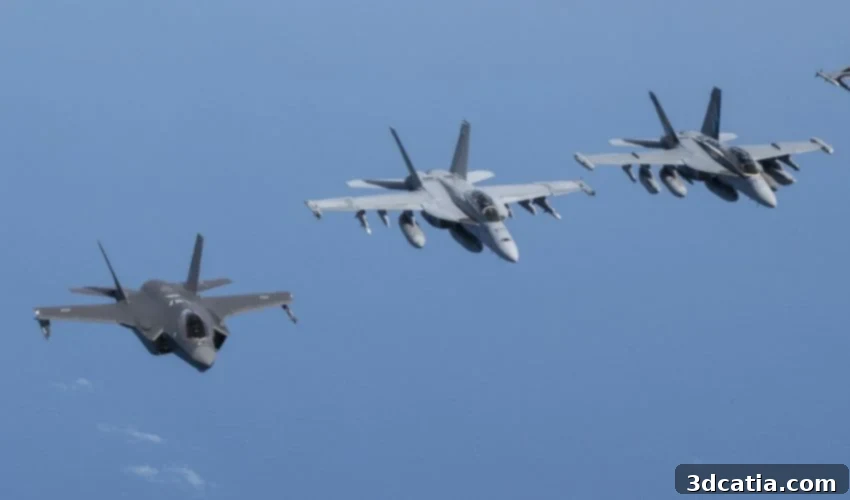
*Cover Image: Royal Australian Air Force combat aircraft flying in formation (photo credits: Tech. Sgt Hailey Haux/U.S. Air Force)