
From Paralysis to Play: How 3D Printing Enabled a Miracle Recovery for Arthur the Cockapoo
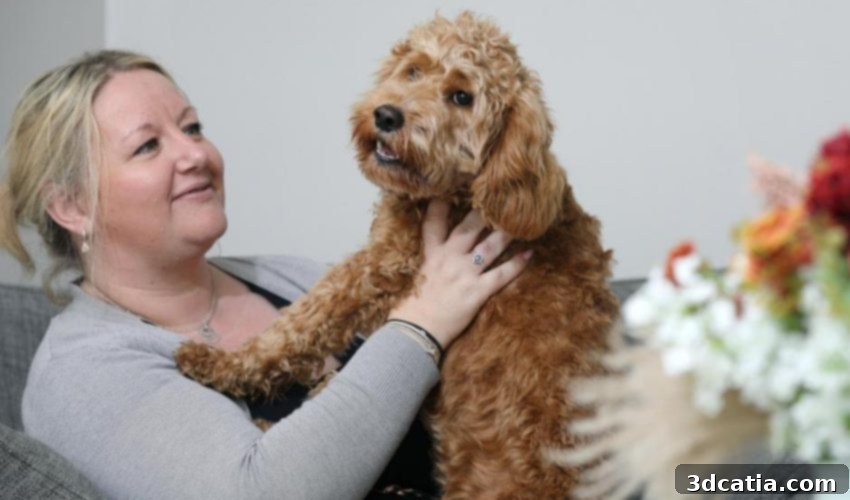
In a heartwarming and scientifically advanced triumph of veterinary medicine, Arthur, a six-month-old Cockapoo from Chester, UK, has made a remarkable journey from complete paralysis to full mobility. His extraordinary recovery, which saw him regain the ability to walk and play, was made possible through the innovative application of 3D printing technology. This cutting-edge solution involved the design and implantation of custom 3D printed spinal screws and surgical cement, a collaborative effort between the renowned Chestergates Veterinary Hospital and specialized implant manufacturer, Fusion Implants.
Arthur’s ordeal began abruptly when he suddenly collapsed, losing all sensation and movement in his limbs. His owner, Natalie, faced every pet owner’s worst nightmare as her beloved puppy became weak and unresponsive. A visit to a local veterinarian offered a grim prognosis, highlighting the severity of his condition. Determined to find a solution, Natalie promptly sought specialist care at Chestergates Veterinary Hospital, a leading center for veterinary neurology in the UK. There, a dedicated team of expert veterinary neurologists, under the meticulous guidance of surgeon Rocio Orlandi, conducted thorough diagnostic imaging, including advanced MRI scans and X-rays. These examinations revealed the root cause of Arthur’s paralysis: a severe instability between his first and second cervical vertebrae (C1 and C2). This critical instability was causing significant compression of his spinal cord, leading to the devastating neurological symptoms he presented.
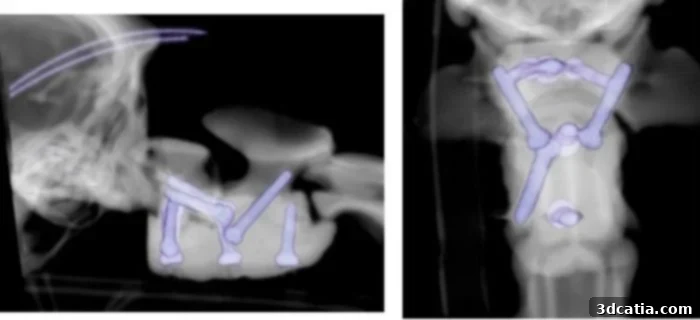
Addressing such a delicate and life-threatening condition required an innovative approach. The team at Chestergates recognized the limitations of standard implants for Arthur’s unique anatomy and quickly formulated a plan. They forged a crucial partnership with Fusion Implants, a specialist in advanced orthopedic solutions based in Liverpool, to engineer bespoke 3D printed spinal screws and surgical cement specifically tailored to Arthur’s precise spinal structure. This personalized approach was vital for achieving optimal stability and minimizing risks. Rocio Orlandi underscored the gravity of the situation, stating, “Arthur’s condition was very serious, as these bony abnormalities could potentially be life-threatening due to their proximity to the brainstem. The use of 3D printed technology enhances the accuracy of this complicated surgery, significantly improving Arthur’s prognosis.” The ability to create patient-specific implants through additive manufacturing was not just an advantage; it was a game-changer for Arthur’s chances of recovery.
The process of creating these custom implants began with detailed imaging data from Arthur’s MRI and CT scans. These digital blueprints allowed engineers at Fusion Implants to meticulously design screws and a stabilizing cement application that would perfectly conform to Arthur’s small and complex cervical spine. This level of precision is virtually impossible with conventionally manufactured implants, which often require extensive intra-operative adjustments, increasing surgical time and potential complications. The 3D printing process, typically utilizing biocompatible materials like titanium alloys for screws, allowed for rapid prototyping and production of these vital components, ensuring that Arthur received the most appropriate and effective surgical solution without undue delay.
Natalie recounted the initial stages of this daunting period, expressing immense relief despite the gravity of the situation: “Upon arrival at Chestergates, we were seen within minutes. The vets were so calm, which was a huge reassurance. We had no option but for Arthur to have surgery.” Her words highlight the immediate and compassionate care Arthur received, reinforcing trust in the veterinary team during a highly stressful time. The decision for surgery, while profound, was the only viable path to restore Arthur’s quality of life and potentially save it.
Before the intricate four-hour operation, Arthur was hospitalized and fitted with a specialized body brace. This crucial pre-surgical measure served to immobilize his neck and prevent any further damage to his already compromised spinal cord, a testament to the comprehensive care protocol at Chestergates. A week later, he underwent the meticulous surgical procedure. The customized 3D printed components – the tiny, yet robust, spinal screws and surgical cement – were carefully implanted into his spine. The precision afforded by these custom-designed parts was paramount, allowing the surgical team to stabilize the unstable vertebrae with unprecedented accuracy. The surgery was a resounding success, marking the critical first step on Arthur’s challenging road to recovery. Natalie shared her overwhelming relief: “Five hours later, I received the call he’d made it through. He was discharged three days later, tail wagging. We were so pleased, but having such a poorly dog was scary. He had a brace from stomach to head, was unable to use his limbs, and needed 24-hour care.” This period required immense dedication from Natalie, providing round-the-clock care to ensure Arthur’s comfort and initial healing.
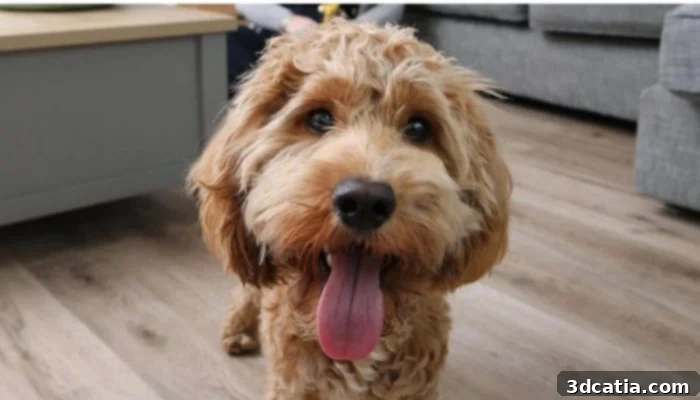
Arthur’s journey post-surgery was a testament to his resilience and the effectiveness of the treatment. Just three weeks later, defying expectations, Arthur managed to take his very first steps alone. While still fragile and requiring support, this milestone was a powerful indicator of the successful spinal stabilization and the beginning of neurological recovery. His full rehabilitation was meticulously planned and executed through a comprehensive physiotherapy regimen. This involved a combination of exercises, hydrotherapy, and specialized movements designed to strengthen his muscles, improve coordination, and restore proprioception. Within an astonishing three months of the surgery, Arthur had not only recovered but had regained full mobility, returning to his playful, energetic self, a true testament to the power of advanced veterinary intervention combined with dedicated rehabilitation.
Arthur’s remarkable story is far from an isolated incident; it exemplifies a growing trend in veterinary medicine where 3D printing is rapidly becoming an indispensable tool. Additive manufacturing offers unparalleled advantages for creating patient-specific solutions, from complex orthopedic implants like Arthur’s spinal screws to customized prosthetics for animals who have lost limbs. This technology allows veterinary surgeons to plan and execute procedures with greater precision, creating surgical guides, models for pre-operative planning, and even custom skull or jaw implants for reconstructive surgery. The ability to tailor implants to the exact anatomical requirements of each animal significantly reduces surgical time, minimizes complications, and leads to superior long-term outcomes, fundamentally improving animal welfare. As the cost of 3D printing technology becomes more accessible and materials continue to evolve, its adoption in veterinary surgical procedures is expected to expand even further, promising a future of increasingly personalized and effective treatments for our beloved pets.
Chestergates Veterinary Hospital, celebrating its 20th anniversary, continues to solidify its reputation as a vanguard in UK veterinary neurology. Their proactive embrace of innovative technologies, demonstrated by Arthur’s case, highlights their commitment to pushing the boundaries of what’s possible in animal healthcare. By pioneering new treatments and collaborating with specialists like Fusion Implants, Chestergates remains at the forefront of delivering advanced, life-changing care. To delve deeper into the pioneering work and remarkable achievements of Chestergates Veterinary Hospital, you can explore their resources by clicking here.
What are your thoughts on the revolutionary use of 3D printing to restore this puppy’s mobility and enhance veterinary care? We invite you to share your insights and comments below, or engage with us on our LinkedIn, Facebook, and Twitter pages! For the very latest advancements and news in the dynamic world of 3D printing delivered directly to your inbox, don’t forget to sign up for our free weekly newsletter here. You can also discover a wealth of educational and informative content by visiting all our videos on our dedicated YouTube channel.
*All Photo Credits: ChesterGates Veterinary Specialists