
Revolutionizing Manufacturing: Key Innovations in 3D Printing from Automotive to Aerospace
This week, our 3DExpress special dives deep into groundbreaking advancements shaping the future of additive manufacturing. We’ll explore how French 3D printing service ERPRO has partnered with carmaker Alpine to create innovative, bio-elastomer headrests for their electric sports car, pushing the boundaries of sustainable automotive design. Next, we unveil AddUp’s ambitious MASSIF project, a collaborative endeavor aimed at developing a significantly larger and more environmentally friendly metal 3D printing process, promising a new era for industrial-scale additive manufacturing. We also shine a spotlight on Solukon’s revolutionary depowdering solution, specifically designed for massive metal parts, tackling a critical bottleneck in post-processing. Furthermore, we’ll examine Mehler Protection’s PROTEC3D line, which leverages 3D printing for advanced ballistic protection, and discover Nikon’s new powder feed system for its DED machines, unlocking unprecedented material versatility for various industries. Join us as we explore these exciting developments that are setting new benchmarks across diverse sectors.
ERPRO Propels Alpine’s Electric Future with 3D-Printed Bio-Elastomer Headrests
Building on a strong foundation of innovative design, French 3D printing service ERPRO, renowned for its work on accessories like those for the Peugeot 308, has now embarked on a pioneering collaboration with the prestigious car manufacturer Alpine. This partnership marks a significant milestone in automotive innovation, focusing on Alpine’s highly anticipated 100% electric sports car, the A390_β. A standout feature of this futuristic vehicle is its custom-designed, 3D-printed headrests. These components are not merely aesthetic; they represent a leap forward in material science and sustainable manufacturing, produced using the Selective Laser Sintering (SLS) process. This advanced additive manufacturing technique is perfectly suited for creating intricate geometries and lightweight structures with high precision, allowing for design freedom that traditional manufacturing methods simply cannot match.
The choice of material for these headrests is equally significant. ERPRO utilized the bio-sourced Pebax® Rnew® elastomer, a cutting-edge material developed by Arkema. This bio-elastomer offers a unique combination of flexibility, durability, and a reduced environmental footprint, aligning perfectly with Alpine’s vision for sustainable luxury and performance. The use of a bio-sourced material underscores a commitment to eco-conscious engineering without compromising on performance or design integrity. Such materials are crucial for automotive manufacturers aiming to meet increasingly strict environmental regulations while providing consumers with superior products. Furthermore, the headrests are encapsulated within a transparent material, cleverly designed to evoke the appearance of ice blocks. This aesthetic choice is a direct inspiration from nature, with the car manufacturer drawing specifically from the majestic beauty of the Alps to develop the unique visual identity of its new show car. This thoughtful integration of natural elements, advanced materials, and state-of-the-art 3D printing truly sets a new standard for automotive interior design, showcasing the immense potential of additive manufacturing in creating both functional and aesthetically striking components that reflect a brand’s core values.
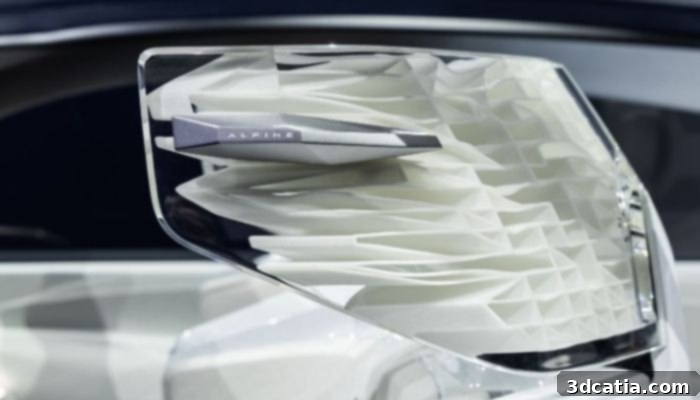
Photo Credits: Alpine
AddUp Unveils MASSIF Project: Pioneering XXL Metal 3D Printing for Industrial Scale
AddUp, a leading manufacturer of advanced metal 3D printing solutions, has recently announced a monumental development project that promises to redefine the landscape of industrial additive manufacturing. This ambitious initiative, aptly named MASSIF (Metal Additive System, Sustainable, Industrial, Eco-Friendly), is spearheaded by AddUp and a consortium of strategic partners. The core objective of MASSIF is to engineer and deploy a new generation of large-format metal 3D printing machines that will dramatically enhance industrial productivity and expand printing capacity to unprecedented levels. This project is a direct response to the growing industry demand for larger, more complex metal components produced efficiently and sustainably, addressing the limitations of existing metal additive manufacturing systems.
The MASSIF project has outlined incredibly clear and ambitious objectives that underscore its transformative potential. These include a staggering +300% increase in productivity, a printing volume that is 12 times greater than AddUp’s current top-tier 3D printers, and a significant commitment to sustainability with a target of 10% less metal waste generation. Achieving these metrics would not only allow for the production of much larger parts with reduced lead times but also significantly lower manufacturing costs and environmental impact, making metal additive manufacturing a more viable and attractive option for high-volume industrial applications in various heavy industries. The development of this cutting-edge metal machine is a collaborative effort involving a powerhouse of industry leaders, each contributing their specialized expertise: Cailabs, known for its expertise in photonics and advanced optical technologies crucial for laser systems; CETIM, a leader in mechanical engineering innovation and industrial process optimization; Dassault Systèmes, a global giant in 3D design software, simulation, and product lifecycle management; ISP Systems, specializing in advanced industrial process integration and automation; and Vistory, providing secure data management solutions essential for intellectual property protection and digital manufacturing workflows. This diverse partnership brings together a wealth of knowledge across materials science, laser technology, software integration, and manufacturing processes, ensuring a holistic approach to tackling the complexities of large-scale metal AM.
Julien Marcilly, CEO of AddUp, emphasizes the strategic importance of this collaboration and the broader vision of the MASSIF project. He states: “It was the association of the best experts, each in their field, that allowed us to launch the MASSIF project. This technological leadership in large-scale metal 3D printing will enable us to meet the challenges of energy transition and productivity for aeronautics, defense and space players, always in a co-design approach by AddUp with its clients.” Marcilly’s statement highlights the project’s intent to address critical challenges faced by demanding sectors such as aeronautics, defense, and space, where the ability to produce large, lightweight, and high-performance metal components with superior material properties is paramount for innovation and operational efficiency. The “co-design approach” further ensures that the technology will be tailored to meet specific client needs and industry requirements, fostering rapid innovation and accelerating the adoption of large-scale metal additive manufacturing across industries that require robust, high-precision metal parts for critical applications.
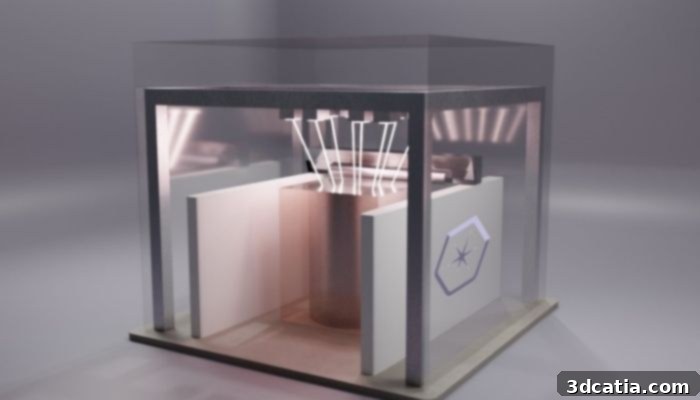
Illustration of the MASSIF concept (photo credits: AddUp)
Solukon Revolutionizes Post-Processing with SFM-AT1500-S for Mammoth Metal Parts
Post-processing remains a critical, and often challenging, step in the additive manufacturing workflow, particularly when dealing with large and intricate metal components. Efficiently removing unbound metal powder from complex internal structures is crucial for part quality, safety, and powder recycling. Addressing this industry-wide hurdle, Solukon, a renowned German manufacturer specializing in advanced post-processing solutions, has recently unveiled its latest innovation: the SFM-AT1500-S system. This groundbreaking machine is engineered for the fast and highly efficient depowdering of metal parts, dramatically improving the safety, speed, and consistency of the post-build cleaning process. The SFM-AT1500-S utilizes Solukon’s signature Smart Powder Recuperation Technology (SPR®), which employs targeted vibration and automated rotation to thoroughly clean parts, ensuring minimal residue and maximizing powder recovery for subsequent reuse, thereby contributing to both cost-efficiency and sustainability.
What truly sets the SFM-AT1500-S apart and makes it particularly interesting for the burgeoning large-format additive manufacturing sector is its unprecedented capacity to handle colossal parts. This machine is Solukon’s largest to date, boasting the capability to process components weighing an astonishing over 2 tons. Specifically, it can accommodate parts measuring up to 600 x 600 x 1,500 mm or, alternatively, 820 x 820 x 1,300 mm, with a total admissible weight of 2,100 kilograms including the build plates. This immense capacity directly addresses a significant bottleneck in the production of large metal 3D-printed parts, which previously required extensive, labor-intensive, and often hazardous manual depowdering, or were simply too large for any automated solutions. By automating the depowdering of such heavy and substantial components, Solukon is not only boosting productivity and throughput for manufacturers but also significantly enhancing workplace safety by reducing human interaction with fine metal powders. This also ensures a higher quality and more consistent finish for critical applications in industries like aerospace, defense, energy, and heavy machinery, where part integrity is paramount. The solution is currently undergoing rigorous testing by two prominent 3D printer manufacturers, a testament to its readiness for industrial market integration and its potential to unlock new possibilities for large-scale metal additive manufacturing. The SFM-AT1500-S is set to make its highly anticipated public debut at the Formnext trade show, scheduled from November 19 to 22, where it is expected to garner significant attention from industry professionals eager to streamline their post-processing workflows.
Mehler Protection’s PROTEC3D: Advancing Ballistic Solutions with Additive Manufacturing
Mehler Protection, a leading German company at the forefront of defense technology and protective solutions, has introduced PROTEC3D, an innovative line of ballistic protection solutions that fundamentally redefines how protective gear is designed and manufactured. This new range leverages the transformative power of 3D printing, specifically Selective Laser Melting (SLM), to achieve unprecedented levels of design flexibility and significant reductions in component weight, critical factors in military and security applications where every gram and every millimeter counts. Traditional manufacturing methods often impose severe limitations on geometry, internal structures, and material distribution, but SLM allows for the creation of incredibly complex internal lattice structures, cellular designs, and optimized geometries that were previously impossible to produce with conventional techniques like machining or casting.
By utilizing SLM printers, Mehler Protection is able to create intricate structures with unparalleled precision, guaranteeing consistent and highly customized ballistic resistance. This means that protection can be tailored precisely to specific threat levels, mission requirements, and vehicle designs, optimizing both safety and overall system performance while minimizing unnecessary bulk and weight. The unique capability of 3D printing to build parts layer by layer from metal powder enables the seamless integration of advanced features such as sophisticated cooling channels for heat dissipation or precise mounting points and attachment interfaces directly within the protective components during a single manufacturing process. This integration not only significantly improves the structural integrity and overall durability of the products by reducing assembly steps and potential failure points but also simplifies logistics and reduces the total number of parts, leading to more robust, efficient, and reliable solutions in demanding operational environments. PROTEC3D solutions are being developed to meet the stringent requirements of STANAG 4569, a crucial NATO standardization agreement that defines protection levels for occupants of logistics and light armoured vehicles against various threats. This strict adherence underscores the high level of reliability, effectiveness, and interoperability of Mehler Protection’s offerings. The company is actively applying this cutting-edge technology to expand its product range, extending its application to military vehicles, ships, fixed installations, and other critical environments where superior ballistic protection combined with lightweight design and multi-functional integration are paramount. PROTEC3D represents a paradigm shift in defense manufacturing, offering bespoke, high-performance protection solutions that enhance safety and operational efficiency on the modern battlefield.
Nikon Elevates Material Science with New Powder Feed System for LM102A DED Machine
Nikon, a global leader celebrated for its precision optical and photographic products, continues to expand its footprint in the additive manufacturing sector with a significant innovation poised to enhance material capabilities. The company recently announced a groundbreaking enhancement to its Lasermeister 102A metal 3D printing system: the integration of an advanced powder feed system. The LM102A operates on Direct Energy Deposition (DED) technology, a method that uses a focused energy source, typically a laser or electron beam, to melt material as it is deposited, creating parts layer by layer from various feedstocks, commonly metal powders or wires. This technology is particularly well-suited for repairing existing components, adding features to existing structures, and producing large, complex geometries with diverse materials due to its ability to handle a wide range of metals and alloys.
The newly introduced Additional Powder Feeder (APF) system represents a monumental leap forward for DED capabilities, specifically in multi-material applications. This innovative system enables the simultaneous printing of multiple metal powders, a feature that unlocks unprecedented possibilities in material science, component design, and part functionality. With APF, manufacturers can now create parts with varying material properties within a single build, allowing for localized optimization of characteristics such as hardness, wear resistance, corrosion resistance, or thermal conductivity in different regions of a component. This capability is revolutionary for developing functionally graded materials (FGMs) or multi-material components where different sections require distinct performance attributes to meet complex engineering demands. Furthermore, the APF significantly facilitates the rapid development and testing of new alloys, enabling researchers and engineers to experiment with small quantities of powder to formulate novel material compositions quickly and efficiently, drastically accelerating R&D cycles and material discovery processes.
The flexibility of the APF system is further underscored by its availability as an optional upgrade for existing Lasermeister 102A systems, allowing current users to enhance their machines’ capabilities without needing to invest in entirely new machinery, thus providing a cost-effective path to advanced material processing. This innovation holds particular interest for high-stakes sectors such as R&D, aerospace, defense, and energy, where performance and material customization are paramount. In aerospace, it can lead to lighter, stronger components with optimized thermal management for jet engines or structural parts. For defense, it allows for custom components with enhanced durability, specific protective properties, or integrated functionalities. In energy, it supports the development of parts capable of withstanding extreme conditions, such as high temperatures or corrosive environments, for power generation turbines or nuclear reactors. Dr. Akira Tanaka, Head of Materials Research at Nikon, eloquently summarizes the profound impact of this advancement: “With APF, we can precisely control the alloy composition during printing. This opens up entirely new possibilities in lightweight construction and the optimization of thermal properties.” His statement emphasizes the strategic advantage of fine-grained material control, paving the way for next-generation components that are not only lighter and more efficient but also possess superior thermal performance and enhanced functionality, pushing the boundaries of what’s achievable in advanced manufacturing across multiple critical industries.
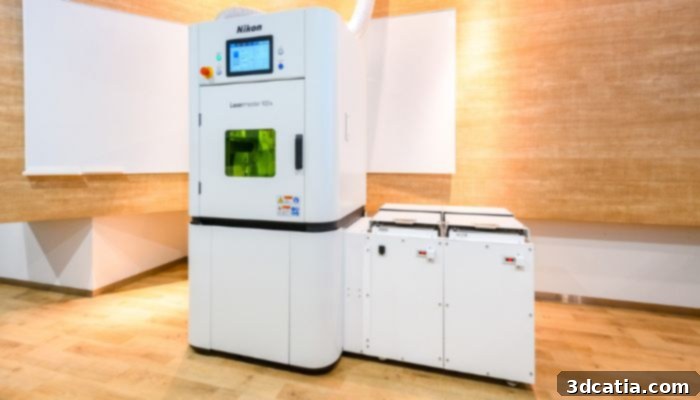
Photo credits: Nikon
These remarkable advancements in 3D printing technology, from sustainable automotive components and large-scale industrial metal parts to innovative ballistic protection and multi-material DED capabilities, truly highlight the dynamic and rapid evolution of additive manufacturing. The integration of advanced materials, intelligent post-processing solutions, and enhanced multi-material capabilities is propelling industries forward at an unprecedented pace, promising more efficient, sustainable, and high-performance products across the board. What are your thoughts on these innovative 3D-printed headrests made for Alpine, or the broader impact of these developments on industrial manufacturing? Let us know in a comment below or on our LinkedIn, Facebook, and Twitter pages! Don’t forget to sign up for our free weekly newsletter here for the latest 3D printing news straight to your inbox! You can also find all our videos on our YouTube channel.