
Pioneering Women in 3D Printing: Shaping the Future of Additive Manufacturing
Today, on International Women’s Day, we shine a spotlight on the invaluable contributions of influential women who are at the forefront of the 3D printing industry. The field of additive manufacturing is experiencing exponential growth, continuously expanding its horizons and profoundly impacting various facets of our society, from industrial production to everyday applications. To celebrate this dynamic landscape and the brilliant minds driving its progress, we engaged with four distinguished women deeply immersed in this innovative sector. Their expert perspectives offer a compelling glimpse into the current state and future trajectory of the 3D printing market.
We had the privilege of interviewing Jessica Snelling, Co-founder of Aurora Labs; Alessandra Sacchelli, Marketing Director of 3DZ France; Cin-Yee Syria Ho, Director of Sales and Marketing for XYZPrinting division Europe; and Lynette Kucsma, Co-founder of Natural Machines. These leaders, representing diverse specializations within the additive manufacturing ecosystem, universally agree on one crucial point: the market is not only still growing robustly but is poised for even greater advancements and novel applications in the years to come. Key trends they highlighted include the transformative rise of metal 3D printing, signaling a shift towards industrial scalability, and the ever-increasing versatility and material compatibility of 3D printing technologies, opening doors to unprecedented innovation across numerous industries. Their insights provide a comprehensive overview of a sector brimming with potential, shaped by foresight and relentless dedication.
Jessica Snelling, Co-founder of Aurora Labs: Pioneering Accessible Metal 3D Printing
Jessica Snelling is the Co-founder of Aurora Labs, an innovative industrial technology company. Aurora Labs specializes in the development of cutting-edge 3D metal printers, advanced metal powders, digital parts, and their associated intellectual property. The company’s core mission is to make sophisticated metal additive manufacturing technology more accessible and cost-effective globally, thereby driving its widespread adoption across various industrial applications.
Reflecting on the inception of Aurora Labs, Jessica shared, “About 5 years ago, my friend David Budge and I were deeply engaged in discussions about our ambitious plan to manufacture and rigorously test liquid-fueled rocket motors. It was during one of these conversations that David sparked a revolutionary idea: instead of relying on traditional machining methods, what if we could create a 3D metal printer capable of directly printing the rocket motor? This groundbreaking concept became the catalyst for us to establish Aurora Labs. Our fundamental aim from day one has been to democratize 3D metal printing, making it significantly more attainable and cost-effective for a wider audience, thereby removing previous barriers to entry. In pursuit of this critical goal, we successfully developed the S-Titanium Pro 3D metal printer, which impressively continues to be the cheapest 3D metal printer available on the market today. This unwavering commitment to accessibility underscores Aurora Labs’ dedication to transforming industrial manufacturing processes and bringing advanced technology to more users.”
When discussing anticipated market trends for the near future, Jessica emphasized a significant and accelerating shift towards enhanced automation within additive manufacturing. “I believe this year, the biggest trend will undeniably be towards comprehensive automation. This means that 3D metal printing and the entire associated production process will require substantially less human interaction and manual oversight than ever before. We foresee a deeper and more seamless integration of these advanced printers into existing industrial production workflows, moving beyond their role as standalone machines. Consequently, the demand for automatic powder handling systems and sophisticated automated build plate management solutions will see a substantial increase this year. This pervasive drive towards automation is absolutely critical for improving overall operational efficiency, significantly reducing labor costs, ensuring unparalleled consistency in output, and ultimately paving the way for truly large-scale industrial additive manufacturing.”
Looking a decade into the future, Jessica articulates an ambitious yet entirely achievable vision for the 3D printing market. “My hopes for the 3D printing market over the next 10 years are profoundly centered on continuous innovation in metal printing capabilities. Specifically, I envision a future where 3D metal printers are capable of printing significantly larger parts, at much faster speeds than currently possible. This accelerated production rate combined with increased capacity is absolutely essential for making 3D metal printing genuinely cost-effective and highly competitive when benchmarked against traditional metal manufacturing methods. Furthermore, coupling these crucial hardware and speed advancements with a streamlined and dynamic certification process—one that allows parts to be certified on the fly, directly during the printing process itself—will ensure they are immediately fit-for-purpose and compliant. Achieving this critical level of efficiency, reliability, and integrated certification will transform 3D metal printers from primarily prototyping tools into indispensable, high-volume production assets for companies. This shift will drastically reduce lead times for essential spares and replacements across a multitude of critical industries, from aerospace to automotive, healthcare, and beyond.”
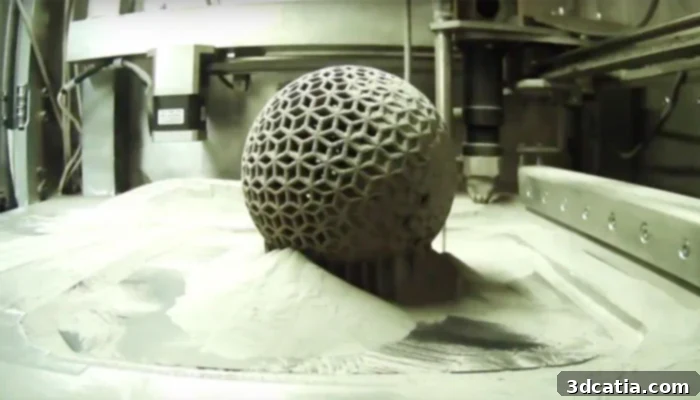
Photo Credits: Aurora Labs
Alessandra Sacchelli, Marketing Director of 3DZ France: Fostering Industrial Adoption Through Reselling Expertise
Alessandra Sacchelli leads the dynamic marketing efforts for 3DZ France, a prominent and influential entity in the European additive manufacturing landscape. 3DZ distinguishes itself as one of the largest and most respected resellers of prestigious 3D printers and related technologies across the continent. Their extensive portfolio includes a wide array of industrial-grade printers from renowned global manufacturers such as 3D Systems, Markforged, and JCR. This comprehensive offering provides businesses with unparalleled access to state-of-the-art additive manufacturing solutions meticulously tailored to their specific production needs and innovation goals.
 “As Marketing Director for 3DZ France, my core role revolves around strategically promoting industrial printing and advanced additive manufacturing solutions across diverse markets. I am responsible for significantly enhancing the 3DZ brand presence and effectively communicating the profound value proposition of our comprehensive product offerings, which encompass not only cutting-edge 3D printers but also sophisticated 3D software and high-precision 3D scanners. My innate passion for both marketing and technology naturally drew me to this incredibly fascinating and rapidly evolving field. It’s an exceptionally dynamic and advanced sector, truly characterized by relentless innovation with new products, processes, and breakthroughs emerging almost every single month! A key aspect that resonates profoundly with me about 3DZ is its unwavering commitment to exemplary customer service. This detail is absolutely fundamental to our operations: working for a company that genuinely places its customers at the very heart of its development strategy and operational philosophy is incredibly rewarding and profoundly motivates our entire team to consistently deliver exceptional support and expertly tailored solutions to meet evolving client demands.”
Addressing the evolving market landscape, Alessandra confidently identified metal additive manufacturing as a dominant and transformative trend. “Personally, I strongly believe that metal additive manufacturing will continue to be a leading and influential trend throughout this year, significantly building on the impressive evolution and advancements we’ve witnessed over the past two years. The processes involved are becoming considerably more accessible to a broader range of users and businesses, moving beyond highly specialized research and development environments into mainstream production. Consequently, manufacturers, engineers, and designers are beginning to fully grasp and harness the immense potential of such processes for critical industrial applications. At 3DZ, we have tangible and compelling evidence of this accelerating shift, particularly with the increasing efficiency, reliability, and widespread adoption of Markforged’s ADAM (Atomic Diffusion Additive Manufacturing) process, which is proving to be incredibly effective and beneficial for a growing number of manufacturers across various industrial sectors, demonstrating its robust capacity for producing high-quality metal parts.”
Envisioning the future, Alessandra expresses a profound hope for the industry’s maturation and widespread impact. “In the future, I sincerely hope that the 3D market will achieve a state of true ‘maturity,’ becoming increasingly and robustly oriented towards large-scale industrial production. This significant maturation will be driven by the widespread adoption and utilization of advanced, stable, and highly reliable additive solutions, thereby facilitating continuous, large-scale manufacturing operations across various industries. My ambition extends even further: I hope that 3D printing can be seamlessly and effectively applied in virtually all possible sectors. This revolutionary technology holds the unique potential to create intricate, customized, and high-performance components that traditional manufacturing methods simply cannot achieve or do so with prohibitive costs and timeframes. Imagine its transformative impact across critical fields such as medical (for personalized prosthetics, complex implants, and surgical guides), aerospace (for lightweight, topologically optimized parts), advanced industrial tooling, and sophisticated automotive applications, where precision, customization, and material innovation are absolutely paramount. The ability to innovate and produce previously impossible designs will undoubtedly be a hallmark of this mature and highly impactful market.”
Markforged Metal X 3D Printer
Cin-Yee Syria Ho, Director of Sales and Marketing for XYZPrinting Europe: Strategizing Consumer Engagement and Future Materials
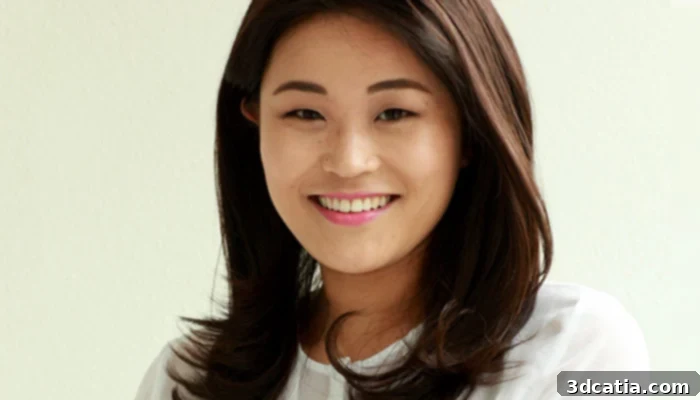
“My name is Cin-Yee, and I proudly serve as the Director of Sales & Marketing for XYZprinting division Europe. I embarked on this exciting journey into the 3D printing business five years ago, joining XYZprinting as their Marketing & Communication Manager. What’s particularly noteworthy about my entry into this sector is that I literally started with zero prior experience or established knowledge about 3D printing technology. At that crucial time, XYZprinting had a clear and ambitious objective: they urgently needed someone to develop and execute a robust, long-term branding strategy that could effectively translate what was predominantly a highly technical field, understood only by engineers, specialized designers, and perhaps a small niche of dedicated tech enthusiasts, into something genuinely accessible, appealing, and desirable to the common domestic user. The XYZprinting brand itself was relatively new to the competitive European market, and there was an urgent need to successfully launch our innovative products into the challenging retail sector. My background as an experienced European marketer, despite my initial lack of specific technological expertise, proved to be invaluable because I possessed a deep, nuanced understanding of consumer behavior and the intricate dynamics of the retail business. In a remarkably short timeframe, I had to rapidly absorb and meticulously learn an immense amount from XYZprinting’s exceptionally talented engineers about the complex world of 3D printing. My subsequent and equally challenging task was to distill this technical knowledge and then translate it into an accessible language and a compelling strategic narrative that both retailers and everyday consumers could easily understand, genuinely appreciate, and ultimately, enthusiastically embrace.”
Observing current market shifts, Cin-Yee highlights a growing sophistication among new users, particularly the younger generation. “I’m observing a significant and exciting trend where many educational institutions across Europe are actively incorporating 3D printers into their curriculum to teach essential digital skills and foster innovation. This new generation of users, therefore, enters the market with a far more advanced foundational understanding and, consequently, significantly higher expectations for 3D printing technology. Their purchasing decisions regarding a 3D printer have fundamentally evolved from previous generations. Instead of merely seeking an ‘easy-plug-and-play’ device for simple, predefined tasks, they are now actively looking for 3D printers that offer much greater material compatibility and enhanced versatility of use. For example, these inquisitive users are keenly interested in the ability to print with a wider array of different materials and are eager to challenge the performance boundaries of their printers by actively tweaking parameters such as speed settings or temperature controls to achieve desired outcomes. This escalating demand for deeper customization, control, and expanded capability is why we are increasingly foreseeing a strong and sustained trend towards the proliferation of DIY kits and open-source 3D printers, which inherently empower users with greater control, flexibility, and boundless opportunities for experimentation and personal innovation.”
When asked about the next decade, Cin-Yee acknowledges the incredibly rapid pace of innovation within the industry. “A timeline of 10 years is quite a distant horizon in our industry, especially given that technology innovation progresses at an incredibly fast and unpredictable rate. For instance, XYZprinting itself successfully developed a full-color FDM printer in just three years, a testament to this rapid advancement. Given this accelerated development cycle, I firmly believe that in 10 years, the conventional office printer as we know it will evolve into a sophisticated, integrated combination of a full-color paper printer and a versatile 3D printer. It will become a standard, fixed asset in every office, school, and naturally, in homes as well, much like a conventional paper printer is today, seamlessly integrating into daily routines. But more importantly, beyond just hardware innovations, I sincerely hope that all companies within this sector will place a much stronger and more concerted emphasis on material science. After all, a significant portion of what we print is plastic. I envision a future where material suppliers are already actively developing and bringing to market new types of advanced plastics that are not only eminently suitable for our diverse daily uses but are also significantly more environmentally friendly and thoughtfully designed for faster biodegradability. That is my deepest and most profound hope for the sustainable future of 3D printing – a future where innovation and ecological responsibility go hand-in-hand.”
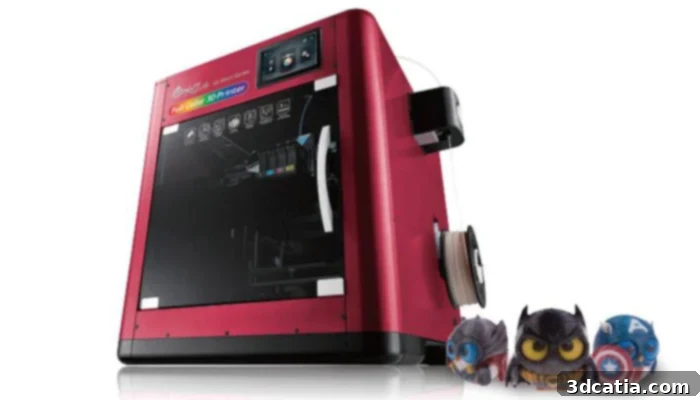
da Vinci Colour 3D Printer
Lynette Kucsma, Co-founder of Natural Machines: Revolutionizing Food Preparation with 3D Printing
Lynette Kucsma is the visionary co-founder of Natural Machines, the innovative company behind the groundbreaking Foodini 3D food printer. Her pioneering work exemplifies how additive manufacturing can transcend traditional industrial applications and integrate seamlessly into everyday life, particularly in the exciting and evolving realm of culinary arts and healthy living. Natural Machines is redefining how we approach food preparation by combining technology with fresh ingredients.
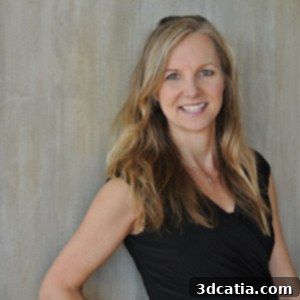
“My name is Lynette Kucsma, and I am the proud co-Founder of Natural Machines. We are the creators of Foodini – a revolutionary 3D food printer that ingeniously combines advanced additive manufacturing capabilities with cutting-edge IoT (Internet of Things) functionality, presenting itself as a new generation kitchen appliance specifically designed to promote and facilitate cooking with fresh, real, and wholesome ingredients. One crucial distinction to understand about our unique approach is that we didn’t simply take an existing industrial 3D printer and try to adapt it for a novel application like printing food. Rather, our journey at Natural Machines began by identifying a significant and pervasive challenge within the conventional food industry and consumer eating habits. We then meticulously determined that 3D printing offered one of the most effective, innovative, and customizable solutions to address this issue directly, focusing on aspects like personalization, health, and reducing waste. This fundamental difference in our starting point profoundly influenced several key aspects of our product development, including how we meticulously engineered Foodini. Specifically, it is constructed entirely with food-grade and food-safe materials, ensuring absolute hygiene, safety, and compliance with kitchen standards. From its very inception, Foodini was conceived and designed as a dedicated, user-friendly kitchen appliance, not merely an industrial tool adapted for the kitchen environment. Consequently, the aesthetic and functional design of our 3D food printer is distinctly different from typical industrial models – it is elegantly crafted to blend seamlessly and harmoniously into any modern kitchen environment, making complex food creation accessible to everyone.”
When considering broader market trends, Lynette maintains a keen interest across various sectors of 3D printing, though her primary focus naturally remains aligned with the kitchen appliance and food technology market. “I certainly keep a close and informed eye on the 3D printing market in general, monitoring its diverse and rapid developments across different applications. However, given our core alignment with the kitchen appliance market and our specialized niche, I wouldn’t profess to predict the future with absolute certainty regarding non-food 3D printers. Personally, I find the ongoing developments in 3D printing with metal particularly fascinating, observing how that robust technology continues to advance and integrate into highly demanding industrial solutions. Beyond the culinary realm, I also find 3D printing with glass incredibly interesting, especially from an artistic and aesthetic point of view, opening up entirely new avenues for creative expression and architectural innovation. And specifically concerning 3D food printing, there is an undeniable and accelerating surge in public interest and curiosity. As this technology becomes more widely known, understood, and accessible to the general population, we are witnessing a significant increase in engagement and excitement. I foresee this growing awareness, enthusiasm, and adoption for 3D food printing becoming even stronger and more widespread throughout this year and beyond, indicating a profoundly promising future for culinary innovation and personalized nutrition.”
Projecting into the future, Lynette envisions a truly transformative role for food 3D printers within our daily lives. “Speaking from the specific vantage point of the 3D food printing market, we firmly believe that within the next 10 to 15 years, 3D food printers will transition from novelties and niche tools to common, indispensable kitchen appliances. They will become as ubiquitous and integrated into both home and professional kitchens as an oven or a microwave are today, seamlessly fitting into our culinary routines. With the widespread adoption of 3D food printers like Foodini, we are not just introducing a new gadget; we are fundamentally reimagining and enhancing the entire process of food preparation. Our innovative technology makes the process of creating meals – always utilizing fresh, real, and wholesome ingredients – significantly healthier, considerably easier, undeniably more efficient, and, perhaps most importantly, much more enjoyable and fun! This profound shift promises to empower individuals, families, and professional chefs alike to experiment with new culinary forms, personalize nutrition to an unprecedented degree, and significantly minimize food waste, all while making cooking an engaging, creative, and healthy activity for everyone.”
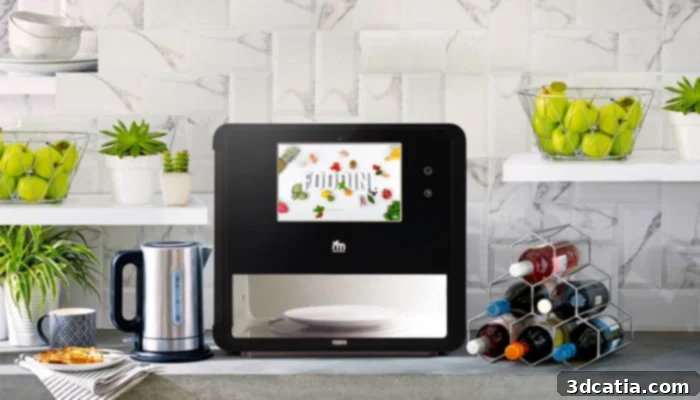
The 3D Food Printer, Foodini
These insightful interviews with pioneering women highlight the incredible dynamism, diverse applications, and immense future potential of the 3D printing industry. From making industrial metal printing more accessible and automating complex manufacturing processes to democratizing advanced technology for consumers and revolutionizing the very act of food preparation, these formidable leaders are actively shaping a future where additive manufacturing plays an even more integral and transformative role in our daily lives and global industries. Their collective insights underscore the industry’s rapid and relentless evolution, driven by continuous innovation, a profound focus on user needs and experience, and a keen, forward-thinking eye on critical aspects like sustainability and accessibility. As we look ahead, the vision for 3D printing is clear: it is rapidly becoming a versatile, efficient, and profoundly transformative technology that will continue to redefine possibilities across all sectors, empowering creators and industries alike.
How are you celebrating International Women’s Day and acknowledging the significant impact of women in technology and innovation? We invite you to share your valuable thoughts and inspirations! Let us know in a comment below or connect with us and share your perspective on our Facebook and Twitter pages. Don’t miss out on the latest advancements, breaking news, and expert analyses in the exciting world of 3D printing – sign up for our free weekly Newsletter to receive all the crucial updates straight to your inbox and stay ahead of the curve!