
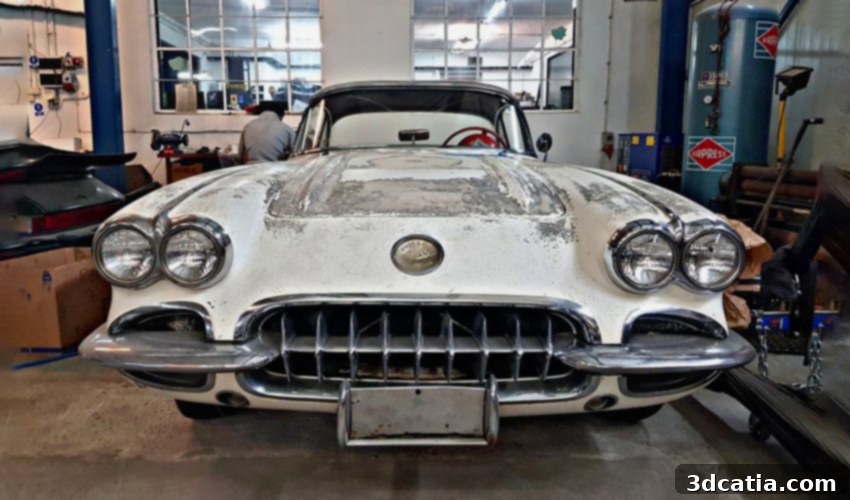
Revolutionizing Classic Car Restoration: The Power of 3D Printing in Automotive Heritage
The additive manufacturing industry is experiencing exponential growth and significant adoption, particularly within the automotive sector. What was once primarily a technology for rapid prototyping has now evolved into an indispensable tool for major car manufacturers. Companies such as Porsche, for instance, are leveraging advanced 3D printing to create highly customized parts, from intricate interior components to original, ergonomically designed seats for their high-performance sports cars. This innovative approach is not confined to new vehicle production; it’s also breathing new life into the challenging field of classic car restoration. A compelling success story emerges from ABCar Oldtimers, a prominent European car rebuilder, which has recently begun using state-of-the-art stereolithography (SLA) 3D printing to meticulously repair and reconstruct vintage automobiles. The overarching objective of this project is to create precise replacement parts and essential equipment that are no longer commercially available due to the advanced age and rarity of the vehicles they intend to rebuild. In this demanding context, additive manufacturing has proven to be not just a suitable option, but often the most efficient and sometimes the only viable solution for preserving automotive heritage.
Classic car restoration presents a unique array of obstacles that frequently baffle traditional manufacturing methods. Many vintage vehicles feature bespoke designs and intricate components that were originally produced in extremely limited quantities decades ago. Over time, these parts suffer from wear and tear, become obsolete, or are simply impossible to source from original manufacturers or aftermarket suppliers. The search for authentic components can be an incredibly time-consuming, labor-intensive, and prohibitively expensive endeavor, often yielding no results. Furthermore, conventional manufacturing techniques such as casting, forging, or intricate machining can be too costly or technically unfeasible for producing single, highly customized parts with complex geometries and unique material requirements. This is precisely where the agility, precision, and cost-effectiveness of 3D printing technology truly excel, offering a tailored solution to faithfully reproduce the exact specifications, aesthetic details, and even material properties required for authentic and high-quality restorations, thereby ensuring that the legacy of these magnificent machines endures for future generations.
To successfully implement this ambitious project, ABCar Oldtimers strategically chose to utilize 3D printers supplied by Zortrax, a renowned Polish manufacturer at the forefront of additive manufacturing solutions. Zortrax’s reputation for delivering reliable, high-precision, and robust printing systems extends far beyond the realm of automotive restoration. Their technology has earned the trust of global innovators and industry giants such as NASA, where it’s used for critical space applications, and the Bosch Group, for advanced industrial prototyping and manufacturing. This widespread adoption by leading organizations underscores the superior quality and accuracy inherent in Zortrax’s printing systems, making them an ideal choice for the extremely exacting standards and intricate demands of classic car restoration. The comprehensive restoration work undertaken by ABCar Oldtimers encompasses a wide range of complex tasks, including precise sheet metal forming, intricate wiring, and critical engine replacement. Such detailed operations necessitate a manufacturing method that can deliver unparalleled accuracy and consistency when developing and reproducing individual elements of the bodywork, interior, and mechanical components. Given that many old vehicles are characterized by their numerous small, often highly elaborate, and aesthetically critical elements, the question naturally arises: how has 3D printing definitively helped solve these profound challenges?
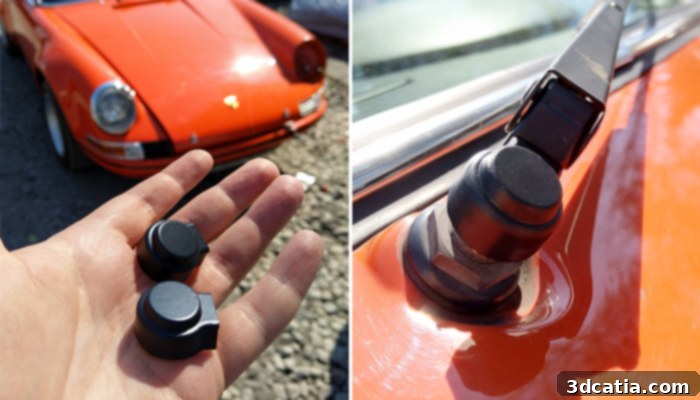
Some of the car pieces that were meticulously rebuilt with 3D printing, showcasing the technology’s precision and versatility in restoring classic vehicles.
The Development of High-Precision 3D Printed Parts for Classic Car Restoration
The restoration of luxury classic cars frequently demands unique, bespoke parts, and traditionally, reproducing these components has been an incredibly slow, labor-intensive, and astronomically expensive process. The highly customized, often handcrafted nature of these vintage vehicles presented the initial, and perhaps most significant, hurdle for ABCar Oldtimers. Bartlomiej Blaszczak, the distinguished Director of Design and Engineering at ABCar Oldtimers, vividly illustrates this challenge: “Consider the exceptionally fine and rather precious crescent-shaped needles that were specifically used in the tachometers and speedometers of classic Mercedes Benz cars. These are not merely functional indicators; they are integral aesthetic elements that significantly contribute to the vehicle’s period-correct character and allure. Crucially, no one currently produces elements of this exact design and finish. While it is possible to acquire some generic, similar-looking needles, perhaps cut with a diamond blade, they are typically finished in a standard, utilitarian manner, completely lacking the distinctive crescent shapes that perfectly complete the original design and impart that essential, special touch of authenticity. Replicating such intricate, small-scale details with traditional manufacturing methods would necessitate bespoke tooling, highly skilled craftsmanship, and considerable time, pushing both costs and lead times to unsustainable levels for single-part production. This is where 3D printing offers an unparalleled advantage.” This specific example powerfully highlights the critical void that advanced 3D printing, particularly stereolithography, is uniquely positioned to fill within the classic car restoration industry.
Beyond the complexities of intricate geometries, another significant and often overlooked challenge in classic car restoration involves sourcing or creating materials that possess the exact same properties as the original parts. This is especially crucial for components that are exposed to light, require specific mechanical resistance, or need to integrate seamlessly with other original elements. However, 3D printing utilizing specialized photopolymer resins offers an exceptionally promising and versatile solution for a wide range of car equipment, particularly where properties like light transmission, UV resistance, or specific flexural strength are paramount. Stereolithography (SLA) technology excels in this area because it allows for the precise curing of liquid resin layer by meticulously thin layer, enabling the creation of transparent or translucent parts while maintaining impeccable optical clarity and the proper thickness of the manufactured layers. This capability is absolutely essential for delicate components such as instrument cluster covers, intricate light lenses, or, as in the critical case for ABCar Oldtimers, the precise instrument needles. The ability to control material properties at such a granular level ensures that replacement parts are not only dimensionally accurate but also functionally and aesthetically identical to the originals.
Bartlomiej Blaszczak further elaborates on the transformative impact of Zortrax’s technology on their daily operations and restoration workflow: “Thanks to the incredible precision, reliability, and sheer speed of the Zortrax Inkspire’s 3D printer, we can now produce these highly specific elements – such as those historically accurate crescent-shaped tachometer needles – in just a matter of minutes. This rapid turnaround time is an absolute game-changer for our restoration projects. Furthermore, the digital design and additive manufacturing process allows us the unparalleled flexibility to easily adjust critical parameters such as the thickness, length, and exact curvature of a particular gauge or needle, ensuring a perfect, customized fit and appearance for each unique car model we work on. The needles we meticulously produce directly from the 3D printer are not merely prototypes or temporary fixes; they are the definitive, final, and historically accurate components of the equipment that are permanently installed in the valuable classic cars we lovingly restore. This remarkable ability to produce high-quality, end-use, and historically accurate parts on demand is fundamental to the efficiency and authenticity of our entire operation.” This significantly reduces both lead times and manufacturing costs, making previously impossible or financially prohibitive restorations now entirely feasible and accessible.
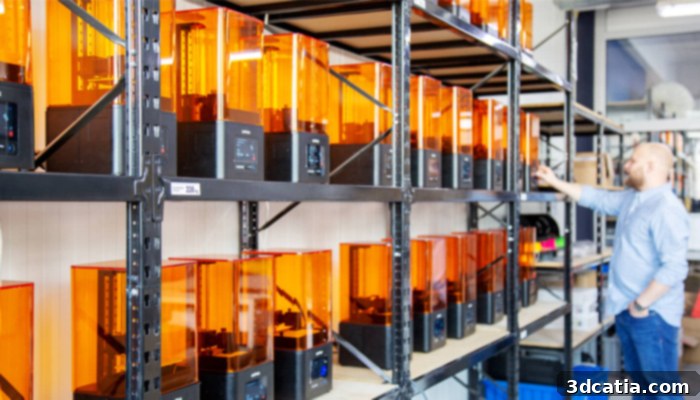
The Zortrax Inkspire 3D printers, powerful tools that are critical for modern classic car restoration and precision manufacturing.
The successful implementation of additive manufacturing has undeniably provided an extraordinarily efficient, cost-effective, and highly precise solution for ABCar Oldtimers. This compelling success story serves as a powerful testament to the technology’s immense potential and strongly indicates that 3D printing can, and indeed should, be utilized across a multitude of activities within the classic car restoration field, particularly for overcoming the persistent and frustrating problem of sourcing unique, rare, or entirely obsolete equipment. Traditionally, the arduous and often futile search for these specific, irreplaceable parts for the reconstruction of classic cars could consume weeks, months, or even years, frequently culminating in disappointment or the need for exorbitantly priced, custom-machined fabrication. In stark contrast, with advanced 3D printing techniques, these highly specialized and historically accurate components can be designed, produced, and obtained in a fraction of the time – often in less than a day – and at a significantly reduced cost compared to traditional manufacturing methods or exhaustive global searches. This dramatic reduction in both time and expense not only streamlines the entire restoration process but also makes the preservation of automotive heritage more accessible, sustainable, and economically viable for a broader range of enthusiasts and specialists. Moreover, 3D printing opens up new avenues for innovation, allowing restorers not only to replicate original parts with unparalleled accuracy but also, where appropriate, to subtly improve upon their durability or functionality using modern, high-performance materials, all while meticulously maintaining visual authenticity and historical integrity.
The application of 3D printing in classic car restoration extends far beyond small decorative elements or instrument needles. Its versatility encompasses a broader spectrum of possibilities, including the creation of intricate interior trim pieces, custom-fit brackets, prototyping for larger structural components, and even specialized tooling required for particular repair tasks that are unique to vintage vehicles. This extensive range of capabilities makes additive manufacturing an invaluable asset for restorers facing diverse and complex challenges. By digitalizing the entire design and production of parts, companies like ABCar Oldtimers are not merely restoring cars; they are pioneering a new era of automotive preservation, ensuring that rare and historically significant vehicles continue to grace our roads and captivate enthusiasts for generations to come. The ability to accurately scan, digitally design, and precisely print on-demand provides unprecedented control over every aspect of the restoration process, guaranteeing both mechanical precision and historical authenticity in every component created. This technological leap safeguards the past while embracing the innovations of the future.
In conclusion, the groundbreaking partnership between ABCar Oldtimers and Zortrax vividly exemplifies the transformative power of additive manufacturing in safeguarding our rich automotive history. It compellingly showcases how advanced technologies can effectively bridge the vast gap between past craftsmanship and present-day innovation, offering pragmatic, efficient, and highly precise solutions to the most complex problems encountered in classic car restoration. This innovative approach not only facilitates the faithful reproduction of vintage parts with incredible accuracy but also drastically improves the overall efficiency and cost-effectiveness of restoration projects, thereby making the cherished dream of bringing oldtimers back to their original glory a tangible and achievable reality for more specialists and enthusiasts worldwide. The seamless integration of 3D printing into the restoration workflow signifies a monumental shift within the industry, marking a new chapter where cutting-edge technology serves as a cornerstone for preserving our irreplaceable automotive heritage for future generations to admire, appreciate, and experience firsthand. For those interested in delving deeper into this fascinating project and ABCar Oldtimers’ pioneering work, further information is readily available on their official website, accessible directly HERE.
What are your thoughts on classic cars being rebuilt with advanced SLA technology? Do you believe this innovative approach represents the definitive future of automotive heritage preservation and restoration? We invite you to share your valuable insights in a comment below or join the vibrant discussion on our Facebook and Twitter pages! And to ensure you don’t miss out on the very latest advancements, groundbreaking stories, and essential news in the world of additive manufacturing, make sure to sign up for our free weekly Newsletter to get all the cutting-edge information delivered straight to your inbox!