
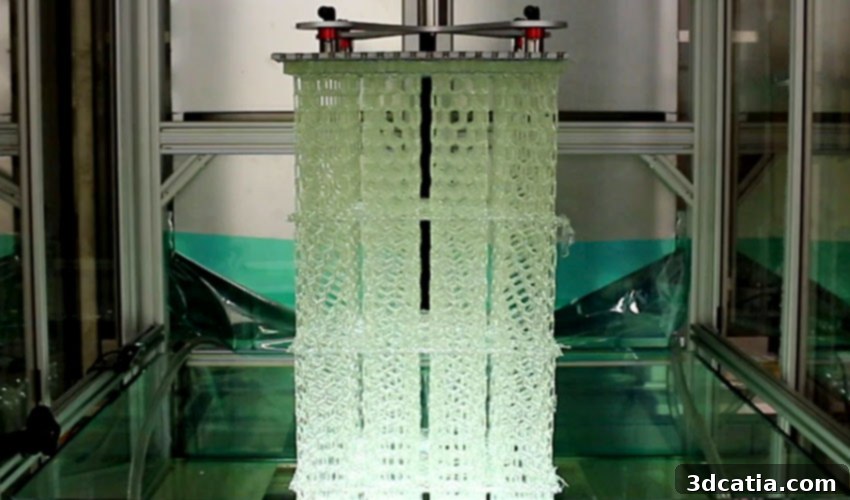
Azul 3D’s HARP Technology: Revolutionizing Large-Scale, High-Speed Resin 3D Printing for Industrial Manufacturing
The landscape of additive manufacturing has seen remarkable advancements, particularly within resin 3D printing processes. These methods are celebrated for their unparalleled precision, intricate detail capabilities, and excellent surface finish, making them indispensable across various industries. However, even with these inherent strengths, traditional resin-based 3D printing has historically faced significant limitations. Chief among these are the restricted build plate sizes and inherently slow printing speeds, which collectively impede the production of large-scale parts or high-volume manufacturing crucial for industrial applications. These constraints often relegate resin 3D printing to prototyping or small-batch, specialized production, rather than widespread factory adoption.
Yet, innovation is continuously reshaping the boundaries of possibility. A notable disruptor in this space is the American startup, Azul 3D, which has introduced a groundbreaking solution: the HARP (High-Area Rapid Printing) process. This revolutionary technology leverages advanced photopolymerization principles, enabling the creation of exceptionally large parts—even those approaching adult size—in astonishingly short durations, such as mere hours. This dramatic increase in speed and build volume represents a paradigm shift for resin 3D printing, promising to unlock new opportunities for end-use manufacturing. Intrigued by this unique 3D printer and its potential to profoundly impact the resin 3D printing market, we had the distinct opportunity to engage with the Azul 3D team to delve deeper into their pioneering work.
3DN: Can you introduce yourself and elaborate on your journey within 3D printing technologies?

Dr. James Hedrick
I am Dr. James Hedrick, the CEO and co-founder of Azul 3D. Our mission at Azul 3D is to commercialize the world’s first 3D printing technology that can genuinely compete with the formidable speed, material strength, and economies of scale offered by traditional manufacturing methods like injection molding. My entrepreneurial journey began quite early; I launched my first company at the age of 16, and the profits from that venture helped fund my college tuition at MIT, where I also proudly competed as a student-athlete. Following my undergraduate studies, I pursued and successfully obtained my Ph.D. at Northwestern University, working under the esteemed Professor Mirkin. It was during this pivotal time that I became an integral part of the team responsible for developing the foundational technology that now lies at the very core of Azul 3D: HARP. Initially, my involvement with 3D printing technologies started with the application of HARP to nano 3D printing, focusing on incredibly tiny structures. However, it quickly became apparent, within just a few months, that the true transformative potential of HARP lay in its capacity for macro 3D printing, leading us to swiftly pivot our focus to larger-scale applications.
3DN: What was the inspiration behind creating Azul 3D?
The genesis of Azul 3D traces back to my Ph.D. research at Northwestern University, under the brilliant mentorship of Professor Chad Mirkin. During my time in the lab, I collaborated closely with a post-doctoral researcher, Dr. David Walker. Our initial endeavors were centered around developing an innovative nano 3D printer. This research led to a significant technological breakthrough. What started as an exploration into printing minuscule structures soon revealed an unexpected and far more impactful capability: with some strategic modifications to our technique, we realized we could also print extraordinarily large structures. This “aha!” moment was profound. We immediately recognized that the HARP technology possessed the inherent ability to fundamentally transform the manufacturing industry as we knew it. This realization prompted a crucial shift in our research focus, moving decisively from nano-scale applications to macro-scale production. It was this shared vision and understanding of HARP’s immense potential that led the three of us – Professor Mirkin, Dr. Walker, and myself – to co-found Azul 3D. Our collective goal was ambitious yet clear: to bridge the gap between this groundbreaking laboratory discovery and its commercial implementation on the factory floor, making high-speed, large-scale 3D manufacturing a tangible reality.
3DN: Could you elaborate on the operational principles of HARP technology?
HARP technology represents a significant evolution within the broader domain of stereolithography and liquid resin printing. While it builds upon the established foundations of these techniques, its core innovation lies in a critical modification that sets it apart. The true breakthrough within HARP is its utilization of a dynamically flowing liquid interface. This ingenious design element accomplishes two crucial functions simultaneously, which are fundamental to achieving its unprecedented speed and scale. Firstly, the continuous movement of this liquid interface facilitates a smooth, uninterrupted pull of the printed object from the resin vat. This continuous motion directly translates into an exceptionally fast vertical print rate, dramatically accelerating the entire build process. Unlike traditional methods where layers are cured discretely and then separated, often leading to slower speeds, HARP’s continuous pull allows for much faster production. Secondly, and equally important, this flowing liquid interface plays a vital role in actively regulating the temperature of the print. Maintaining an optimal and stable temperature throughout the printing process is absolutely critical, especially when producing large parts at such high speeds. Without effective thermal management, the exothermic reactions of photopolymerization could lead to overheating, material degradation, warping, or inconsistent part quality. HARP’s ability to precisely control the thermal environment ensures the structural integrity and dimensional accuracy of large components, even under rapid manufacturing conditions. This dual functionality – enabling continuous, high-speed printing while meticulously controlling thermal conditions – is what truly distinguishes HARP technology and positions it as a leader in advanced resin 3D printing.
3DN: Which sectors are you primarily focusing on and targeting with HARP?
At this moment, we are maintaining a strategic confidentiality regarding the specific names of our current customers, but we encourage everyone to stay tuned for future announcements. What I can disclose is that Azul 3D is actively engaging with leading companies that are not just exploring 3D printing, but are genuinely prepared to integrate it for the industrial manufacturing of end-use goods. Our target sectors are carefully selected; we prioritize industries that do not involve excessively long and complex regulatory processes. This strategic approach enables our customers to transition from concept to mass production much more rapidly, accelerating the market entry of their products. Our focus is squarely on applications where the speed, scale, and cost-effectiveness of HARP can deliver an immediate and significant competitive advantage, allowing us to demonstrate the technology’s full manufacturing potential without unnecessary delays. We aim to empower businesses to rethink their production workflows, offering a viable alternative to traditional methods for high-volume, high-quality part fabrication.
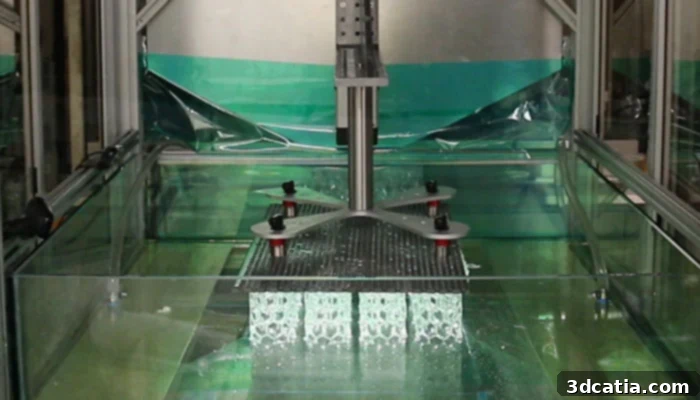
Azul 3D’s 3D printer, showcasing the HARP technology.
3DN: What is the significance and what are the opportunities presented by large-scale 3D printing?
The concept of large-scale 3D printing extends far beyond merely producing giant, monolithic parts. While it certainly enables the creation of such components, its true importance lies in its capacity to facilitate the mass production of medium-sized parts with unprecedented efficiency and economic viability. This capability fundamentally transforms the manufacturing paradigm, opening up vast opportunities for industries across the board. To illustrate this, consider a practical application: during the recent global health crisis, Azul 3D leveraged its technology to manufacture face shields. These essential personal protective equipment items were then generously donated to healthcare workers and first responders nationwide. Even with our smallest HARP printer, we were able to achieve an extraordinary production rate, manufacturing 10,000 face shields in a mere 250 hours of print time. This not only highlights the impressive throughput of our technology but also underscores a critical economic advantage: our production costs proved to be highly competitive, even against traditionally manufactured face shields. This case study powerfully demonstrates that HARP technology offers a compelling combination of high throughput and favorable economics, positioning it as a potent force for future manufacturing solutions. The ability to quickly and cost-effectively produce thousands of units on demand, with the flexibility inherent in additive manufacturing, signals a significant shift towards more agile, resilient, and localized supply chains. This capability is vital not only for emergency response but also for customized product lines, rapid iteration, and efficient inventory management in everyday industrial scenarios. Large-scale 3D printing, therefore, isn’t just about size; it’s about unlocking new dimensions of speed, cost-efficiency, and adaptability in production, making highly customized or high-volume manufacturing more accessible than ever before.
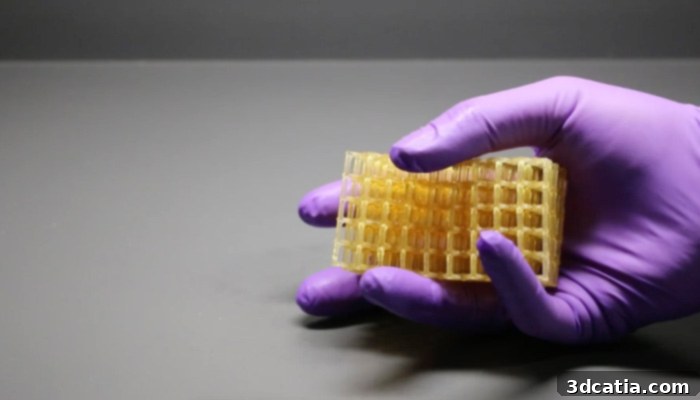
A complex part meticulously crafted using the innovative HARP 3D printing process.
3DN: Where do you envision Azul 3D standing in the next 5 years?
Looking ahead over the next five years, I foresee Azul 3D significantly deepening its integration into the core of manufacturing operations globally. As a company, we made a conscious strategic choice to begin with a focused, deliberate approach. We engage intensely with each individual customer, providing comprehensive support to ensure they can seamlessly integrate and effectively utilize our printers for their manufacturing needs right from the outset. This meticulous, hands-on methodology allows us to maximize the impact and return on investment for every printer we deploy, fostering robust and successful adoption. While this initial strategy means we can’t immediately enter every potential field or market we aspire to on day one, it builds a solid foundation for sustainable growth. As Azul 3D expands and matures, this limitation will naturally diminish, allowing us to broaden our reach into diverse industries where HARP technology can make a substantial difference. Furthermore, I am incredibly enthusiastic about the anticipated evolution of customization software. We have already executed numerous production runs of highly custom parts, and what we’ve consistently observed is that the primary bottleneck often lies not in the printing capability itself, but rather in the design phase and the efficiency of customization workflows. In five years, I strongly believe that advanced software tools will bridge this gap, transforming customized manufacturing from an aspirational dream into an everyday reality for countless businesses. Imagine a future where bespoke products, tailored precisely to individual needs or specific application requirements, can be designed and produced with the same ease and speed as standardized goods. Azul 3D will be at the forefront of this transformation, driving the convergence of cutting-edge hardware and intelligent software to redefine what’s possible in additive manufacturing.
3DN: Do you have any concluding remarks or advice for our readers?
For any of our readers who have a specific application or manufacturing challenge that they believe could benefit from advanced 3D printing technologies, especially for production-scale endeavors, I strongly encourage you to reach out to us directly at contact*****@****3d.com. We firmly believe that the most impactful and successful applications for our HARP printers often originate from our customers themselves, as they possess unparalleled expertise in their specific processes and product requirements. Your insights are invaluable, and we are eager to explore how HARP can integrate into and elevate your production capabilities. For more comprehensive information about Azul 3D and our innovative HARP technology, please visit our official website HERE. We are committed to fostering a collaborative environment where groundbreaking technology meets real-world industrial needs, pushing the boundaries of what’s achievable in modern manufacturing.
What are your thoughts on the revolutionary HARP process and its implications for the future of 3D printing? We invite you to share your insights and comments below, or engage with us on our social media channels via Facebook and Twitter! Don’t miss out on the latest advancements and news in the additive manufacturing world; make sure to sign up for our complimentary weekly Newsletter, delivered straight to your inbox. You can also explore more #3Dstartup interviews, such as our feature with Castor, by clicking HERE.