
Exploring the Frontier: This Week’s Top 5 3D Printing Innovations and Applications
Welcome to our weekly showcase of groundbreaking advancements in the world of 3D printing and additive manufacturing! Each week, we scour the landscape of innovative projects and developments to bring you the most compelling videos that highlight the transformative power of this technology. From revolutionizing dentistry to pioneering sustainable construction and even personalizing everyday items, 3D printing continues to push boundaries across diverse industries. This curated collection aims to inspire and inform, demonstrating the incredible potential unfolding right before our eyes. We encourage you to dive into these fascinating stories, share your insights, and comment on this article, or join the conversation on 3Dnatives’ Facebook or Twitter accounts. Get ready to explore the future of manufacturing and have a fantastic day discovering what’s new in additive manufacturing!
Top 1: Revolutionizing Dental Practices with 3D Printing
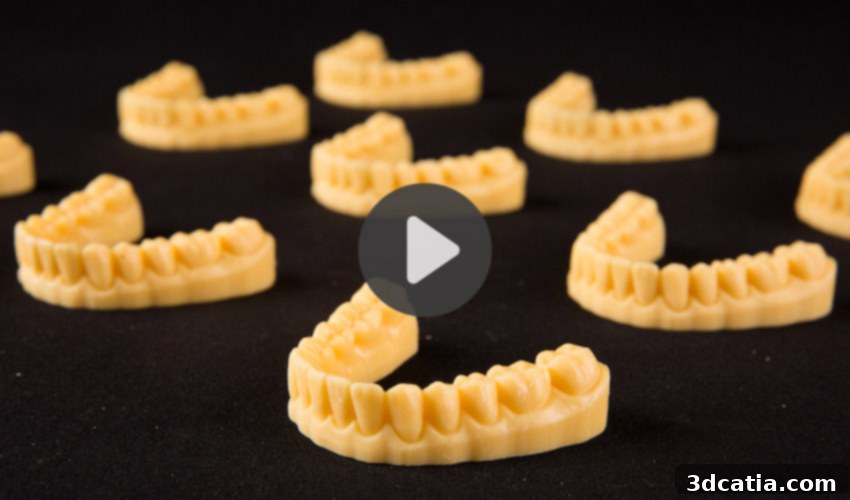
The dental industry is experiencing a profound transformation thanks to the integration of 3D printing technology. Singapore-based company Structo is at the forefront of this revolution with its innovative dental 3D printer, the DentaForm. This advanced machine exemplifies how additive manufacturing can streamline complex dental processes, offering unprecedented precision, speed, and customization capabilities. In the featured video, Structo provides an insightful step-by-step demonstration of creating dental gutters – from the initial digital design to the final post-processing stages. The DentaForm stands out for its impressive operational efficiency. Its design allows for continuous work, largely facilitated by an intuitive and rapid print tray replacement system. This feature significantly enhances workflow in busy dental laboratories, reducing downtime and increasing throughput. Furthermore, the post-processing of printed dental appliances is meticulously divided into two distinct stages, ensuring optimal strength, biocompatibility, and a perfect finish. This level of automation and precision means dental professionals can produce a wide array of applications, including clear aligners, surgical guides, crowns, bridges, and customized models, with superior accuracy and in a fraction of the time compared to traditional methods. The DentaForm isn’t just a printer; it’s a comprehensive solution for modern digital dentistry, promising a future where personalized patient care is more accessible and efficient than ever before. Watch the video to witness firsthand how the Structo DentaForm is setting new benchmarks in dental additive manufacturing and discover the intricate details of its operation.
Top 2: The Future of Power: Innovating with 3D Printed Batteries
The relentless pursuit of more compact and efficient electronic devices, especially mobile phones, continually highlights a significant bottleneck: battery technology. Traditionally, manufacturers face a dilemma when it comes to lithium-ion batteries. They can opt for standard, off-the-shelf sizes, which often dictate larger device footprints and consume valuable internal space. Alternatively, they can invest in costly custom-designed batteries, a solution that drives up production expenses. What if a revolutionary third option emerged, offering both flexibility and cost-effectiveness? The concept of a 3D printed battery holds immense promise. Imagine tailoring battery shapes and sizes precisely to fit intricate device architectures, maximizing available space and opening new design possibilities. However, turning this vision into reality presents substantial technical hurdles, primarily the development of truly ion-conducting filaments suitable for additive manufacturing. A dedicated team of researchers has taken up this challenge, embarking on an ambitious journey to develop functional 3D printed batteries. Their pioneering approach involves integrating an electrolytic solution directly into Polylactic Acid (PLA), a commonly used 3D printing material. This innovative composite aims to imbue PLA with the necessary electrochemical properties to function as a battery component. While these early prototypes represent a monumental step forward, the path to commercialization is still long. The current iteration of their 3D printed battery, though demonstrating proof of concept, currently boasts a life span of only about one minute. This limitation underscores the need for further research into material science, electrode design, and overall energy density improvements. Nevertheless, this groundbreaking work signifies a pivotal moment, laying the foundation for a future where batteries are not just components but integrated, customizable elements of device design, promising a new era of flexible electronics and optimized power solutions. The journey has just begun, but the potential is undeniably electrifying!
Top 3: Biomimicry and Artistry: Nature’s Influence on 3D Printing Design
Nature has always served as an inexhaustible wellspring of inspiration for artists, designers, engineers, and innovators across various disciplines. Its intricate patterns, efficient structures, and captivating forms—from the delicate petals of a flower to the complex geometry of an organism—offer endless possibilities for creative interpretation and functional design. In the realm of 3D printing, this biomimicry takes on a whole new dimension, allowing for the faithful reproduction and innovative reimagining of natural phenomena. The project aptly named “Parametric flowers” is a brilliant illustration of this synergy between nature and advanced manufacturing. Utilizing stereolithography (SLA) technology, a high-precision 3D printing method known for its ability to create exceptionally detailed and smooth surfaces, designers are now able to fabricate botanical forms that mimic the ethereal beauty and complex structures found in our very own gardens. These 3D printed flowers are not just static reproductions; they often incorporate parametric design principles, meaning their forms can be algorithmically generated and customized based on various parameters, leading to unique and evolving designs. This particular endeavor strongly echoes the innovative work previously developed by artists and researchers like Nicole Hone, who has explored how 3D printing can capture and exaggerate natural forms, often creating kinetic sculptures or objects that interact with light and movement. The ability of stereolithography to produce objects with fine details and complex geometries makes it ideal for capturing the organic nuances of natural shapes, opening up new avenues for decorative arts, product design, and even scientific modeling. This project underscores the growing trend where digital fabrication technologies enable a deeper connection to the natural world, allowing us to translate its inherent beauty and wisdom into tangible, often breathtaking, creations. Witness how the elegance of nature is being redefined and brought to life through the precision and versatility of 3D printing.
Top 4: Building a Sustainable Future: 3D Printing in Construction
The global housing crisis, which currently impacts over a billion people worldwide, coupled with the urgent need for more environmentally responsible construction practices, presents one of humanity’s most pressing challenges. Traditional building methods often rely on energy-intensive processes and materials with significant carbon footprints. However, 3D printing in the construction sector offers a beacon of hope, promising a revolutionary approach to creating durable, affordable, and eco-friendly structures. The Institute of Advanced Architecture of Catalonia (IAAC) is leading the charge in this innovative field, as showcased in their compelling video. IAAC has pioneered the development of a unique, sustainable building material composed primarily of readily available natural resources: sand, clay, and water. This innovative composite is then utilized in their large-scale 3D printing systems to construct robust and resilient architectural elements and even entire buildings. The advantages of this method are manifold. Firstly, the material itself is sustainable and locally sourced, drastically reducing the environmental impact associated with material extraction and transportation. Secondly, 3D printing minimizes waste by depositing material only where it’s needed, a significant improvement over traditional construction that often generates substantial offcuts and debris. Thirdly, the process allows for rapid construction and the creation of complex geometries that would be difficult or impossible to achieve with conventional techniques, potentially accelerating the deployment of affordable housing solutions in areas that need them most. The structures created using IAAC’s method are designed to be more durable and stronger than many conventional alternatives, ensuring longevity and resistance to environmental factors. This blend of material innovation and additive manufacturing technology positions 3D printing as a crucial tool in addressing both the housing shortage and the imperative for sustainable development. By providing cost-effective, rapid, and environmentally benign construction solutions, IAAC’s work illustrates a tangible pathway towards a more equitable and sustainable built environment for generations to come. Explore their visionary answer to global challenges with this inspiring look into sustainable 3D printing construction.
Top 5: Personal Grooming Perfected: Customizing Razors with 3D Printing
In today’s consumer landscape, the demand for personalized products is steadily growing, reflecting a shift from mass production to individual expression. This trend is now elegantly making its way into the personal grooming sector, proving that even everyday items can be reimagined for individual style and comfort through advanced manufacturing. Global shaving giant Gillette has embraced this customization revolution by partnering with Formlabs, a leading innovator in desktop 3D printing solutions. Together, they have launched the groundbreaking “Pilot Razor Maker™ Concept,” a pioneering initiative that allows consumers to design and 3D print their own personalized razor handles. This collaboration is a testament to how Boston-based startups and cutting-edge technology are actively shaping the future of the 3D printing industry and its applications in consumer goods. The concept empowers consumers by offering an unprecedented level of personalization. Users can choose from a variety of ergonomic designs, aesthetic patterns, textures, and even color combinations, enabling them to create a razor handle that not only fits their hand perfectly but also reflects their unique personality and style preferences. This goes beyond mere aesthetics; a custom-designed handle can significantly enhance grip, balance, and overall shaving experience, making a routine task more comfortable and enjoyable. Formlabs’ expertise in high-resolution resin 3D printing allows for the rapid production of these intricate and durable custom handles, making the concept both feasible and scalable. The “Pilot Razor Maker™ Concept” represents more than just a new product; it’s a paradigm shift in consumer engagement and product development, demonstrating how additive manufacturing can bridge the gap between individual desire and mass production. It highlights the potential for brands to offer truly unique products, fostering deeper customer loyalty and opening up new markets for highly customized goods. Delve into the video to explore the cool designs and discover how this innovative partnership is defining the next era of personalized consumer products, allowing everyone to 3D print razor handles tailored to their individual style and needs.
We hope you thoroughly enjoyed this week’s exploration of the Top 5 videos showcasing exciting advancements in 3D printing, from the precision of dental 3D printers and the promise of sustainable building to the artistry inspired by nature and the personalization of everyday items. The world of additive manufacturing is continuously evolving, bringing forth new possibilities and innovations that promise to reshape our industries and daily lives. Your feedback is invaluable to us! Please feel free to drop a comment below sharing your thoughts on these incredible developments, or engage with us on our Facebook and Twitter pages. To ensure you stay at the forefront of this dynamic field, don’t forget to sign up for our free weekly Newsletter. It’s your direct link to all the latest news, breakthroughs, and insights from the 3D printing industry, delivered straight to your inbox every week!