
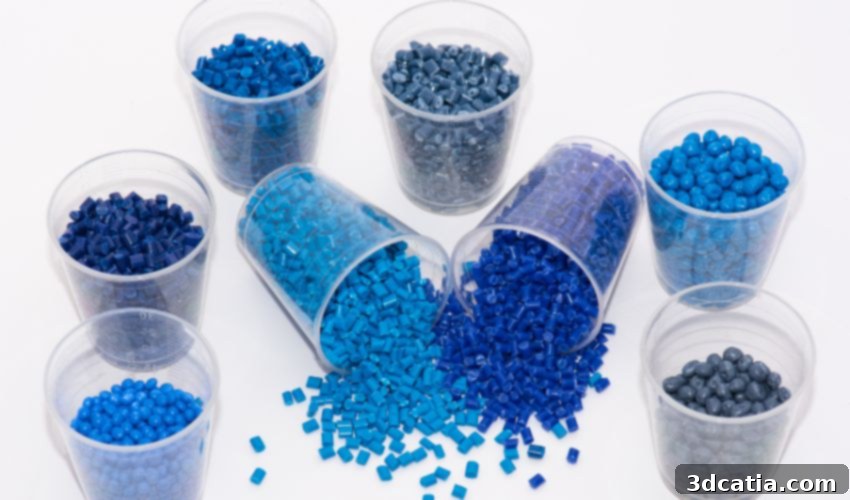
Pioneering Sustainable 3D Printing: Standardizing Recycled Plastic Filaments for Global Impact
In a significant stride towards sustainable manufacturing, Professor Mogens Hinge at the University of Aarhus, Denmark, is spearheading an ambitious research project focused on transforming plastic waste into a universally standardized 3D printing filament. Titled “Development of filament for 3D printing based on recycled plastics,” this groundbreaking initiative has already secured €84,000 in funding from the prestigious Danish Innovation Fund. The project is a collaborative effort, strategically led by Denmark’s prominent plastics recycling firm, Aage Vestergaard Larsen A/S. Professor Hinge’s core objective is to ensure unparalleled consistency in filament quality across all batches, eradicating the common variations that plague the industry today. This innovative approach promises not only to elevate the reliability of 3D printing but also to provide a compelling incentive for the industry to embrace a robust circular economy model, streamlining the entire process of manufacturing high-quality filaments from reclaimed materials.
The impetus for this vital project stems from a critical observation by Professor Hinge: the prevailing inconsistency in quality between different batches of 3D printing filaments, regardless of brand reputation. This variability often leads to a cascade of issues for users. When changing spools, the quality is rarely identical, which can dramatically increase the failure rate of prints, necessitate frequent reprinting, and significantly lengthen the post-processing time required for finished objects. Such inconsistencies are a major barrier to the widespread adoption of 3D printing in industrial and professional sectors, where precision, reliability, and repeatability are paramount. Professor Hinge attributes these discrepancies to “the careless use of plastic for 3D printing filament, and the fact that the components are not dimensioned according to the material, as is the case in the plastics industry.” This highlights a fundamental gap in current manufacturing practices for additive manufacturing materials, suggesting a need for more rigorous engineering and material science principles to be applied. Achieving such standardization for thermoplastics, a material ubiquitous in 3D printing, presents an inherently ambitious challenge. Perhaps recognizing this complexity, Professor Hinge has judiciously chosen to focus his initial efforts on recycled materials, leveraging their environmental benefits while simultaneously tackling the quality control conundrum.
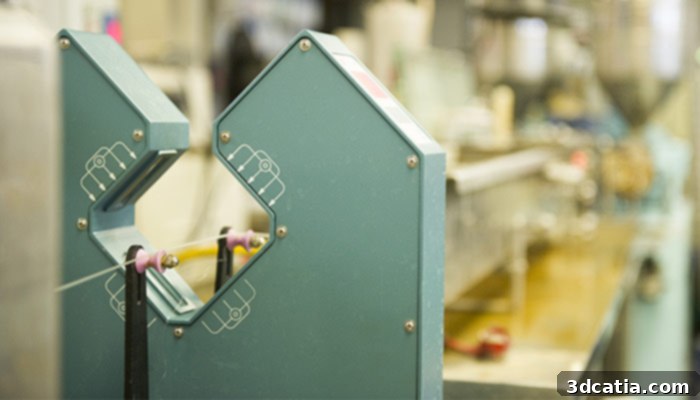
The quality of a filament can vary from one batch to another depending on the Danish teacher (photo credits: Real Filament)
The vision for standardized filament extends beyond merely reducing print failures. It aims to create a predictable and reliable material stream that can underpin more sophisticated and critical 3D printing applications. For industrial users, this means greater confidence in producing functional prototypes, tooling, and even end-use parts without the fear of material-induced defects. For hobbyists and small businesses, it translates into less wasted material, reduced frustration, and a lower barrier to entry for more complex projects. To achieve this, Professor Hinge’s research will likely delve deep into material characterization, process control, and rheological analysis of recycled plastics. Understanding how impurities, degradation, and inconsistent polymer chain lengths in recycled feedstocks affect critical properties like melt flow index, thermal stability, and mechanical strength is crucial. The project aims to develop robust protocols and material specifications that ensure consistent performance, bridging the gap between raw recycled plastic and high-performance 3D printing filament. By focusing on recycled materials first, the project not only addresses a significant environmental challenge but also taps into a readily available, often undervalued resource, potentially reducing the cost of filament production in the long run.
This pioneering work is being conducted in close collaboration with Aage Vestergaard Larsen A/S, Denmark’s largest and most experienced plastic recycling company. Gitte Buk Larsen, the head of business development and marketing at the company, eloquently articulates the multifaceted reasons behind this crucial partnership. She identifies three primary challenges the collaboration seeks to overcome. Firstly, despite extensive efforts, the industry has yet to successfully produce a 3D printing filament made from 100% recycled plastic that consistently meets performance benchmarks. The purity requirements and property degradation inherent in some recycling processes often limit the percentage of recycled content. Secondly, there is a distinct lack of a “production code” – a comprehensive, data-sheet-driven protocol that ensures uniform quality in filament manufacturing. This implies a need for precise chemical and physical property targets, alongside detailed processing parameters that guarantee consistency from batch to batch, much like in traditional plastics manufacturing. Finally, Gitte Buk Larsen points out a notable void in the Danish market: the absence of domestic filament producers. This project, therefore, serves a dual purpose: addressing a global quality issue while simultaneously fostering local industrial growth. Mogens Hinge’s role is pivotal in this regard, as his research aims to provide the robust quality documentation and scientific understanding necessary to produce reliable filaments from recycled materials. This forms the bedrock of a new manufacturing standard, which promises to finally grant every 3D printer user the benefit of consistent quality, spool after spool. This standardization will encompass crucial printing characteristics, such as the precise melting temperature of the filament and its glass transition temperature, ensuring optimal performance across various 3D printers and applications.
Gitte Buk Larsen further emphasizes the transformative potential of this initiative: “If the project is successful, it will revolutionize the material consumption of 3D printers, which today are largely made of new plastics. The aim is to be able to use plastic waste to create new high-quality filaments. This will have a significant impact on the environment and the climate in the long term.” This statement underscores the profound environmental implications of the project. Currently, the vast majority of 3D printing filaments are produced from virgin plastics, contributing to the depletion of non-renewable resources and the associated carbon footprint of plastic production. By effectively converting plastic waste into a valuable, high-performance product, the project directly supports the principles of a circular economy. This model minimizes waste and maximizes resource utilization, diverging sharply from the traditional linear “take-make-dispose” approach. The collaboration with Aage Vestergaard Larsen A/S provides a significant advantage; the company’s extensive experience and wide range of recycled quality polymers make it easier for project stakeholders to test a diverse array of materials. This broad testing capability is crucial for developing a truly standardized 3D printing filament that can be adapted for various applications while consistently meeting stringent quality parameters, ultimately reducing landfill waste and decreasing reliance on new plastic production.
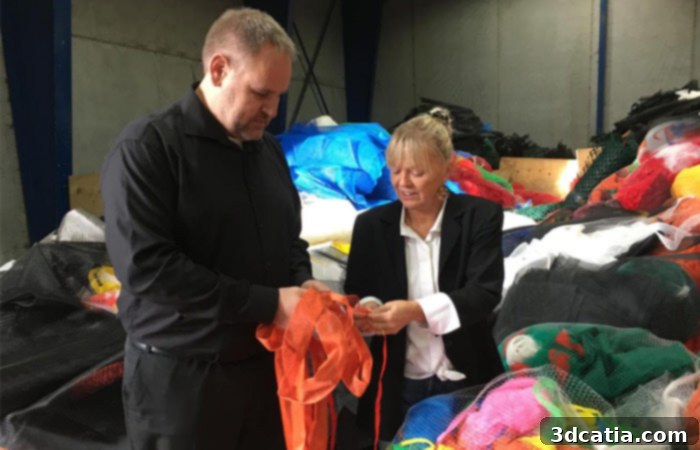
Mogens and Gitte choose different plastics (photo credits: Aage Vestergaard Larsen A/S)
This Danish initiative is a shining example of the growing global movement towards a circular economy, proposing a viable and impactful way to give our plastic waste a valuable second life. It aligns perfectly with other inspiring projects, such as the Project PLA, pioneered by a young American student, which also focused on recycling plastic waste into 3D printing materials. The implications of Professor Hinge’s work, if successful, extend far beyond the borders of Denmark. It could set a new benchmark for sustainable material development in additive manufacturing worldwide, encouraging other regions and companies to invest in similar research and infrastructure. The ability to reliably produce high-quality filament from recycled sources would not only reduce the environmental footprint of 3D printing but also potentially lower material costs, making this powerful technology more accessible and economically attractive for a wider range of users and applications. This project reinforces the undeniable truth: 3D printing possesses an immense capacity to contribute positively to our planet’s well-being, transforming waste into innovation and forging a path towards a more sustainable future for manufacturing. The ongoing research and development in this field promise a future where advanced manufacturing and environmental stewardship go hand-in-hand, creating a robust and responsible industrial ecosystem.
What are your thoughts on this pioneering project and its potential to reshape the landscape of sustainable 3D printing? We invite you to share your perspectives and engage with our community. Let us know your comments below or connect with us on our Facebook and Twitter pages! Don’t miss out on the latest advancements and news in the world of additive manufacturing; make sure to sign up for our free weekly Newsletter, delivering all the essential updates directly to your inbox!