
Sustainable & Custom Manufacturing: Driving Innovation with 3D Printing, Advanced Materials, and Optimized Workflows
Additive manufacturing (AM), commonly known as 3D printing, is widely celebrated for its transformative potential across various industries. It is frequently lauded as a more environmentally conscious production method compared to traditional manufacturing techniques. This perception stems from its inherent capabilities for enabling localized production, which significantly reduces supply chain emissions, and its promise of achieving near-zero waste manufacturing. By building parts layer-by-layer, AM minimizes material scrap, a stark contrast to the subtractive processes of conventional methods. Beyond its ecological advantages, additive manufacturing stands out as a pioneering technology for delivering unparalleled levels of customization. This bespoke capability is particularly indispensable in critical sectors such as medicine, where patient-specific devices, prosthetics, and implants are revolutionizing healthcare outcomes.
While these benefits are well-recognized, the profound importance of materials to the overall environmental footprint and performance of additive manufacturing is less frequently emphasized. The choice of material dictates not only the mechanical properties and durability of the final product but also its recyclability, bio-compatibility, and overall life cycle impact. Furthermore, achieving personalization at scale – often referred to as mass customization or high-volume production – introduces its own set of intricate challenges, ranging from design validation to ensuring consistent quality and efficient post-processing. Addressing these critical aspects, a recent insightful webinar brought together leading experts from Arkema, XFeet Orthotics, and Erpro Group. This collaborative discussion explored the nexus of sustainable and custom manufacturing through the innovative lens of AM. The distinguished speakers compellingly demonstrated that the ambitious goals of creating tailor-made products sustainably are not only achievable but are actively being realized through the strategic integration of advanced 3D printing technologies, meticulously optimized production workflows, and the pioneering development of sustainable materials.
The discussion highlighted that true sustainability in additive manufacturing extends beyond just the printing process itself. It encompasses the entire product lifecycle, starting with the raw materials. Utilizing biosourced, recycled, or highly durable materials contributes significantly to reducing environmental impact. Similarly, an optimized workflow ensures efficiency from design to final product, minimizing energy consumption and material waste throughout the entire value chain. The synergistic combination of cutting-edge hardware, intelligent software, and innovative materials is what truly unlocks the potential for both environmental stewardship and unprecedented customization in manufacturing today. This comprehensive approach is vital for companies aiming to meet the evolving demands for personalized products while adhering to stringent environmental standards.
Relive the Insights: Watch the Webinar Recording!
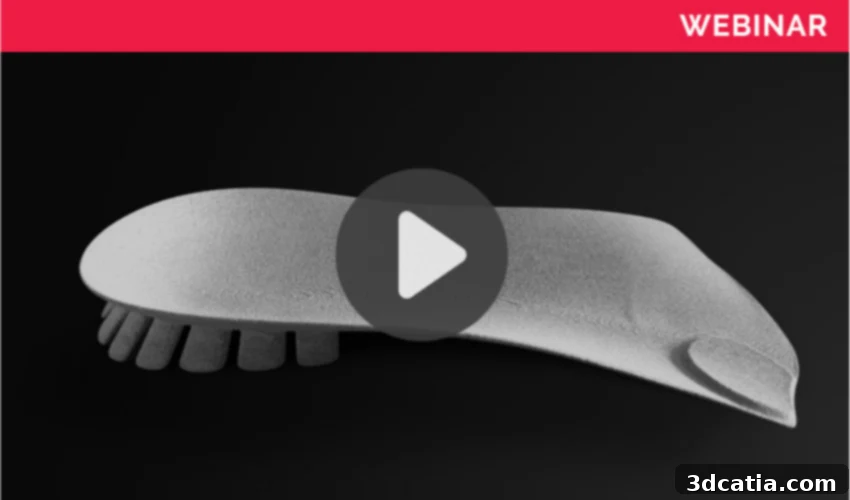
Couldn’t attend the live session? Or would you like to revisit the key discussions and expert presentations? You can watch the recording of this insightful webinar again below! Discover how industry leaders are shaping the future of sustainable and customized production.
Meet Our Expert Speakers
The webinar featured a panel of distinguished experts, each bringing unique perspectives and invaluable experience from their respective fields within additive manufacturing. Their insights provided a holistic view of the challenges and opportunities in integrating sustainability and customization into modern production processes.

Sophie Mulsant serves as the Europe Market Development Manager for 3D Printing Solutions at Arkema, a global leader in specialty materials. With an impressive 20-year tenure at Arkema, Sophie brings a wealth of experience in material science and market strategy. In her current role, she spearheads the business development initiatives for advanced thermoplastic powders specifically designed for powder bed fusion (PBF) additive manufacturing processes. Her expertise is crucial in bridging the gap between innovative material science and practical industrial applications, focusing on delivering high-performance, sustainable polymer solutions that meet the rigorous demands of AM.

Youri Saint-Lo is the visionary Co-Founder of XFeet Orthotics, a company at the forefront of digital orthotics. With a distinguished career spanning 25 years in managing businesses within the dynamic field of IT technologies, Youri brings extensive operational and technological leadership to XFeet. Today, he is responsible for guiding the operational development of the sophisticated XFeet interface, a platform meticulously designed to empower podiatrists with advanced tools for creating personalized, 3D printable insoles. His insights into digital workflow optimization and user experience are key to XFeet’s success in mass customization.

Anaïse Mourocq contributes her diverse expertise as the Communication & Marketing lead for XFeet Orthotics. Prior to joining XFeet, Anaïse dedicated a decade to managing complex international cultural projects, honing her skills in communication, strategic planning, and global outreach. Now, she masterfully oversees XFeet’s communication and marketing strategies, playing a pivotal role in articulating the brand’s innovative approach to customized orthotics and engaging with both medical professionals and patients. Her ability to translate complex technological benefits into clear, compelling messages is essential for market penetration and adoption.

Quentin Betucchi is an accomplished R&D Process Engineer at Erpro 3D Factory, a pioneering facility dedicated to the industrialization of 3D printing for mass production. Since 2016, Quentin has been instrumental in the establishment and remarkable success of Erpro 3D Factory. His work focuses on optimizing additive manufacturing processes to ensure efficiency, repeatability, and cost-effectiveness at scale. His deep technical knowledge of various 3D printing technologies and his hands-on experience in bringing concepts to high-volume production make him an authority on the industrial capabilities and future potential of additive manufacturing.
Pioneering Companies in Additive Manufacturing
Arkema: Driving Innovation with Advanced 3D Printing Materials
Arkema, a global leader in advanced materials, is at the forefront of developing high-performance 3D printing materials tailored for a diverse array of additive manufacturing processes. Their extensive portfolio includes specialized materials for extrusion, photopolymerization, and powder bed fusion technologies. Beyond material development, Arkema distinguishes itself through its collaborative approach, working intimately with numerous professionals and manufacturers across the AM sector. This close partnership ensures the creation of materials that not only meet but exceed the stringent requirements for producing high-quality, reliable parts.
The company is strategically focused on unlocking new opportunities within additive manufacturing by cultivating valuable partnerships with market leaders such as EOS and Erpro. These collaborations are crucial for co-developing materials, validating processes, and accelerating market adoption of innovative AM solutions. Arkema’s dedicated business unit, 3D Printing Solutions by Arkema, is specifically tasked with forging these vital alliances and developing materials that precisely fit the evolving needs of manufacturers in AM. As industry professionals understand, additive manufacturing materials demand highly specific characteristics – including precise rheological properties, thermal stability, and mechanical performance – to function optimally on AM systems and consistently deliver repeatability, accuracy, and precision. This fundamental understanding underscores Arkema’s philosophy: starting with the development of the correct materials, engineered for the specific requirements of manufacturers, is paramount to achieving groundbreaking results in additive manufacturing. Arkema’s commitment to biosourced and sustainable polymers further positions them as a key player in enabling greener manufacturing practices. Contact their experts to explore their material solutions HERE.
XFeet Orthotics: Revolutionizing Insoles with Tailor-Made 3D Printing
XFeet Orthotics has established itself as an innovative collaborative platform designed to facilitate the creation of tailor-made and 3D printable insoles. Their comprehensive platform provides a seamless, end-to-end workflow that transforms the traditional orthotics production process. This workflow begins with advanced 3D scanning technology, capturing precise anatomical data of the patient’s foot. This data is then utilized to generate a highly accurate STL file, which serves as the digital blueprint for the customized insole. This file is subsequently sent to a specialized manufacturer for 3D printing, culminating in the delivery of a perfectly fitted and functional orthotic. The digital nature of this process ensures unparalleled precision and efficiency, significantly improving patient outcomes.
Within this innovative framework, the integration of Arkema’s biosourced and sustainable products plays a pivotal role. These advanced materials provide exceptional mechanical specifications and consistently high quality, which are critical for medical devices that require both durability and comfort. By leveraging these cutting-edge materials, XFeet is able to offer podiatrists and their patients the immense added value of true personalization. This means insoles are custom-designed to address individual foot biomechanics and pathologies, leading to superior therapeutic effectiveness and patient comfort. Crucially, while offering such a high degree of personalization, the XFeet system is ingeniously designed to factor in serial production capabilities. This enables efficient manufacturing of custom insoles at scale, bridging the gap between bespoke craftsmanship and industrial output, making personalized medical care more accessible and sustainable.
Erpro Group: Masters of Industrial 3D Printing and Production
Since its inception in 1997, Erpro Group has consistently delivered a full spectrum of services encompassing the entire product development and manufacturing lifecycle. From initial prototyping to small-batch and large-volume production, Erpro Group offers comprehensive solutions for diverse industrial needs. Their expertise extends beyond mere printing; they provide design optimization for additive manufacturing, advanced post-processing, and stringent quality control, ensuring every project meets the highest standards.
A distinguishing characteristic of Erpro Group is their profound mastery of a wide array of 3D printing technologies. This extensive technological proficiency includes wire deposition (FDM and CFF composite), stereolithography, Carbon technology, polymer powder sintering, metal fusion, and Multi Jet Fusion technology, among others. This technological diversity is a significant advantage for their clients, as it allows Erpro to select the optimal printing method for each specific application, considering factors such as material requirements, desired part properties, cost-efficiency, and scalability. Whether a client needs a functional prototype with specific mechanical properties or a high volume of end-use parts, Erpro can precisely match the technology to the project. Their Erpro 3D Factory site is a testament to their commitment to mass production in 3D printing, equipped with machine farms, automated post-processing lines, and robust quality assurance systems to deliver consistent, high-quality output at an industrial scale. This makes Erpro Group an invaluable partner for companies looking to industrialize their additive manufacturing processes and leverage the full potential of custom, on-demand production.