
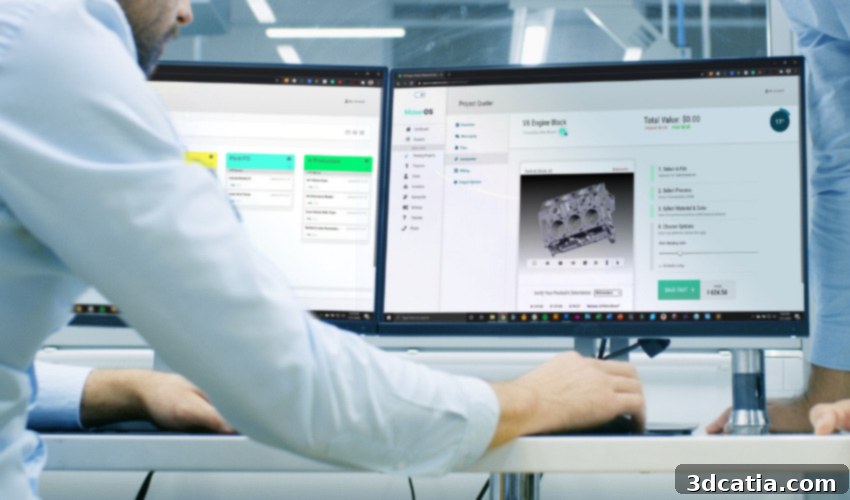
Optimizing 3D Printing: The Essential Role of Additive Manufacturing Workflow Management Software (AM MES)
As the landscape of industrial production rapidly evolves, the adoption of advanced 3D printing solutions is accelerating across a multitude of sectors. This widespread integration has inevitably brought forth a critical demand for sophisticated, streamlined processes that ensure every phase of part creation is meticulously optimized. This is where additive manufacturing workflow management software solutions come into play. Often referred to as MES software, or specifically, Additive Manufacturing Execution Systems (AM MES), these platforms bear a resemblance to conventional manufacturing execution systems. Traditional MES are computerized systems designed to track and meticulously document every single step involved in transforming raw materials into a finished product, ensuring oversight and control. However, AM MES solutions are meticulously engineered to cater to the unique and often complex demands of additive manufacturing processes.
Unlike their traditional counterparts, AM MES solutions are purpose-built to manage the distinct intricacies of 3D printing. This means they are specialized software platforms that diligently work to optimize and oversee every critical stage, from the initial digital modeling and precise slicing, through the actual printing phase, and ultimately to the often-complex post-processing procedures. All these functions are consolidated and made accessible through a single, intuitive interface. Furthermore, many of these advanced solutions extend their tracking capabilities to encompass the entire supply chain, from the initial purchasing of materials to the final shipment of the completed part. This comprehensive oversight makes AM MES software particularly indispensable for 3D printing service bureaus, which are often tasked with producing millions of parts monthly for a diverse global customer base. The question then naturally arises: why should a company consider adopting such specialized software? What tangible benefits do they offer, and what limitations might one encounter? To answer these crucial questions, we sought insights from leading experts in the field, who shared their experiences and perspectives on the implementation and impact of MES solutions within their respective organizations.
Our esteemed panel of experts brings a wealth of experience to this discussion. First, we have Mike Moceri, the dynamic founder and CEO of MakerOS. With a robust background spanning manufacturing, design, and software, Mike’s journey began in 2013 when he co-founded what was globally recognized as the first 3D printing retail service bureau in Chicago. His company, MakerOS, has since developed one of the most widely recognized and respected manufacturing execution systems tailored for additive manufacturing. Our next expert is Matthew Forrester, who plays a pivotal role in overseeing the technical aspects of AM deployment within the vast L’Oréal group. His responsibilities range from initial prototyping and diverse industrial applications to the intricate development and optimization of packaging components for large-scale finished goods production. Finally, we hear from Gaël Spiral, the dedicated manager of Erpro’s site in Toulouse. Erpro stands as a prominent 3D printing service provider based in France, known for its extensive capabilities. Both L’Oréal and Erpro represent companies that have strategically integrated AM MES solutions to profoundly streamline and enhance their manufacturing processes.
-

- Mike Moceri

-
- Matthew Forrester

-
- Gaël Spiral

Why Should a Company Adopt Additive Manufacturing Workflow Software? Enhancing Efficiency and Control
At its core, the AM workflow encompasses every single step required to transition from a digital design model to a tangible, finalized physical part. This complex chain of events demands meticulous management. Just as in conventional manufacturing environments, AM MES software is specifically designed to empower manufacturers by providing a robust framework to organize, track, and manage each individual stage of the additive manufacturing process. This capability allows for not only real-time monitoring of production but also establishes a clear, auditable pathway for managing a part from its initial conceptualization through its entire creation cycle. The direct consequences of this enhanced oversight are profound: it leads to significantly faster production cycles, vastly more efficient operational workflows, and a substantial reduction in costly errors throughout the manufacturing process. Ultimately, these benefits contribute to a more agile and reliable production pipeline.
Given these compelling advantages, an increasing number of companies deeply involved in 3D printing are making the strategic decision to integrate additive manufacturing workflow management software into their operations. This move becomes particularly critical when businesses are faced with the challenge of producing a high volume of 3D printed parts, where manual tracking becomes cumbersome and error-prone. L’Oréal serves as a prime example of this necessity. As they scaled up their production of 3D printed components, integrating an AM MES solution was perceived as a logical and essential step. Matthew Forrester from L’Oréal elaborates on this, stating: “We are producing thousands of parts internally per year, and so moving to a digital solution allowed us to gain a more complete vision of the ecosystem and how it was running, allowing performance tweaks to be made to further increase agility that weren’t necessarily obvious before.” L’Oréal’s choice of AMFG as their software provider was driven by its ability to be perfectly customized and shaped to meet their very specific and evolving operational needs.
Erpro, another industry leader, embarked on the journey of adopting workflow software for similarly pressing reasons. Gaël Spiral recounts their experience, mentioning that “We started managing a very high volume of 3D printed parts, about one million per month. We needed to find a solution that would allow us to track, control and better manage all the steps involved in producing these parts, from manufacturing to shipping. Traditional software was no longer sufficient for the volumes we were handling.” This highlights the scalability limitations of generic tools when confronted with industrial-scale additive manufacturing. He further noted that Erpro selected 3Yourmind as their preferred software due to its remarkable versatility. This allowed them not only to gain superior control over each individual stage of their AM processes but also to efficiently manage complex pricing structures, which is crucial for a service bureau with high output.
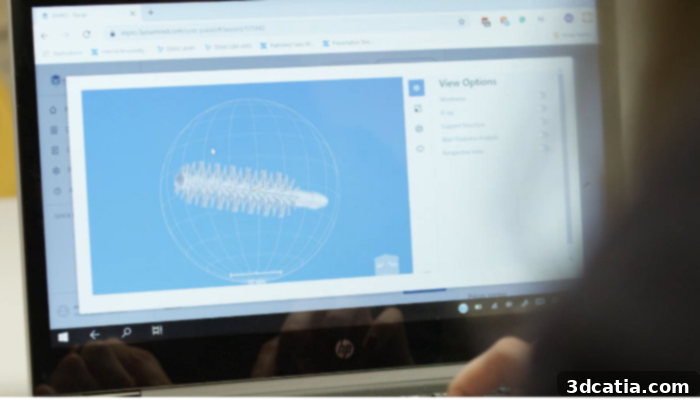
Photo Credits: Erpro
However, the utility and necessity of these powerful solutions are not exclusively limited to large Original Equipment Manufacturers (OEMs) or expansive service bureaus. Mike Moceri from MakerOS emphasizes that, in reality, these workflow management softwares can profoundly benefit nearly anyone operating within the expansive field of additive manufacturing. He states, “We built MakerOS specifically for the modern product designer, engineer, and fabricator. Just in the US, there are over 150,000 engineering firms, contract manufacturers, job shops, prototypers, with 50 or fewer employees that do not have the time, money, patience, or sometimes the knowhow to string together an effective business operating system to make themselves competitive for the post-COVID era.” This underscores a critical unmet need among small to medium-sized enterprises (SMEs) that struggle to implement complex digital solutions. A compelling illustration of this is the case of Hydra Research in Portland, Oregon. John Kray, the CEO and Founder, highlighted the indispensable role MakerOS played in enhancing his business, noting it provided a significantly improved and more efficient method for customers to submit projects. Specifically, it helped streamline project management for their 3D printing services and established a professional, clean client project portal, thereby making Hydra Research far more appealing to prospective customers by offering a seamless experience.
How Does Additive Manufacturing Workflow Software Help? Unlocking Organization, Collaboration, and Financial Gains
The tangible ways in which AM MES software assists additive manufacturing businesses are multifaceted and impactful. Mike Moceri articulates three primary categories that elucidate why companies derive specific benefits from AM workflow tools: enhanced organization, seamless collaboration, and, of course, significant financial advantages. But what exactly do these entail in a practical sense? In the context of MakerOS, improved organization allows users to centralize all necessary data for any given project into one intuitive, easy-to-use platform. Moceri vividly describes the prior challenges: “I have personally started and run two fabrication shops before using MakerOS and we typically used around six daily applications to manage billing, project management, client and team communication, file analysis, and the list goes on. What happened was we had data for a single project in several different places that had to be input manually and if we wanted it in one place, we would have to create or integrate an expensive and cumbersome solution. So we took that headache, broke it down into several modules within the MakerOS platform, and made everything work seamlessly in one organized portal.” This consolidation drastically reduces manual effort, minimizes errors, and ensures that all project information is consistent and readily available.
This ability to centralize and organize all files and project-related information within a singular system offers a colossal benefit in itself, but it also serves as a catalyst for further operational advantages. By significantly increasing the organization of data and assets, the central AM MES system inherently enables vastly greater collaboration among all project stakeholders. Every team member, regardless of their role or location, can securely access any file or piece of information they might require, as everything is consolidated within one comprehensive portal rather than being scattered across numerous individuals, departments, or disparate digital storage locations. The culmination of this enhanced organization and streamlined collaboration directly leads to the third major benefit: improved financial returns. The fundamental principle is simple: the faster and more efficient additive manufacturing processes become – thanks to automation, better scheduling, and reduced downtime – the greater the throughput of parts that can be produced. This increased productivity translates directly into a higher return on investment (ROI), lower operational costs, and ultimately, greater profitability. Additive manufacturing workflow solutions thus play an absolutely critical role in empowering companies to optimize their entire production ecosystem and achieve sustained growth.
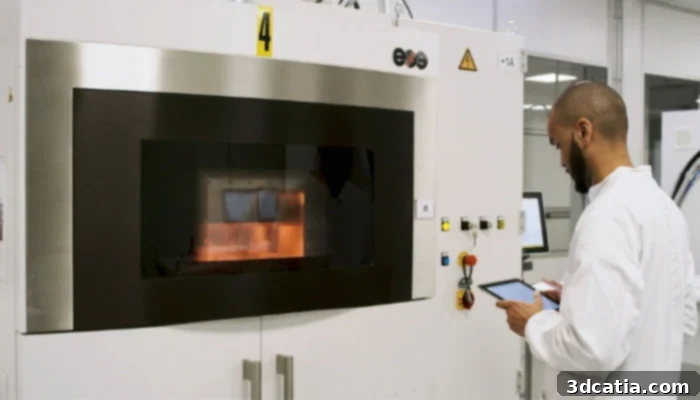
Photo Credits: Erpro
L’Oréal concurs that these collaborative and organizational benefits are profoundly significant, particularly in an era where remote work has become prevalent, and physical interactions with coworkers can be uncertain. Matthew Forrester explains: “Instead of sending emails, or bringing hefty files down to the lab with a usb stick (made even harder over the recent months), with just a couple of clicks a part is ordered by our engineers, and they know that within 24 hours a physical component will be ready for use. A single software solution means that when components are ordered, the internal billing, reporting, and stock management data is automatically filled. The web-based approach also meant we could also open up the application to all our development and purchasing teams to have easy access to a 3D file viewer.” This seamless digital interaction and automation are particularly crucial when so many employees are working remotely, transcending geographical barriers. AM workflow management software thus proves instrumental in eliminating, or at the very least significantly reducing, these logistical and communication challenges, ensuring continuity and efficiency.
An additional and immensely valuable advantage of these software solutions becomes apparent when attempting to combine and manage different additive manufacturing technologies simultaneously. Erpro, operating as a leading service provider, exemplifies this challenge perfectly. Their facilities house a diverse array of machines from various manufacturers, including industry giants like HP, Carbon, EOS, and Stratasys. Each of these manufacturers typically provides its own proprietary monitoring software for their specific 3D printing equipment. However, this creates a significant hurdle when a company aims to integrate and leverage multiple brands for a unified production workflow. Gaël Spiral notes that 3Yourmind proved pivotal in resolving this particular operational conundrum for Erpro: “The software we use today allows us to encompass all the additive manufacturing technologies we have, to pool them. So the 3Yourmind software helps us to bring everything together, more importantly it also extends from the production management to post-processing and shipping. It’s not just about controlling the print itself, but the entire value chain.” This capability for cross-platform integration is a game-changer for service bureaus and large-scale operations, allowing for optimized resource allocation, streamlined production scheduling, and comprehensive oversight of the entire additive manufacturing value chain.
What Are the Remaining Limitations? Addressing Challenges in AM MES Solutions
Despite the numerous and undeniable benefits offered by these advanced software solutions, it is important to acknowledge that they are not without their areas for improvement. There remain certain limitations that developers and users are actively working to address. One significant point of concern, eloquently raised by Gaël Spiral, centers on quality management: “Although versatile, the software remains specialized in the field of additive manufacturing and has limitations in terms of quality management. Compatibility with ISO standards, for example, is not an easy task, and I think this is the main area for improvement.” As additive manufacturing continues its progression from primarily prototyping applications to producing critical, end-use parts across an expanding array of industries, the rigorous demands of quality control, robust traceability, and seamless integration with international ISO standards will undoubtedly become increasingly paramount. This is an area where AM MES software will need to evolve further to meet stringent industrial requirements.
Mike Moceri also highlights that the scope of many existing workflow management software solutions can often be a significant limitation. He stresses that the most effective solutions are those that adopt a truly holistic and integrated approach to the entire production process. Moceri observes, “Many workflow management software solutions are limited by their scope. Some have the ability to automate quoting but they stop there and don’t have any solution after the quote. Others have a good project management system but no way for clients to collaborate on the project with you. Not many solutions offer the holistic approach to workflow management that MakerOS does.” This fragmentation can lead to new inefficiencies as companies are forced to stitch together multiple disparate systems, undermining the very goal of streamlining operations. A comprehensive AM MES should ideally cover the entire journey from initial customer inquiry and quoting, through design validation, production planning, actual manufacturing, quality assurance, post-processing, and final logistics, all within a unified platform.
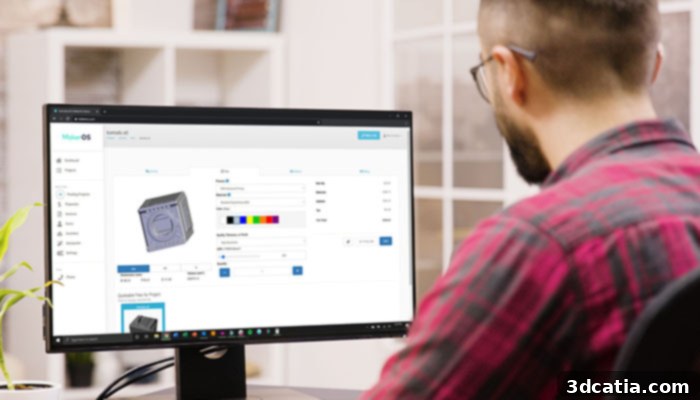
Photo Credits: MakerOS
From Matthew Forrester’s perspective, workflow solutions hold the potential to go even further in terms of streamlining and automating processes, pushing the boundaries of what’s currently achievable. He expresses his strong advocacy for the “Lean Life” philosophy, which centers on continually seeking opportunities to reduce task duplication, eliminate activities that offer low added value, enhance overall agility, and dramatically accelerate Time To Market. Forrester envisions a future where: “Ideally the part should start printing as soon as the CAD design is finished, and the replacement stock order is sent directly, and honestly, we are pretty close to this already. Moving forward, we see real benefits from analytical tools using AI to highlight areas for weight reduction, print time, or build optimization – so let’s see some more of these on the market!” This aspiration highlights the growing desire for predictive analytics and AI-driven optimization within AM MES, pushing towards truly autonomous and intelligent manufacturing. Overall, however, the experts collectively emphasize that the substantial benefits offered by these systems far outweigh the existing limitations. They also highlight the rapid pace of innovation, noting that many significant improvements have already been implemented in recent years. The market now offers a greater diversity of solutions than ever before, with an increasing number incorporating comprehensive approaches that enable total control over every critical step of the additive manufacturing production cycle.
Last Words of Advice: Strategic Implementation for Additive Manufacturing Success
In general, additive manufacturing workflow management software appears to yield the most significant advantages for 3D printing service bureaus and large Original Equipment Manufacturers (OEMs), where the sheer volume and complexity of production demand sophisticated oversight. Their true value becomes undeniably clear when businesses are tasked with creating a substantial number of 3D printed parts, where manual processes quickly become unsustainable. That being said, the inherent benefits of these systems are broadly applicable to virtually any business that leverages additive manufacturing, regardless of its scale. The ability to meticulously organize, track, and manage every step of the manufacturing process – from the initial concept and design through production, post-processing, and final shipment to clients – is an invaluable asset in today’s competitive business environment. This is especially true as distributed workforces become more common, with employees increasingly working remotely. Furthermore, these systems are continuously improving, becoming more robust and, crucially, highly customizable. This adaptability allows them to be tailored to specific organizational needs, thereby unlocking even greater benefits. Our experts are unanimous in their belief that additive manufacturing workflow solutions are not just useful, but increasingly essential for achieving operational excellence.
“Additive manufacturing, especially batch and mass-production, is relatively new, and businesses are still finding their way around best practices and different ways of working. I don’t believe there is a unique solution for everyone, but to draw a parallel with the beauty of additive, the ability to customize and create unique systems brings great value to the end user. You should certainly aim for modular systems that can grow with the maturity of the technology within your enterprise, and don’t be afraid to create your own specs when you can’t find what you want in the brochures.” – Matthew Forrester
Matthew Forrester’s advice emphasizes the dynamic nature of AM and the importance of flexibility. He suggests focusing on modular systems that can evolve alongside your company’s growing expertise and the technological advancements in additive manufacturing. The core message is that rather than searching for a one-size-fits-all product, companies should prioritize solutions that offer customization, allowing them to define their own specific requirements if off-the-shelf options don’t fully meet their needs. This approach ensures that the AM MES solution remains relevant and effective as the business matures and its AM capabilities expand.
“But I’ll leave you with these words of advice: you should take advantage of the tools out there that allow you to make more, including MakerOS.” – Mike Moceri
Mike Moceri’s recommendation is straightforward and pragmatic: actively leverage the innovative tools available in the market. His point highlights that specialized AM workflow software, such as MakerOS, is designed specifically to enhance productivity and facilitate greater output. By adopting such systems, businesses can overcome operational bottlenecks and fully capitalize on the potential of their additive manufacturing investments, ultimately enabling them to “make more” with increased efficiency and reduced hassle.
“You have to structure your specifications well. This will allow you to choose the right solution and not waste time. I would also say that you have to define your priorities well.” – Gaël Spiral
Gaël Spiral provides crucial advice on the foundational steps for successful software implementation. He stresses the absolute necessity of clearly defining and meticulously structuring one’s operational specifications. This meticulous planning phase is critical because it directly influences the selection of the most appropriate AM MES solution, thereby preventing wasted time, resources, and potential costly missteps. Furthermore, prioritizing needs ensures that the chosen software aligns perfectly with the company’s strategic goals and addresses its most pressing challenges effectively.
Considering the extensive benefits and the expert insights, would you consider integrating an AM workflow management software into your operations? We invite you to share your thoughts and experiences in a comment below or engage with us on our Linkedin, Facebook and Twitter pages! For the very latest 3D printing news delivered straight to your inbox, don’t forget to sign up for our free weekly Newsletter here. You can also discover all our insightful videos and content on our YouTube channel, where we continually explore the advancements in additive manufacturing.
Thumbnail Photo Credits: MakerOS