
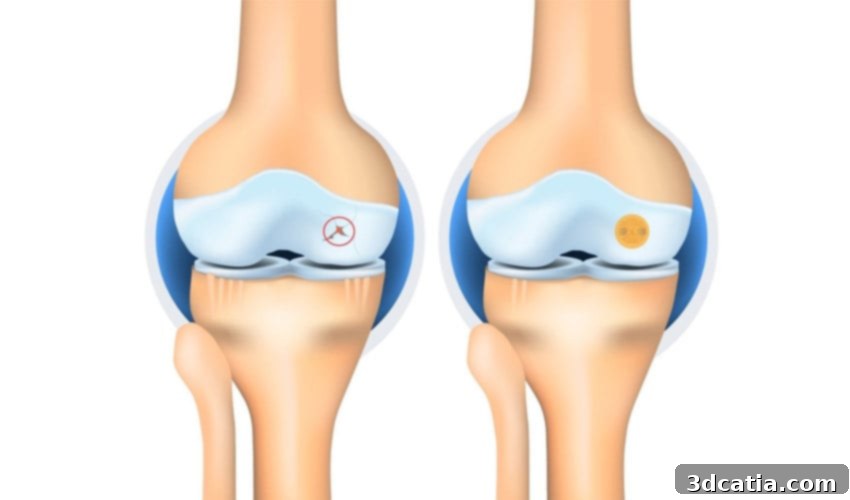
Revolutionizing Orthopedic Care: Nanochon Pioneers 3D Printed Cartilage Repair with Chondrograft™
Established in 2016, Nanochon stands at the forefront of medical innovation, dedicated to transforming cartilage replacement and repair for patients grappling with debilitating knee injuries. The company leverages cutting-edge 3D printing technology, specifically advanced extrusion methods, to engineer a revolutionary implant designed to seamlessly replace lost or severely damaged cartilage. This groundbreaking approach positions Nanochon as a formidable alternative to traditional arthroplasty – a surgical procedure often associated with significant patient discomfort, prolonged convalescence, and limited long-term efficacy. Named Chondrograft™, this state-of-the-art 3D-printed device is crafted from an innovative, proprietary biocompatible composite material meticulously formulated to actively promote natural tissue growth and regeneration. To delve deeper into the intricacies of this implant and gain insight into Nanochon’s future aspirations, we had the distinct pleasure of connecting with Nathan Castro, one of Nanochon’s visionary co-founders and its Chief Technology Officer.
Introducing Nathan Castro and His Journey into 3D Printing
“My name is Nathan Castro, and I proudly serve as co-founder and CTO of Nanochon, Inc. Our core mission revolves around the development of a pioneering 3D-printed synthetic implant meticulously engineered for cartilage resurfacing and repair within the complex patellofemoral (knee) joint. My fascination with additive manufacturing and 3D printing technology began in the mid-2000s. During my undergraduate studies at the University of Texas-El Paso, I had the invaluable opportunity to participate in a research program at the esteemed W. M. Keck Center for 3D Innovation. This experience proved pivotal, as it allowed me to delve into the synthesis of biocompatible resins, specifically tailored for stereolithography. My interest in this advanced photopolymerization technique deepened during my doctoral studies. It was then that I embarked on the ambitious project of constructing a tabletop stereolithography system from scratch, simultaneously expanding my research focus to the critical field of musculoskeletal tissue regeneration. This extensive background in materials science and additive manufacturing forms the bedrock of Nanochon’s innovative approach.”

Nathan Castro, co-founder and CTO of Nanochon
The Genesis and Vision Behind Nanochon
“Nanochon’s journey began as a spin-off from George Washington University, an institution where my co-founder, Ben Holmes, and I completed our doctoral studies, specializing in the exciting field of regenerative medicine. Our introduction to the entrepreneurial landscape was facilitated through the local NIH I-Corps program in Washington D.C. This invaluable program provided us with the framework to conduct numerous customer discovery interviews, rigorously testing the viability and potential impact of our nascent technologies. By the program’s conclusion, it became clear that our combined expertise and shared vision were perfectly aligned. This realization prompted us to join forces, officially giving birth to Nanochon. Our overarching objective from day one has been to address the profound and often unmet need for highly effective and efficient solutions in cartilage repair. We believe that by applying a sophisticated, multidisciplinary approach rooted in advanced materials science and mechanical engineering principles, we can deliver truly transformative patient outcomes.”
The Innovative Production of Nanochon Implants
“The manufacturing process for Nanochon’s signature Chondrograft™ implant represents a significant leap forward in medical device production. Each implant is meticulously additively manufactured through the precise fusion of a filament composed of our unique, proprietary biocompatible composite material. This extrusion-based 3D printing process allows for unparalleled control over the raw microstructure of the implant, which is precisely dictated by the sophisticated pathing of the 3D printer. Beyond this visible macroscopic structure, Chondrograft™ is ingeniously designed to incorporate submicron porosity. This intricate network of tiny pores, developed during a specialized post-processing phase, results in a device that is not only remarkably softer and more malleable – characteristics essential for optimal integration within the body – but also robustly retains its structural integrity. What truly distinguishes Nanochon and our Chondrograft™ from other approaches in the field is our unparalleled, unique 3D-printable material. This advanced material is the cornerstone of our ability to produce an implant that is simultaneously mechanically robust, capable of withstanding the dynamic forces within the knee joint, and inherently biocompatible, fostering a harmonious environment for cellular growth and tissue regeneration. We are confident that this combination of innovative material science and advanced manufacturing techniques is key to addressing the critical demand for effective and efficient cartilage repair.”
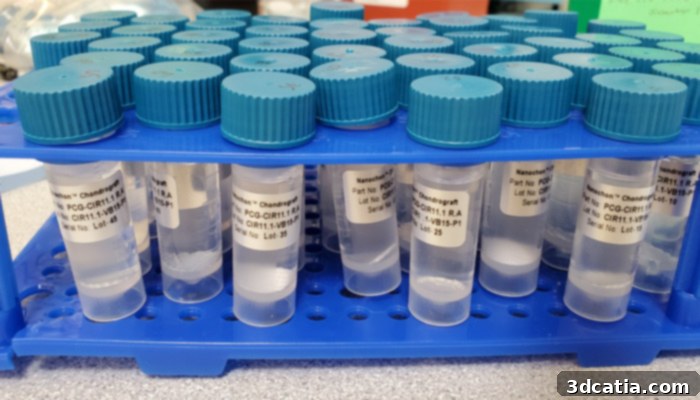
The 3D printed implants
The Strategic Advantages of Additive Manufacturing for Nanochon
“At Nanochon, we firmly believe that additive manufacturing, commonly known as 3D printing, offers an expansive array of advantages, particularly for agile, innovative start-up companies like ours. These benefits extend beyond mere production and fundamentally shape our development and operational strategies. Specifically, we harness several key strengths of this technology. First, additive manufacturing enables incredibly rapid iteration and efficient design testing. The ability to quickly produce multiple prototypes, evaluate their performance, and swiftly refine designs significantly accelerates our product development cycle. This iterative process is crucial for optimizing complex medical devices like Chondrograft™. Second, it provides a highly cost-effective solution for small- to medium-scale manufacturing. Unlike traditional manufacturing methods that often require expensive tooling and extensive lead times, 3D printing allows for on-demand production with minimal overhead, making it ideal for specialized medical implants. Third, additive manufacturing facilitates prudent capital investment management. The versatility and accessibility of various FFF (Fused Filament Fabrication) 3D printers available on the market, coupled with the inherent robustness of these systems, enable us to achieve excellent levels of reproducibility and repeatability in our manufacturing processes. This means we can consistently produce high-quality implants with predictable performance, a critical factor in the medical device industry, without needing massive upfront capital outlays typically associated with medical device production.”
Critical Considerations for Implementing 3D Printing in the Medical Field
“Our experience in bringing a 3D-printed medical device to fruition underscores the paramount importance of consulting with seasoned professionals in this highly specialized field. Navigating the complex landscape of regulatory guidance is particularly crucial. Additive manufacturing, while rapidly advancing, remains a relatively novel domain for the direct fabrication of medical devices. Although various guidance documents exist to assist manufacturers, it’s essential to recognize that these are often broad guidelines, open to interpretation, and constantly evolving. Engaging with individuals who possess direct, practical experience in securing regulatory approvals for 3D-printed medical devices can significantly minimize unforeseen challenges and prevent unnecessary obstacles in the development and approval process. Beyond regulatory compliance, careful consideration of market size and meticulous product design are equally vital. Nanochon strategically positions Chondrograft™ as a ready-to-use implant, suitable for a broad spectrum of patient categories suffering from cartilage defects. However, a comprehensive evaluation must always be undertaken to weigh the merits of developing a customized product tailored to individual patient anatomies against the efficiencies of a standardized, off-the-shelf solution. Determining the most fiduciary and clinically beneficial course of action requires deep market analysis and a clear understanding of patient needs and healthcare economics.”
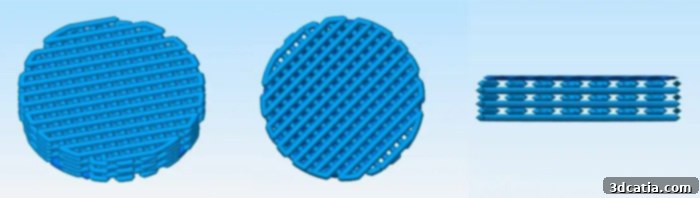
The 3D printed implant promotes cell growth
The Bright Future of Additive Manufacturing in Medicine
“I hold a firm conviction that the future of additive manufacturing within the medical sector is exceptionally bright and replete with untapped potential. As the underlying technology continues its rapid maturation, we will undoubtedly witness the emergence of entirely novel materials alongside innovative applications for existing ones. This ongoing evolution will unlock countless new avenues for exploration and development. We anticipate a future where personalized medicine becomes increasingly accessible, with 3D printing enabling patient-specific implants and prosthetics that offer unprecedented levels of fit and function. Furthermore, the advent of bioprinting – the 3D printing of living cells and tissues – holds immense promise for regenerative medicine, potentially allowing us to create functional organs or complex tissue constructs. The ability to rapidly prototype, customize, and produce intricate geometries on demand will profoundly impact surgical planning, drug delivery systems, and even educational models for medical training. The journey of additive manufacturing in medicine is still in its early chapters, and the innovations yet to come promise to redefine healthcare as we know it.”
A Final Message to Our Esteemed Readers
“On a personal note, the world of additive manufacturing profoundly awakened the inventor within me. It provided me with an incredibly powerful and accessible tool that empowers me to unleash my creativity and rapidly test novel ideas. The beauty of this technology lies in its ability to transform abstract concepts into tangible realities with remarkable speed and efficiency. A relatively small initial investment in 3D printing capabilities can yield immensely significant dividends, not only in a financial sense but also profoundly on a spiritual and intellectual level, fostering a continuous cycle of innovation and discovery. I encourage everyone to explore the boundless possibilities that additive manufacturing offers. To learn more about Nanochon’s groundbreaking work and how we are actively shaping the future of orthopedic medicine, please visit our website HERE.
We value your insights! What are your thoughts on Nanochon’s pioneering efforts in 3D-printed cartilage repair? Please share your perspective in a comment below or connect with us on our LinkedIn, Facebook, and Twitter pages! Don’t miss out on the latest advancements in additive manufacturing – subscribe to our free weekly Newsletter here, delivering the most current 3D printing news directly to your inbox! Additionally, you can find all our engaging videos on our dedicated YouTube channel.”
*All image credits: Nanochon