
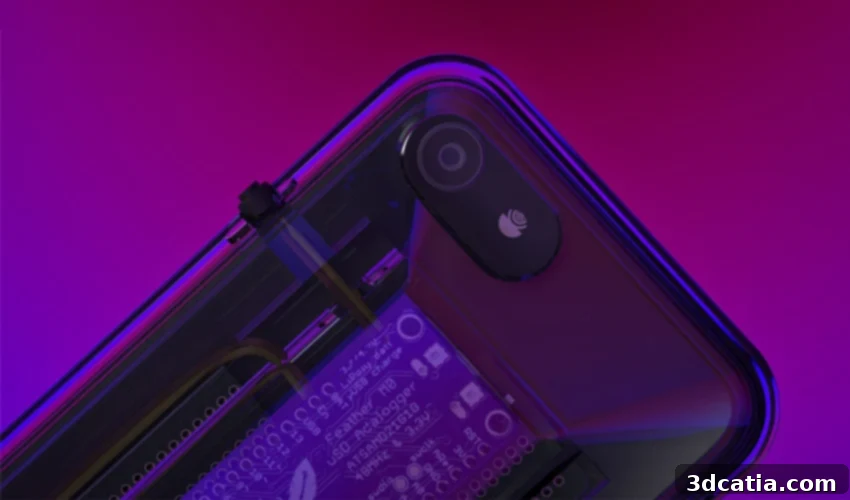
TypeCase: Revolutionizing Smartphone Accessibility for the Visually Impaired with Innovative 3D Printing
In an era defined by rapid technological advancement, the potential of 3D printing to create transformative solutions for individuals with disabilities continues to expand, offering renewed hope and empowerment to thousands. Among these groundbreaking innovations is TypeCase, an ingeniously designed keyboard seamlessly integrated into a mobile phone case, specifically crafted to enhance smartphone usability for people who are blind or visually impaired. This remarkable invention is the brainchild of Dougie Mann, a recent and accomplished university graduate holding Masters Degrees in Mechanical Engineering and Product Design from the prestigious Imperial College London and The Royal College of Art. Mann’s primary motivation was to dismantle the barriers that often make modern smartphones challenging for people with disabilities to navigate. His visionary solution is TypeCase: a compact, 3D printed keyboard featuring a mere 5 buttons, a stark and deliberate contrast to the often overwhelming 50+ buttons found on traditional virtual keyboards.
The prevalent design of contemporary smartphones, dominated by flat, featureless touchscreens, presents significant hurdles for visually impaired individuals who struggle to discern and accurately interact with virtual buttons. It was this pressing need that spurred the creation of TypeCase. The device’s innovative designs are brought to life through the precision of resin 3D printers, a manufacturing choice that facilitates intricate detail and rapid prototyping essential for such specialized assistive technology. TypeCase liberates users from the common frustrations associated with ordinary smartphone interfaces, offering a discreet and highly functional alternative to more overt or, as some users perceive, stigmatising solutions such as voice-to-text devices. The genius of TypeCase lies in its integration: by embedding the keypad directly into the phone case, users gain the unparalleled ability to type without needing to look at their screen, using just one hand, and even while keeping their phone conveniently tucked away in their pocket. This design philosophy champions not just accessibility, but also discretion, efficiency, and personal independence.
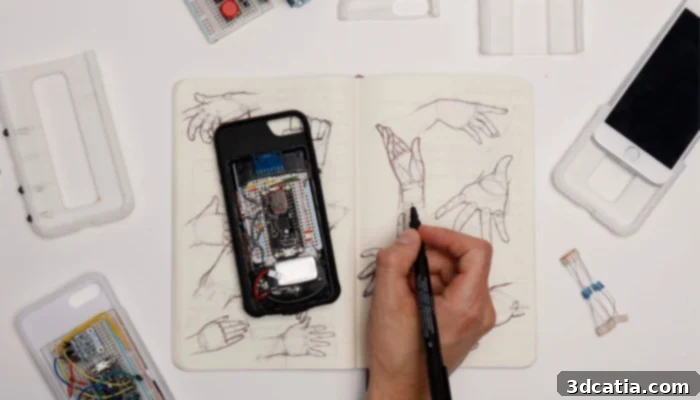
The design of the TypeCase keyboard consists of only 5 tactile buttons, allowing for intuitive and discreet smartphone interaction | Credits TypeCase
TypeCase masterfully reinterprets the concept of a traditional keyboard, distilling its functionality into a beautifully intuitive and effortlessly interactive interface. The compact keypad operates on principles akin to Braille, guiding the user through the correct button presses purely through tactile cues when holding the phone. For individuals who are blind, TypeCase goes beyond mere message sending; it introduces an entirely new dimension of communication through sophisticated tactile feedback that allows users to *receive* messages as well. By ingeniously reversing the interaction, users can “feel” incoming text, with small, distinct vibrations in each of their fingers corresponding to the same unique code used for typing. This bidirectional haptic communication system represents a profound leap forward in inclusive technology, enabling a truly immersive and private communication experience without reliance on visual or auditory cues.
This innovative system developed by Dougie Mann has the potential to fundamentally revolutionize communication for the blind and visually impaired community. It offers not only a practical tool but also a significant step towards more inclusive digital interaction, fostering greater independence and reducing reliance on auditory output, which can sometimes be less private or convenient. Furthermore, TypeCase extends its utility beyond the visually impaired, providing a completely novel and efficient way for anyone to use a smartphone without needing audio or visual input. This discreet interaction can be particularly beneficial in environments where silence is required or personal privacy is paramount. The applications also reach individuals with upper extremity amputations, for whom typing with a full keyboard and mouse can be an incredibly time-consuming and often frustrating endeavor. A one-handed, gestural keyboard like TypeCase dramatically speeds up interaction with these essential devices, offering a fluid and accessible input method that enhances productivity and ease of use for a wider demographic facing diverse physical challenges.
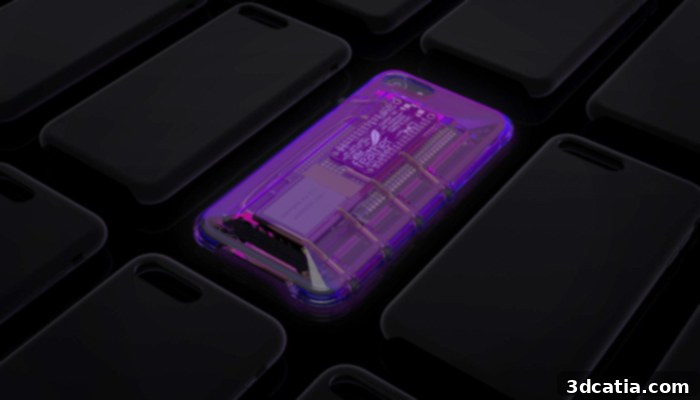
Users of TypeCase can “feel” received messages through a unique vibrating code, enabling two-way tactile communication | Credits: TypeCase
The development journey of TypeCase was characterized by a free, experimental, and deeply user-centric process. Dougie Mann commenced his work by exploring broader thematic questions surrounding disability and product development, seeking to understand not just technical solutions but also the societal and emotional contexts. He meticulously studied the delicate balance required between form and function, delving into the critical role that fashion and aesthetics play even in products designed for accessibility – ensuring that assistive technology is not just functional but also desirable and integrated seamlessly into daily life. Dougie rigorously tested numerous different technologies and design iterations before converging on the definitive solution that ultimately brought the TypeCase project to fruition. His methodical approach involved rapid prototyping of both the electronic components and the physical designs. Early user tests were conducted using prototypes manufactured with 3D printing resin, allowing for quick iterations and crucial feedback incorporation from the very people TypeCase is designed to serve. This agile development process, heavily reliant on the versatility of 3D printing, was instrumental in refining the device’s ergonomics, tactile feel, and overall user experience.
Dougie Mann, the visionary creator, candidly acknowledges that “The product still needs a lot of work and development on the hardware and design; there is even a side of the software that is completely intact in the project that could make a big difference in usability and functionality.” This honest assessment underscores his commitment to continuous improvement and his dedication to perfecting TypeCase. He expresses his ultimate aspiration: “I’d love to get to the point where it makes someone’s life easier, then I’ll be happy.” This profound statement highlights the core mission behind TypeCase – not just to create a piece of technology, but to genuinely enhance the quality of life for individuals who have long faced barriers in digital communication. The ongoing development promises further refinements in haptic feedback mechanisms, software integration for a more personalized experience, and hardware optimization for durability and widespread adoption. TypeCase stands as a testament to how innovative design, coupled with advanced manufacturing techniques like 3D printing, can forge a path towards a more inclusive and accessible future for all.
We invite you to engage with us: Would you consider using TypeCase? Share your thoughts and insights in a comment below, or connect with us on our Facebook and Twitter pages! Don’t miss out on the latest advancements and news in the dynamic world of 3D printing – sign up for our free weekly Newsletter and have all the breaking stories delivered directly to your inbox!
Additionally, mark your calendars! We have an exciting webinar approaching on the 26th of February, dedicated to guiding you through the process of adopting additive manufacturing for your specific projects. This is an invaluable opportunity to learn from industry experts. You can sign up for free as of today HERE.