
Think3DDD: Advancing Animal Health with Customizable 3D Printed Orthotics and Prosthetics
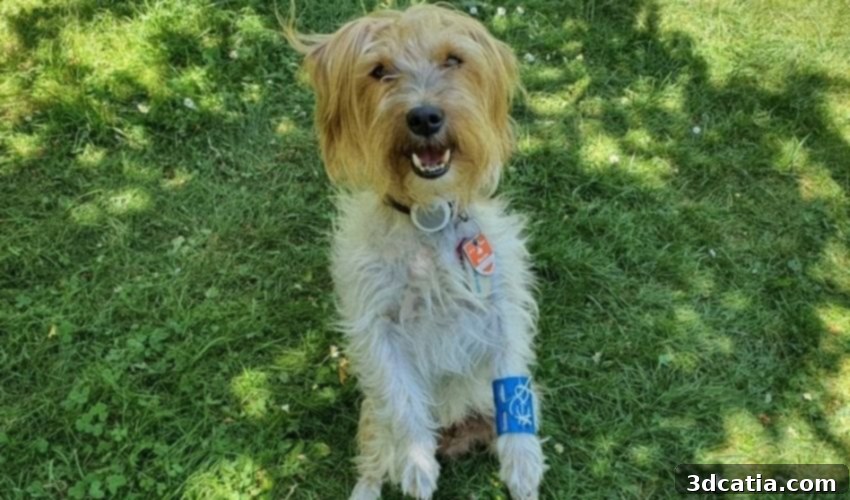
The medical field is currently experiencing a profound transformation, largely driven by the rapid advancements in 3D printing technology, also known as additive manufacturing. This innovative approach is particularly revolutionizing the creation of orthotics and prosthetics, offering unprecedented levels of customization. A key advantage of additive manufacturing lies in its ability to produce devices that are perfectly adapted to the unique morphology of each individual patient – a benefit that extends not only to humans but also, remarkably, to our beloved animal companions. This leads to a multitude of significant advantages: a dramatic simplification of the complex steps involved in the manufacturing process, alongside the capability to precisely address highly individualized medical requirements. Recognizing this immense potential, the Berlin-based startup Think3DDD has been at the forefront of this evolution since 2018. The company is dedicated to producing bespoke 3D printed orthotics for animals, championing a model that is inherently sustainable, remarkably cost-effective, and deeply personalized. We recently had the opportunity to sit down with Tino Jacobi, the visionary founder and CEO of Think3DDD, to delve into his profound connection with additive manufacturing, explore the intricate details of their 3D printing processes, and discuss the ambitious future plans for his groundbreaking company.
3DN: Could you introduce yourself and Think3DDD, detailing your journey into 3D printing and the company’s core mission?
Founder and CEO Tino Jacobi with his dog Kibo (photo credits: Think3DDD)
My fascination with new technologies and their multifaceted, interdisciplinary applications has been a lifelong pursuit. My initial foray into the world of 3D printing occurred during my A-levels, where I specialized in computer science and chemistry. During this period, I leveraged this cutting-edge technology to design and construct a variety of spare parts and engaging teaching models for the Lise Meitner Secondary School, marking the beginning of my hands-on experience. This foundational work subsequently led to my involvement in several impactful youth research projects, further solidifying my passion for innovation.
What truly captivates me about 3D technologies is their unparalleled versatility. The extensive selection of materials available, coupled with the material-saving nature of the manufacturing process, and the virtually limitless flexible customization options, are aspects I find incredibly exciting. I firmly believe that when the precision of 3D scanning methods is intelligently integrated with sophisticated automated software and groundbreaking, innovative materials, the potential to create truly unique and revolutionary products becomes boundless. My profound fascination with the almost endless possibilities that 3D technologies offer ultimately inspired me to transform what began as a hobby into my professional career.
In collaboration with Leonardo Lauer, I co-founded Think3DDD, initially establishing ourselves as a comprehensive 3D printing service provider. Our primary focus was centered on the production of spare parts that were no longer actively manufactured, catering to niche markets such as classic car restoration, very small-batch production for specialized components, and the creation of intricate models for various research facilities. This diverse range of projects has consistently provided us with fascinating insights into a wide array of research and development endeavors across different sectors. Beyond mere production, our expertise often extends to intricate model design and in-depth material consulting, ensuring our clients receive holistic support. Over time, Think3DDD has strategically expanded its operations, increasingly dedicating resources to the development of its own proprietary products. Today, in addition to our core 3D printing services, we proudly offer custom 3D printed healing cuffs designed for both humans and animals, protective masks, and innovative antimicrobial door handles. Our product range continues to evolve and grow, driven by our unwavering commitment to developing solutions that are not only user-friendly but also environmentally conscious and sustainable.
3DN: How did the idea for Think3DDD’s animal-specific products originate, and how do you specifically cater to your animal customers?
The pivotal idea for creating individualized healing sleeves for animals sprang directly from a poignant encounter with a dog patient named Murphy. Murphy, who belonged to our then-cooperation partner for 3D printing materials, had unfortunately suffered a leg fracture, specifically to his hind leg, caused by biting. Upon examination, his veterinarian provided a standard bandage, but it quickly became apparent that this solution was inadequate. The bandage failed to provide sufficient support and, critically, led to rapid skin irritation and inflammation. Witnessing Murphy’s evident discomfort and struggle with the conventional bandage was a powerful motivator. Given that surgical intervention carried significant risks and the simple fracture had the potential to heal naturally, we sought an alternative. It was in this moment that our very first VET orthi – our specialized animal orthosis – was conceived and brought to life.
What struck us as particularly fascinating and deeply rewarding was the immediate and profound impact our orthosis had on Murphy. He suddenly began to walk with a newfound ease, almost as if his fracture had vanished. The inflammation that plagued him quickly subsided, and the fracture healed remarkably fast on its own. This transformative experience served as a powerful validation and catalyst. Inspired by Murphy’s rapid recovery, we dedicated ourselves to rigorously researching and identifying increasingly suitable technologies and advanced materials for our custom orthoses. To date, our primary focus has been on treating dogs and cats, addressing a wide spectrum of mobility and injury issues. However, we have also occasionally received and fulfilled unique requests from other animal species, as well as from the human medical sector. For animals, our orthoses are most commonly applied to either the front or hind leg. The typical clinical conditions we effectively treat mirror many human ailments, including various bone fractures, strains, degenerative conditions like arthrosis, and chronic walking difficulties. In more complex and severe cases, such as joint fractures, torn ligaments, or significant bone trauma, our orthosis proves invaluable as a supportive aid during the post-operative recovery phase. Furthermore, our capabilities extend to crafting individual prostheses, offering renewed mobility and quality of life for animals facing limb loss. Our commitment is to provide tailored solutions that improve the lives of animals, offering comfort and promoting healing in a humane and effective manner.
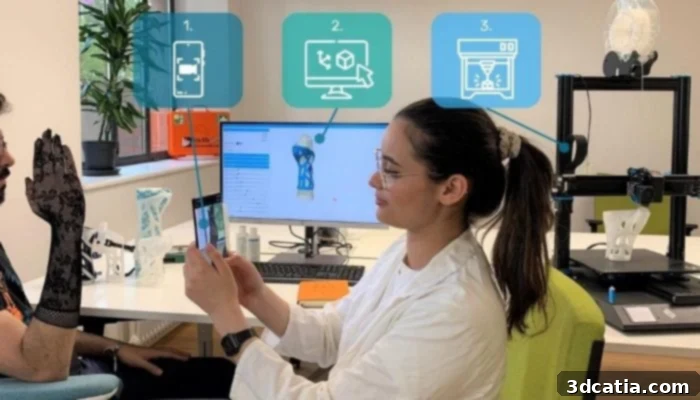
Scan via cell phone, process using 3D printing software and then 3D print – this is the process at Think3DDD (Image: Think3DDD)
3DN: Can you elaborate on the detailed process involved in creating a customized VET orthi for an animal patient?
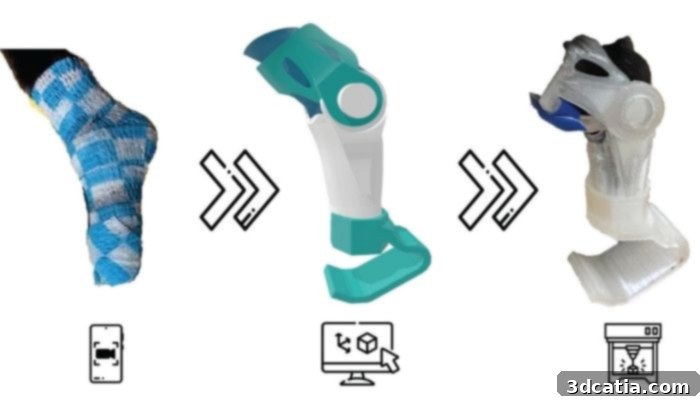
The entire process for manufacturing one of our bespoke VET orthi splints is meticulously structured into three distinct yet interconnected steps, ensuring precision and optimal patient outcome. The initial step involves accurately scanning the specific body part requiring treatment. To achieve this, the affected limb is carefully wrapped with specially designed patterned adhesive bandages. Leveraging the ubiquitous accessibility of modern technology, any smartphone can then be used by the veterinarian or even the pet owner to capture a comprehensive 360-degree video of the bandaged body part. This simple yet effective video capture forms the foundation for the next stage: our proprietary software automatically processes this video data, meticulously calculating and generating a highly accurate digital three-dimensional image of the limb. This digital twin serves as the precise blueprint for the customized orthosis.
In the subsequent second step, our team skillfully adapts the VET orthi to this newly acquired digital image. This crucial design phase is facilitated by a sophisticated, semi-automatic CAD (Computer-Aided Design) program that we have developed in-house, specifically tailored to our needs. During this stage, we meticulously integrate the veterinarian’s precise specifications regarding the required level and type of support. For instance, we consider whether the orthosis needs to be exceptionally rigid and stable, or if a degree of flexibility is more appropriate for the specific condition. Furthermore, we design protective zones to shield areas prone to swelling or irritation. A key aspect of our design philosophy is optimizing all our digital models for the most efficient and straightforward 3D printing process possible. This careful optimization means that, in most cases, no additional support structures are needed during printing, which not only conserves valuable material but also significantly reduces overall production time, contributing to both cost-effectiveness and sustainability.
Finally, the digital model is brought to life through the 3D printing process. We utilize a carefully selected semi-flexible material that is either fully recyclable or compostable, aligning with our commitment to environmental responsibility. After the printing is complete, any minor post-processing, such as smoothing edges or removing tiny imperfections, is performed to ensure maximum comfort and safety for the animal. Once this final touch-up is done, the VET orthi is ready to be worn directly by the animal patient. The advantages of our custom 3D printed orthoses over conventional alternatives are numerous and significant. Chief among them is the superior ventilation they provide to the animal’s coat and skin. This excellent airflow is critical in preventing common issues such as skin irritation and inflammation, which are frequently observed with traditional bandages or ill-fitting splints. Additionally, our orthoses are remarkably lightweight, ensuring minimal burden on the animal and promoting greater comfort and mobility. Cleaning the VET orthi is also exceptionally easy, contributing to better hygiene. Due to these and many other benefits, the vast majority of our animal patients adapt to and accept our supportive measures very quickly, often showing improved comfort almost immediately. And in the unfortunate event that a VET orthi gets damaged, for instance, if an animal chews on it, the digital file allows for easy and rapid reproduction using the 3D printer, ensuring continuous care without lengthy delays.
3DN: What are the future plans and ambitious projects on the horizon for Think3DDD?
Looking ahead, Think3DDD is poised for significant growth and innovation across multiple fronts. On one hand, we are vigorously expanding our existing product range, with a particular emphasis on advancing veterinary medicine solutions. This involves the continuous development of our VET orthi sleeves, which are becoming progressively more sophisticated. Our goal is to incorporate flexible and freely movable joints into these designs, enabling us to effectively treat animals with increasingly complex orthopedic cases that require dynamic support and motion. This evolution will broaden the scope of conditions we can address, offering advanced solutions for a wider array of animal patients.
Simultaneously, we are dedicated to advancing automation within our production processes. The objective here is to manufacture our veterinary products even faster and with greater independence from physical location, streamlining our operations and enhancing efficiency. Furthermore, an innovative online accessible system is currently under development. This platform is designed to make high-quality 3D printing services significantly more affordable for small, individualized orders utilizing standard materials. Through this targeted automation, we envision making pure 3D printing orders accessible and cost-effective for private individuals, fostering wider adoption of customized solutions.
However, our most ambitious and pivotal project at this moment is the strategic spin-off of 3D-Medico. Within this new venture, we are meticulously developing a comprehensive, coordinated, and highly intuitive fitting and production system specifically tailored for orthopedic and rehabilitation technicians. The long-term vision for this system includes its eventual expansion to encompass other medical professionals, thereby extending its reach and impact. 3D-Medico aims to empower these specialists to digitally fit and manufacture our individualized orthoses, prostheses, and insoles directly on-site at each specialist company, all while adhering strictly to rigorous medical standards. To achieve this, our offering includes advanced 3D scanning capabilities via smartphone video, precise fitting facilitated by intuitive 3D CAD software, and streamlined manufacturing using the simplest 3D printing processes with sustainable, recyclable materials. As an initial flagship product, we have already successfully developed the “Orthimale,” a specialized orthosis designed for the hand area, demonstrating the system’s capabilities. The overarching vision driving this entire project is to provide every individual with access to a sustainable, everyday-suitable treatment solution through personalized orthoses, ultimately enhancing quality of life and promoting well-being.
3DN: Do you have any final words or advice you’d like to share with our readers?
Absolutely! As an interdisciplinary, dynamic, young, and international team, Think3DDD is always actively seeking further collaborations and welcoming new talented team members. So, if you are a user of orthotic tools, a curious junior researcher, or an experienced professional interested in exchanging ideas and exploring new possibilities, we warmly invite you to connect with us or follow our journey on LinkedIn. For those aspiring to kickstart their career in this exciting field, whether you’re looking for an internship, working on a bachelor’s or master’s thesis, or searching for a job opportunity, our doors are always open. We encourage you to check our job page (please note, it’s currently available in German) for suitable openings, or feel free to submit a spontaneous application at any time. We pride ourselves on offering our interns a truly integrated team experience, where they are valued at eye level, gaining a wealth of practical experience with the exciting option of a longer-term cooperation. Finally, I’d like to offer a piece of personal advice: If you ever have the incredible chance to transform your hobby into your professional career, seize that opportunity without hesitation! You will undoubtedly find it to be one of the most rewarding decisions of your life.
What are your thoughts on Think3DDD’s innovative approach to animal and human healthcare? We invite you to share your insights in a comment below or join the conversation on our LinkedIn, Facebook, and Twitter pages! Don’t forget to sign up for our free weekly Newsletter here to receive the latest 3D printing news directly in your inbox! You can also explore all our engaging videos on our YouTube channel.
*Cover Photo Credits: Think3DDD