
US Navy Unveils State-of-the-Art Additive Manufacturing Center of Excellence in Virginia: Revolutionizing Defense Production with 3D Printing
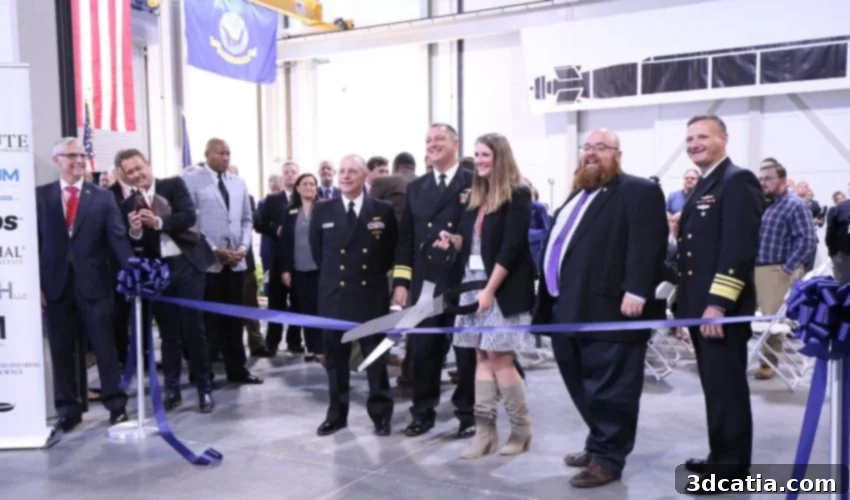
The United States Navy has officially inaugurated its cutting-edge Additive Manufacturing Center of Excellence (AM CoE) during a significant formal ceremony. This pivotal event was attended by prominent figures, including the Governor of Virginia, representatives from the Office of the Secretary of Defense, senior Navy officials, and key industry partners, underscoring the collaborative effort behind this initiative. Located within the State of Virginia’s Center for Manufacturing Advancement, on the campus of the esteemed Institute for Advanced Learning and Research, this new facility is poised to become a cornerstone of defense innovation.
The AM CoE is strategically designed with three dedicated bays, aiming to dramatically accelerate the adoption and implementation of additive manufacturing technologies. Its primary objective is to scale these advanced processes for widespread, impactful use across various Navy operations. Beyond merely accelerating technological integration, the Center will play a crucial role in streamlining the complex supply chain for Navy applications, ensuring greater efficiency and resilience. Furthermore, it is envisioned to serve as a vital operational hub, centralizing efforts and expertise in advanced manufacturing for national defense.
Virginia’s Vision: Economic Growth and Defense Strengthening
The inauguration ceremony was highlighted by an address from Virginia Governor Glenn Youngkin, who articulated the profound strategic and economic implications of the Center. His speech emphasized the multifaceted benefits this partnership brings to the region and the nation:
“This partnership will diversify, transform and grow Southern Virginia’s production capability for the Submarine Industrial Base as well, marking another major win for Virginia’s defense economy and labor market.”
Governor Youngkin’s remarks clearly recognize the intrinsic link between advanced manufacturing techniques, particularly additive manufacturing, and the potential for vastly increased production capabilities. His specific reference to the Submarine Industrial Base highlights a critical area of national defense that will directly benefit from enhanced manufacturing processes. Moreover, the emphasis on the “labor market” strongly implies the significant potential for job creation and workforce development resulting from the establishment and ongoing operations of the 3D printing activities at this Center. This initiative is set to invigorate Southern Virginia’s economy, attracting talent and investment into high-tech manufacturing sectors.
The integration of additive manufacturing is a game-changer for productivity. Unlike traditional subtractive manufacturing methods, 3D printing allows for the rapid production of complex parts with significantly less material waste. This efficiency translates into faster turnaround times for critical components, reducing lead times and enhancing operational readiness for the Navy. For instance, the UK Ministry of Defence has already contracted for 3D-printed metal parts to address pressing supply chain vulnerabilities, demonstrating a global trend toward leveraging this technology for defense applications. The US Navy’s AM CoE builds upon this understanding, aiming to replicate and expand these successes on a larger, more integrated scale.
Additive Manufacturing: A Strategic Pillar for Modern Defense
The establishment of the AM CoE is not an isolated event but rather the culmination of years of strategic foresight and incremental advancements. The US Navy has been exploring and utilizing additive manufacturing for some time. As early as 2017, the Navy successfully employed 3D printing to create essential submarine parts, demonstrating its viability for mission-critical components. This early adoption paved the way for more comprehensive integration. Building on these experiences, the Department of Defense (DoD) published an extensive Additive Manufacturing Strategy in 2021. This seminal document meticulously outlined a vision for integrating and collaborating on 3D printing technology across all military forces, emphasizing standardization, training, and expanded application.
The DoD’s strategy underscored the transformative potential of additive manufacturing to enhance readiness, enable agile sustainment, and reduce overall costs. It highlighted the importance of a robust ecosystem that supports research, development, and deployment of AM capabilities. The new AM CoE in Virginia perfectly embodies this strategic vision, serving as a centralized hub to drive these objectives forward. It will foster innovation, develop best practices, and facilitate the widespread adoption of 3D printing to produce a diverse range of parts, from simple spares to highly complex, customized components crucial for naval operations. This not only strengthens the military’s self-sufficiency but also reduces reliance on external and potentially vulnerable global supply chains.
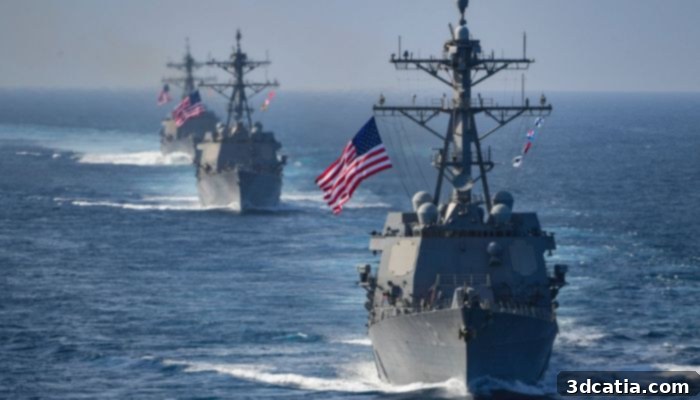
The US Navy warships are regularly called into action at sea (Photo credit: US Navy)
Building a Skilled Workforce for Tomorrow’s Defense
Crucially, the expansion of additive manufacturing capabilities goes hand-in-hand with robust workforce development initiatives. Alongside the physical Center itself, the Navy and the Office of the Secretary of Defense have jointly launched a critical training program named ‘Accelerated Training in Defense Manufacturing (ATDM)’. This innovative program is designed to immerse students in an intensive, fast-paced learning environment, providing comprehensive instruction in both traditional manufacturing techniques, such as welding and machining, and the cutting-edge methodologies of additive manufacturing. The overarching goal of ATDM is to equip a new generation of skilled professionals with the hands-on experience and specific industrial production skills absolutely necessary for the advanced defense sector.
Further solidifying this commitment to human capital, Rear Admiral Scott Pappano of PEO SSBN announced a significant investment into a Regional Training Center. This supplementary facility will work in tandem with the Center of Excellence, with an ambitious target of training 1,000 defense manufacturing workforce members each year. These initiatives highlight a proactive approach to addressing the skills gap in advanced manufacturing and ensuring a sustainable pipeline of talent capable of operating and innovating within the additive manufacturing ecosystem. Clearly, officials are not merely experimenting with the idea of 3D printing; they are demonstrating a deep, long-term commitment to scaling operations to their maximum possible output, recognizing that a skilled workforce is as vital as the technology itself.
The combined efforts of the AM CoE, ATDM program, and the Regional Training Center represent a holistic strategy to revolutionize defense manufacturing. This approach ensures that the US Navy not only possesses the technological capabilities but also the human expertise to design, produce, and maintain its fleet with unprecedented agility and efficiency. The ability to rapidly prototype, produce on-demand spare parts, and create customized solutions directly at the point of need significantly enhances military readiness and operational flexibility. This strategic commitment positions the Navy at the forefront of defense innovation, ready to tackle future challenges with advanced manufacturing solutions. For a comprehensive overview, readers can access the official press release HERE.
We invite your thoughts on this groundbreaking Center. How do you believe it will further empower the Navy in its critical global role? Share your insights and comments below or engage with us on our LinkedIn, Facebook, and Twitter pages! Don’t forget to subscribe to our free weekly Newsletter here to receive the latest 3D printing news directly in your inbox. You can also explore all our videos on our YouTube channel.