
Luxembourg Pioneers Sustainable Living with Nation’s First 3D Printed Home
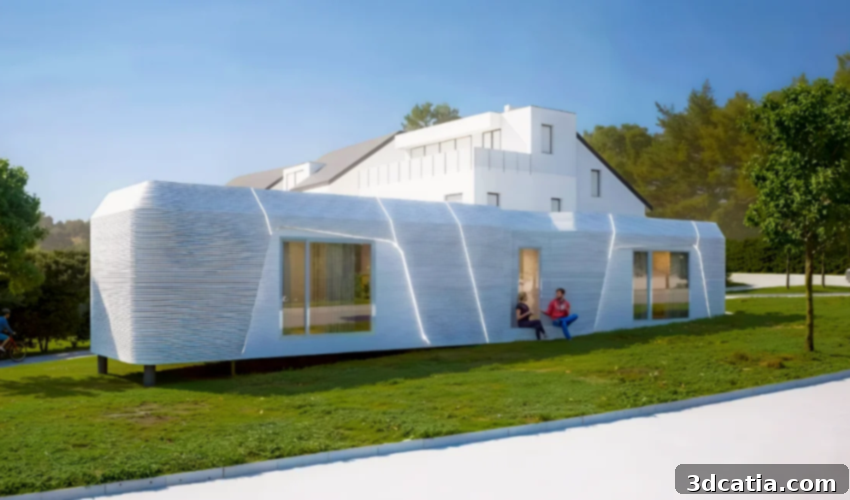
Luxembourg recently marked a significant milestone in modern construction and sustainable living with the unveiling of its first 3D printed house. Nestled in the picturesque commune of Niederanven, this innovative residential project is not just a technological marvel but also a beacon of hope for addressing Europe’s pressing housing challenges. The initiative was spearheaded by ICE Industrial Services, a distinguished Czech company, showcasing the remarkable potential of additive manufacturing in creating efficient, affordable, and eco-friendly housing solutions.
This pioneering project demonstrates how advanced robotics and intelligent design can dramatically cut down construction timelines and costs. The core structure of the house was meticulously printed in an astonishingly short period of just over 27 hours. While the printing phase was rapid, the entire fabrication process, including finishing touches, utility installations, and interior outfitting, was completed in approximately ten weeks. This impressive speed stands in stark contrast to traditional construction methods, which often span many months, if not years, highlighting the transformative efficiency of 3D printing technology.
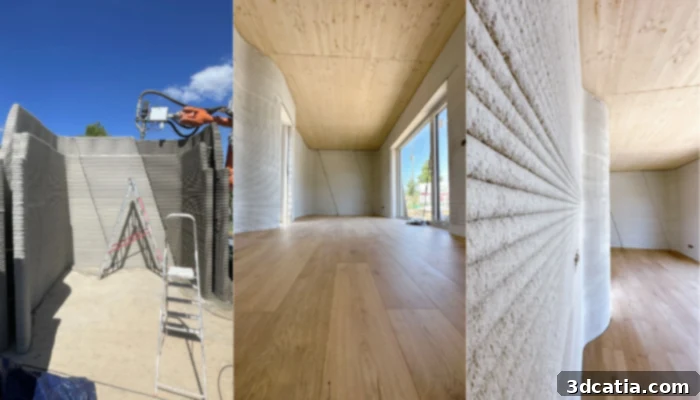
The thoughtfully designed dwelling spans approximately 56 square meters, offering a compact yet highly functional living space. It cleverly integrates all essential areas required for modern living, including a comfortable living room, a fully equipped kitchen, a contemporary bathroom, a welcoming hallway, and a versatile multipurpose room that can adapt to various needs, from a home office to a guest bedroom. Every aspect of the interior has been optimized for spatial efficiency and occupant comfort, proving that smaller footprints do not necessitate a compromise on quality of life.
Beyond its innovative construction method, the Niederanven house is a model of sustainable living. It comes equipped with state-of-the-art solar panels installed on its roof, seamlessly integrated with advanced battery storage units. This integrated energy system is designed to make the home largely energy self-sufficient, significantly reducing its reliance on conventional power grids and minimizing electricity bills for residents. This commitment to energy independence not only lowers operational costs but also sets a new standard for environmentally conscious residential design, aligning perfectly with global efforts to combat climate change and promote greener infrastructure.
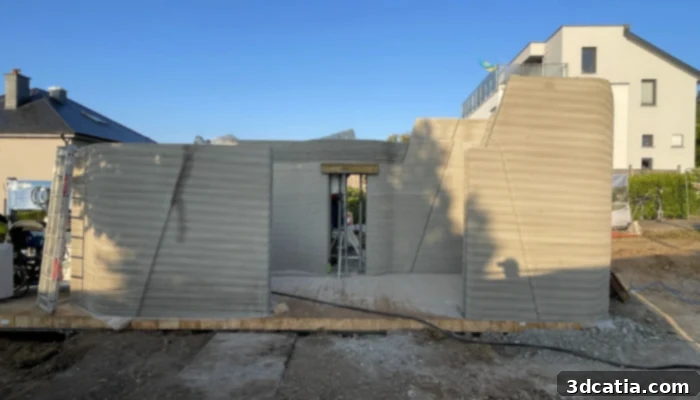
The 3D printed house is a central component of a larger pilot program, envisioned to explore and validate the viability of additive manufacturing in mainstream housing. Valued at approximately 8 million CZK, which translates to about 385,000 USD or around €320,000, the project has already garnered substantial interest. Even at this early stage, the demand has been considerable, with around 20 applications received from prospective residents and tenants eager to experience this new form of sustainable and efficient housing. This strong interest underscores the public’s readiness to embrace innovative solutions to housing needs.
Fred Ternes, the esteemed Mayor of Niederanven, lauded the project as a monumental leap forward in the quest to find inventive and effective remedies for Luxembourg’s ongoing housing crisis. He emphasized the profound impact of such technological advancements in significantly reducing both labor requirements and overall construction costs, which are critical factors in making housing more accessible. This project serves as a tangible demonstration of how strategic integration of cutting-edge technology can deliver tangible benefits to communities struggling with housing shortages and affordability issues.
Officials from Czechia (the Czech Republic) have also proudly highlighted this project as a testament to their nation’s growing competitive edge on the global stage, particularly in advanced manufacturing and construction technology. Jiří Jílek, the Czech deputy ambassador in Luxembourg, articulated this sentiment clearly, stating, “This innovative building, created with a unique 3D printing technology, clearly shows that Czech companies have considerable potential in the Luxembourg market with high-quality and modern projects.” His remarks underscore the collaborative spirit and mutual benefits derived from such international partnerships, positioning Czechia as a frontrunner in innovative construction solutions.
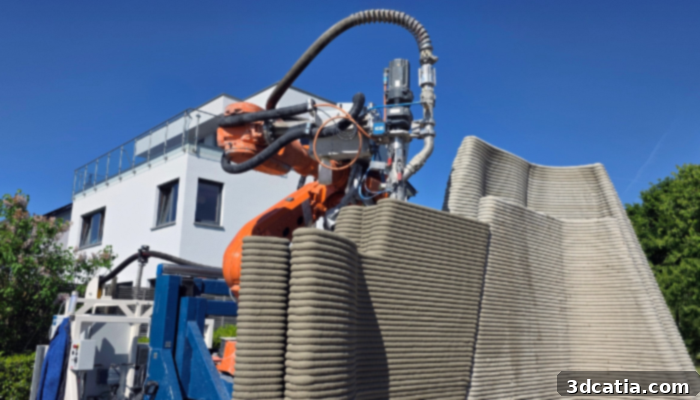
One of the most remarkable aspects of this project is its ingenious use of space. Designed by the visionary ODA Architects, the home is situated on a micro-plot in Rammeldange, an area that would typically be deemed unsuitable for conventional residential development due to its diminutive size and irregular shape. However, the inherent flexibility of 3D printing, combined with a smart modular form and compact footprint, allowed ODA Architects to overcome these constraints. This design philosophy not only opens up new avenues for urban densification by utilizing previously overlooked land parcels but also contributes significantly to maintaining low emissions throughout the construction and operational phases.
The environmental credentials of this 3D printed house are equally impressive. The total carbon footprint for the entire construction process was reported to be an exceptionally low 4.4 tons. This figure is significantly lower than that of comparable traditionally built homes, showcasing the environmental advantages of additive manufacturing. Furthermore, the materials used in the construction process are designed with recyclability in mind, embedding a circular economy approach directly into the material cycle. This forward-thinking strategy minimizes waste and resource consumption, reinforcing the project’s commitment to holistic sustainability.
The affordability of housing remains a critical global concern, and this development directly addresses it. With an estimated cost of approximately €320,000, the house provides a crucial entry point into Luxembourg’s notoriously expensive housing market, particularly for young professionals who often find themselves priced out. Luxembourg currently faces a significant deficit in its housing supply, requiring roughly 7,000 new homes annually but only managing to complete around 4,000. Projects like the Niederanven 3D printed house are vital in narrowing this gap, offering a scalable and cost-effective method to meet the burgeoning demand for housing.
This is not the first instance where Czech innovation has garnered international attention in the realm of 3D printed houses. As far back as 2010, the groundbreaking floating home ‘Prvok’ emerged as Czechia’s inaugural residential structure produced using additive manufacturing. The ‘Prvok’ project demonstrated the versatility and potential of 3D printing in challenging environments, setting a precedent for future innovations. ICE Industrial Services’ current success in Luxembourg builds upon this legacy, further solidifying how 3D printing can revolutionize construction by accelerating project timelines, substantially reducing environmental impacts, and significantly expanding the available options for truly sustainable living across Europe and beyond.
As municipalities throughout Luxembourg continue to explore innovative strategies for revitalizing and utilizing previously underused small plots of land, projects like the Niederanven 3D printed house serve as compelling, replicable models. This pilot project not only offers a blueprint for local development but also sparks crucial conversations within Czechia itself about how a similar, technologically advanced approach could be deployed to alleviate its own domestic housing crisis. Concurrently, such achievements reinforce Czechia’s burgeoning reputation as a global leader in applying 3D printing technology to the built environment, showcasing its expertise and forward-thinking vision.
The implications of this project extend far beyond the borders of Luxembourg. It represents a paradigm shift in how we conceive, design, and construct residential buildings in the 21st century. By integrating rapid construction, sustainable materials, energy efficiency, and cost-effectiveness, 3D printed homes are poised to play a pivotal role in the future of urban development and housing solutions worldwide. This initiative in Niederanven stands as a testament to human ingenuity and the power of technology to address some of society’s most pressing challenges, promising a more accessible and greener future for housing.
What are your thoughts on this groundbreaking new project in Luxembourg? Do you foresee it making a significant impact on Europe’s approach to sustainable and affordable housing? We invite you to share your perspectives and engage in the conversation by leaving a comment below or by connecting with us on our LinkedIn or Facebook pages! Additionally, ensure you stay informed about the latest advancements in 3D printing technology by signing up for our free weekly Newsletter, delivered directly to your inbox. For more visual content, don’t forget to explore all our videos on our YouTube channel.
*All Photo Credit: Coral 3D Concrete Printing