
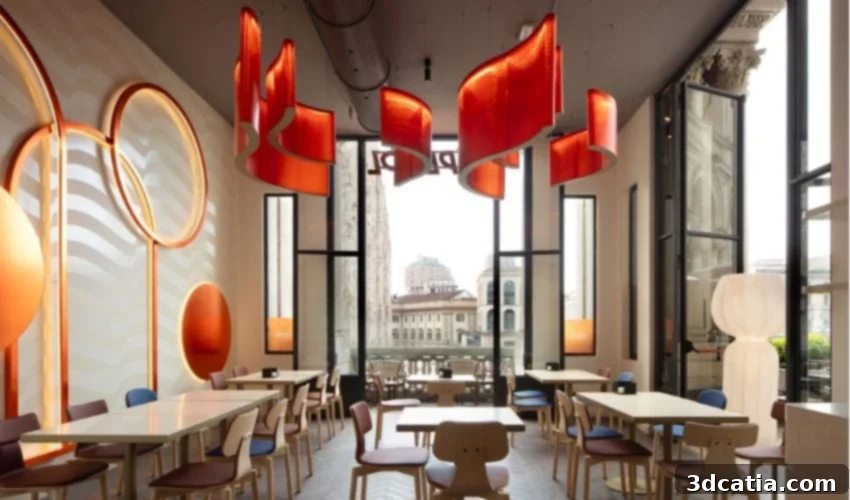
Revolutionizing Milan’s Iconic Terrazza Aperol: A 3D Printed Vision of Sustainable Interior Design
Milan, a global capital of fashion and design, is renowned for its vibrant nightlife and iconic venues. Among these, Terrazza Aperol stands out, offering breathtaking views of Piazza Duomo. This cherished Milanese hotspot has recently undergone a transformative redesign, a project that masterfully blends cutting-edge aesthetics, environmental sustainability, and technological innovation. At the heart of this groundbreaking initiative is eXgineering, an innovative Italian startup specializing in additive manufacturing. Through their expertise, eXgineering has created pivotal design elements for Terrazza Aperol using recycled polycarbonate and their proprietary Robotic Additive Moulding (RAM) technology, heralding a new era for sustainable interior design in high-profile commercial spaces.
The architectural vision for this ambitious redesign was spearheaded by the esteemed firm Vudafieri-Saverino Partners. Their intervention is characterized by a distinctive design language that immediately captivates visitors. The space bursts with vibrant colors, utilizes carefully selected sustainable materials, and features organic, fluid shapes that evoke a sense of movement and warmth. This thoughtful approach meticulously expresses the core values of the Aperol brand: togetherness, joy, and sharing. These brand tenets are not merely implied but are powerfully conveyed through an immersive visual narrative that guides guests through a unique sensory experience, making Terrazza Aperol more than just a bar, but a destination for shared moments and aesthetic appreciation.
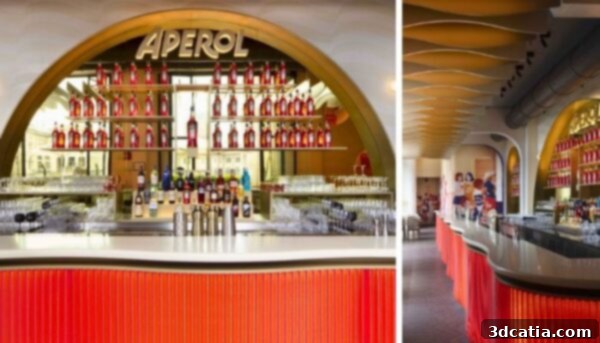
Within this overarching design concept, eXgineering played a crucial role in bringing the most exclusive and intricate components of the bar to life. Their contributions include the striking entrance wall and the elegantly crafted lamp screens. Both structures share a mesmerizing three-dimensional texture, drawing inspiration from the gentle, undulating movement of waves. This intricate detailing, impossible to achieve with conventional methods, was meticulously fabricated from recycled polycarbonate through advanced 3D printing techniques. eXgineering’s proprietary RAM technology, a sophisticated Robotic Additive Moulding process, is key to achieving such precision. This advanced manufacturing method incorporates meticulously controlled melting and cooling processes, which enables the creation of complex, multi-layered, and non-coplanar geometries. Such precision not only allows for unparalleled design freedom but critically helps preserve the material’s inherent mechanical properties, including its impressive strength, remarkable transparency, and desired crystallinity, ensuring both aesthetic appeal and structural integrity.
The strategic choice of polycarbonate as the primary material for these intricate components was far from arbitrary; it was a deliberate decision rooted in its superior properties and sustainable profile. Simone Maccagnan, Business Development Director at eXgineering, elaborates on this crucial selection: “This isn’t your typical cheap plastic, but a material that offers an exceptional combination of lightness and transparency, alongside robust safety features and impressive mechanical strength.” He emphasizes the material’s immense potential, not only in fostering creative freedom during the demanding design and development phases but also in meeting stringent safety standards and contributing significantly to environmental sustainability efforts. Polycarbonate is celebrated for its ability to be recycled multiple times, provided it undergoes proper treatment and collection processes. This multi-recyclability dramatically reduces its environmental footprint compared to many other materials, making it an ideal choice for projects committed to circular economy principles. Maccagnan further asserts, “This project vividly demonstrates how 3D printing, when synergistically combined with the remarkable characteristics of polycarbonate, is actively redefining the very limits of contemporary design, thereby unlocking unprecedented creative and productive opportunities for designers and architects alike.” The use of recycled polycarbonate not only aligns with global sustainability goals but also allows designers to push boundaries, crafting bespoke elements that would otherwise be unachievable.
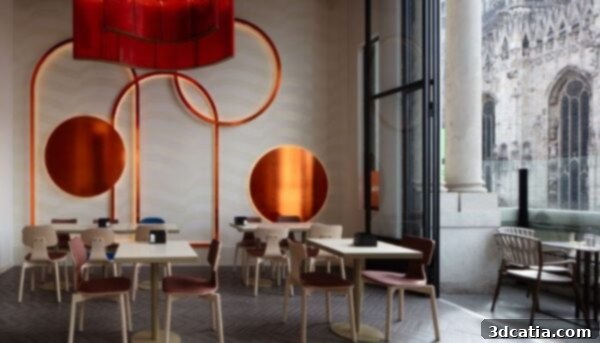
The application of large-scale 3D printing, as showcased in Terrazza Aperol’s interior design, represents a pivotal advancement in the industry. It facilitates a seamless and innovative blend of traditional craftsmanship with modern industrial production techniques. This synergy allows for the creation of unique, intricate formats that are exceptionally difficult, if not impossible, to achieve through conventional manufacturing methods. By leveraging computational architecture, designers can explore complex geometries and organic forms with unparalleled precision. The morphological freedom inherent in additive manufacturing allows these complex digital designs to materialize into tangible, physical objects, transforming conceptual visions into functional and beautiful realities. The ultimate outcome of this approach is a distinctive design that is inherently customizable, infinitely scalable to different project needs, and fundamentally sustainable. This innovative methodology ensures that the new Terrazza Aperol is not only aesthetically pleasing but also perfectly integrated into Milan’s rich urban identity and the vibrant, engaging aesthetic of the Aperol brand. This blend of technology, art, and sustainability sets a new benchmark for experiential design.
eXgineering’s involvement in the Terrazza Aperol project further solidifies its reputation for innovative capabilities, following previous successful endeavors in cities like Venice. Their work consistently pushes the boundaries of what is possible with additive manufacturing, particularly in high-visibility and design-centric applications. This latest achievement in Milan opens up exciting new possibilities for the broader adoption and integration of 3D printing across various sectors, including food design and sophisticated interior decoration. The potential for creating bespoke elements, personalized spaces, and environmentally conscious furnishings through large-scale 3D printing is immense. As technology continues to evolve, eXgineering stands at the forefront, demonstrating how digital fabrication can deliver both unparalleled aesthetic quality and a commitment to sustainable practices, shaping the future of design in commercial and hospitality spaces.
The innovative use of 3D printing in the redesign of Terrazza Aperol serves as a compelling case study for the future of sustainable and technologically advanced interior architecture. It invites a broader conversation about how modern manufacturing techniques can contribute to iconic spaces, merging heritage with forward-thinking design. What are your thoughts on the groundbreaking use of 3D printing in Terrazza Aperol? We invite you to share your insights and comments below, or engage with us on our LinkedIn or Facebook pages! For those keen to stay abreast of the latest developments in additive manufacturing, don’t forget to sign up for our free weekly Newsletter to receive the most current 3D printing news directly in your inbox. Additionally, you can explore all our engaging videos and content on our dedicated YouTube channel.