
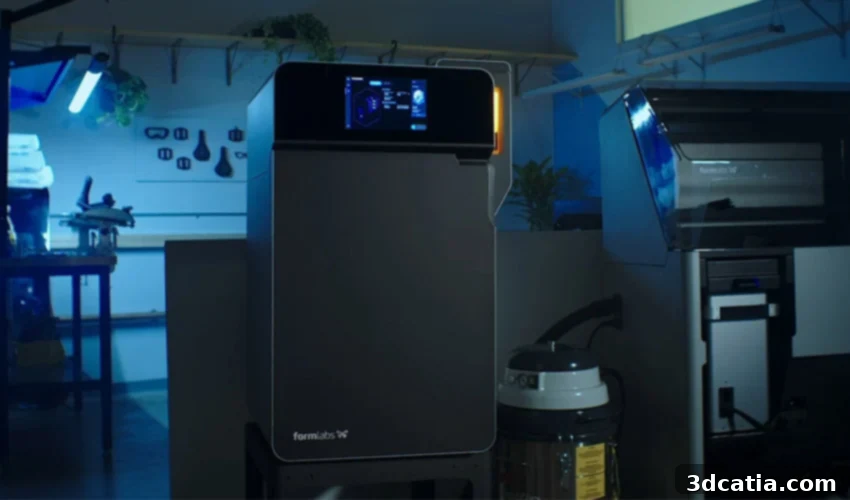
Formlabs Fuse 1 Review: Redefining Desktop SLS 3D Printing for Industrial Applications
Formlabs, a company long celebrated as a pioneer and leader in the world of resin-based 3D printing, made a significant strategic move into the industrial landscape of Selective Laser Sintering (SLS) 3D printing a few months ago with the introduction of the Fuse 1. This groundbreaking machine marks a pivotal expansion for the Boston-based manufacturer, propelling Formlabs into an exclusive league of manufacturers that successfully offer multiple sophisticated 3D printing processes. This expansion not only diversifies their product portfolio but also positions them as a comprehensive solutions provider in the additive manufacturing space, catering to a broader spectrum of professional and industrial users seeking high-quality, functional parts.
Since its inception in 2011, Formlabs has primarily focused on Stereolithography (SLA) technology, establishing its reputation with highly acclaimed machines like the Form 1, Form 2, and more recently, the advanced Form 3 series. While SLA employs a UV laser to meticulously solidify liquid photopolymer resin, SLS operates on a fundamentally different principle: it utilizes a powerful laser to sinter (fuse) polymer powder, layer by layer, creating robust and complex geometries. Historically, traditional industrial SLS solutions have been characterized by their substantial investment, often costing upwards of $250,000, placing them out of reach for many small to medium-sized businesses and design studios. The paramount advantage of the Fuse 1 3D printer lies precisely in its accessibility, boasting an astonishingly competitive starting price of just $31,845 (or €25,955 for the complete setup). This aggressive pricing strategy effectively democratizes industrial-grade SLS technology, positioning the Fuse 1 as one of the most compelling and affordable desktop SLS printers currently available on the market, ready to disrupt traditional manufacturing workflows.
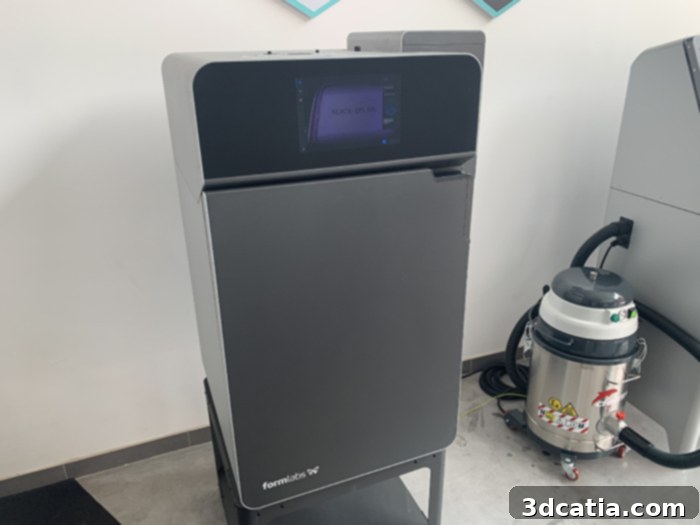
The Fuse 1 represents Formlabs’ pioneering entry into the SLS 3D printing domain, offering unprecedented accessibility.
The esteemed 3Dnatives Lab was granted the exclusive opportunity to be among the very first to rigorously test this innovative 3D printer. Our comprehensive evaluation was conducted with invaluable assistance from 3DZ, a dedicated reseller of the Formlabs Fuse 1, who graciously hosted us and provided expert training on the machine during a complete, in-depth testing period. This hands-on experience allowed us to thoroughly explore the capabilities and user experience of this unique system. Our primary objective was to answer critical questions: What truly sets the Fuse 1 apart in a competitive market? How user-friendly is it to operate an industrial-level desktop SLS 3D printer? What range of materials can it process, and what quality standards can users genuinely anticipate from its output? This detailed review by 3Dnatives aims to address these inquiries, providing a complete and unbiased assessment of the new Formlabs Fuse 1, empowering potential users with the insights needed to make informed decisions about integrating this technology into their operations.
1. Unboxing and First Impressions: The Formlabs Fuse 1 Ecosystem
The Formlabs Fuse 1 and its essential accompanying equipment arrive securely shipped on a robust pallet, meticulously protected with all necessary packaging, custom-fit foam inserts, and durable wrapping to ensure safe transit. This comprehensive package includes several key components vital for operation: the Fuse 1 3D printer itself, a sturdy custom-designed stand, a removable build chamber for versatile processing, and the convenient powder cartridge system. While marketed as a compact 3D SLS printer, the Fuse 1’s dimensions of 27 x 25.4 x 41.9 inches (685 x 645 x 1065 mm) and a substantial weight of 251.3 lbs (114 kg) reveal it as quite an imposing machine when compared to conventional desktop FDM or SLA 3D printers. However, when juxtaposed against more formidable, traditional industrial SLS machines, the Fuse 1 unmistakably presents itself as a remarkably more compact and genuinely office-friendly version, striking an impressive balance between industrial capability and workspace integration.
Aesthetically, the Fuse 1 exemplifies Formlabs’ commitment to sleek, professional design. Its exterior is characterized by clean, grey metal panels that exude an industrial yet refined appeal. Dominating the front is a generously sized 10.1-inch, full-color LCD touchscreen, which serves as the intuitive command center for all printing operations, offering real-time status updates and easy navigation. At the top right of the printer, an integrated hopper, essentially a powder tank, is designed to efficiently store up to 9kg (19.8 lbs) of powdered material. This hopper thoughtfully incorporates Formlabs’ iconic orange window panel, allowing users to quickly and conveniently monitor the powder level at a glance. The heart of the printing process, the removable build chamber, slots seamlessly inside the 3D printer, providing a maximum printing volume of 6.5 x 6.5 x 11.8 inches (165 x 165 x 300 mm). While this build volume might appear modest when compared to some of the largest industrial-grade SLS systems, it is notably generous and competitive within the burgeoning category of desktop SLS 3D printers, offering ample capacity for professional prototyping and small-batch production.
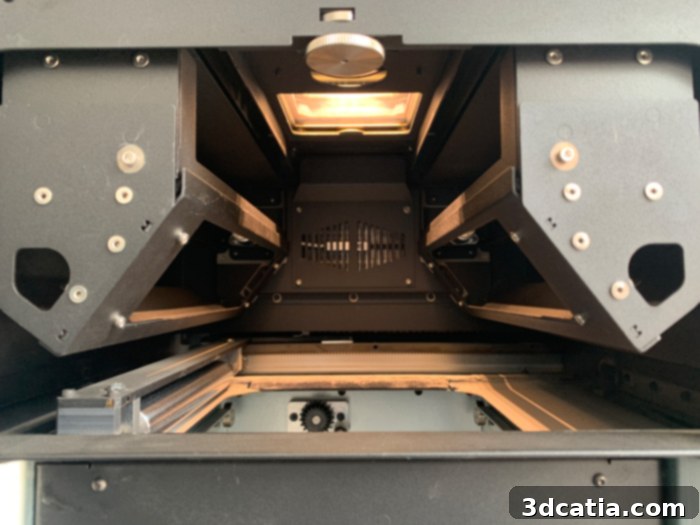
A detailed view into the build chamber of the Fuse 1, highlighting its precision engineering.
Positioned strategically above the build chamber, an advanced heating system plays a crucial role in the SLS process. It emits precisely controlled infrared radiation, maintaining the internal temperature of the 3D printer just below the material’s sintering point. This meticulous thermal control is vital for ensuring consistent powder bed temperature, which is critical for achieving optimal part quality and preventing warping. Complementing the heating system are an array of sophisticated mirrors, engineered to accurately reflect and direct the powerful 10W laser during the selective sintering process. This precise laser steering ensures that only the intended powder particles are fused, layer by layer, with exceptional accuracy. Demonstrating remarkable confidence in its own additive manufacturing capabilities, Formlabs has ingeniously incorporated several 3D printed components, produced directly on the Fuse 1 itself, into the final assembly of the printer. These self-replicated parts, such as the IR sensor and its handle, the door handle, and the interlock magnet cover, serve as tangible proof of the Fuse 1’s ability to create high-quality, functional parts, highlighting the technology’s potential for iterative design and internal component production.
To complete the comprehensive SLS workflow, Formlabs has developed an essential companion device: the Fuse Sift. This dedicated post-processing station is indispensable for extracting printed parts, meticulously cleaning them, recovering any unfused powder, and preparing it for recycling. Once a print job on the Fuse 1 is complete, the removable build chamber is seamlessly transferred to the Fuse Sift. This step, common to virtually all SLS machines on the market, is where the “powder cake” – the solid block of sintered parts embedded within the unsintered powder – is carefully processed. The Fuse Sift is intelligently designed, featuring a cleaning tray integrated with a powerful vacuum system that efficiently collects the loose, unfused powder. To facilitate the delicate task of part cleaning and powder removal, the Fuse Sift comes equipped with a comprehensive set of specialized tools, including a large brush, two smaller precision brushes, pipe cleaners for intricate channels, dental picks for fine details, and two distinct types of vacuum nozzles, ensuring thorough and efficient post-processing for every print job.
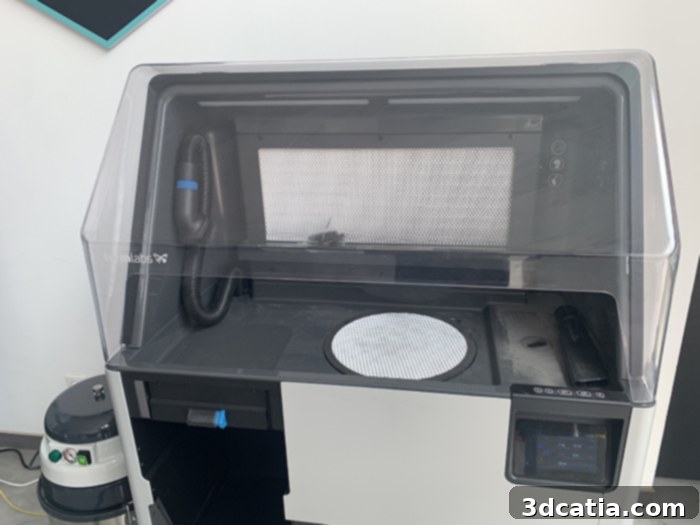
The Fuse Sift serves as the crucial post-processing station, enabling efficient removal of unfused powder and thorough cleaning of 3D printed parts.
2. Streamlined Setup and Material Management for the Fuse 1
Formlabs engineered the Fuse 1 with a clear objective: to make industrial-grade SLS technology as accessible and user-friendly as possible, embodying the concept of a “desktop” machine. The company has invested significant effort into simplifying the installation process, making it dramatically easier than typically found with traditional industrial SLS systems. While its weight necessitates at least two individuals for safe unboxing and positioning, the entire setup from pallet to first print can be accomplished in approximately 60 minutes – a remarkable feat for an SLS system. A key differentiator and convenience factor is that the Fuse 1 operates on a standard AC socket, eliminating the need for specialized high-power electrical infrastructure often required by larger industrial machines. Furthermore, its relatively compact build chamber facilitates easier and more stable temperature control, effectively circumventing the need for expensive and complex specialized air handling equipment, which is a common requirement for many industrial SLS installations. This thoughtful design significantly reduces both the initial setup complexity and ongoing operational costs, truly making it an office-friendly solution.
The installation procedure is remarkably straightforward, mirroring the simplicity expected from Formlabs’ desktop SLA printers. It primarily involves connecting the power cables to the Fuse 1, attaching the Wi-Fi antenna, and powering on the printer. Following this, users are prompted to connect the printer to the internet, either via Wi-Fi or an Ethernet cable, to register the machine online, which is essential for warranty and support. An additional, minor step involves leveling the machine by adjusting its individual feet, ensuring optimal print bed alignment and stability for precise builds. This minimalist setup philosophy ensures that users can quickly integrate the Fuse 1 into their workspace and begin operations with minimal downtime.
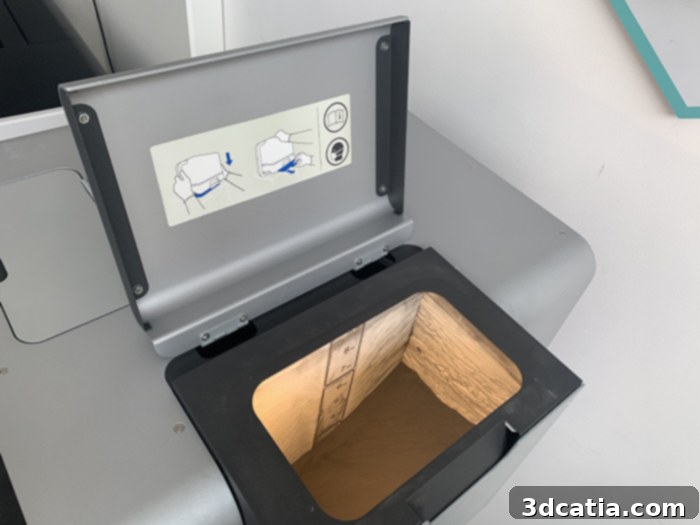
The Fuse 1’s hopper, capable of holding up to 9kg of nylon powder, ready for material loading.
The Fuse Sift, the crucial companion for post-processing, also features a user-friendly assembly process. It requires the connection or assembly of several key components, including the sifter mesh for powder separation, the surface grate for part placement, a convenient tool shelf, the powder catch tray, and the integrated vacuum system, along with its power cables. Once these elements are securely in place, the Fuse Sift is simply powered on, becoming an integral part of the SLS workflow. This modular approach ensures that both the printer and the post-processing unit are easy to set up and maintain.
Regarding material compatibility, our testing specifically focused on Nylon PA12, which is one of the two primary materials currently available for the Fuse 1, alongside Nylon PA11. Nylon PA12 is highly regarded in the industry for its exceptional combination of high detail resolution, superior dimensional accuracy, and robust mechanical properties, making it ideal for intricate prototypes and functional end-use parts. In contrast, Nylon PA11 offers enhanced ductility, strength, and flexibility, particularly suitable for applications requiring impact resistance and hinge-like functionalities. These materials empower users to produce diverse parts ranging from complex geometries to robust, high-performance components, broadening the Fuse 1’s application scope across various industries, including engineering, product design, and manufacturing.
To ensure proper material tracking and management, Formlabs implements a clever system where each new batch of powder purchased comes with a unique ID card. This card functions as a “powder credit” system, authorizing the material for use with the Fuse 1, tracking the remaining quantity of powder, and proactively alerting the user when levels are running low. The process of installing material into the printer is meticulously guided by the Fuse Sift’s touchscreen interface. Users fill the material cartridge with powder using the Fuse Sift, following on-screen instructions, and then simply transfer and place it over the Fuse 1’s hopper. Formlabs recommends maintaining at least 6 kg (13.2 lb) of material in the tank to ensure uninterrupted printing and consistent performance, preventing issues related to insufficient material during long print jobs.
Prior to initiating any print job, the removable build chamber must be correctly inserted into the printer. The Fuse 1’s intuitive screen control then guides the user through a comprehensive pre-flight checklist. This critical checklist ensures that the printer is optimally prepared for operation, verifying key parameters such as an empty build chamber, the required level of powder in the hopper, and the cleanliness of critical components like the scanning mirrors, which are essential for laser precision. Only once all checklist items are confirmed, guaranteeing the best possible printing conditions and minimizing the risk of errors, can the print job commence. This systematic approach enhances reliability and ensures consistent high-quality output.
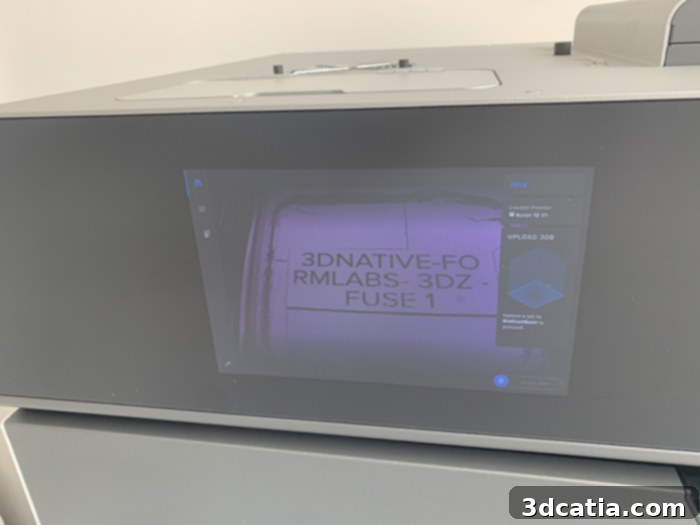
The Fuse 1 features a vibrant 10.1-inch, full-color LCD touchscreen and an internal camera for live print monitoring.
3. Leveraging PreForm Software for Optimized SLS Printing
In a testament to thoughtful user experience design, Formlabs made an excellent decision to adapt its highly regarded PreForm slicer software for the Fuse 1. This familiar and intuitive software, already well-known to users of their SLA Form 3D printers, has been specifically enhanced to incorporate the unique requirements of SLS technology. While the core interface remains consistent, PreForm for Fuse 1 includes specialized functionalities and considerations crucial for successful powder bed fusion printing. Printing with an SLS 3D printer demands adherence to specific design and printing guidelines, such as minimum wall thickness, adequate distance between parts to mitigate thermal warping effects, minimum hole diameters to ensure successful powder removal, and the essential need for drainage holes in hollow models to extract unfused powder. To comprehensively support users, Formlabs provides extensive and exceptionally useful design guidelines, meticulously detailed on their official website. These guidelines are absolutely critical for designers and engineers utilizing the Fuse 1, as overlooking them can lead directly to print failures or compromised part quality. While some advanced slicers might offer automatic alerts for certain design non-conformities, PreForm for the Fuse 1 does not currently provide such notifications if, for instance, a wall is too thin or a necessary drainage hole is absent. Therefore, a thorough understanding and application of these guidelines are paramount for achieving optimal results. Once the 3D model is meticulously prepared and configured within PreForm, the file can be effortlessly transmitted to the 3D printer through various convenient options: Ethernet, Wi-Fi, or a direct USB cable connection, offering flexibility in different operating environments.
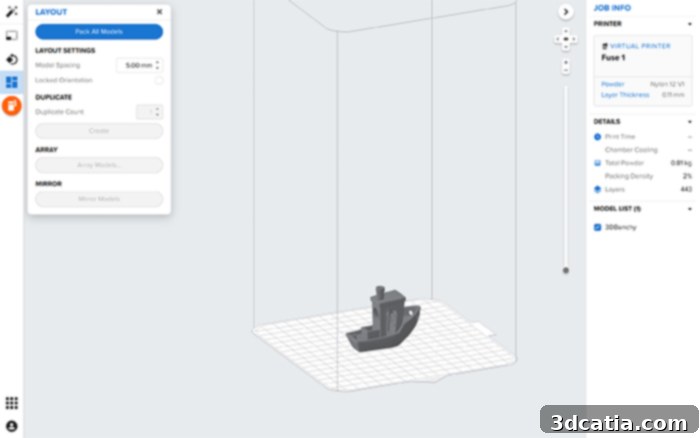
PreForm, Formlabs’ renowned slicer, adapted for the advanced capabilities of the Fuse 1 SLS printer.
One of the most compelling advantages of Selective Laser Sintering (SLS) technology, and a significant workflow simplification, is its inherent ability to print complex geometries without the need for traditional support structures. Unlike FDM or SLA, where intricate supports are often required to prevent part collapse, in SLS, the un-sintered powder surrounding the printed part provides natural, self-supporting bedding. This eliminates the time-consuming and often wasteful process of designing, printing, and removing supports, thereby streamlining the entire workflow. This unique characteristic significantly simplifies the slicing process within PreForm and, more importantly, unlocks the capability to densely stack and “nest” multiple models on top of each other throughout the entire build chamber. This maximizes the build capacity and enhances productivity, allowing users to efficiently produce a large volume of parts in a single print run. This nesting capability, coupled with the fact that SLS prints inherently exhibit superior isotropy (uniform mechanical properties in all directions) compared to parts produced with FDM or even SLA, makes SLS an incredibly attractive and versatile technology for demanding applications where part strength and consistency are paramount. The ability to create complex, robust, and isotropic parts efficiently and without supports truly highlights the transformative potential of the Fuse 1 in professional additive manufacturing environments.
4. Evaluating Print Quality and Real-World Applications
As previously noted, our rigorous testing concentrated exclusively on the performance of Nylon PA12 material. We initiated our evaluation with a standard benchmark model, the classic 3DBenchy from Creative Tools. Following its printing and subsequent post-processing with the Fuse Sift, the resulting output unmistakably demonstrated a profoundly superior quality when compared to parts produced by typical desktop FDM or SLA 3D printers. A particularly striking observation was the complete absence of visible layer lines to the human eye, a hallmark of high-quality SLS printing. Even the intricate text embossed at the bottom of the print was rendered with remarkable clarity and precision, a detail often poorly defined or entirely unreadable on FDM-printed models. This level of detail and surface finish underscores the Fuse 1’s capability to produce aesthetically pleasing and highly functional prototypes and end-use parts.
To further challenge the Fuse 1’s capabilities, we also subjected it to a comprehensive torture test model, designed to assess various tolerances, overhang performance, and its ability to accurately reproduce round features. While this specific model is typically conceived for FDM 3D printers, we applied it to the Fuse 1 to push its limits. The results were largely impressive, with one notable exception: the model’s wall thickness proved to be too thin when compared to the 0.6mm minimum requirement explicitly advised by Formlabs in their design guidelines. Consequently, these thin walls exhibited structural instability, failing to maintain perfect linearity and developing a few minor cracks. This observation strongly reinforces the critical importance of adhering to Formlabs’ detailed design specifications to ensure optimal print integrity. Apart from this specific challenge, the printer flawlessly rendered bridges, cylinders, and intricate text features, showcasing its general precision and ability to handle complex geometries with confidence.
Our third and final test print involved a sophisticated lattice cube model from APFI. Such intricate lattice structures typically necessitate extensive support materials when produced on FDM/FFF 3D printers and are prone to stringing artifacts. With the Fuse 1, the outcome was precisely as anticipated: a perfectly formed lattice cube, entirely free of defects, stringing, or any need for supports. This result powerfully demonstrates the inherent strengths of SLS technology for creating lightweight, complex, and topologically optimized parts, making it an ideal choice for applications in areas like medical prosthetics, aerospace components, or advanced product design where intricate internal structures are paramount.
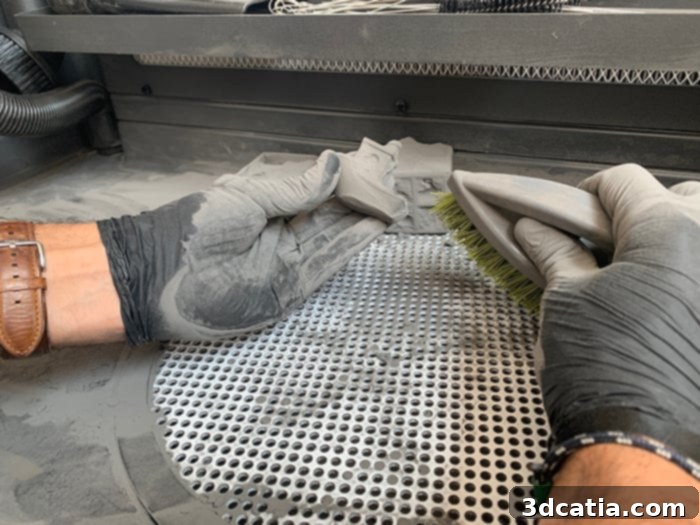
While thorough, the post-processing on the Fuse Sift is a vital step for achieving clean, high-quality final parts from SLS printing.
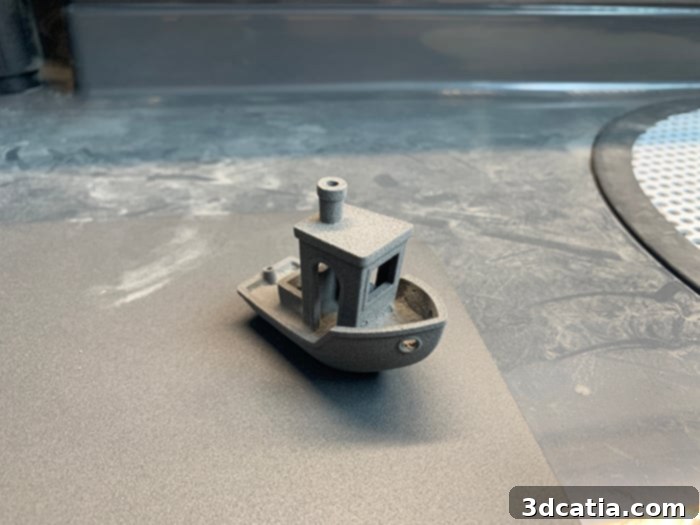
#3DBenchy by CreativeTools, demonstrating exceptional detail when printed in PA12 on the Fuse 1.
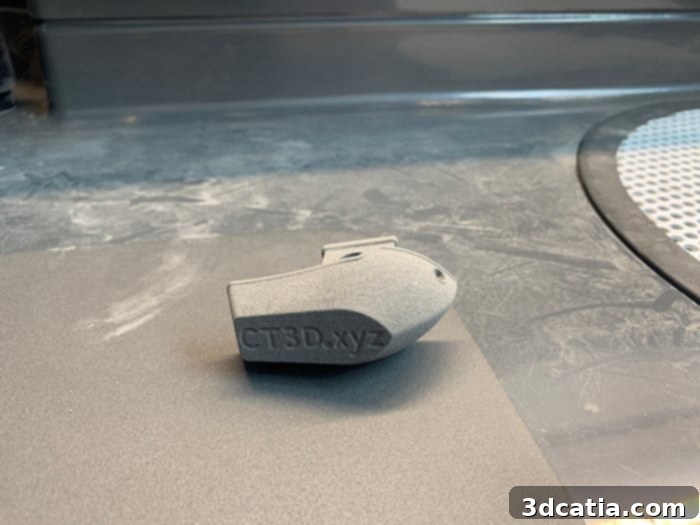
The crisp text at the bottom of the #3DBENCHY, with imperceptible layers, showcasing SLS precision.
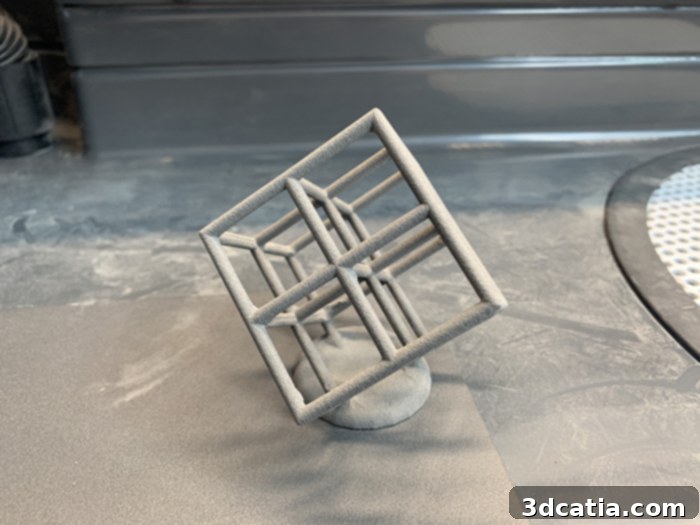
Lattice Cube 3D Printer Torture Test by Lazerlord, perfectly executed by the Fuse 1.
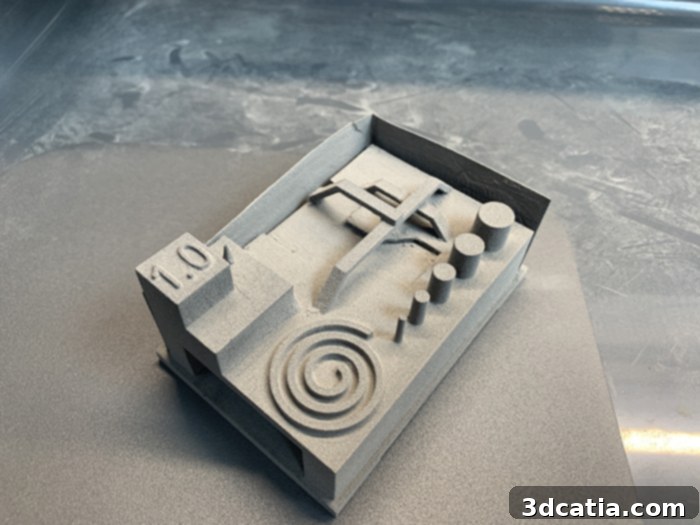
Results from the Slicing Engine Torture Test, highlighting the Fuse 1’s capabilities.
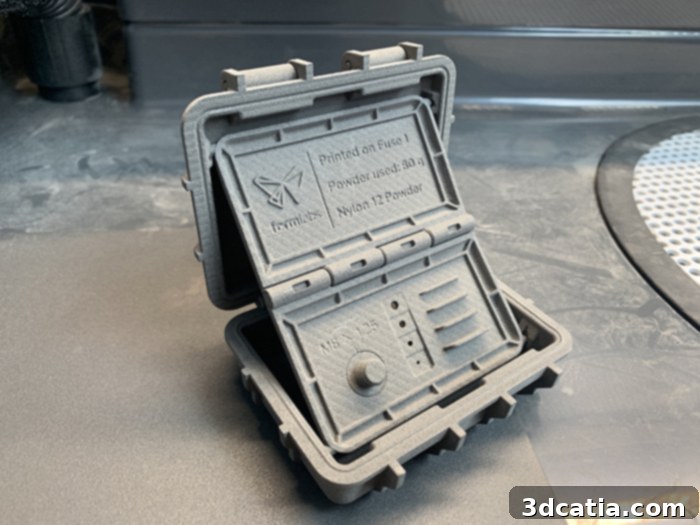
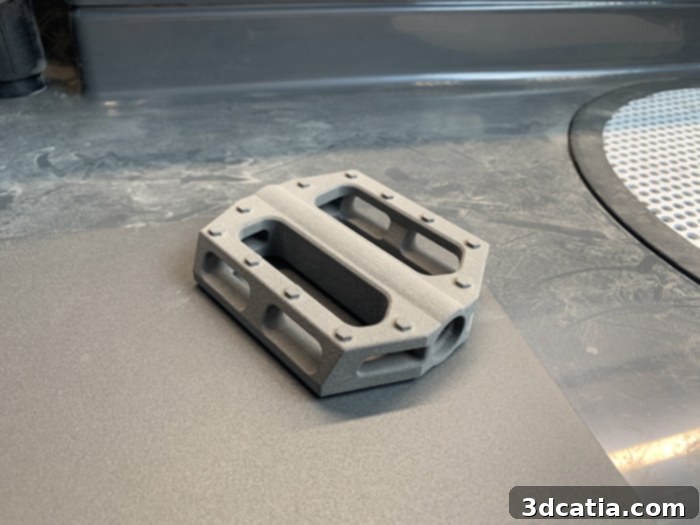
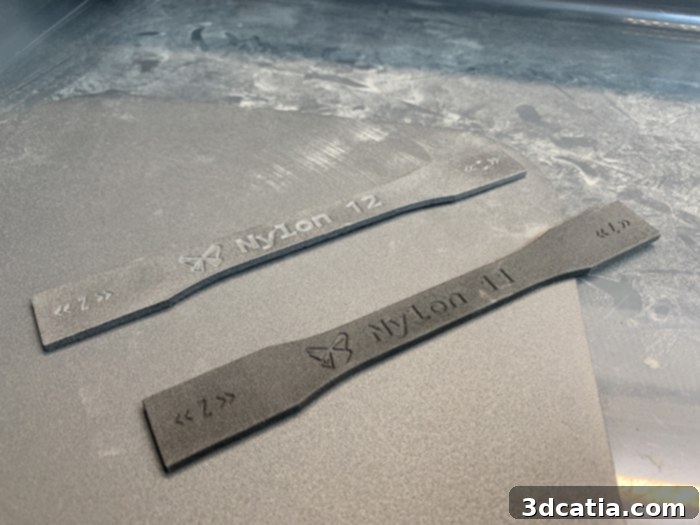
Beyond our independent test prints, Formlabs generously provided us with an impressive array of 3D printed sample parts. These samples were not only designed to showcase the exceptional quality achievable with the Fuse 1 but also to illustrate the diverse range of practical applications across various industries. Among these were functional components like a durable bike pedal, an ingeniously designed foldable suitcase (which serves as Formlabs’ own challenging torture test, demonstrating intricate assembly and material resilience), and several tensile test specimens. These specimens, produced using both PA12 and PA11 Nylon, allowed for direct comparison of material properties and performance, emphasizing the versatility of the Fuse 1 in creating parts for both robust functional prototypes and demanding end-use applications, whether for engineering validation or consumer products.
Finally, it would be incomplete to discuss the Fuse 1 without extensively covering the essential post-processing steps. Once a print job concludes and the build chamber has safely cooled down to a manageable temperature, the user is required to transfer the removable build chamber to the Fuse Sift post-processing station. This dedicated station is expertly designed to facilitate the extraction of the entire print volume, affectionately referred to as the “powder cake,” which encompasses both the fully sintered parts and the surrounding, un-fused powder. This critical process shares similarities with the post-curing and cleaning stages of SLA parts, requiring careful attention and manual effort. While it can indeed be a time-consuming aspect of the SLS workflow, it is an absolutely necessary procedure to thoroughly clean and prepare the final parts, removing all residual powder and ensuring their functional integrity and desired aesthetic. A significant economic and environmental advantage of the Fuse Sift is its integrated recycling capability. It efficiently recovers the un-fused powder, which can then be intelligently mixed with fresh powder for subsequent print jobs. The Fuse 1 boasts an impressive material refresh rate of approximately 30%, meaning users can create a new powder blend by combining 70% of the previously used, unfused powder with just 30% of fresh, virgin powder. This high refresh rate not only significantly reduces material waste but also contributes to substantial cost savings, enhancing the overall economic viability of the Fuse 1 for continuous production and iteration. This sustainability feature underscores Formlabs’ commitment to making industrial 3D printing more efficient and environmentally responsible.
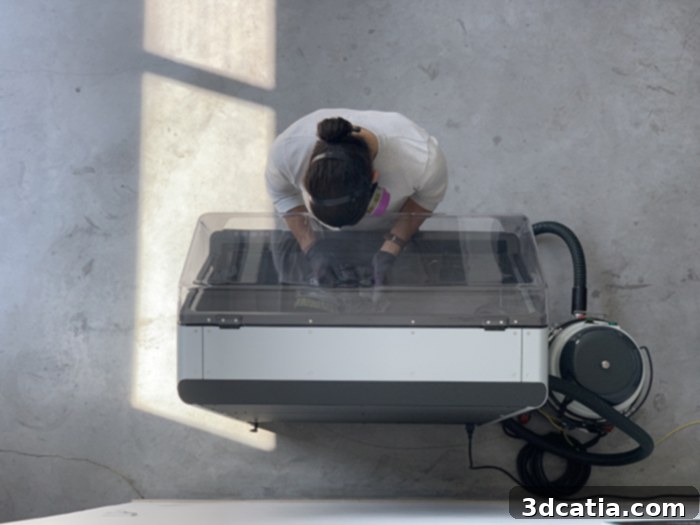
One of the distinct advantages of SLS printing is the efficient recycling of unsintered powder, enhancing sustainability and reducing operational costs.
In conclusion, the Formlabs Fuse 1 represents a monumental leap in making industrial-grade SLS 3D printing accessible and practical for a much wider audience. Its competitive price point, user-friendly setup, integrated post-processing, and exceptional print quality for functional nylon parts make it an indispensable tool for engineers, designers, and manufacturers looking to bridge the gap between prototyping and true small-batch production. Formlabs has successfully translated its ethos of approachability from SLA to SLS, offering a powerful, reliable, and cost-effective solution that truly redefines what a ‘desktop’ industrial 3D printer can achieve. The Fuse 1, complemented by the Fuse Sift and PreForm software, provides a complete ecosystem that streamlines the entire SLS workflow, from design to finished part, offering a compelling alternative to more expensive and complex industrial systems.