
FDA Clears Desktop Health’s Flexcera: A New Era for Biocompatible 3D Printed Dentures
The landscape of dental care is constantly evolving, driven by technological advancements that promise greater precision, efficiency, and patient comfort. In a significant step forward for additive manufacturing in healthcare, Desktop Health, the dedicated healthcare business line of Desktop Metal, recently announced it has received crucial clearance from the U.S. Food and Drug Administration (FDA) for its innovative proprietary resin formulations, Flexcera Smile and Flexcera Base. These materials are specifically engineered for use in 3D printed dental prosthetics, marking a pivotal moment for the industry. This regulatory approval comes at a critical time, as the rapidly growing field of 3D printing in dentistry has faced scrutiny regarding the biocompatibility of certain resins. Just months prior, research from Northwestern University raised concerns that many supposedly biocompatible 3D printing resins could potentially pose risks to the female reproductive tract. By securing FDA 510(k) clearance for Flexcera, Desktop Health not only validates the safety and efficacy of its materials but also reinforces confidence in the continued progress and responsible innovation within the additive manufacturing dental sector.
Desktop Health and Desktop Metal’s Vision in Additive Manufacturing
Desktop Metal, a recognized leader in metal and carbon fiber 3D printing, has long championed the goal of making advanced additive manufacturing technologies more accessible to a broader range of manufacturers and engineers. While their origins are rooted in robust industrial applications, the company’s strategic vision clearly extends beyond metal. At the beginning of the year, Desktop Metal made a decisive move into the resin market through its significant acquisition of EnvisionTEC, a pioneer in photopolymer 3D printing solutions. This acquisition provided Desktop Metal with a strong foundation in polymer-based additive manufacturing, essential for expanding into diverse medical and dental applications.
Building upon this strategic move, Desktop Health was launched earlier this year as a specialized business line, specifically tasked with accelerating the development and adoption of additive manufacturing solutions across various critical healthcare sectors. Its primary focus areas include dental, orthodontic, and otolaryngology applications, where precision, customization, and speed are paramount. The launch of Desktop Health underscored Desktop Metal’s commitment to leveraging its expertise in advanced materials and printing technologies to address pressing needs in the medical community. This strategic alignment ensures that innovations like Flexcera are not isolated product releases but rather integral components of a larger, cohesive effort to transform patient care through advanced manufacturing.
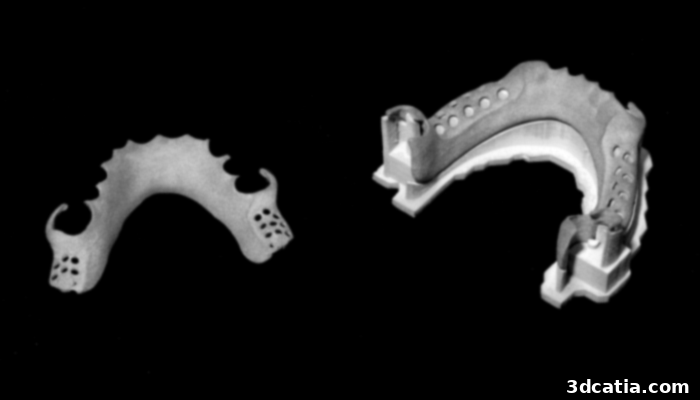
Desktop Health was launched to advance AM dental and orthodontic solutions. (Photo Credits: Desktop Health)
The Growing Demand for Advanced Dental Solutions
The global demand for dental prosthetics is substantial and continues to expand. Projections indicate that the global denture market alone is estimated to reach an impressive $3.8 billion USD by 2027 in the U.S., reflecting an aging population and increasing awareness of oral health. Statistics from the American Association of Oral and Maxillofacial Surgeons highlight this need, reporting that a staggering 60% of adults have lost at least one permanent tooth. This considerable market creates immense pressure on dental laboratories and clinics to provide high-quality, customized, and cost-effective solutions.
It is therefore unsurprising that the US dental 3D printer market is also on a steep growth trajectory, expected to reach $144 million by 2027. This signifies a clear trend: additive manufacturing is increasingly becoming an indispensable tool for meeting escalating demand in dentistry. 3D printing offers unparalleled advantages for dental prosthetics, particularly due to its inherent ability to create highly customized forms. Unlike traditional manufacturing methods, 3D printing allows for the precise fabrication of devices that are perfectly tailored to each patient’s unique oral anatomy. This customization ensures superior fit, comfort, and functionality, all while often achieving a lesser production cost per unit, making it an ideal technology for crafting personalized solutions like dentures, crowns, and bridges that fit seamlessly within the mouth. The efficiency and accuracy of 3D printing address many of the challenges associated with conventional prosthetic fabrication, paving the way for more accessible and advanced dental care.
Introducing Flexcera: Innovation in Dental Resin Technology
With the introduction of Flexcera, Desktop Health is directly addressing critical needs and limitations prevalent in the existing market for 3D printed dental prosthetics. Michael Jafar, President and CEO of Desktop Health, articulated this vision, stating, “Three years ago, we set out to create a product that addressed the limitations of current 3D printed dental prosthetics – brittleness and poor aesthetics. The introduction of Flexcera marks the inception of a remarkable new era in dentistry, combining advanced Flexcera science with 3D printing technology to deliver superior strength, aesthetics, and function for patients. We are pleased to bring this innovative product to market as it represents our commitment to meet the needs of dental professionals and their patients.” This statement underscores a dedication to pushing boundaries beyond mere functionality, striving for excellence in both durability and appearance.

Photo Credits: Business Wire
The core innovation behind Flexcera lies in its proprietary “long chain chemistry.” This advanced material science approach was specifically developed to yield superior dental properties that surpass many conventional resins. Key attributes of Flexcera include exceptional high fracture resistance, a crucial characteristic for dental prosthetics that endure daily chewing forces. This enhanced durability significantly reduces the likelihood of cracks or breakage, contributing to the longevity and reliability of the dentures. Furthermore, Flexcera boasts excellent moisture resistance, a vital property that prevents staining, discoloration, and the absorption of liquids over time, maintaining the aesthetic integrity of the prosthetic. Beyond its structural resilience, Flexcera is also celebrated for its overall natural aesthetic. It offers lifelike tooth translucency and a realistic, natural-looking smile, enabling patients to regain confidence in their appearance.
Perhaps one of the most compelling advantages of Flexcera, particularly when integrated with EnvisionTEC 3D printers, is its potential to dramatically enhance production efficiency. The company highlights that up to eight customized Flexcera dentures can be fabricated in less than two hours. This rapid turnaround time is revolutionary for dental practices and labs, making same-day, high-quality prosthetics a tangible reality for patients. This capability not only improves patient satisfaction by minimizing wait times but also optimizes clinic workflow and profitability. The resins are formulated to create dentures that combine robust functionality with striking beauty, offering ceramic-like strength that mimics natural teeth while delivering an attractive, comfortable solution. Flexcera is poised for a commercial launch in the U.S. and Canada by the end of June, eagerly anticipated by dental professionals seeking to upgrade their prosthetic offerings.
Understanding the Significance of FDA Clearance for Flexcera
For any medical device or material intended for use within the human body, receiving approval or clearance from regulatory bodies like the U.S. Food and Drug Administration (FDA) is paramount. The FDA is an American federal agency entrusted with the critical mission of protecting public health by rigorously ensuring the safety, efficacy, and security of drugs, biological products, and medical devices. In the context of Flexcera, Desktop Health’s achievement of FDA 510(k) clearance for Flexcera Base, its proprietary resin for dental prosthetics, and the classification of Flexcera Smile as an FDA Class 1 Medical Device, represents a significant endorsement of its quality and safety. Specifically, Flexcera Smile is designated as an FDA Class 1 Medical Device, suitable for the fabrication of lifelike denture teeth. Class 1 devices generally present the lowest risk to patients and are subject to general controls. In contrast, Flexcera Base has received FDA 510(k) clearance as a Class 2 Medical Device, specifically for the fabrication of premium denture bases. Class 2 devices pose a moderate risk and typically require more stringent controls, including premarket notification (510(k) clearance) to demonstrate substantial equivalence to an already legally marketed device.
While this is not the first instance of a 3D printed medical device receiving FDA approval, this specific clearance holds particular weight given recent controversies. Just a few months prior, concerns emerged from a study conducted by Northwestern University, which suggested that numerous resins commonly used in dental 3D printing might be hazardous to reproductive health. The study indicated that these resins could potentially leach toxic compounds into oocytes (egg cells), raising serious questions about the long-term safety of such materials when in close contact with human tissue. Desktop Health’s successful FDA clearance for Flexcera directly addresses these profound concerns. It provides dental professionals and patients with a rigorously tested and government-approved material, offering reassurance about its biocompatibility and overall safety profile. This clearance is a testament to Desktop Health’s commitment to patient well-being and allows the additive manufacturing dental industry to continue its expansion with renewed confidence, ensuring that innovation is coupled with uncompromising safety standards. You can read the full press release HERE.
Enhancing Patient Care and Practice Efficiency
The implications of Flexcera’s FDA clearance and its advanced properties extend directly to both patient care and the operational efficiency of dental practices. For patients, Flexcera promises a superior experience. The combination of high fracture resistance and moisture resistance translates into more durable and longer-lasting dentures, reducing the frequency of repairs or replacements. The natural aesthetic, with lifelike translucency and a natural-looking smile, significantly boosts patient confidence and quality of life. Furthermore, the ability to produce customized prosthetics quickly means less waiting time and a more comfortable, perfect fit from the outset, minimizing the need for multiple adjustment appointments.
From a dental professional’s perspective, Flexcera offers a transformative solution. The rapid production capabilities, especially when utilizing EnvisionTEC 3D printers, allow clinics to offer same-day denture services. This not only sets practices apart in a competitive market but also dramatically improves patient satisfaction and workflow. Imagine a patient visiting in the morning and leaving with a perfectly fitted, high-quality denture by the afternoon – this level of efficiency was previously unimaginable for complex prosthetics. The ceramic-like strength of Flexcera ensures that dentists can confidently provide prosthetics that are both functional and aesthetically pleasing, standing up to the rigors of daily use. This innovation empowers dental professionals to deliver cutting-edge solutions, streamline their operations, and ultimately provide better, faster, and safer care.
The Future of Dental Additive Manufacturing
The FDA clearance for Desktop Health’s Flexcera is more than just a regulatory milestone; it is a catalyst for the accelerated evolution of dental additive manufacturing. It signals to the broader healthcare industry that 3D printing technologies, when backed by rigorous scientific development and stringent regulatory approval, are not just viable but represent the future of medical device fabrication. This achievement is likely to spur further research and development into new biocompatible materials and advanced printing techniques, pushing the boundaries of what is possible in reconstructive and restorative dentistry. As costs decrease and accessibility increases, 3D printed solutions will become even more pervasive, offering customized, high-performance options for a wider demographic. Desktop Health, through its pioneering work with Flexcera, is positioned at the forefront of this transformation, demonstrating how material science, advanced manufacturing, and regulatory compliance can converge to deliver genuinely impactful innovations that benefit millions worldwide. The era of personalized, rapidly produced, and supremely aesthetic dental prosthetics is not just dawning, but brightly shining, promising healthier smiles and improved lives.
What do you think of Flexcera’s FDA approval and its potential impact on the dental industry? We invite you to share your insights in a comment below or join the conversation on our Facebook, Twitter, and LinkedIn pages! Don’t miss out on the latest advancements in 3D printing – sign up for our free weekly Newsletter here, delivered straight to your inbox!
*Thumbnail Photo Credits: Desktop Health