
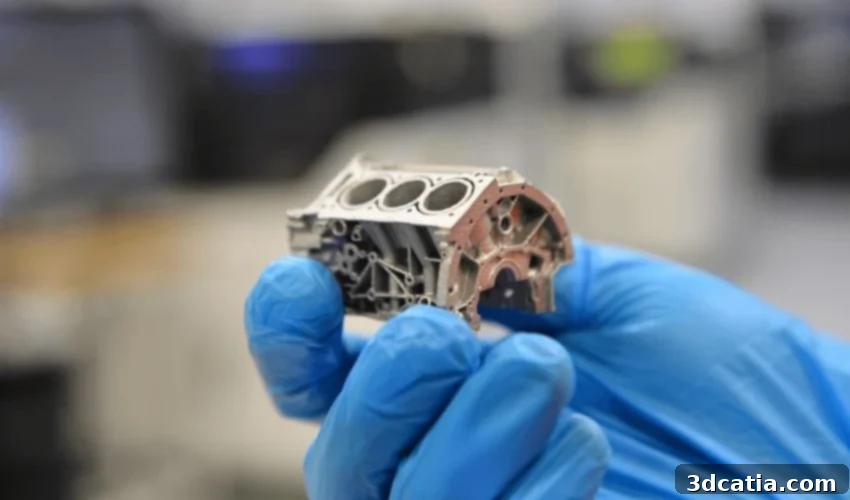
Advancing American Manufacturing: A Comprehensive Guide to Leading US Metal 3D Printer Manufacturers
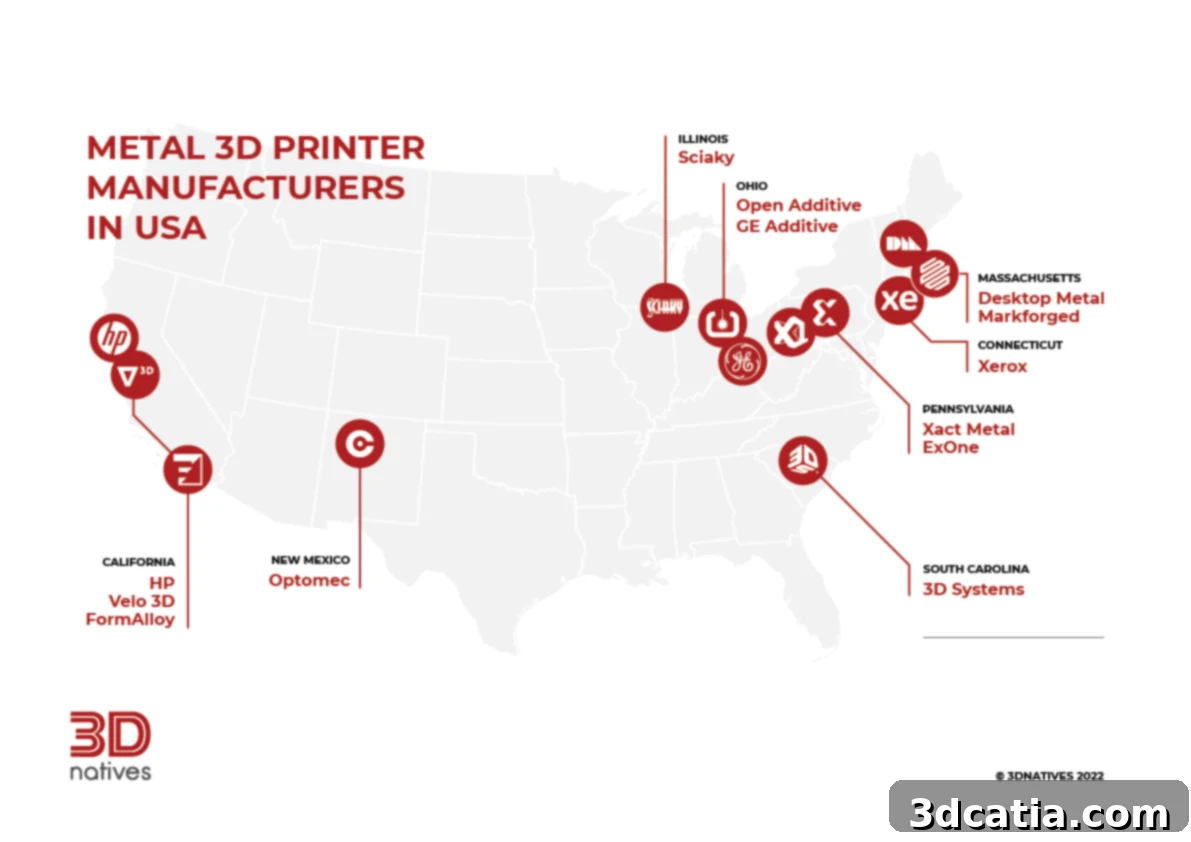
The landscape of additive manufacturing (AM) is rapidly transforming industries globally, with the United States consistently at the forefront of this technological revolution. Since the groundbreaking introduction of stereolithography by Chuck Hull in 1987, and the subsequent emergence of metal AM technologies in the 1990s, the sector has experienced exponential growth within the USA. This nation proudly maintains its position as a global leader, boasting the largest installed base of 3D printers worldwide. However, for many seeking to navigate this dynamic market, identifying the key players and their specific contributions can be challenging. To shed light on this crucial segment, 3Dnatives embarks on a comprehensive series dedicated to exploring prominent American AM manufacturers. This inaugural article focuses on the innovative companies specializing in metal 3D printer manufacturing, presenting them in alphabetical order to offer a clear and organized overview of the sector’s pioneers and innovators. Future installments will delve into the thriving world of polymer 3D printer manufacturers in the country, providing an even broader perspective on America’s additive manufacturing prowess.
3D Systems: A Pioneer Shaping the Future of Metal Additive Manufacturing
3D Systems stands as one of the original and most influential 3D printer manufacturers globally, playing a foundational role in the development and commercialization of additive manufacturing. Their extensive expertise naturally extends to advanced metal AM solutions, cementing their position as a versatile provider in the industrial sector. The company’s metal portfolio is built upon Direct Metal Laser Sintering (DMLS) technology, a powerful process known for producing high-density, complex metal parts with excellent mechanical properties. This process precisely fuses fine metal powder particles layer by layer using a high-power laser, offering design freedom and material versatility. 3D Systems offers a range of DMLS printers tailored for diverse industrial needs, including the robust DMP Factory 500 Solution, the versatile DMP Flex 350 and its dual-laser counterpart, the DMP Flex 350 Dual, the mid-range DMP Flex 200, and the more accessible entry-level DMP Flex 100.
While all these machines leverage the proven DMLS process, they are differentiated by their build volumes, features, and target applications. The flagship DMP Factory 500 boasts an impressive build volume of 500 x 500 x 500 mm, ideal for large-scale production and complex industrial components, particularly in aerospace and automotive. In contrast, the compact DMP Flex 100 offers a build volume of 100 x 100 x 90 mm, making it perfect for R&D, small-batch production, and precision applications in medical and dental fields. A significant advantage of 3D Systems’ factory-level solutions lies in their integrated powder management systems, which optimize material handling, reduce waste, and ensure a consistent low-oxygen environment (below 10 ppm) to prevent oxidation and improve part quality. This focus on consistency, high throughput, and repeatability is critical for demanding industrial applications where part integrity and performance are paramount. Furthermore, all 3D Systems’ metal AM machines are powered by their proprietary 3DXpert software, an all-in-one platform that streamlines the entire workflow from design optimization and simulation to print preparation and post-processing, ensuring efficiency and precision across the manufacturing chain. This comprehensive ecosystem underscores 3D Systems’ commitment to delivering end-to-end solutions for advanced metal additive manufacturing.
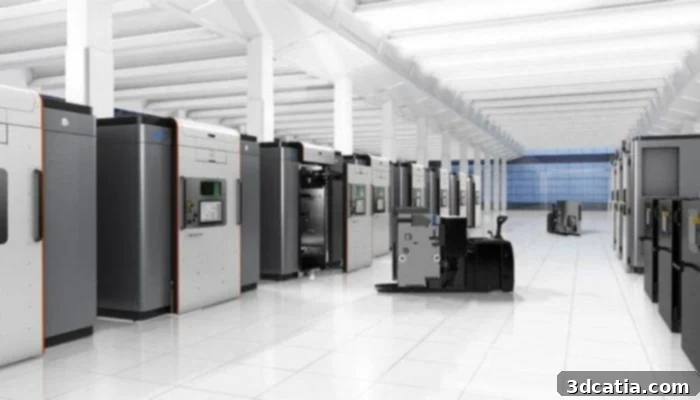
Photo Credits: 3D Systems
Desktop Metal: Revolutionizing Accessible Metal 3D Printing
Since its inception in 2015, Desktop Metal has made an indelible mark on the additive manufacturing industry, rapidly ascending from a promising startup to a key innovator. Their core mission—to democratize metal 3D printing by making it more accessible, affordable, and applicable for a broader range of industrial uses—has driven significant advancements in the field. While the company has navigated recent market challenges, its innovative spirit and diverse technology portfolio continue to position it as a leader in industrial additive manufacturing. Desktop Metal offers a unique blend of metal extrusion (Bound Metal Deposition, BMD) and binder jetting solutions, catering to different production scales and application requirements.
The company’s Studio System™ pioneered office-friendly metal 3D printing using a bound metal rod and a three-step process (print, debind, sinter), making metal prototyping and low-volume production easier than ever before. For higher throughput and production-scale applications, Desktop Metal excels with its binder jetting technology. Their Shop System™ is designed for machine shops, enabling the production of end-use metal parts at an affordable price, while the Production System™ is built for mass production, capable of printing high volumes of complex metal geometries with exceptional speed and cost-efficiency. This technology uses a binder to selectively join metal powder particles, followed by a sintering step to achieve full density, minimizing material waste and offering significant economic advantages for high-volume manufacturing.
Beyond metal, Desktop Metal has strategically expanded its material capabilities and market reach through key acquisitions. The acquisition of EnvisionTEC, the original inventor of DLP 3D printing, allowed Desktop Metal to integrate polymer solutions into its offering, broadening its appeal across various industries. More significantly, the acquisition of its competitor, ExOne, profoundly strengthened Desktop Metal’s dominance in the binder jetting market, particularly enhancing its capabilities in sand casting and industrial applications where large, complex parts are required. This strategic move solidified their position as a comprehensive additive manufacturing solution provider, offering technologies and materials ranging from metals and polymers to ceramics and sand, making them a one-stop-shop for diverse industrial needs and pushing the boundaries of what is possible with accessible additive manufacturing.
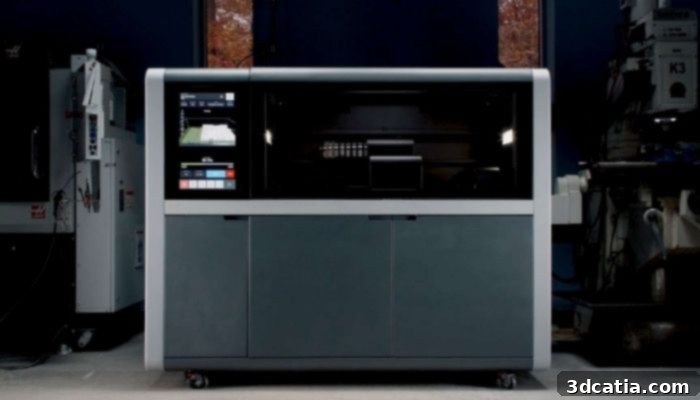
The Shop System from Desktop Metal is one of the company’s binder jetting solutions (photo credits: Desktop Metal)
FormAlloy: Precision DED Solutions from California
FormAlloy, based in California, stands out as a specialized American metal 3D printer manufacturer focused exclusively on Directed Energy Deposition (DED) technology. DED is a highly versatile additive manufacturing process often employed for repairing high-value components, creating large-format parts, or fabricating multi-material and functionally graded structures. FormAlloy’s commitment to innovation in DED has led to the development of two distinct series of printers: the X Series and the L Series, each engineered to meet stringent industrial demands across sectors like aerospace, defense, and oil & gas.
Both the X and L Series DED printers incorporate advanced features designed to maximize precision, control, and material flexibility. Key among these is their closed-loop control system, which provides real-time monitoring and adjustment of critical process parameters, ensuring consistent part quality and repeatability. The integration of variable wavelength lasers allows for optimized material absorption and processing of a wider range of alloys, from nickel-based superalloys to stainless steels and titanium. Furthermore, FormAlloy’s proprietary PF (Powder Feeder) and ADF (Advanced Deposition Feeder) powder feeders are integral to their systems, enabling precise material delivery for creating gradient or bi-metallic structures. This capability is crucial for engineering components with tailored properties, such as wear-resistant coatings or thermal barriers. Each machine is also equipped with the FormAlloy AX metal deposition head, a sophisticated component that facilitates build volumes with up to 5-axes of motion, unlocking the ability to produce highly complex geometries and overhangs without extensive support structures. The AX head is renowned for its high powder efficiency, minimizing material waste, and features quick-release mechanisms for easy maintenance and material changes. FormAlloy offers significant flexibility in build volume, with standard sizes including 200x200x200mm, 500x500x500mm, and even industrial-scale 1x1x1m, alongside options for custom dimensions, making their DED solutions adaptable to a broad spectrum of manufacturing requirements.
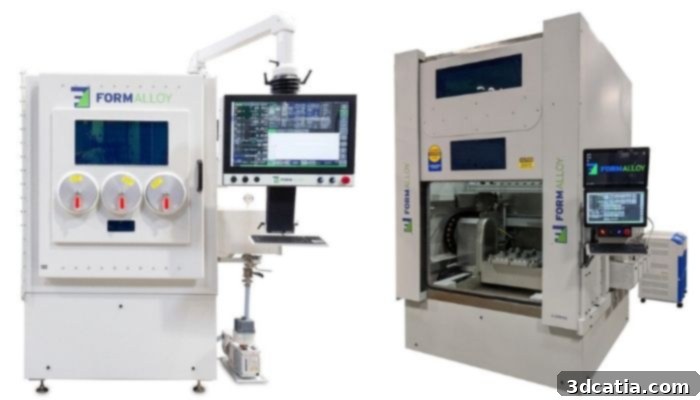
The L-2 (left) and X5 (right) 3D printers (photo credits: FormAlloy)
HP: Bringing Innovation to Metal Additive Manufacturing
While globally recognized for its pioneering work in 2D printing and its revolutionary Multi Jet Fusion (MJF) technology for polymers, HP is rapidly establishing itself as a significant player in the metal additive manufacturing sector. Their innovative approach to metal 3D printing is centered around HP Metal Jet technology, a high-speed binder jetting process that promises to redefine industrial metal production. Although the Metal Jet printer was not initially available for direct purchase, HP allowed customers to order production-grade metal parts through its manufacturing partners, demonstrating the technology’s readiness and capability.
HP Metal Jet utilizes a binder jetting process where a liquid binding agent is selectively deposited onto a bed of metal powder, layer by layer, followed by a sintering step in a furnace to fuse the part into a dense metal component. This method is praised for its ability to produce highly complex parts with excellent precision at a significantly lower cost compared to traditional metal additive manufacturing techniques like DMLS or SLM, especially for high volumes. HP claims that their Metal Jet technology can achieve up to 50 times greater productivity compared to alternative 3D printing methods, making it an ideal solution for mass production of functional metal parts. With a generous build size of 430 x 320 x 200 mm (16.9 x 12.6 x 7.9 in), the HP Metal Jet is capable of producing both large components and high volumes of smaller parts, catering to diverse industrial needs in sectors such as automotive, medical, and consumer goods. The technology’s cost-effectiveness, combined with its capacity for high precision and intricate designs, positions it as a disruptive force in industrial manufacturing. Following extensive development and pilot programs, HP announced the commercial availability of the Metal Jet S100 Solution in late 2022, marking a pivotal moment for industrial-scale metal binder jetting. Manufacturers can now reserve these advanced printers directly from HP’s website, signaling the company’s full commitment to expanding its influence and offering transformative solutions in the metal additive manufacturing landscape.
Markforged: Innovation in Metal and Composite 3D Printing
Founded in 2013, Markforged initially gained widespread recognition for its groundbreaking work in composite 3D printing, particularly its continuous fiber fabrication (CFF) technology which produces parts with unprecedented strength-to-weight ratios. Building on this expertise in advanced materials and extrusion-based additive manufacturing, Markforged successfully transitioned into the metal AM space with its innovative Metal X System. This system represents a significant step towards making industrial metal 3D printing more accessible and safer for a wider range of businesses. The Metal X utilizes a unique Metal FFF (Fused Filament Fabrication) process, often referred to as Bound Metal Deposition (BMD), which involves printing parts from bound metal powder filaments.
The process is relatively simple and office-friendly: users print a “green” part using a filament composed of metal powder encased in a polymer binder, which is then debound and sintered in a separate furnace to remove the binder and fuse the metal particles into a dense, solid metal component. This extrusion-based method significantly reduces the safety concerns and infrastructure requirements associated with traditional powder bed fusion technologies, making it appealing for both prototyping and end-use part production. The Metal X System supports a growing range of industrial-grade materials, including 17-4 PH Stainless Steel, Copper, H13 Tool Steel, Inconel 625, and A2 and D2 Tool Steel, each offering distinct mechanical properties for diverse applications from tooling and fixtures to functional prototypes and end-use parts. The printer boasts a generous build volume of 300 x 220 x 180 mm (11.8 x 8.7 x 7.1 in) and incorporates advanced features crucial for metal printing. These include a closed, heated chamber and a heated, vacuum-sealed print bed with auto-leveling, which together maintain optimal environmental conditions for printing metal materials, minimizing warping and ensuring consistent layer adhesion. Additionally, the system features two nozzles, enabling the simultaneous printing of the metal material and a ceramic release material that acts as an interface, simplifying post-processing and part removal. Markforged’s emphasis on creating safe, accessible, and cost-effective metal 3D printing solutions through its Metal X System continues to empower engineers and manufacturers to adopt additive manufacturing for robust metal components.
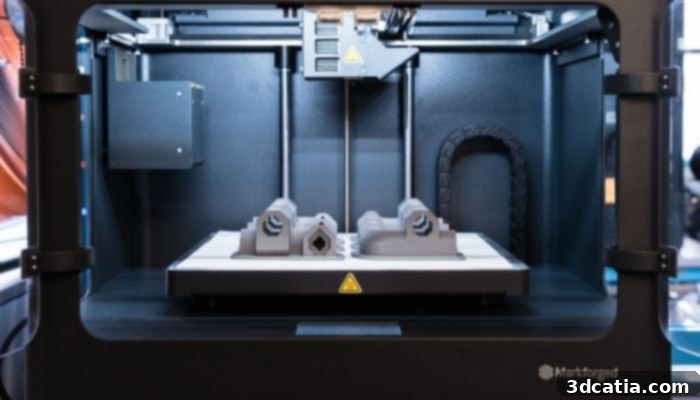
Photo Credits: Markforged
Optomec: Advanced DED Solutions from New Mexico
Optomec, a New Mexico-based American metal 3D printer manufacturer, has been a significant force in additive manufacturing since its founding in 1997. The company’s innovative spirit has led it to develop advanced solutions across a remarkably diverse range of markets, including electronics, energy, life sciences, aerospace, and defense. Optomec distinguishes itself with its focus on high-volume additive manufacturing enabled by its proprietary LENS Directed Energy Deposition (DED) technology. LENS, an acronym for Laser Engineered Net Shaping, is a sophisticated DED process that utilizes a high-power laser—ranging from 400W to 3kW—to precisely fuse powdered metals into fully dense, high-performance parts. This technology allows for the creation of new components, the repair of existing ones, and the application of protective coatings, often with superior material properties.
A critical aspect of Optomec’s LENS process is its controlled build environment. The entire deposition process takes place within a hermetically-sealed chamber, which is meticulously purged with argon. This inert atmosphere is maintained to ensure oxygen and moisture levels remain below 10 parts per million, effectively preventing oxidation of reactive metals like titanium and aluminum during processing. This precise environmental control is paramount for achieving exceptional material integrity, density, and mechanical performance in the printed parts. The benefits of Optomec’s LENS DED technology are numerous and significant: it offers high precision for intricate geometries, remarkable speed for faster production cycles, and a reduced environmental impact due to efficient material utilization. Optomec frequently highlights that LENS technology can enable printing up to 10 times faster and 5 times cheaper than conventional manufacturing methods, offering substantial cost and time savings for industrial applications. Their current portfolio of metal AM solutions caters to various sizes and complexities, including the CS 250, CS 600, CS 800, CS 1500, MTS 500, MTS 860, and the LPE series, providing scalable and versatile options for high-performance metal additive manufacturing.
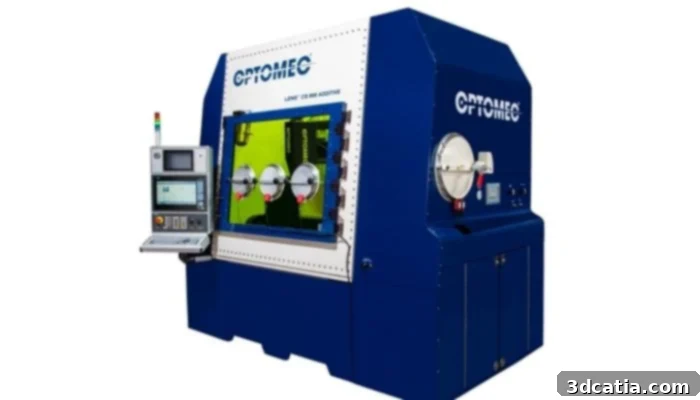
Photo Credits: Optomec
Sciaky: Decades of Welding Expertise, Now in Advanced Metal 3D Printing
Sciaky, a Chicago-based company, boasts an impressive and storied history, making it one of the oldest manufacturers on our list. Established in 1939, Sciaky initially built its reputation as a premier provider of advanced welding systems, playing a critical role during World War II by supplying resistance welding systems for the production of warplanes for the U.S. military. This deep heritage in high-precision metal joining technologies laid a strong foundation for their eventual entry into additive manufacturing. Since 2009, Sciaky has been a pioneer in industrial metal additive manufacturing solutions, leveraging their extensive knowledge of electron beam technology. Their Electron Beam Direct Manufacturing process, launched in 2009, has evolved into the now renowned Electron Beam Additive Manufacturing (EBAM®).
Sciaky’s Electron Beam Additive Manufacturing (EBAM) is a unique, proprietary metal 3D printing process that stands out for its ability to produce high-quality, large-scale metal structures with exceptional material efficiency and minimal waste. The EBAM process is conceptually similar to DED in that it deposits metal layer by layer, but it employs a high-power electron beam gun to melt metal wire feedstock within a vacuum chamber. This vacuum environment is critical for preventing oxidation and ensuring the metallurgical purity of the printed part. Sciaky has successfully collaborated with leading entities in defense and aerospace, including the Department of Defense, Lockheed Martin, the Defense Advanced Research Projects Agency (DARPA), and Airbus, to produce critical, flight-ready components. The company offers a diverse range of EBAM machines tailored to different production scales, including the EBAM 300, EBAM 200, EBAM 140, EBAM 110, and EBAM 40. Notably, the EBAM 110 Industrial Metal 3D printer is capable of creating parts up to an astounding 19 feet in length, far exceeding the capabilities of many traditional metal manufacturing processes in both speed and cost-effectiveness. Sciaky proudly claims that its EBAM process can reduce lead times and material costs by up to 80%, establishing it as one of the fastest and most economically advantageous metal 3D printing processes available globally, particularly for large, complex, and high-performance metal components.
Velo3D: Enabling Complex Designs for Critical Industries
When Benny Buller founded Velo3D, his vision was to overcome a fundamental barrier hindering the broader adoption of additive manufacturing: the necessity for engineers to not only master a new manufacturing process but also an entirely new design methodology, often referred to as Design for Additive Manufacturing (DfAM). Buller sought to reverse this paradigm, creating a company where “design informs manufacturing, not the other way around.” This philosophy underpins Velo3D’s holistic, integrated solution, encompassing advanced hardware (the Sapphire® series printers) and sophisticated software platforms (Flow™ for print preparation and Assure™ for quality control) that simplify the AM workflow while maximizing its inherent advantages, particularly for highly complex and critical parts.
Velo3D’s strength lies in its unique metal powder bed fusion process, which leverages a non-contact recoater blade and per-layer mapping to ensure unparalleled powder bed uniformity. This innovative approach, combined with their proprietary Intelligent Fusion™ underlying manufacturing process, enables the creation of complex geometries with minimal or no support structures, including low-angle features, thin walls, and large overhangs that are traditionally challenging or impossible with other metal AM systems. This freedom of design is particularly beneficial for industries like aerospace, oil & gas, and defense, where component performance, lightweighting, and intricate internal channels are paramount. The American company offers three primary metal 3D printers, each designed for specific production needs while maintaining consistent quality and process across the board. The Sapphire® Printer (with a build volume of 315mm Ø x 400mm z) is ideal for low-volume production and R&D, offering exceptional precision. For larger parts, the Sapphire® 1Mz Printer (315mm Ø x 1000mm z) extends the vertical build envelope significantly. The Sapphire® XC Printer (600mm Ø x 550mm z) is engineered for large-volume, production-scale parts, providing high throughput without compromising on quality. All three machines utilize the same software, run the identical manufacturing process, and are compatible with the same qualified materials, ensuring repeatable consistency and robust part performance critical for demanding applications. This end-to-end manufacturing solution empowers engineers to confidently build even the most critical components, accelerating innovation and overcoming previous manufacturing limitations.
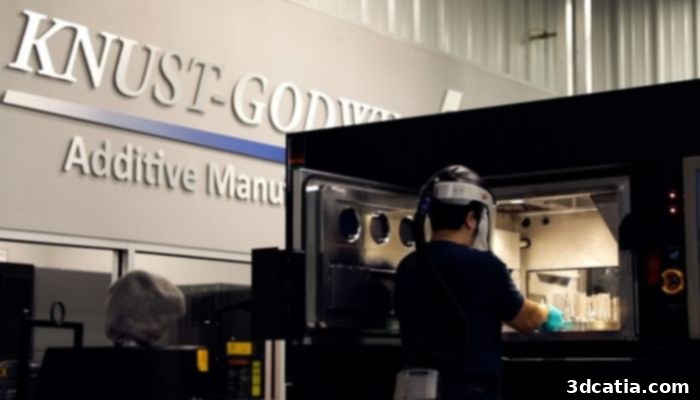
Photo Credits: Velo3D
Xact Metal: Making High-Quality Metal 3D Printing Affordable
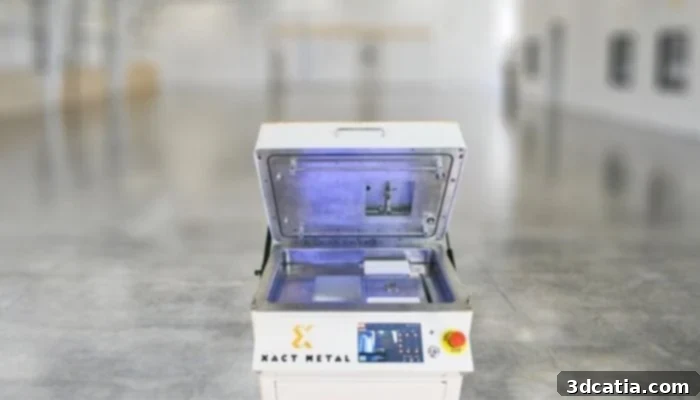
Xact Metal, strategically located in State College, Pennsylvania, and operating out of Penn State’s Innovation Park, is driven by a clear mission: to democratize access to high-quality metal 3D printing by offering it at the most competitive price point possible. This commitment is encapsulated in their motto, “Don’t be held back by traditionally expensive technology.” While powder bed fusion—the core technology they employ—is often associated with high costs in metal additive manufacturing, Xact Metal challenges this perception. They achieve affordability by meticulously combining the essential elements of robust powder bed fusion with innovative technological advancements, streamlining the process and reducing the overall investment required, thereby making metal AM accessible to a broader user base.
Xact Metal’s dedication extends beyond just price, as they are committed to fostering the next generation of innovative manufacturing solutions powered by metal 3D printing, a promise clearly articulated on their website. This dual focus on accessibility and innovation underscores their approach to the market. Currently, the manufacturer offers a versatile range of Direct Metal Laser Sintering (DMLS) machines designed to cater to various user needs and application requirements. The XM200G Series is engineered to meet high-performance use cases in advanced manufacturing and rigorous research & development environments, offering superior part quality and processing capabilities. The XM200C, on the other hand, is specifically suited for educational institutions, research laboratories, and small-to-medium businesses (SMBs) looking for an affordable entry into metal AM for prototyping and functional part creation. For applications demanding larger build volumes, prototyping, tooling capabilities, or cost-effective alternatives to low-volume casting, the XM300C provides an excellent solution. All three series leverage the DMLS process, known for its ability to produce highly complex, fully dense, and high-quality metal parts with fine feature details and excellent mechanical properties. By making industrial-grade metal 3D printing more attainable, Xact Metal is playing a crucial role in expanding the reach and adoption of additive manufacturing across diverse industries.
This extensive overview highlights the diverse and dynamic landscape of American metal 3D printer manufacturers, showcasing their innovative technologies, strategic approaches, and significant contributions to advancing additive manufacturing. From pioneering DMLS systems to groundbreaking DED and binder jetting solutions, these companies are not only expanding the capabilities of metal 3D printing but also making it more accessible, efficient, and integrated into global industrial processes. Their relentless pursuit of innovation solidifies the United States’ position as a powerhouse in the global AM arena, driving forward advancements in critical sectors like aerospace, defense, medical, and general industrial manufacturing.
What are your thoughts on this comprehensive list of American metal 3D printer manufacturers? Are there any other innovative companies you believe should be featured? We invite you to share your insights in a comment below or connect with us on our LinkedIn and Facebook pages! Don’t forget to sign up for our free weekly Newsletter here to receive the latest 3D printing news directly in your inbox. You can also explore all our insightful videos and discussions on our YouTube channel, where we continue to delve into the fascinating world of additive manufacturing.
*Cover Photo Credits: ExOne