
Ultimate Guide to Choosing the Best 3D Printer: Key Factors for Professionals and Makers
Whether you’re a seasoned professional looking to optimize your workflow or an enthusiastic maker eager to bring your digital designs to life, the decision to invest in a 3D printer marks a significant step into the world of additive manufacturing. This revolutionary technology offers unparalleled capabilities, from crafting intricate custom parts and rapidly iterating prototypes to designing complex components with speed and precision. However, with a bustling market brimming with diverse brands, models, and price points, selecting the right 3D printer can feel like navigating a labyrinth. The sheer variety can present significant obstacles in your purchasing journey, making it crucial to approach this decision with a clear understanding of your needs and the options available.
To empower you in making the most informed decision, we’ve outlined at least five critical questions you must ask yourself. These questions are designed to help you pinpoint the ideal brand, define a realistic budget, and identify the 3D printing technologies that perfectly align with your objectives. Before diving into these specific inquiries, it’s also paramount to clearly articulate the primary purpose of your 3D printer and to honestly assess your current knowledge and experience with 3D technologies. A well-defined purpose and an understanding of your existing skill level will serve as a foundational compass throughout your selection process.
1. Defining Your 3D Printer Budget: How Much Are You Willing to Spend?
Once you’ve crystallized the core purpose of your 3D printer – be it for hobbyist projects, professional prototyping, or industrial production – the next pivotal step is to establish a clear budget. The financial investment you’re prepared to make will largely dictate the range of technologies, features, and brands available to you. The 3D printing market boasts a wide spectrum of price ranges, catering to every need and financial capacity. Understanding these tiers will help you manage expectations and explore options effectively.
Entry-Level Options (Under $500): In this accessible price bracket, you’ll predominantly encounter FDM (Fused Deposition Modeling) 3D printers, often available in kit form. These machines, frequently from popular Chinese brands like Creality or Anycubic, offer an excellent gateway into 3D printing for hobbyists and educational environments. While incredibly affordable, they typically require self-assembly, providing a valuable learning experience in mechanics and calibration. This hands-on approach is fantastic for those eager to understand the inner workings of their machine, though it does demand a certain level of technical aptitude and patience for troubleshooting.
Mid-Range & Prosumer Models ($500 – $2,000): As your budget extends towards and beyond €1000 (approximately $1,100-$1,200), you gain access to more refined FDM printers and entry-level resin (SLA/DLP) machines. Many FDM printers in this range are “plug & play,” meaning they arrive pre-assembled and are ready to use with minimal setup, often starting with the simple push of a button. These models generally offer improved reliability, better print quality, and sometimes enclosed print chambers for enhanced safety and material compatibility (e.g., ABS). They are ideal for serious hobbyists, small businesses, and educational institutions seeking a more user-friendly and consistent printing experience.
Professional & Small Industrial Systems ($2,000 – $10,000): With a budget reaching several thousand euros/dollars, other advanced technologies become available. Within the $2,000 to $5,000 range, you’ll find high-quality FDM and SLA 3D printers boasting superior print precision, larger build volumes, and more robust construction. These machines often feature advanced sensors, remote monitoring capabilities, and compatibility with a wider array of engineering-grade materials. Between $5,000 and $10,000, you can opt for more specialized SLA printers tailored for sectors like dental or jewelry, known for their exceptional detail and surface finish. You will also begin to see compact industrial FDM machines designed for rigorous use and potentially some entry-level Selective Laser Sintering (SLS) systems, which have gained significant popularity for producing strong, functional parts without the need for supports.
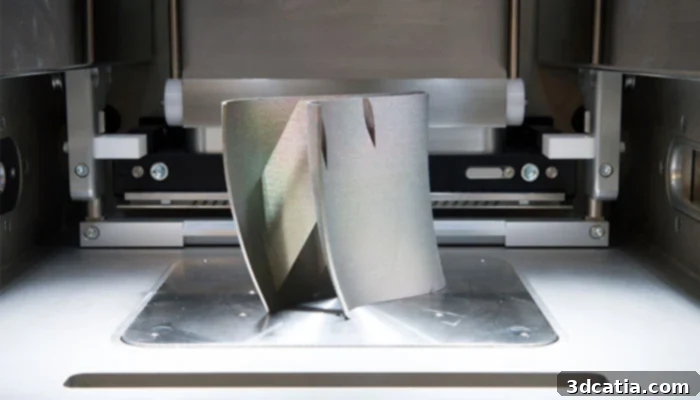
Industrial & High-End Production Solutions ($10,000 – $80,000+): The upper echelons of 3D printing, starting from approximately $10,000 and extending well beyond $80,000, unlock access to truly industrial-grade systems. This tier includes advanced SLS machines, offering isotropic parts and batch production capabilities, along with technologies like HP’s Multi Jet Fusion (MJF), renowned for its speed and ability to produce highly functional nylon parts. At the highest end, Direct Metal Laser Sintering (DMLS) and other metal additive manufacturing processes come into play, enabling the creation of complex, high-strength metal parts in materials such as stainless steel, aluminum, and titanium. These machines are designed for demanding applications in aerospace, automotive, medical, and other high-tech industries, offering unmatched precision, material properties, and production scalability. When considering these advanced systems, it’s also crucial to factor in the total cost of ownership (TCO), which includes not only the initial machine cost but also materials, maintenance, software licenses, and specialized operational environments.
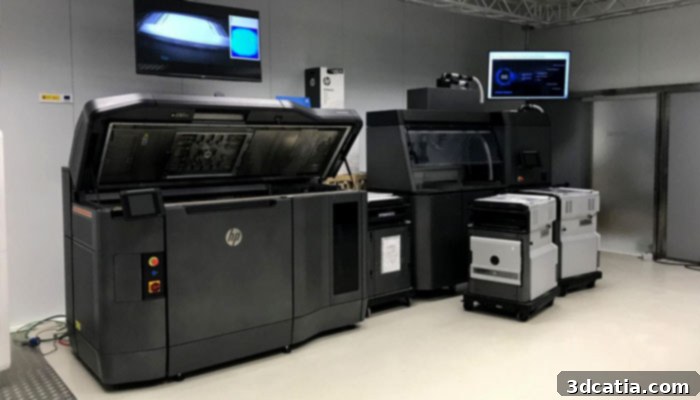
HP Multi Jet Fusion printers offer speed and functional parts.
2. Material Compatibility: What Type of Materials Do You Need to Print With?
Once your budget is established, the next critical consideration is the specific materials you intend to use for your 3D printing projects. The choice of material is inextricably linked to the 3D printing technology, as each method is designed to work with particular material types, offering distinct properties and applications. Understanding these connections is essential for achieving your desired outcomes.
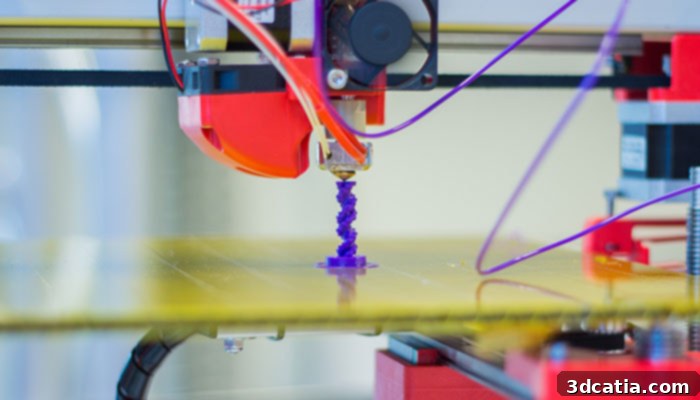
FDM Technology and Plastics: If you are leaning towards FDM technology, your primary materials will be various plastics, typically supplied on filament spools. Basic materials like PLA (Polylactic Acid) and ABS (Acrylonitrile Butadiene Styrene) are widely available and relatively inexpensive, with spools starting around $20. However, the world of FDM filaments is vast, encompassing a range of specialized options. You can find PETG for durability and moisture resistance, flexible filaments like TPU, and even high-performance engineering plastics such as Nylon or polycarbonate. Furthermore, composite filaments infused with carbon fiber, wood, or metal particles are available, offering enhanced strength, aesthetic appeal, or specific functionalities. These more technical filaments can significantly increase costs, reaching upwards of $350 per kilogram, depending on their composition and performance characteristics.
SLA/DLP Technology and Resins: For those considering SLA (Stereolithography) or DLP (Digital Light Processing) technologies, you will primarily work with photopolymer resins. These liquid resins solidify when exposed to UV light, allowing for incredibly high detail and smooth surface finishes. Standard resins typically start around $70 per liter. Beyond standard resins, there are a multitude of specialized options, including tough resins for functional prototypes, flexible resins for bendable parts, high-temperature resins for specific engineering applications, and even biocompatible resins for dental and medical use. While the availability of colors in resins has historically been more limited than filaments, manufacturers are continuously innovating to offer a broader spectrum, although the choices remain less diverse than FDM plastics.
Industrial Applications: Powders and Metals: If your requirements lean towards more industrial-grade applications, demanding exceptional strength, thermal resistance, or direct use in manufacturing, you will likely opt for SLS (Selective Laser Sintering) or DMLS (Direct Metal Laser Sintering) technologies. With SLS, the main material feedstock is polymer powders, most commonly Nylon (PA11, PA12) and TPU (Thermoplastic Polyurethane). These powders yield strong, durable, and highly functional parts ideal for prototyping, jigs, fixtures, and even end-use components. The cost of these powders varies but is generally higher than FDM filaments or standard resins.
For DMLS and other metal additive manufacturing processes, you will be working with a diverse range of metal powders and alloys. This includes stainless steel, aluminum alloys, titanium, cobalt-chrome, and nickel-based superalloys. These materials allow for the creation of incredibly strong, lightweight, and complex metal components suitable for aerospace, medical implants, automotive, and tooling applications. The price of metal powders is significantly higher, varying substantially based on the type of metal, purity, and particle size, reflecting the advanced properties and specialized processing required.
3. Print Volume Requirements: What Size and Quantity of Parts Do You Need?
A crucial factor in your 3D printer selection is understanding the required print volume and the quantity of parts you anticipate producing. The physical dimensions of the objects you wish to print, coupled with your production volume needs, will significantly influence the type and size of machine that is best suited for you. A user printing small prototypes in limited runs will have vastly different requirements than someone producing larger components or batch manufacturing numerous small items.
Matching Volume to Needs: It’s important to resist the temptation to simply choose the cheapest machine. In many instances, a slightly higher initial investment for a larger or more suitable print volume can save considerable time, effort, and cost in the long run. If your projects involve objects that exceed the build plate of an entry-level printer, you might find yourself needing to slice models into multiple pieces and then painstakingly glue them together – a process that compromises part integrity and finish.
FDM’s Flexibility in Volume: FDM technology stands out for its versatility in print volume. You can find FDM machines ranging from compact desktop units with modest build plates to incredibly large-format industrial systems, such as those from manufacturers like BigRep, capable of producing massive parts. This flexibility means that whether you need to print a small bracket or a full-scale piece of furniture, there’s likely an FDM solution available, often at a more affordable price point for a given volume compared to other technologies. This makes FDM particularly attractive for prototyping and creating large, non-load-bearing functional parts.
SLA/SLS and Precision over Volume: In contrast, SLA and SLS 3D printers generally offer smaller build volumes compared to their FDM counterparts, especially at similar price points. The focus with these technologies is typically on high precision, intricate details, and superior surface finish, rather than sheer size. While larger industrial SLA and SLS systems do exist, they come with a significant price premium. For users requiring numerous small, highly detailed, or functional parts, SLS excels due to its ability to print without support structures, allowing for efficient nesting of multiple parts within the build chamber, maximizing throughput per build.
Metal 3D Printing Build Volumes: For metal 3D printers, build volumes can vary widely depending on the technology (e.g., DMLS, Binder Jetting) and the specific investment. While generally smaller than large plastic printers due to the complexities and costs associated with high-temperature metal processing, it is indeed possible to produce substantial and high-quality industrial metal parts. The decision here often balances the need for robust, high-performance metal components against the inherently higher cost and more specialized nature of the equipment.
4. Assessing Your 3D Printing Skill Level: Beginner, Intermediate, or Expert?
Before making a purchase, it’s crucial to honestly evaluate your current skill level and comfort with 3D printing and related technical processes. Your degree of knowledge in additive manufacturing, alongside your familiarity with mechanics, software, and troubleshooting, will significantly influence the ideal printer choice for you. Some technologies offer a seamless, user-friendly experience, while others demand a more profound technical understanding and hands-on involvement.
For Beginners and Hobbyists: If you are new to 3D printing or primarily engage in hobbyist projects, FDM technology is often the most forgiving entry point. You’ll find two main types of FDM machines suitable for beginners. First, there are “Plug and Play” machines that are fully assembled and pre-calibrated, combining user-friendly hardware with intuitive software. These allow you to start printing almost immediately with minimal fuss, making them perfect for those who want to focus on design and printing rather than assembly and maintenance. Second, DIY kit 3D printers are also available. While these require you to assemble the machine yourself, they offer an invaluable learning experience about the mechanics and components of a 3D printer. If you enjoy hands-on projects and have a basic grasp of mechanics, a kit printer can be a rewarding, cost-effective option, offering significant control over your machine once built.
For Professionals and Advanced Users: If you possess a solid understanding of 3D printing principles, have technical skills in mechanics, electronics, or 3D modeling (CAD software), and are looking to push the boundaries of additive manufacturing, you can confidently explore more professional and industrial technologies. These include SLA, SLS, Multi Jet Fusion, or DMLS. These advanced systems typically offer higher precision, wider material versatility, and greater throughput, but they also come with a steeper learning curve. Operating industrial 3D printers often requires specialized training, a more in-depth understanding of the printing process, material science, and safety protocols. The software interfaces are generally more complex, demanding proficiency in CAD/CAM software for optimal results. The commitment to continuous learning is key to fully leveraging the capabilities of these sophisticated machines.
The Role of 3D Software: An often-overlooked but crucial aspect is the 3D software required. For less complex projects and beginner-friendly printers, very simple slicing software (often bundled with the printer) can suffice. However, as the complexity of your projects increases and you venture into new technologies or demand higher precision, your CAD (Computer-Aided Design) and CAM (Computer-Aided Manufacturing) software needs will invariably become more sophisticated. Professional users often utilize industry-standard CAD suites (e.g., SolidWorks, Fusion 360, AutoCAD) and advanced slicers to prepare models for printing, manage printer settings, and optimize build strategies.
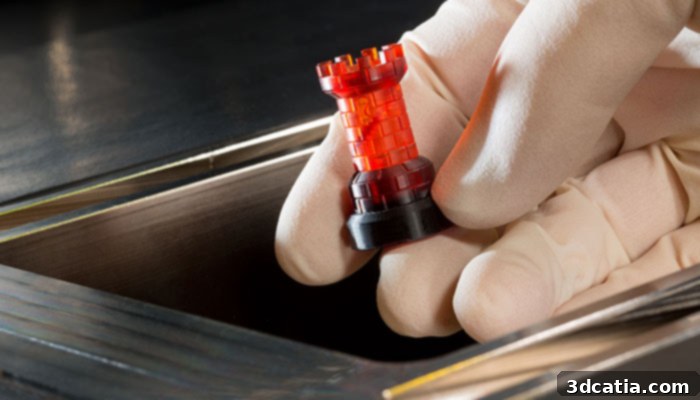
SLA technology often requires more elaborate post-processing steps.
Considering Post-Processing Workflow: Beyond the printing itself, it’s vital to assess your willingness and capacity to undertake post-processing tasks. The amount of work required after a print is complete varies significantly across different 3D technologies. Some require minimal intervention, while others demand extensive labor and specialized equipment.
- FDM Post-Processing: FDM prints often necessitate the removal of support material, if used, which can be a manual process or involve soluble supports that dissolve in water. Additionally, sanding, filing, or painting may be required to achieve a smoother surface finish and reduce the visible layering effect characteristic of FDM prints.
- SLA/DLP Post-Processing: SLA technology typically involves a more elaborate post-processing workflow. Printed parts must first be washed in isopropyl alcohol (IPA) to remove uncured resin, then cured under UV light to fully harden the material and achieve its final mechanical properties. Support structures also need to be carefully removed, often leaving small nubs that require sanding or polishing. Handling resins requires attention to safety protocols due to their chemical nature.
- SLS Post-Processing: For SLS, parts are embedded in a cake of unfused powder. Post-processing involves de-powdering the parts (often with specialized blasting cabinets), which can be quite messy. Additional steps might include bead blasting for surface texture, dyeing for color, or infiltration with other materials for enhanced properties.
- Metal 3D Printing Post-Processing: Metal additive manufacturing technologies demand the most extensive post-processing. Supports, which are often integral for heat dissipation, must typically be removed via machining or grinding. Parts often require heat treatment to relieve internal stresses and improve mechanical properties. Surface finishing processes like polishing, grinding, or CNC machining are usually necessary to achieve desired tolerances and surface quality. This phase is often much more time-consuming and labor-intensive than the printing process itself and requires specialized equipment and expertise.
Understanding these post-processing demands is essential, as they add to the overall cost, time, and effort involved in bringing your 3D printed parts to their final usable state.
5. Where to Purchase Your 3D Printer: Vendors, Distributors, and Online Resources
Having meticulously clarified your project needs, budget, material preferences, print volume requirements, and assessed your skill level, the final crucial question is: where do you buy your 3D printer? The purchasing channel can significantly impact your experience, from initial consultation to long-term support and maintenance.
Exploring Brand Variety: The 3D printing market offers an abundance of choices when it comes to brands, each specializing in different technologies and catering to various user segments. To navigate this vast landscape effectively, resources like our comprehensive 3D printer comparator can be incredibly valuable. This tool allows you to filter and narrow down options based on the specific criteria you’ve just considered – technology, compatible materials, price range, and build volume. Utilizing the filter function will streamline your search and present you with a tailored list of suitable machines, saving you considerable research time.
Online Retailers & Manufacturer Direct: For many desktop and prosumer-grade 3D printers, particularly FDM and entry-level SLA machines, online retailers like Amazon, dedicated 3D printing stores (e.g., MatterHackers, Prusa Research), or purchasing directly from the manufacturer’s website are common avenues. Buying directly from a manufacturer like Prusa, Ultimaker, or Formlabs often provides direct access to their customer support, comprehensive warranties, and genuine accessories. Online retailers offer convenience and often competitive pricing, but post-sales support might be less personalized.
Specialized Distributors for Industrial Solutions: If your needs extend to industrial 3D printers – systems like high-end SLS, Multi Jet Fusion, or DMLS machines – it is highly recommended to contact specialist distributors. These distributors, often found through industry directories, offer much more than just a sales transaction. They provide invaluable consultation, helping you select the precise machine and configuration for your industrial applications. Furthermore, they typically offer comprehensive services including installation, operator training, ongoing technical support, and tailored maintenance contracts. This level of partnership is critical for ensuring the optimal performance and longevity of high-investment industrial equipment.
Leveraging Resources for Informed Decisions: Don’t hesitate to tap into the wealth of information available through online reviews, user forums, and expert guides. Watching videos, such as one demonstrating how to use a machine comparator, can also provide practical insights into navigating your options. Making an informed decision means leveraging all available resources to gain confidence in your investment.
What other factors do you believe a buyer should consider before purchasing a 3D printer? We invite you to share your insights and experiences in a comment below or connect with us on our Facebook and Twitter pages. And don’t miss out on the latest news and innovations in additive manufacturing – sign up for our free weekly newsletter, delivered straight to your inbox!