
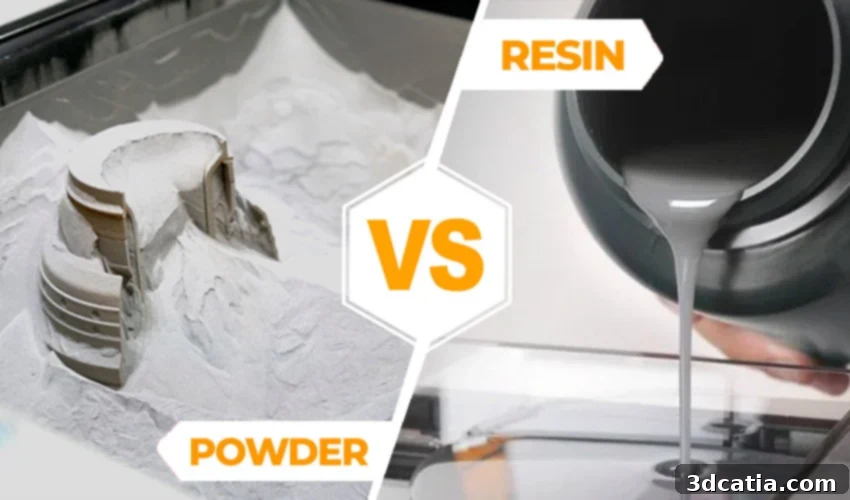
Resins vs. Powders: A Comprehensive Guide to Polymer Materials in 3D Printing
The world of 3D printing is vast and continuously expanding, offering an extensive array of materials tailored for diverse applications and printing processes. This broad selection, while beneficial for innovation, can often make material choice a daunting task for users. From plastics and ceramics to metals, the additive manufacturing material landscape is rich and complex. To navigate this complexity, this detailed guide provides an in-depth comparison of two dominant polymer material families: resins and powders. While acknowledging the existence of specialized materials like metal powders and ceramic resins, our focus today will primarily remain on their polymeric counterparts, which form the bedrock of many 3D printing applications.
Polymer-based 3D printing materials are broadly categorized into two main types: thermosets and thermoplastics. The fundamental distinction between these two families lies in their response to heat. Thermoset plastics, once cured, undergo an irreversible chemical change. They decompose when reheated and cannot be reformed or melted down, making them unsuitable for recycling in their cured state. In contrast, thermoplastics are far more commonly utilized in 3D printing. These materials can be repeatedly heated to assume a desired shape and subsequently cooled and solidified. This process of melting and solidification can be repeated multiple times, although their mechanical properties may experience slight alterations with each reheating cycle. This recyclability and versatility make thermoplastics highly desirable for a wide range of applications.
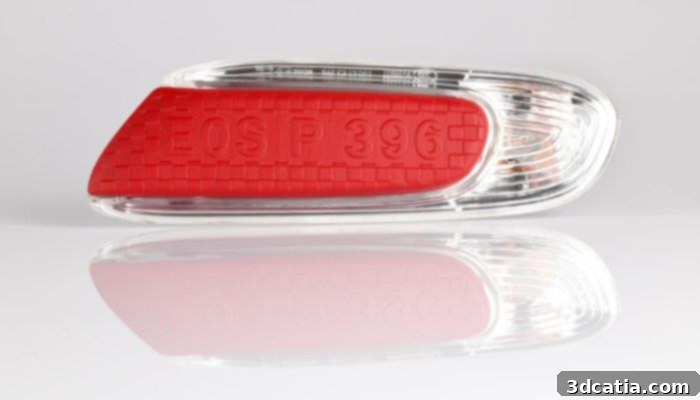
Plastic powders can be used in many areas, e.g. in the automotive industry (photo credits: EOS)
These two material families, resins and powders, are indispensable in modern additive manufacturing. The market for plastic powders is projected to reach an impressive $3 billion by 2029, according to the Linker report. Meanwhile, the resin market is poised for even more substantial growth, with Fortune Business Insights estimating its value to exceed $750 billion. Naturally, each material type is compatible with specific 3D printing technologies. Powders are typically employed in processes such as Selective Laser Sintering (SLS) or Multi Jet Fusion (MJF). Resins, on the other hand, are the cornerstone of material jetting and photopolymerization techniques like Stereolithography (SLA) and Digital Light Processing (DLP). Throughout this article, we will delve deeper into these processes, exploring post-processing requirements, pricing structures, distinct material characteristics, prominent manufacturers, and their diverse applications.
Features and Properties of Polymer Resins and Powders in 3D Printing
3D Printing Polymer Resins
The polymer resin market is incredibly dynamic, offering a multitude of formulations with varying properties designed for specific applications across numerous industries. Resin-based 3D printing excels at producing small, intricate objects with exceptionally fine details and smooth surface finishes. Here’s a breakdown of some common resin types available today:
- Standard Resins: These are generally the most affordable and widely accessible resins. They are easy to work with, simple to post-process, and typically yield parts with a smooth, soft-to-the-touch finish. However, their primary drawback is their inherent fragility, making them prone to breaking and cracking. They are primarily favored for rapid prototyping and non-functional aesthetic models where mechanical strength is not critical.
- Flexible and Elastomeric Resins: Engineered for parts requiring resistance to bending, compression, or stretching. These resins can create objects with varying degrees of flexibility, with their Shore hardness—a measure of material hardness—being individually adjustable to meet specific application needs. They are ideal for gaskets, seals, grips, and functional prototypes that mimic rubber-like properties.
- Water Washable Resins: As their name suggests, these innovative resins simplify post-processing by allowing parts to be cleaned with plain water instead of isopropyl alcohol (IPA). This not only streamlines the workflow but also reduces odor and leaves a less sticky, drier surface finish. They are a popular choice for hobbyists and professionals seeking a more convenient and eco-friendlier post-processing solution.
- Industrial Resins: These specialized resins are formulated for demanding applications requiring robust mechanical performance, rigidity, and durability. Within the industrial category, several sub-types exist:
- Temperature Resistant Resins: Capable of withstanding extreme temperatures, often up to 238 ℃ or higher. These resins are crucial for producing prototypes, molds, and functional parts that require high thermal stability, precision, and intricate detail in environments where heat exposure is a factor.
- Burnout Resins (Castable Resins): Characterized by their exceptional detail, smooth surface finish, and rapid curing properties. Their unique feature is their ability to cleanly burn out during the casting process, leaving virtually no ash or residue. This makes them indispensable in jewelry making and dental applications for creating intricate patterns for investment casting.
- Dental Resins: A highly specialized category designed specifically for the dental industry. These resins come in various formulations, including colored, transparent, flexible, or rigid, to suit diverse dental applications such as bridges, crowns, retainers, and surgical guides. A critical requirement for dental resins is their ability to be sterilized, ensuring patient safety and compliance with medical standards.
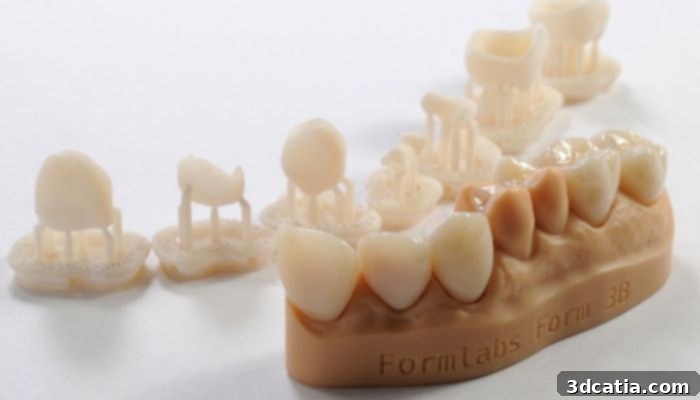
Resins play an important role within the dental industry (photo credits: Formlabs)
3D Printing Polymer Powders
The market for thermoplastic polymer powders offers an equally diverse range of materials, with nylon (polyamide) being the most prevalent due to its exceptional balance of properties. It’s worth noting that some powders can be enhanced with additives, such as glass beads, to further customize their mechanical characteristics. A prime example is HP 3D High Reusability PA 12 Glass Beads, a thermoplastic enriched with 40% glass beads for increased stiffness and dimensional stability.
- Nylon (Polyamide): Also known as polyamide, PA12 and PA11 are the most commonly used forms in powder bed fusion. These materials are renowned for their low moisture absorption, high resistance to wear and friction, and excellent mechanical properties, making them invaluable in industries like automotive for durable functional components.
- Nylon PA12: Derived from petroleum, PA12 exhibits remarkable ability to withstand drastic temperature fluctuations and offers strong resistance to various chemicals. Its robust nature makes it suitable for complex, high-performance parts.
- Nylon PA11: A bio-based polymer, PA11 is often considered a more ecological alternative to PA12, primarily because it’s sourced from castor oil. While not inherently biodegradable, its renewable origin offers sustainability advantages. PA11 boasts good heat resistance, high elasticity, and superior impact strength compared to PA12, making it ideal for parts requiring flexibility and toughness.
- PEEK (Polyether Ether Ketone): A high-performance, semi-crystalline thermoplastic, PEEK is highly prized in advanced industries for its extraordinary mechanical strength, exceptional heat resistance, chemical inertness, and superior wear resistance. Its impressive strength-to-weight ratio allows it to replace certain metals in critical applications. However, PEEK is notoriously challenging to print due to its high processing temperature requirements and precise thermal management needs. Consequently, its use is primarily concentrated in demanding sectors like automotive, aerospace, and medical, where its unique properties justify the complexity.
- Composites: Composite materials for 3D printing typically consist of a polymer matrix reinforced with short or long fibers, significantly enhancing their strength, stiffness, and other mechanical properties. The most common reinforcing fibers are carbon fibers and glass fibers. Carbon fiber composites, formed by mixing a polymer with carbon fibers, result in exceptionally lightweight, strong, and stiff materials, ideal for high-performance applications. Glass fiber composites, while strong, are generally less stiff and denser than carbon fiber variants, offering a balance of performance and cost-effectiveness.
- Polypropylene (PP): This semi-crystalline thermoplastic is widely recognized for its excellent resistance to chemical products, superior electrical insulation properties, and lightweight nature. Despite these advantages, PP can be challenging to 3D print due to its tendency to warp and its specific thermal management requirements during the printing process. When successfully printed, it’s a versatile material for durable, chemically resistant parts.
- TPU (Thermoplastic Polyurethane): Thermoplastic polyurethane is celebrated for its remarkable durability, high elasticity, and flexibility, making it ideal for producing rubber-like parts. It offers excellent resistance to shocks, abrasion, and cuts. However, TPU does not tolerate high temperatures well, a crucial consideration for both the 3D printing process and the intended application of the final part.
A significant advantage of plastic powders, especially thermoplastics used in SLS and MJF, is their inherent recyclability. Post-sintering, excess powder that was not fused can be sieved and mixed with fresh powder, effectively reducing material waste and lowering operational costs. This aspect contributes to a more sustainable additive manufacturing workflow, aligning with growing industry demands for eco-friendly practices.
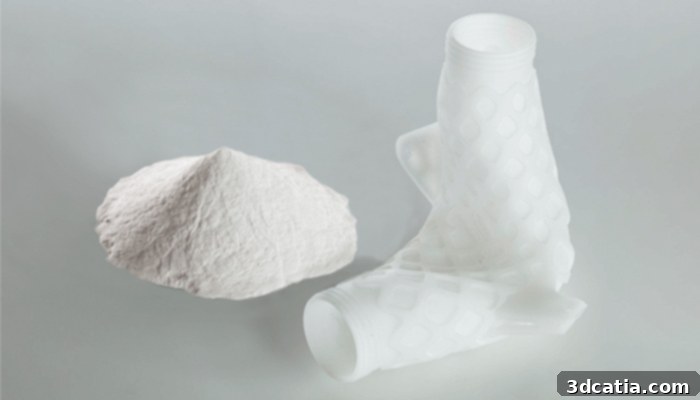
Photo Credits: BASF
The 3D Printing Digital Workflow: Processes and Post-Processing
Resins: Vat Photopolymerization and Material Jetting
For resin 3D printing, the most prevalent methods fall under the umbrella of vat photopolymerization, which includes Stereolithography (SLA), Digital Light Processing (DLP), and LCD-based printing (MSLA). These processes all rely on an ultraviolet (UV) light source to selectively cure liquid photopolymer resin, solidifying it layer by layer. The primary difference lies in the type of light source and how it cures the resin: SLA uses a laser to trace and cure points sequentially, DLP employs a projector to cure an entire layer simultaneously, and MSLA utilizes an LCD screen as a mask to control UV light from an array of LEDs. Another distinct process compatible with resins is Material Jetting, which precisely jets droplets of photopolymer resin that are then instantly cured by UV light. This method uniquely allows for multi-material printing, including the use of transparent resins, within a single build.
Post-processing for resin 3D prints is a crucial multi-step procedure. After printing, parts typically emerge with sticky, uncured resin residue on their surfaces. This excess resin must be thoroughly removed, most commonly by washing the part in a solvent such as isopropyl alcohol (IPA), which consistently delivers excellent results. Following washing, any support structures, essential for printing complex geometries and overhangs, must be carefully removed, usually with pliers or specialized tools. The final critical step is post-curing. Since the initial curing during printing may not fully complete the polymerization process, resin parts require additional exposure to UV light or heat to achieve their final mechanical properties and maximum strength. This can range from simple exposure to sunlight to using dedicated UV curing stations. The duration of this post-curing process varies depending on the resin type and part geometry. Optional finishing steps include sanding for smoother surfaces, painting, or coating to enhance aesthetics or functional properties.
It is paramount to address the toxicity of resins. Many photopolymer resins can cause severe skin irritation and allergic reactions upon contact, particularly when exposed to UV light. Furthermore, inhaling resin vapors can lead to dizziness and other adverse health effects due to their chemical composition. Therefore, adequate personal protective equipment (PPE) such as gloves, safety glasses, and proper ventilation are essential when handling liquid resins and operating resin 3D printers.
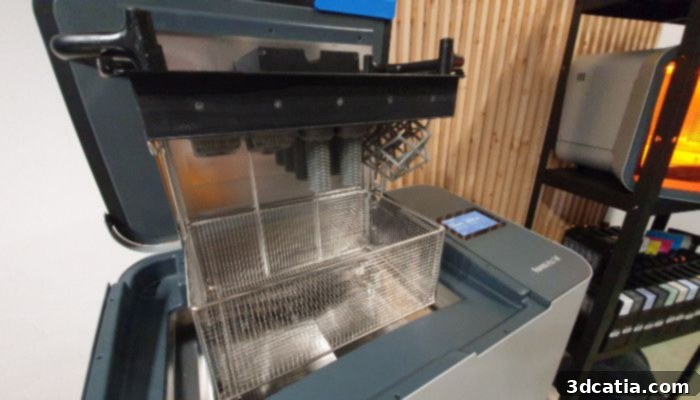
Post-processing of resins requires all the steps, such as washing off here (photo credits: Formlabs)
Powders: Powder Bed Fusion Technologies
For 3D printing with plastic powders, several advanced technologies are employed, primarily falling under the category of powder bed fusion. These include Selective Laser Sintering (SLS), Multi Jet Fusion (MJF) developed by HP, and Selective Absorption Fusion (SAF) from Stratasys. Binder Jetting can also utilize plastic powders in some specialized applications. In SLS technology, a high-power laser selectively sinters (fuses) powdered material, layer by layer, after a thin layer of powder is spread across the build platform. This process precisely solidifies the chosen areas, forming the desired geometry. HP’s Multi Jet Fusion operates differently: after a powder layer is applied, fusing and detailing agents are jetted selectively onto the powder. The fusing agent promotes particle fusion in the desired areas, while the detailing agent is applied to the edges to inhibit fusion, resulting in sharper, smoother part boundaries. Stratasys’ SAF technology differentiates itself by using a high-energy absorption fluid, which, once jetted onto the polymer powder, absorbs thermal energy from an infrared lamp to fuse the powder into the precise 3D pattern.
A significant advantage of printing with polymer powders is the inherent self-supporting nature of the process. Unlike resin printing, external support structures are generally not required. During printing, the part is encased within a “powder cake” of unfused material, which acts as a natural support, allowing for complex geometries without the need for additional material. Post-processing for powder prints begins with a crucial cooling phase, which can take up to 10 hours depending on the part’s size and complexity. This controlled cooling is essential to prevent warping and ensure optimal part properties. Following cooling, the parts are carefully excavated from the surrounding powder cake. This de-powdering step can be performed manually or automated using specialized machines. Due to the fine nature of the powder, appropriate personal protective equipment, including respirators, must be worn to prevent inhalation, which can pose health risks. While optional, further finishing steps such as galvanizing, painting, dyeing, or sanding can be applied to enhance the aesthetic appearance or functional attributes of the plastic parts.
The Price Range of Plastic Powders and Resins in 3D Printing
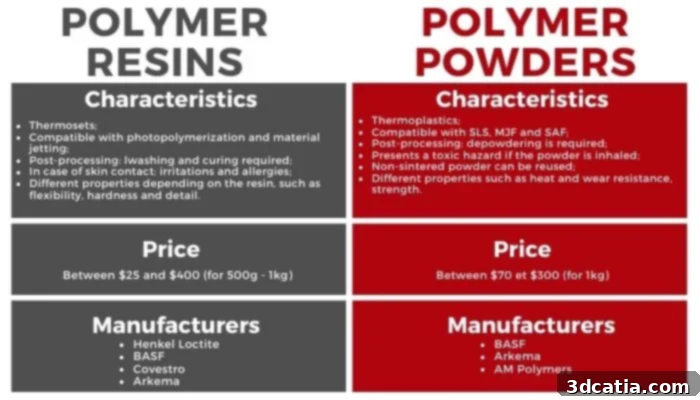
The cost of 3D printing materials, both resins and powders, varies considerably based on their specific properties, performance characteristics, and intended applications. Generally, the price of 500g of standard black resin can start at approximately $25, but highly specialized engineering or dental resins can command prices upwards of $400 per liter. Plastic powders, on the other hand, typically fall into a different price bracket. For instance, PA11 powder can range from $75 to $320 per kilogram. However, when evaluating the overall cost-effectiveness of powder-based printing, it’s essential to consider the material’s reusability. In powder bed fusion processes like SLS and MJF, a significant percentage of unused powder—often 50% or more—can be sieved and blended with fresh material for subsequent prints, effectively reducing per-part material costs and minimizing waste. This reusability factor significantly impacts the long-term economic viability of powder-based additive manufacturing.
What Manufacturers Are Dominating the Polymer 3D Printing Market?
The ecosystem for polymer 3D printing materials is characterized by a synergistic relationship between chemical groups and 3D printing companies. Chemical giants are primarily responsible for the production of the raw material feedstocks, while 3D companies either utilize these materials, adapt them for specific machines, or collaborate with chemical groups to develop innovative new formulations. In the realm of resins, prominent chemical groups include Loctite Henkel, Covestro Additive Manufacturing, BASF, and Arkema. These companies often partner directly with 3D printer manufacturers like Zortrax, Formlabs, and EnvisionTEC, resulting in highly optimized and sometimes proprietary resin systems. For plastic powders, leading chemical innovators include Arkema, BASF, and Evonik, which famously collaborates with HP for its MJF technology, and EOS, a pioneer in SLS. Additionally, specialized manufacturers dedicated solely to 3D printing powders, such as AM Polymers and Fabulous, contribute significantly to the material landscape. It’s crucial for users to note the prevalence of proprietary resins, as many resin 3D printing machines operate as “closed systems,” meaning they are exclusively compatible with materials developed or certified by the machine manufacturer, limiting material choice but often ensuring optimized print performance.
Diverse Applications for Resins and Powders in Additive Manufacturing
The distinct properties of resins and powders make them suitable for a wide array of applications across various industries.
Resin-based applications typically thrive where exceptional detail, smooth surface finish, and high precision are paramount. This includes the creation of intricate small parts, highly detailed prototypes, and aesthetic components for sectors such as entertainment, scale modeling, and jewelry design. Resins also hold a particularly strong position in the medical and dental fields. Transparent and biocompatible resins are indispensable for producing highly accurate surgical guides, custom dental crowns, bridges, and implants, where precision and sterilizability are non-negotiable requirements for patient safety and efficacy.
Plastic powders, especially nylons, are celebrated for their mechanical strength, durability, and suitability for functional parts. In the health sector, biocompatible nylons are ideal for manufacturing custom prostheses and orthotics, as they can safely come into direct contact with the skin. The broader manufacturing industry extensively utilizes powder-based materials for functional prototyping, end-use parts, and small to medium-batch production runs. Their ability to produce strong, tough, and durable components makes them perfect for applications like gears, hinges, enclosures, jigs, fixtures, and other mechanical parts that require robust performance in demanding industrial environments.
Have you had the opportunity to utilize either resins or plastic powders in your 3D printing endeavors? Share your experiences and insights in the comments section below, or connect with us on our social media platforms: LinkedIn, Facebook, and Twitter! Don’t forget to subscribe to our free weekly Newsletter here to receive the latest 3D printing news directly in your inbox. For more visual content, you can also explore all our videos on our YouTube channel.