
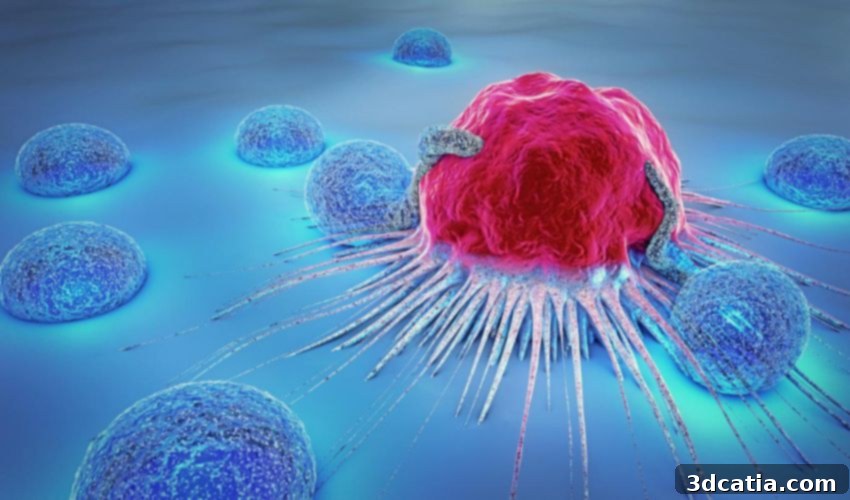
Revolutionizing Cancer Treatment: Harnessing 3D Bioprinting and Hydrogels for Enhanced Immunotherapy Against Solid Tumors
Cancer remains one of the most formidable health challenges globally, responsible for a devastating number of fatalities each year. The World Health Organization (WHO) reported approximately 10 million cancer-related deaths worldwide in 2020 alone, underscoring its profound impact on human lives and healthcare systems. Despite relentless efforts and continuous advancements in medical research, the quest for a definitive cure and more effective treatments is an ongoing journey. Researchers constantly explore innovative technologies to combat this complex disease. A significant beacon of hope has emerged from the collaborative work of scientists at the Korea Institute of Machinery and Materials (KIMM) and the Korea Research Institute of Bioscience and Biotechnology (KRIBB), both operating under the Ministry of Science and ICT. These institutions have unveiled a groundbreaking 3D bioprinting technology that holds immense promise as a novel therapeutic strategy, particularly targeting challenging solid tumors and potentially revolutionizing cancer treatment.
Solid tumors, characterized by their dense, three-dimensional structure composed of malignant cells, vascular networks, and connective tissues, present unique difficulties in treatment. Unlike hematological cancers, their physical solidity and often hypoxic (low oxygen) core can impede the effective delivery and penetration of therapeutic agents, making them notoriously hard to eradicate. Traditional cancer treatments, including chemotherapy and radiation, frequently come with severe side effects due to their non-specific targeting of both cancerous and healthy cells. Immunotherapy, a revolutionary approach that harnesses the body’s own immune system to fight cancer, has shown remarkable efficacy in certain types of malignancies. This treatment involves using substances to stimulate or restore the immune system’s ability to combat cancer cells directly. Among the key players in the immune response are natural killer cells (NK cells), a type of leukocyte that is intrinsically capable of identifying and eliminating harmful cells, including cancerous ones, without prior sensitization. The Cancer Center often recommends immunotherapy for patients with advanced stages of cancer, and its success in specific cancer types has paved the way for extensive research into optimizing its application, especially for resistant solid tumors.
Korean researchers are using 3D bioprinting to treat solid tumors (photo credits: Korea Institute of Machinery and Materials (KIMM))
Despite the immense potential of NK cell-based immunotherapy, conventional delivery methods, such as intravenous (IV) injection, face significant hurdles that limit their full therapeutic impact. A major challenge is the rapid degradation and loss of NK cells once they enter the bloodstream, severely limiting the number of active cells that can reach and infiltrate tumor sites. This inefficiency reduces the overall therapeutic benefit and necessitates frequent, high-dose administrations, which can have their own complications. The innovative method developed by the KIMM and KRIBB scientists directly addresses this critical limitation by leveraging advanced 3D bioprinting technology to encapsulate NK cells within specialized hydrogels. This sophisticated approach provides a protective microenvironment for the NK cells, shielding them from premature degradation, immunological attack, and mechanical stresses. By safeguarding the NK cells, the technology enables a significantly higher proportion of these potent immune cells to home in on and attack tumor cells effectively. This ensures their sustained presence and activity, which is crucial for overcoming the aggressive and often immunosuppressive nature of solid tumors.
The success of this groundbreaking technique hinges on the carefully engineered hydrogels, which are biocompatible, three-dimensional polymer networks designed to mimic the extracellular matrix of biological tissues. In this specific application, the hydrogels are fabricated from a precise blend of sodium alginate and gelatin, materials well-regarded for their excellent biocompatibility, biodegradability, and tunable physical properties. The state-of-the-art 3D bioprinting process allows for the creation of these complex hydrogel structures with embedded NK cells with unparalleled precision and control. A key feature of these hydrogels is their ability to form controlled pores over time within the matrix, facilitating the gradual and sustained release of the encapsulated NK cells. This delayed release mechanism is paramount, as it ensures a continuous and localized supply of active immune cells to the tumor site, extending their therapeutic window and dramatically improving their targeting efficiency compared to a rapid bolus injection. Moreover, by encapsulating the NK cells within the hydrogel, printing them into a desired structure, and subsequently culturing them in this protected, supportive environment, the researchers have observed a remarkable enhancement in both the viability and activity of the NK cells. This superior preservation and functionality are critical factors in boosting the overall efficacy of the immunotherapy, allowing NK cells to perform their cancer-killing functions more robustly and for an extended duration, directly at the site where they are most needed.
The initial findings from this research have been exceptionally promising, sparking considerable excitement and optimism within the oncology community and the field of regenerative medicine. The detailed study documented how the hydrogel system successfully created an optimal microenvironment that not only protected but also supported the NK cells, confirming the potential of 3D bioprinting of NK cells as a viable and highly promising therapeutic option for solid tumors. This innovative approach significantly improves upon existing immunotherapy methods and paves the way for the development of even more effective and targeted cancer treatments, particularly for malignancies that have historically been difficult to manage due to their location, type, or resistance to conventional therapies. Principal Researcher Su A Park of KIMM emphasized the transformative potential of this development, stating, “This technology can help to significantly improve the functionality of NK cells that are used for cancer treatment. We expect to contribute to the treatment of cancer patients through this newly developed technology.” This sentiment underscores the researchers’ profound confidence in their innovation’s capacity to translate into meaningful clinical benefits for patients battling various forms of cancer, especially those with advanced solid tumors where current treatment options are limited and often come with severe side effects. This advancement represents a significant step towards personalized cancer medicine, where treatments can be tailored to individual patient needs with unprecedented precision and effectiveness.
Photo Credits: Korea Institute of Machinery and Materials (KIMM)
The implications of this innovative 3D bioprinting technology extend far beyond the current scope of NK cell delivery for solid tumors. It opens up entirely new avenues for cell-based therapies, offering a versatile platform for the controlled release of various therapeutic cells, biomolecules, and even drugs. The ability to precisely control the release kinetics and create localized treatment zones within the body holds the potential to revolutionize the treatment of not only cancer but also a wide range of degenerative diseases, chronic inflammatory conditions, and tissue regeneration applications. This method’s potential for significantly enhancing the efficacy of immunotherapy, especially against challenging solid tumors that often develop resistance or are physically inaccessible to conventional therapies, marks a critical paradigm shift in oncology. Future research will undoubtedly focus on scaling up the production of these sophisticated bioprinted constructs, refining the hydrogel formulations for different tumor microenvironments, and conducting comprehensive preclinical and rigorous clinical trials to ensure safety, efficacy, and long-term therapeutic benefits in human patients. While challenges such as regulatory approval processes, manufacturing costs, and widespread clinical adoption remain, the foundational research by KIMM and KRIBB provides a robust and promising framework for overcoming these hurdles and bringing this technology closer to patient care.
Ultimately, this pioneering work in 3D bioprinting represents a monumental leap forward in the relentless global fight against cancer. By combining the power of advanced manufacturing with the precision of biological engineering, scientists are not just developing a new treatment; they are forging a path towards more effective, less invasive, and truly personalized therapies that can significantly improve patient outcomes and their overall quality of life. This technology holds the profound promise of transforming the landscape of oncology, offering renewed hope to millions affected by this devastating disease, particularly those for whom existing treatments have proven insufficient or too toxic. The ability to strategically enhance and deliver the body’s natural defenses through such ingenious methods signifies a brighter future where cancer may one day become a manageable or even curable condition for a much larger population worldwide.
What are your thoughts on the groundbreaking use of 3D bioprinting to treat cancer? We encourage you to share your perspectives and insights in the comments section below or engage with us on our LinkedIn, Facebook, and Twitter pages! Don’t miss out on the latest advancements and breaking news in the world of 3D printing; remember to sign up for our free weekly Newsletter here, delivered straight to your inbox. For a visual exploration of innovative 3D printing applications, you can also find all our compelling videos on our YouTube channel.
*Cover Photo Credits: University of Louvain