
Revolutionizing Retail Design: Wuhan’s Iconic 3D Printed Elephant Sculpture Transforms the I Do Store
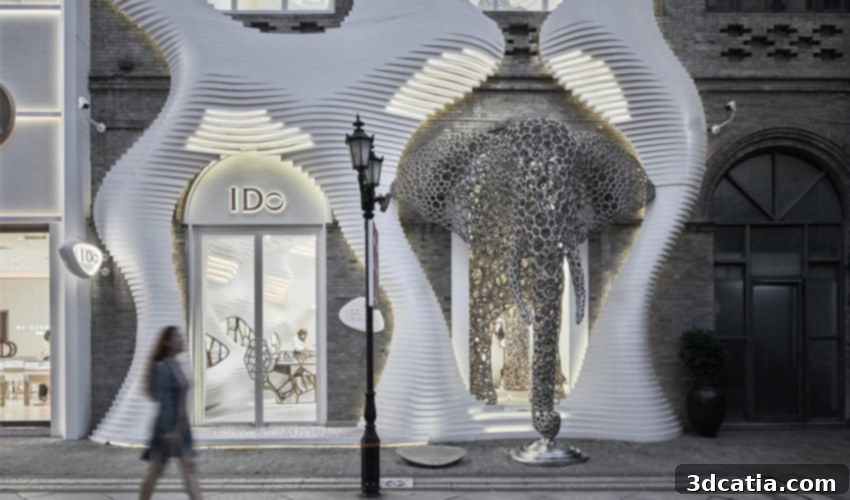
Imagine strolling through a bustling city, perhaps doing your holiday shopping, when your gaze catches something truly extraordinary: a colossal metal elephant, its head majestically emerging from the facade of a building. This isn’t a scene from a fantasy novel; it’s a vibrant reality in Wuhan, China. The renowned I Do store has transformed its exterior into an architectural marvel, featuring an awe-inspiring 9-meter high metal sculpture. The head of this magnificent elephant sculpture boldly protrudes from one of the store’s facades, immediately capturing the attention of passersby. Adding further intrigue and scale, two intertwined figures are dynamically placed on the animal’s back, effectively extending the sculpture’s height and drawing the eye upwards towards the two-story establishment. This impressive and groundbreaking sculpture is a testament to the power of modern manufacturing, realized in part through additive manufacturing. More specifically, its intricate form was achieved via 3D printed molds, which were subsequently utilized in the traditional lost-wax casting process. This monumental artistic and architectural feat is the result of a visionary collaboration between the innovative architecture studio Antistatics Architecture and the celebrated contemporary artist Yue Minjun.
Nestled in the vibrant city of Wuhan, China, this striking installation adorns the 250 square meter I Do store, a space now imbued with the unique artistic signature of Yue Minjun. The artist, globally recognized for his distinctive paintings and sculptures that famously depict him and other figures laughing exuberantly, has brought his signature style to this new retail environment. True to form, two intertwined figures, mirroring his iconic laughing depictions, are dramatically positioned on the back of the elephant sculpture. The entire stainless steel sculpture reaches an impressive height of 9 meters and commands a substantial weight of approximately 9 tons. Beyond its sheer physical presence, the artwork is deeply symbolic, intended to represent wisdom, strength, and unity—qualities universally associated with elephants. The majestic animal itself is grounded on the first floor of the store, while the two expressive figures ascend and cross the second floor, visually connecting the store’s levels and subtly inviting visitors to explore the upper reaches of the retail space. This integration of art and architecture creates a compelling dialogue between the urban landscape and the commercial interior, making the I Do store a distinctive landmark.
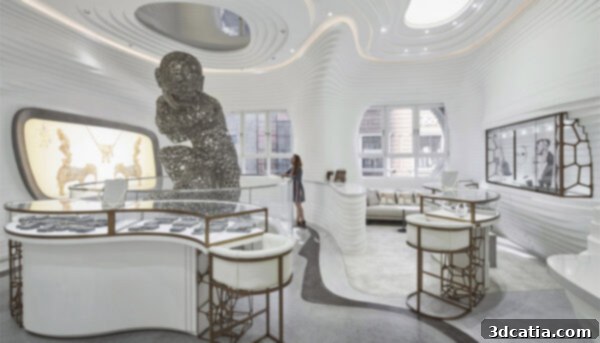
The second floor of the store, showcasing the magnificent sculpture and its unique interior design (photo credits: Dachou Photography)
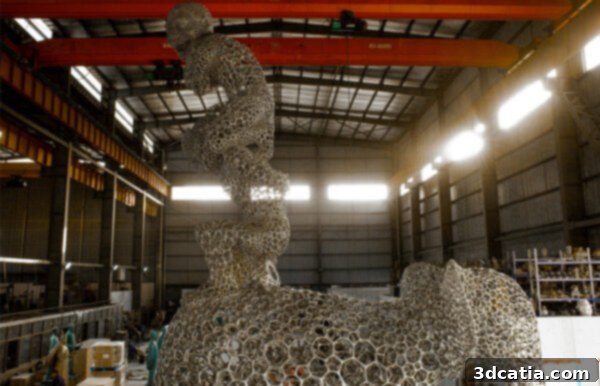
A significant aspect of this project, particularly fascinating from an engineering and design perspective, is the sophisticated method employed in the sculpture’s creation. The collaborative team, comprising the Chinese architecture studio Antistatics Architecture and artist Yue Minjun, detailed their approach, emphasizing the seamless integration of parametric design with advanced manufacturing technology to achieve this extraordinary end result. They specifically highlighted the use of large-format wax additive manufacturing for fabricating the intricate molds. These highly detailed wax molds were then used in the traditional lost-wax casting process, allowing for the precise reproduction of the design in durable 316L stainless steel. While the specific model of the additive manufacturing machine remains undisclosed, the final, complex aesthetic of the sculpture strongly suggests that topological optimization software played a crucial role in its design. This advanced software is typically used to optimize material distribution, enhancing structural integrity while minimizing weight and achieving complex organic forms. Artist Yue Minjun drew profound inspiration from the intricate world of cell biology and the crystalline internal structure of a diamond to conceptualize the distinctive forms of both the elephant and the two accompanying characters. This unique blend of artistic vision and scientific principles lends the sculpture its remarkable texture and profound aesthetic depth, making it a masterpiece of modern art and engineering.
The choice of 316L stainless steel for such a monumental public art piece is significant. This particular grade of stainless steel is renowned for its exceptional corrosion resistance, high strength, and aesthetic appeal, making it ideal for outdoor installations that must withstand various environmental conditions while maintaining their lustrous finish. The combination of parametric design and 3D printed molds offered unparalleled freedom in creating the sculpture’s complex, organic geometries that would be incredibly challenging, if not impossible, to achieve with traditional mold-making techniques. Parametric design allowed the architects and artist to define the sculpture’s form through algorithms and parameters, enabling iterative design changes and precise control over every curve and facet. This digital approach, coupled with the precision of large-format 3D printing, ensured that Yue Minjun’s vision, inspired by cellular structures and diamond patterns, was translated flawlessly from digital concept to physical reality. The lost-wax casting process, while ancient, found a modern revival through 3D printing. Instead of hand-sculpting detailed wax patterns, the exact digital model was produced by the 3D printer, ensuring consistency and accuracy across the entire 9-meter structure. This fusion of age-old craftsmanship with cutting-edge technology exemplifies the innovative spirit behind this project, pushing the boundaries of what is possible in large-scale public art and architectural embellishment.
This distinctive artistic style, characterized by cellular patterns and diamond-like structures, extends seamlessly from the sculpture’s exterior to the store’s interior design, creating a truly immersive experience. The furniture within the I Do store meticulously adopts the same intricate diamond shape and organic motifs, fostering a cohesive aesthetic that blurs the lines between art, architecture, and retail. Stepping inside, the store evokes the feeling of entering a futuristic yet organic cave, a space where innovation, art, advanced technology, and architectural brilliance harmoniously converge. The interior is not merely a backdrop for products; it is an active participant in the overall artistic narrative. A dramatic spiral staircase serves as a central design element, not only facilitating movement between floors but also acting as an inviting sculptural piece in itself. It beckons visitors to ascend, encouraging them to fully explore the space and offering new perspectives on the magnificent elephant sculpture that first captivated them from the sidewalk. This thoughtful integration of exterior grandeur with interior continuity provides a truly unique and engaging experience for everyone who enters the store. It stands as a beautiful and compelling combination of artistic expression, technological prowess, and smart commerce, redefining the traditional retail experience and establishing the I Do store as a destination in itself.
The collaboration between Antistatics Architecture and Yue Minjun on this project is a prime example of how interdisciplinary efforts can lead to groundbreaking achievements. The architects brought their expertise in parametric design and structural integrity, ensuring that the complex artistic vision could be realized as a robust and enduring structure. Yue Minjun, on the other hand, infused the project with his profound artistic philosophy and signature visual language, transforming a retail facade into a piece of public art that stimulates thought and evokes emotion. This synergy has created more than just a building or a sculpture; it has birthed a landmark that contributes significantly to Wuhan’s urban identity. It challenges conventional retail design by prioritizing an experiential journey over a purely transactional one, illustrating how art and technology can elevate commercial spaces into cultural statements. The careful consideration of how the exterior sculpture interacts with the interior ambiance through shared design language makes the I Do store a holistic work of art, inviting visitors to engage with the space on multiple sensory and intellectual levels. From the initial impression of the elephant emerging from the facade to the intricate details of the interior furnishings, every element is meticulously crafted to tell a story of creativity, innovation, and beauty.
The full sculpture, a blend of art and architecture, enhancing the I Do store’s facade (photo credits: Dachou Photography)
This project serves as a powerful demonstration of the transformative potential of advanced manufacturing technologies, particularly 3D printing, in the realms of art and architecture. The ability to produce highly complex, custom-designed components, such as the molds for this elephant sculpture, opens up new frontiers for designers and artists. It allows for the creation of intricate forms that were previously cost-prohibitive or physically impossible using traditional methods. Beyond its technical brilliance, the I Do store’s elephant sculpture significantly contributes to the urban landscape of Wuhan, adding a layer of artistic expression and cultural vibrancy. It’s a bold statement that challenges passersby to look closer, to question the boundaries between art, commerce, and public space. Such projects inspire innovation across various industries and highlight the increasing trend of integrating bespoke art installations into commercial architecture to create unique brand identities and memorable customer experiences. The success of this collaboration underscores how the strategic adoption of technologies like parametric design and large-format additive manufacturing can lead to iconic structures that resonate deeply with both local communities and global audiences, setting new benchmarks for design and construction in the 21st century.
What are your thoughts on this remarkable 3D printed elephant sculpture and its innovative integration into retail design? We invite you to share your insights and comments below, or engage with us on our social media platforms: LinkedIn, Facebook, and Twitter! Don’t miss out on the latest advancements and groundbreaking stories in the world of 3D printing; sign up for our free weekly Newsletter here to have the freshest news delivered straight to your inbox. You can also explore our extensive collection of videos and visual content on our dedicated YouTube channel for more inspiration and in-depth coverage of additive manufacturing innovations.
*Cover Photo Credits: Dachou Photography