
Additive Manufacturing Weekly Roundup: Industry Shifts, Innovations, and Strategic Investments in 3D Printing
Welcome back to our weekly roundup of the most significant developments shaping the additive manufacturing landscape! This edition of #3DEXPRESS brings you crucial updates, from the closure of a pioneering SLS company to groundbreaking advancements in large-format printing, strategic funding, and key collaborations. The dynamic world of 3D printing continues to evolve at a rapid pace, presenting both challenges and exciting opportunities for innovation and growth. Join us as we delve into this week’s top stories, highlighting the companies and technologies pushing the boundaries of what’s possible in digital manufacturing.
Key Developments in the Additive Manufacturing Sector This Week
Sintratec Announces Closure After a Decade of Pioneering SLS Technology
In a significant development for the additive manufacturing community, Swiss SLS solution manufacturer Sintratec has confirmed it will be ceasing operations as of May 7th, 2024. This marks the end of a decade-long journey for a company recognized for its pioneering contributions to making Selective Laser Sintering (SLS) technology more accessible. Sintratec gained prominence in 2014 with the launch of the Sintratec Kit, one of the very first desktop SLS 3D printers, which democratized access to industrial-grade material properties and design freedom for a wider audience. Over the years, the company expanded its portfolio with more advanced solutions, including the Sintratec S2 and S3, catering to diverse industrial applications.
In a joint statement, co-founders Dominik Solenicki and Christian von Burg expressed their gratitude, stating, “We thank our customers, partners, investors, and our team for their trust, support, and dedication over the years. Sintratec’s journey may be concluding, but its spirit will persist through the applications it enabled and the ground it broke.” The closure underscores the competitive and rapidly evolving nature of the 3D printing market, where even innovative pioneers face substantial challenges. Sintratec’s priority now is to minimize disruption for its global customer and reseller network. To ensure continuity of service and supply, French reseller KREOS will manage the provision of spare parts and printing materials for customers in the EMEA region. Similarly, 3DChimera, Sintratec’s U.S.-based reseller, will extend these vital services to customers across the U.S. and the rest of the world, aiming to provide a smooth transition for existing users of Sintratec’s SLS technology. This strategic arrangement is crucial for preserving the utility of Sintratec’s installed base and ensuring that the legacy of their accessible SLS solutions continues to serve the industry.
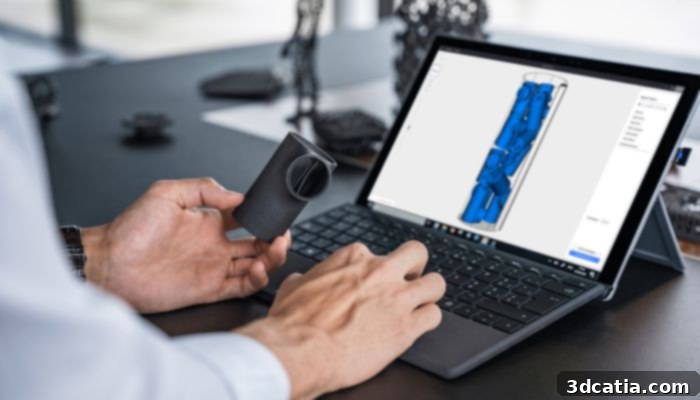
A part made with a Sintratec SLS solution (Photo Credits: Sintratec)
Massivit to Unveil New Affordable, Large-Format 3D Printer at Drupa Tradeshow
Massivit, a leader in large-format 3D printing solutions, is set to make a significant splash at the upcoming Drupa tradeshow in Dusseldorf, Germany, with the official launch of its new Massivit 3000 large-format 3D printer. This innovative machine is poised to democratize access to ultra-high-speed, large-scale additive manufacturing by offering a more affordable Fused Deposition Modeling (FDM) solution. The Massivit 3000 is specifically designed to address the needs of industries requiring extensive visual communication and experiential marketing, such as advertising, entertainment, and themed environments.
With an impressive print volume of approximately 1.2 x 1.5 x 1.8 meters (4 x 5 x 6 feet), the Massivit 3000 offers truly massive capabilities for an extrusion-based system. Its target applications are broad and impactful, including rapidly producing eye-catching 3D window displays, dimensional billboards that stand out, custom channel letters for signage, integrated 2D/3D point-of-purchase displays, interactive event props, elaborate theme park scenery, and even molds for thermoforming. Erez Zimerman, the CEO of Massivit, underscored the importance of this launch, stating, “We are very excited about the launch of the Massivit 3000, which marks a significant milestone for Massivit. Our contributions to the advertising and entertainment markets have already been substantial, with the delivery of large-format 3D printing capabilities at unprecedented speed. The introduction of the new Massivit 3000 extends access to this disruptive technology to a much wider range of companies, offering excellent value for money. The highly anticipated global Drupa show is the perfect platform for unveiling our new printer to these markets.” This move by Massivit highlights a growing trend towards making large-format additive manufacturing more accessible and cost-effective, opening new avenues for creative and industrial applications.
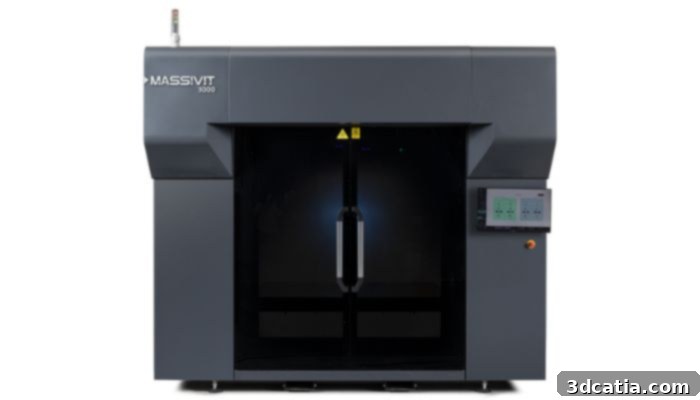
(Photo Credits: Massivit)
Inkbit Secures $19M Funding Led by Ingersoll Rand for Vision-Controlled Jetting Technology
Inkbit, a pioneering company at the forefront of advanced 3D printing solutions, has successfully concluded a significant $19 million financing round. This substantial investment was prominently spearheaded by Ingersoll Rand, a global leader in mission-critical flow creation and industrial technologies, alongside other notable investors. The capital injection is earmarked to accelerate the development and market adoption of Inkbit’s revolutionary Vision-Controlled Jetting (VCJ) technology. This proprietary technology represents a paradigm shift in manufacturing by integrating 3D machine vision-based feedback control directly into the additive printing process, fundamentally transforming traditional assembly lines.
Developed initially at MIT’s Computer Science and Artificial Intelligence Lab (CSAIL), the VCJ system offers unparalleled flexibility and reliability. Its unique ability to perform multi-material, single-pass production directly from raw materials eliminates the need for complex, multi-stage assembly, drastically simplifying manufacturing workflows. This capability is crucial for creating highly complex parts with diverse material properties in a single print. The strategic importance of this funding is further amplified by the addition of esteemed industry experts to Inkbit’s board of directors, including Jason Weber from Ingersoll Rand and Henry Ford III from Ford Motor Company. Their combined expertise will be instrumental in guiding Inkbit’s strategy and accelerating the widespread implementation of VCJ technology across various significant sectors. Inkbit anticipates that the broad adoption of VCJ will yield a profound and lasting positive impact on product design and manufacturing processes in critical fields such as robotics, healthcare, mobility, and defense. By streamlining complex supply chains and assembly processes, VCJ technology promises to unlock new levels of efficiency, innovation, and design freedom for industrial users worldwide.
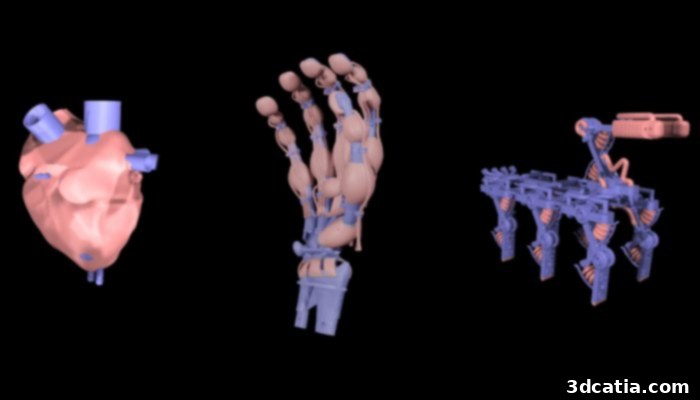
(Photo Credits: Inkbit)
Lithoz Joins the UK Manufacturing Technology Center to Advance Ceramic 3D Printing
Lithoz, a renowned leader in additive manufacturing for high-performance ceramics, has recently solidified its commitment to expanding the industrial application of ceramic 3D printing by joining the Manufacturing Technology Center (MTC) in the UK. This strategic membership is a significant step towards promoting and integrating advanced ceramic additive manufacturing solutions for industrial end users throughout the United Kingdom. The MTC, a key institution within the UK’s High Value Manufacturing Catapult network, serves as a hub for developing and proving innovative manufacturing processes and technologies, making it an ideal partner for Lithoz.
Through Lithoz’s new membership, the MTC aims to significantly broaden its existing range of additive manufacturing options, offering industries access to cutting-edge ceramic capabilities that were previously less accessible. MTC engineers will now utilize Lithoz’s state-of-the-art CeraFab S65 machine. This advanced system will enable them to process a diverse array of high-performance ceramics, renowned for their exceptional properties such as extreme temperature resistance, chemical inertness, high strength-to-weight ratio, and biocompatibility. This enhancement in MTC’s capabilities will empower the center to design and produce increasingly complex ceramic geometries, opening up new possibilities for various industrial applications where conventional manufacturing methods are often limited. Sherry Ghanizadeh, Senior Research Engineer at MTC, expressed enthusiasm about the collaboration, stating, “[We’re] very excited to be working with Lithoz using their advanced CeraFab system to push the boundaries of ceramic AM across sectors, including power, energy, and defense.” This partnership is expected to drive innovation in critical sectors by leveraging the unique benefits of ceramic additive manufacturing, leading to the development of components with enhanced performance and durability.
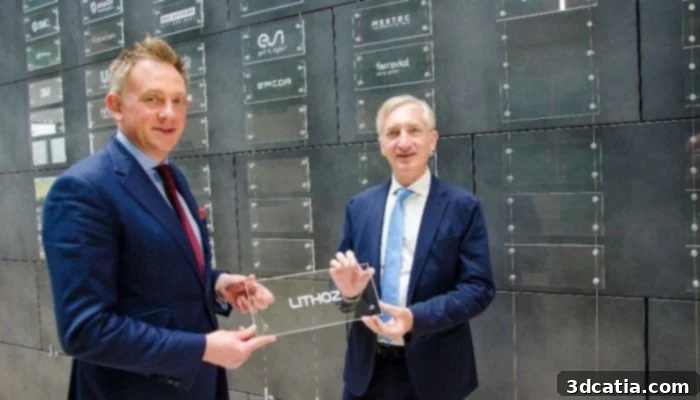
(Photo Credits: Lithoz/MTC)
Dyndrite Receives $1.3 Million America Makes Award to Improve LPBF Operational Qualification Through Software Automation
Dyndrite, a leading innovator in GPU-accelerated computing engines for digital manufacturing, has been honored with a significant $1.3 million award from America Makes, the National Additive Manufacturing Innovation Institute, in collaboration with the National Center for Defense Manufacturing and Machining (NCDMM). This substantial funding is dedicated to the ambitious project titled “Improving LPBF Operational Qualification (OQ) through Software Automation.” The core objective of this initiative is to critically optimize and streamline the notoriously complex Operational Qualification (OQ) process for Laser Powder Bed Fusion (LPBF) technology, a cornerstone of metal additive manufacturing.
Currently, the qualification processes in metal additive manufacturing are fraught with challenges. They are typically manual, highly complex, and inherently prone to human error, resulting in prohibitively long lead times, exorbitant costs, and often inconsistent or variable results for critical components. These issues severely hinder the widespread industrial adoption of LPBF technology, particularly in sectors demanding stringent quality and reliability. The award-winning project seeks to address these pain points directly through the power of advanced software automation. By integrating intelligent software solutions, the initiative aims to simplify and standardize OQ methods, making them more efficient, repeatable, and cost-effective. The project is a collaborative effort involving key industry players, including Siemens Energy, which brings extensive expertise in energy systems and industrial applications, and ASTM International’s Additive Manufacturing Center of Excellence (AM CoE), a global leader in developing industry standards. Together, these partners will demonstrate and provide commercially viable solutions for automated OQ processes. Richard Huff, director of Industry Consortia and Partnerships at ASTM International, emphasized the transformative potential of this collaboration, stating, “This project represents not just a step forward but a significant leap for the entire industry, promising enhanced efficiency and improved quality across the board.” This effort is expected to accelerate the industrialization of LPBF by fostering greater trust, predictability, and efficiency in the production of high-performance metal parts.
(Photo Credits: Dyndrite)
This week’s additive manufacturing news highlights both significant market shifts, such as Sintratec’s closure, and exciting technological advancements, including Massivit’s new printer, Inkbit’s funded VCJ technology, Lithoz’s strategic collaboration, and Dyndrite’s award-winning project. These developments underscore the dynamic and innovative nature of the 3D printing industry.
What are your thoughts on Sintratec’s closure and the other major announcements from this past week? We’d love to hear your perspective! Let us know in a comment below or join the conversation on our LinkedIn, Facebook, and Twitter pages! For the latest 3D printing news delivered straight to your inbox, don’t forget to sign up for our free weekly newsletter here. You can also find all our comprehensive videos and interviews on our YouTube channel, offering deeper dives into the world of additive manufacturing.