
Bridging the Skills Gap: How SETU’s New Additive Manufacturing Degree is Shaping Industry’s Future
The additive manufacturing (AM) sector is experiencing unprecedented growth, rapidly evolving from a niche prototyping tool to a cornerstone of modern industrial production. As this transformative technology matures, producing increasingly sophisticated and refined products across diverse industries, a critical challenge emerges: a growing shortage of skilled professionals. This deficiency threatens to become a significant bottleneck, potentially limiting the full potential and widespread adoption of AM technologies. Recognizing this impending skills gap, higher education institutions globally are stepping up, developing specialized programs to cultivate a new generation of engineers and technicians equipped with the practical expertise needed to drive the industry forward.
Leading this proactive educational charge in Ireland, South East Technological University (SETU) has announced the launch of a pioneering one-year Bachelor of Science (BSc) in Additive Manufacturing. Commencing in September 2022, this innovative degree program is designed to provide comprehensive, hands-on training for aspiring professionals. Offered across SETU’s campuses in Waterford, Carlow, Wexford, Wicklow, and Kilkenny, the course curriculum is meticulously structured, divided equally into four core modules: an Introduction to Additive Manufacturing, Design in Additive Manufacturing, Health and Safety and Regulatory Affairs in AM, and a deep dive into AM Technologies and Post-processing techniques. This holistic approach ensures graduates possess both theoretical knowledge and practical proficiency essential for success in this dynamic field.
The development of this cutting-edge BSc degree underscores a collaborative vision for the future of manufacturing in Ireland. The program was spearheaded by the SETU Waterford-led AMASE (Additive Manufacturing Advancing the South-East) initiative, a project generously funded under the Irish Government’s Human Capital Initiative. This significant undertaking was a partnership involving SETU Carlow and a consortium of key industry partners, ensuring the curriculum remains directly relevant to industry needs and future demands. AMASE, as a dedicated part of the university, champions additive manufacturing as an ‘outstanding industrial solution of the future,’ and through this profound belief, it actively provides essential education and training in this rapidly evolving technology.
The Human Capital Initiative itself is a vital government program specifically designed to fund skills-based educational programs that aim to address critical skills shortages within the Irish economy. Its decision to financially support the SETU BSc in Additive Manufacturing project powerfully emphasizes the continuous and indeed growing importance of 3D printing and additive manufacturing in meeting contemporary and future manufacturing needs. This investment highlights a national commitment to fostering innovation and ensuring a highly skilled workforce ready for Industry 4.0. Furthermore, SETU, with its expansive network of campuses across Ireland, is committed to providing accessible and high-quality education, aspiring to serve a future student body of 18,000 learners, thereby cementing its role as a pivotal institution in regional and national development.
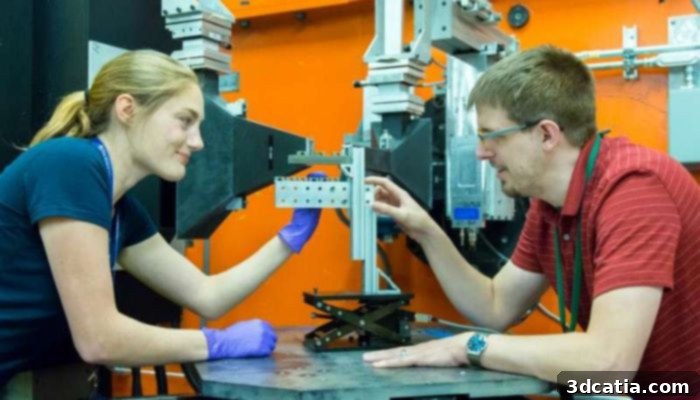
3D printing classes are often practical and collaborative. (Photo credit: 3Dnatives)
The escalating prominence of additive manufacturing naturally leads to its increasing integration into the education sector, as demonstrated by initiatives far beyond university degrees. As AM technology continually improves and its adoption becomes more widespread, we observe further innovative examples of how the education sector is adapting. For instance, companies like Lino3D are actively working to improve accessibility to 3D printing knowledge by providing specialized seminars and classes in universities across Europe. These programs aim to democratize access to AM skills, reaching a broader audience of students and professionals. Furthermore, Amadde, an independent online platform, is dedicated to helping companies and businesses of all sizes seamlessly adopt additive manufacturing to realize their full potential. By offering accessible educational resources and guidance, Amadde is breaking down barriers to entry for businesses looking to leverage AM. These diverse approaches — from comprehensive university degrees to targeted seminars and online platforms — collectively highlight the recognition that AM technology is an increasingly vital component of the broader manufacturing industry. It is becoming unequivocally clear that in the very near future, having some experience with its application will not just be an advantage, but an essential requirement for many roles within the industrial landscape.
The significance of additive manufacturing extends far beyond mere fabrication; it represents a paradigm shift in how products are designed, produced, and supplied. Central to the principles of Industry 4.0, AM enables unprecedented design freedom, allowing for the creation of complex geometries and internal structures previously impossible with traditional manufacturing methods. This capability translates into lighter, stronger, and more efficient components, revolutionizing sectors from aerospace and automotive to medical devices and consumer goods. The ability to produce highly customized parts on demand reduces waste, minimizes inventory, and shortens supply chains, offering substantial economic and environmental benefits. Moreover, AM plays a crucial role in rapid prototyping, accelerating product development cycles and fostering innovation. The demand for skilled professionals who can navigate the intricacies of Design for Additive Manufacturing (DfAM), material science for AM, process optimization, and post-processing techniques is therefore paramount.
The BSc in Additive Manufacturing at SETU is thoughtfully structured to equip students with a robust foundation and specialized knowledge. The “Introduction to Additive Manufacturing” module covers the historical development, fundamental principles, and the broad landscape of AM technologies. “Design in Additive Manufacturing” delves into critical aspects like topology optimization, lattice structures, generative design, and the use of advanced CAD software tailored for AM. Students learn how to design components specifically for various AM processes, maximizing their benefits. The “Health and Safety and Regulatory Affairs” module addresses the critical importance of safe operating procedures, material handling, quality control, and compliance with industry standards and regulations – vital for the responsible application of AM in industrial settings. Finally, “Technologies and Post-processing” provides an in-depth exploration of diverse AM processes such as Fused Deposition Modeling (FDM), Stereolithography (SLA), Selective Laser Sintering (SLS), Direct Metal Laser Sintering (DMLS), and Binder Jetting, along with essential post-processing techniques like support removal, surface finishing, heat treatment, and quality assurance.
Graduates from this program will be poised for diverse and high-demand careers within the burgeoning AM sector. Potential roles include additive manufacturing design engineer, process development engineer, materials scientist specializing in AM, quality assurance specialist, research and development engineer, and production manager for AM facilities. The interdisciplinary nature of additive manufacturing means that individuals with expertise in this field will be invaluable assets across a spectrum of industries – from aerospace and automotive to medical, dental, and consumer electronics. By proactively addressing the skills gap, SETU’s new degree program is not merely offering an educational qualification; it is actively shaping the future workforce, empowering individuals to contribute significantly to innovation and economic growth both in Ireland and on a global scale.
For those eager to delve deeper into the specifics of this groundbreaking program, comprehensive information is available directly from the university. You can explore the full course details and curriculum on SETU’s official website by clicking HERE. This program represents a crucial step in ensuring that the rapid advancements in additive manufacturing are matched by a workforce capable of harnessing its transformative power.
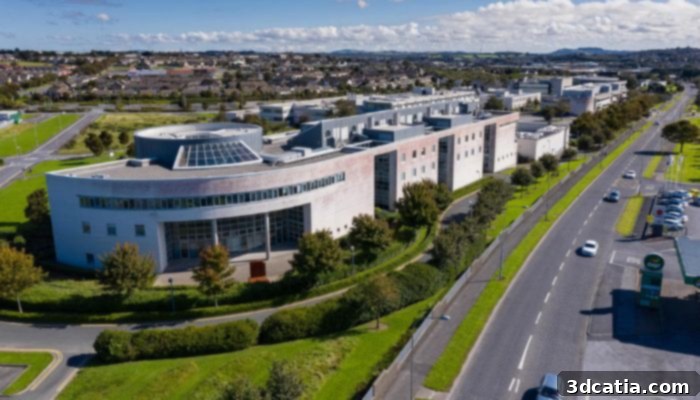
SETU is based on several campuses across Ireland (Photo credit: SETU)
What are your thoughts on this exciting new course? Do you believe a specialized 3D printing degree is essential for the future of manufacturing? Would you consider enrolling in such a program to advance your career in additive manufacturing? We invite you to share your perspectives and engage with our community! Let us know your comments below or connect with us on ourLinkedIn,Facebook, andTwitter pages! Don’t miss out on the latest advancements and news in the 3D printing world; sign up for our free weeklyNewsletter here, delivering the most relevant updates straight to your inbox! You can also find all our insightful videos and interviews on our dedicatedYouTube channel.
*Cover photo credit: Aalto University