
Formnext Digital Days: Unpacking the Latest 3D Software Trends Revolutionizing Additive Manufacturing
Last week marked the successful conclusion of Formnext Digital Days, a virtual extension designed to broaden the reach of the renowned physical Frankfurt expo. This online event offered attendees a unique and invaluable opportunity to engage in dynamic networking sessions and participate in insightful panels led by prominent experts in the additive manufacturing sector. It truly served as a pivotal gathering for the additive manufacturing community, fostering knowledge exchange regarding the industry’s current landscape, groundbreaking innovations, and future forecasts. Among the many compelling presentations, one particular panel stood out, featuring Jonathan Girroir, Senior Manager at Tech Soft 3D. Girroir’s presentation focused on the pivotal 3D software trends that are currently shaping and driving the additive manufacturing market.
Tech Soft 3D, an American company with a significant global footprint including operations in France, the UK, Germany, and Japan, specializes in providing comprehensive services that empower clients to advance their manufacturing projects. They achieve this by offering state-of-the-art software development tools and components. Leveraging his extensive expertise in this specialized field, Jonathan Girroir masterfully articulated the contemporary state of the industry concerning 3D software. He highlighted a crucial point: while 3D printing may not yet match the widespread adoption of traditional subtractive manufacturing technologies, an impressive 65% of industrial companies are already investing in this complementary production method. During his presentation, he skillfully illustrated the “Innovation Adoption Curve” and posed a thought-provoking question to his audience: at what stage of this curve does 3D printing currently reside? After soliciting various responses from the virtual attendees, Girroir unequivocally affirmed that additive manufacturing technology is situated in the “Late Majority” stage. This designation signifies that the technology is now gaining traction with a more conservative segment of the market, indicating a maturing phase of adoption beyond early innovators.
The Innovation Adoption Curve: Understanding 3D Printing’s Position
The Innovation Adoption Curve, a sociological model, categorizes how new ideas, technologies, or innovations spread through a population. It typically divides adopters into five segments: Innovators, Early Adopters, Early Majority, Late Majority, and Laggards. Girroir’s assertion that 3D printing is in the “Late Majority” stage is highly significant for the future trajectory of additive manufacturing. This stage is characterized by individuals or organizations who are skeptical of innovation, adopt it only after it has been tried by the majority, and often do so due to increasing peer pressure or a sense of necessity. For 3D printing, this implies that the technology has moved beyond the experimental phase and is now perceived as a viable, albeit still somewhat cautious, investment by a broader industrial base.
Being in the “Late Majority” stage means that companies are no longer just experimenting with 3D printing but are integrating it into their established workflows, albeit often starting with specific applications or pilot programs. This phase demands greater reliability, cost-effectiveness, and ease of use from 3D printing technologies and the software that drives them. The focus shifts from merely showcasing capabilities to proving tangible return on investment and seamless integration with existing manufacturing processes. This stage also highlights the increasing importance of robust, user-friendly software solutions that can address complex industrial requirements, ensuring that the technology is accessible and beneficial to a wider, more risk-averse audience. The market is now looking for proven solutions, stable platforms, and clear pathways to scaling additive operations.
Photo Credit: Tech Soft 3D
The Four Transformative 3D Software Trends in Additive Manufacturing
Following this insightful introduction to 3D printing’s current standing within the broader industry, Jonathan Girroir transitioned into an in-depth discussion of the four pivotal trends impacting software development in additive manufacturing. These trends are not merely incremental changes but represent fundamental shifts that are redefining how products are designed, produced, and managed.
Trend 1: The Metaverse and Digital Twin Integration
Girroir first underscored the emerging significance of the metaverse, defining it as the conceptual successor to the current internet—a persistent, interconnected virtual environment. While companies like Facebook (now Meta) are popularizing this concept for social interaction, its implications for industrial applications, particularly additive manufacturing, are profound. Closely related to the metaverse is the concept of a Digital Twin. A digital twin is a virtual replica of a physical object, process, or system. In additive manufacturing, this could be a virtual model of a 3D printer, a manufacturing line, or even a specific part being designed and produced. This digital counterpart is continuously updated with real-time data from its physical twin, allowing for comprehensive monitoring, analysis, and simulation.
The integration of the metaverse and digital twins within additive manufacturing offers unprecedented opportunities. Imagine designing a component in a virtual collaborative space (metaverse), simulating its performance under various conditions using its digital twin, and even virtually test-printing it before committing to physical production. This enables rapid prototyping, advanced defect detection, predictive maintenance for machinery, and optimization of entire production workflows in a risk-free virtual environment. This trend highlights how the industry is increasingly driven by these immersive and data-rich technological advancements, leading to more efficient, adaptable, and innovative manufacturing processes.
Trend 2: The Critical Role of Advanced Analysis
The second key trend emphasized by Jonathan Girroir is the paramount importance of “analysis.” In the intricate world of additive manufacturing, analysis is not just a final check; it’s an ongoing, iterative process crucial at every stage of design and production. This encompasses a broad spectrum of analytical tools and methodologies, including topology optimization, finite element analysis (FEA), computational fluid dynamics (CFD), and specialized simulations for printability, material behavior, and post-processing effects. The goal is to collect and interpret information at each phase—from initial concept to final product—to ensure the highest quality, performance, and efficiency.
Effective analysis allows engineers to optimize designs for weight reduction, strength, and material usage, pushing the boundaries of what’s possible with additive manufacturing. It enables the prediction of potential print failures, warpage, or material defects before they occur, significantly reducing waste and costly reprints. Furthermore, by analyzing production data, manufacturers can gain insights into process parameters, machine performance, and overall operational efficiency, leading to continuous improvement. This trend underscores a shift from reactive problem-solving to proactive optimization, driven by sophisticated software tools that empower designers and engineers with actionable data for superior end results.
Trend 3: Fostering Innovation Through Communities
The third trend highlighted by Girroir celebrates the indispensable role of communities in driving innovation within additive manufacturing. Platforms such as Thingiverse, Cults, and MyMiniFactory exemplify this by bringing together vast numbers of enthusiasts, designers, engineers, and hobbyists in accessible online spaces. These platforms facilitate the sharing of 3D models, design files, tips, and expertise, creating a collaborative ecosystem where ideas can flourish and designs can be iteratively improved upon by a global network of users. This collaborative spirit not only accelerates design cycles but also democratizes access to advanced manufacturing capabilities, allowing individuals to contribute to and benefit from collective intelligence.
Beyond individual users, these communities generate significant value for companies operating within the additive manufacturing sphere. By participating in or observing these platforms, businesses can gain insights into user preferences, identify emerging design trends, and even tap into a talent pool of passionate individuals. The most successful products and services often originate from or are heavily influenced by the feedback and creativity of these engaged communities. This trend underscores that in an increasingly interconnected world, collective intelligence and open collaboration are powerful engines for innovation, fostering a vibrant ecosystem where the best solutions are often those championed by the technology’s most passionate advocates.
Trend 4: The Ubiquitous Power of Cloud Adoption
The fourth and final trend identified by Girroir is the accelerating move towards Cloud Adoption. This refers to the increasing capability for all essential software tools and data to be accessible remotely and centrally managed in a cloud-based environment. For the additive manufacturing industry, this aspect is nothing short of critical. Cloud computing offers unparalleled flexibility, scalability, and accessibility, allowing users to access powerful design, simulation, and manufacturing software from any location with an internet connection, without the need for extensive local hardware or IT infrastructure.
The global pandemic starkly underscored the necessity and benefits of cloud adoption. As businesses transitioned to remote work, cloud-based additive manufacturing software solutions enabled seamless collaboration among distributed teams, facilitated remote monitoring of print jobs, and ensured continuous access to crucial design and production data. Beyond crisis management, cloud adoption inherently fosters greater collaboration, reduces IT overhead, and allows for dynamic scaling of computational resources based on demand. It represents a paradigm shift towards a more resilient, collaborative, and globally connected additive manufacturing workflow, making advanced tools more accessible and efficient for companies of all sizes.
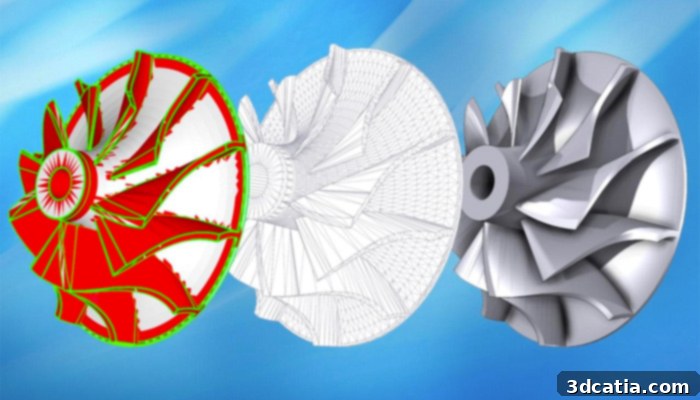
Photo Credti: Tech Soft 3D
Empowering Development: Tech Soft 3D’s SDK for Additive Manufacturing
Concluding his insightful panel, Jonathan Girroir introduced attendees to the powerful Tech Soft 3D SDK (Software Development Kit) specifically tailored for additive manufacturing. An SDK is a set of software development tools that allows for the creation of applications for a certain software package, software framework, hardware platform, computer system, video game console, operating system, or similar development platform. Tech Soft 3D’s SDK is a critical suite of components designed to streamline and enhance various aspects of the additive manufacturing workflow, making it easier for developers to integrate advanced functionalities into their own applications.
Within this comprehensive SDK, developers can find robust solutions like Hoops and Polygonica. Hoops provides powerful tools for 3D graphics, data visualization, and CAD data access, enabling optimal CAD import processes and seamless integration with web graphics. This is crucial for applications requiring high-fidelity visualization of complex 3D models and assemblies. Polygonica, on the other hand, specializes in mesh processing, offering advanced functionalities for repairing, optimizing, and manipulating polygon meshes. This includes automatic self-intersection removal, boolean operations, offsetting, and feature detection—all essential tasks for preparing models for reliable 3D printing and ensuring printability.
These tools within the Tech Soft 3D SDK empower software developers to build more efficient, reliable, and powerful applications for additive manufacturing, addressing challenges from data preparation and optimization to visualization and analysis. By leveraging these proven components, developers can accelerate their product development cycles and deliver cutting-edge solutions to the evolving additive manufacturing market. You can explore more about the comprehensive capabilities of the Tech Soft 3D SDK by visiting their official website HERE.
What are your thoughts on these emerging 3D software trends? Let us know in a comment below or connect with us on our LinkedIn, Facebook, and Twitter pages! Don’t forget to sign up for our free weekly Newsletter here to get the latest 3D printing news straight to your inbox! You can also find all our engaging videos and content on our YouTube channel.