
Additive Manufacturing for a Sustainable Future: Protecting Earth, Water, Air, and Fire with 3D Printing Innovations
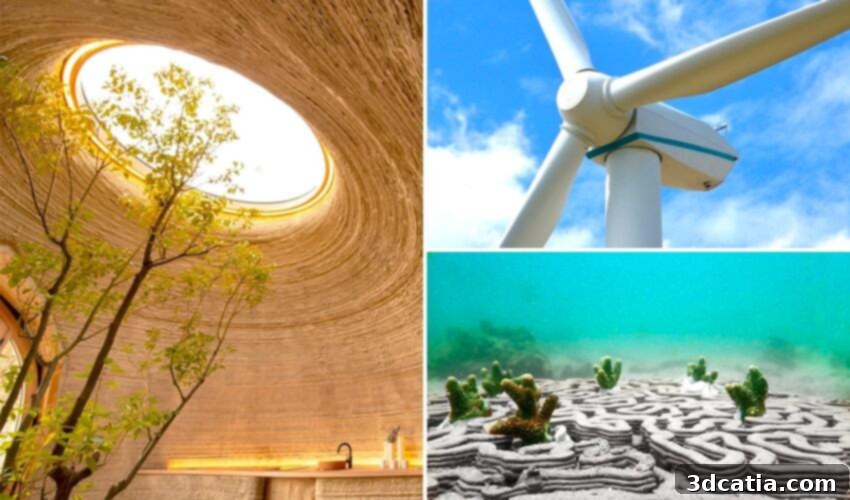
Preserving our planet is undoubtedly one of the most critical challenges facing humanity today. While shifting global mentalities towards environmental consciousness is a long and arduous journey, numerous innovative initiatives are actively being developed to safeguard Earth’s precious resources. Among the most promising solutions, additive manufacturing, commonly known as 3D printing, has emerged as a truly transformative technology. Its inherent nature of building parts layer by layer, through the *addition* of material rather than subtraction, fundamentally reduces waste generation, making it inherently more “green” than many traditional manufacturing methods. Beyond waste reduction, 3D printing fosters local production, strengthens supply chains, and significantly promotes a more circular economy by enabling on-demand manufacturing and customization. In celebration of Earth Day (April 22nd), and to highlight the remarkable strides being made, we’ve adopted a unique lens to explore these innovations: through the prism of the four classical elements – Earth, Water, Air, and Fire. How is additive manufacturing actively contributing to the preservation of these vital elements? How does it leverage these very resources to construct a more sustainable, resilient world for future generations? Join us as we delve into compelling examples that shine a spotlight on our planet’s future and the pivotal role of 3D printing.
Earth: Building Sustainably from the Ground Up
The element of Earth represents not only the ground beneath our feet but also the raw materials and resources that sustain life and enable construction. Additive manufacturing offers groundbreaking potential to revolutionize the construction industry by utilizing local, sustainable materials and significantly reducing environmental impact. Projects leveraging 3D printing for housing demonstrate a powerful commitment to ecological building practices.
TOVA, Spain’s First 3D Printed House Made With Local Soil
The TOVA house stands as a pioneering achievement, representing Spain’s first 3D printed dwelling constructed primarily from local soil. This groundbreaking project was conceptualized and brought to life by a dedicated group of students and professionals from the Institute of Advanced Architecture of Catalonia (IAAC) in Barcelona. Their innovative approach combined traditional construction techniques with the cutting-edge capabilities of additive manufacturing, effectively harnessing the strengths of both processes. The construction utilized WASP’s advanced 3D printing facilities, alongside Rhinoceros 3D’s Grasshopper software for intricate design and parametric modeling. What truly sets TOVA apart is its unwavering commitment to fully sustainable construction materials. The primary components used for printing the walls were local clay and water, chosen for their abundance, low environmental impact, and inherent thermal properties. Extensive research was conducted on the specific soil conditions of the region to formulate the perfect mix, ensuring optimal printability and structural integrity. For the substructure, geopolymers were employed, offering a more sustainable alternative to traditional concrete, while locally sourced wood was used for the roof, further enhancing the project’s ecological footprint. The creators successfully built a 1:1 scale 3D printed housing prototype that is not only robust and weather-resistant but also thoughtfully designed to be cozy and highly sustainable, proving that ecological construction can also be comfortable and durable.
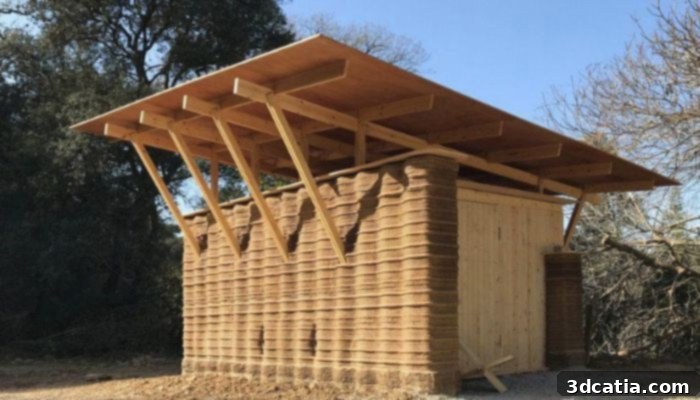
Photo Credits: IAAC
TECLA, an Eco-Sustainable Habitat 3D Printed With Raw Earth
TECLA represents another remarkable milestone in sustainable construction, an eco-sustainable habitat meticulously 3D printed entirely with local raw earth. Located in Massa Lombarda, Ravenna, Italy, its realization was a testament to the synergistic collaboration between the renowned architect Mario Cucinella and the pioneering 3D printing company WASP. This project specifically leveraged WASP’s advanced Crane WASP 3D printing technology, known for its ability to construct large-scale structures from natural materials. The core philosophy behind TECLA is its commitment to being a carbon-neutral house. By utilizing local raw earth, the project eliminated the significant environmental impact associated with transporting traditional construction materials over long distances, thereby drastically reducing carbon emissions and construction waste. The dwelling’s unique dome-like shape was not merely an aesthetic choice; it was thoughtfully designed with specific climate conditions and latitude in mind, optimizing for natural light, ventilation, and thermal performance. Furthermore, the soil mix itself underwent rigorous optimization to achieve a perfect balance of thermal mass, ensuring superior thermal insulation during colder periods and efficient ventilation in warmer months, thus maintaining optimal interior conditions with minimal energy consumption. Spanning approximately 60 square meters, TECLA is cleverly divided into a functional day area, complete with a kitchen, and a serene night area featuring a bathroom. Many elements of the furniture are seamlessly integrated into the raw earth structure, demonstrating a holistic design approach, while other furnishings are explicitly designed for future recycling or reuse, embodying the principles of a truly circular economy and long-term sustainability.
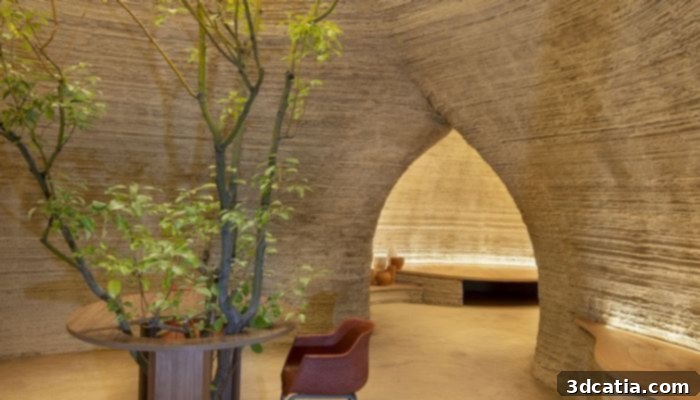
Photo Credits: Mario Cucinella
Water: Cleansing and Restoring Our Aquatic Ecosystems
Water, covering roughly 71% of Earth’s surface in its myriad forms – oceans, lakes, seas, rivers, glaciers, and ice caps – is undeniably critical to the health and survival of our planet and all its inhabitants. Despite its fundamental importance, human activities have led to numerous industrial disasters and widespread pollution, severely impacting aquatic ecosystems. However, additive manufacturing is increasingly demonstrating its potential to provide innovative solutions to these complex water-related environmental challenges, from purification to ecological restoration.
Using 3D Printing to Treat Polluted Water in Mar Menor
A few years ago, Mar Menor, a vast coastal saltwater lagoon in Spain, tragically became the victim of a devastating environmental disaster. Thousands of marine organisms perished due to severe pollution of anthropogenic origin, primarily from agricultural runoff containing harmful chemicals and nitrates. This led to extreme eutrophication – a massive, uncontrolled growth of algae – which subsequently decimated 85% of the vital seagrass beds. The decaying algae and lack of light caused oxygen depletion in the water, compounded by drastic changes in salinity, ultimately suffocating fish and other marine life. The situation urgently demanded the removal of pollutants to restore the lagoon’s ecological balance. This is precisely where additive manufacturing offered a critical lifeline. In a pioneering project co-funded by the Spanish State Research Agency (AEI) and the European Regional Development Funds (ERDF), 3D printing technology was ingeniously employed to manufacture specialized devices. These devices were then combined with synthesized adsorbent carbon, a remarkable material renowned for its capacity to capture and hold molecules in various forms – as a thin film on its external or internal surfaces – effectively removing them from contaminated water. The trials yielded incredibly promising results, demonstrating that pollutants could be removed in under 24 hours. This success underscores the immense potential of 3D printing to contribute significantly to large-scale, long-term efforts aimed at purifying contaminated waters and rehabilitating vital aquatic environments globally.

The 3D printed device designed by Andreu Figuerola, Fernando Maya and Gemma Isabel Turnes
3D Printing Could Restore Coral Reefs
One of the most alarming consequences of climate change currently imperiling our planet is the widespread devastation of coral reefs across the globe, primarily driven by rising global temperatures, ocean acidification, and rampant pollution. These vibrant underwater ecosystems, often referred to as the “rainforests of the sea,” are biodiversity hotspots and crucial for marine health, coastal protection, and supporting human livelihoods. Fortunately, a growing number of innovative initiatives are emerging to restore these vital marine ecosystems, with 3D printing playing an increasingly pivotal role. In Hong Kong, for instance, several distinct projects have been launched in recent years to rehabilitate its endangered bay. Notable among these are initiatives from D-shape and archiREEF, both employing additive manufacturing to create artificial coral reef structures. ArchiREEF, in particular, utilizes clay as its primary material to 3D print complex, bioattractive modules. Additive manufacturing has been absolutely fundamental in the design, development, and realization of these intricate structures. Its ability to create highly complex and flexible designs allows these artificial reefs to be precisely adapted to the specific conditions and requirements of diverse marine environments. Furthermore, 3D printing enables the use of naturally occurring, environmentally inert materials like clay, ensuring that the structures themselves do not introduce new pollutants. For scientists and conservationists, this technology also offers significant advantages in terms of time and cost efficiency compared to traditional manual construction methods. By successfully restoring these critical coral reefs, humanity takes a crucial step towards mitigating ocean pollution and bolstering the overall health of our planet’s invaluable aquatic ecosystems.
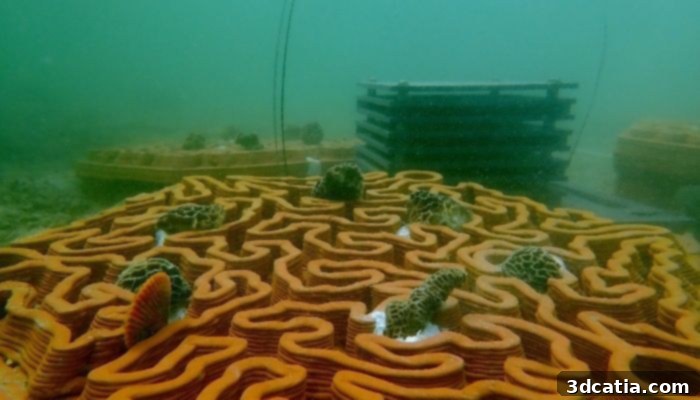
Photo Credits: archiREEF
Air: Innovating for Cleaner Emissions and Renewable Energy
The quality of our air and the composition of our atmosphere are directly linked to global warming and its cascading effects. Addressing airborne pollutants and transitioning to cleaner energy sources are paramount for the planet’s future. Additive manufacturing is proving to be an indispensable tool in developing advanced solutions for carbon capture and enhancing the efficiency of renewable energy technologies, directly contributing to a healthier atmosphere.
GE Is Using 3D Printing to Take Carbon Dioxide Out of the Air
In the critical global effort to combat climate change, many groundbreaking 3D printing projects are focused on improving the quality of “air” by directly addressing carbon emissions. A prime example is the pioneering work being conducted by GE Research, which has strategically turned to additive manufacturing to engineer a highly efficient system capable of extracting carbon dioxide directly from the atmosphere. This ambitious project involved a robust collaboration between GE Research scientists and brilliant chemists and engineers from UC Berkeley and the University of South Alabama. The core innovation lies in combining advanced 3D-printed heat exchanger technology with specialized sorbent materials. Each collaborating entity contributed their unique expertise: GE Research took the lead in developing and providing the intricately designed 3D printed heat exchangers. While specific details about the exact 3D printing technology used were not disclosed, given GE’s extensive history and capabilities in additive manufacturing, it is highly probable that some form of metal powder-based process, such as Direct Metal Laser Sintering (DMLS) or Electron Beam Melting (EBM), was employed to achieve the complex geometries and thermal performance required. Researchers at UC Berkeley, for their part, specialized in the development and sophisticated modeling of the high-performance sorbent materials, which are crucial for efficiently capturing CO2. Meanwhile, the University of South Alabama played a vital role in the meticulous selection of the most suitable materials for the entire system. According to David Moore, GE Research’s principal investigator and technology lead for materials physics and chemistry, this innovative 3D printed carbon dioxide capture system holds immense promise. It is projected to become a cost-effective, large-scale solution, offering a pathway towards significant decarbonization of the energy sector and helping to reverse the effects of atmospheric pollution.
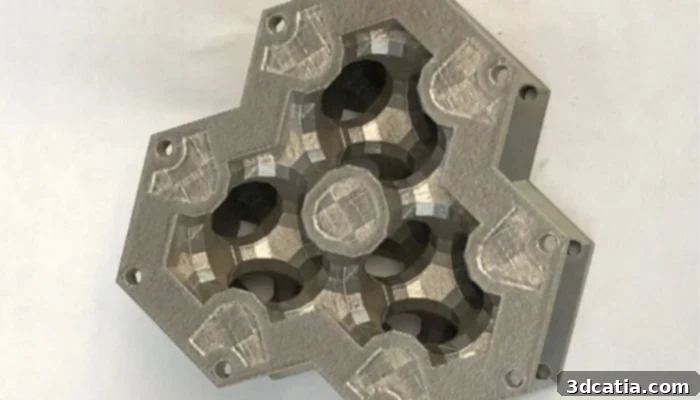
Photo Credits: GE
3D Printing is Key to Better Wind Turbines
Another significant project aimed at reducing atmospheric pollution and accelerating the development of more sustainable energy sources was initiated by the National Renewable Energy Laboratory (NREL). Here, a dedicated team of researchers has rigorously tested the production of modernized wind turbine blades using advanced 3D printing techniques. Specifically, their innovative approach utilized a thermoplastic resin system for the intricate designs of the blades. This choice of material is revolutionary because, unlike conventionally manufactured turbines that typically use thermoset materials, these 3D printed thermoplastic structures can be fully recycled at the end of their operational lifespan, drastically reducing landfill waste. Furthermore, the advantages extend beyond recyclability: the 3D-printed turbines are demonstrably lighter, which can improve efficiency and reduce structural demands, and significantly less expensive to produce. According to the official press release, these next-generation blades can be at least 10% more cost-effective. The efficiency gains are also substantial, with the duration of the manufacturing process itself being reduced by an impressive 15%. Ultimately, the overarching goal of this pivotal project is to significantly reduce greenhouse gas emissions through the adoption of new, cutting-edge technologies. As global warming continues to advance at an alarming rate, the relevance and urgency of renewable energy solutions become ever more pronounced, making projects like NREL’s advancements in 3D printed wind turbines particularly crucial for our sustainable future.
Fire: Mitigating Disasters and Enhancing Safety in a Changing Climate
While fire is a natural element, its increasingly destructive manifestations, particularly wildfires, have become a dire consequence of climate change. The element of Fire, therefore, highlights how additive manufacturing can be used not only to directly combat environmental threats but also to build resilience against the increasingly severe natural disasters exacerbated by a warming planet. From constructing fire-resistant homes to developing advanced tools for firefighters, 3D printing is enabling innovative solutions for protection and response.
3D Printed, Fire-Resistant Houses in California
In the American state of California, the escalating frequency and intensity of wildfires continue to pose an existential threat, ravaging homes, communities, and vast natural landscapes. Global warming significantly contributes to the extreme heat and prolonged droughts that fuel these uncontrollable blazes, keeping the state’s firefighting forces perpetually on high alert. In cities like Redding, located approximately 300km from San Francisco, the annual average exceeds 100 fires, underscoring the chronic nature of this crisis. In response, the innovative American 3D printing company Emergent3D is actively working to provide a tangible solution. The company has developed and deployed a revolutionary 3D-printed fire-resistant house, specifically designed to protect residents and their property in the face of intense wildfires. These robust homes, each spanning over 100 square meters, offer spacious living with multiple rooms, including three bedrooms and two bathrooms. For the construction material, Emergent3D utilized the D.fab concrete solution, a specialized mix developed through a powerful collaboration between COBOD and CEMEX, which was then printed using COBOD’s advanced BOD2 printer. Critically, the initiative to build these fire-resistant houses was financed by the city of Redding itself, reflecting a proactive approach to disaster resilience and a strong commitment to establishing this cutting-edge technology more widely within the community. In total, seven such resilient homes are slated for printing in Redding. While not a direct method of protecting the planet’s natural state, we have included this remarkable application under the “Fire” category in our Earth Day exploration because it directly addresses and resolves significant problems caused by increasingly destructive and out-of-control fires – a phenomenon undeniably exacerbated by global environmental concerns and climate change worldwide. It represents adaptation and resilience in the face of a changing climate.
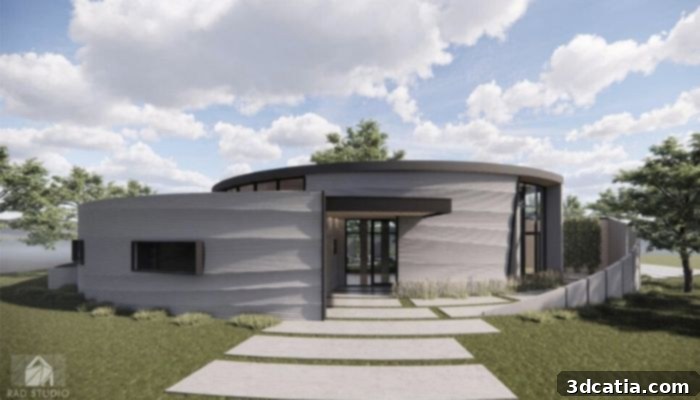
Photo Credits: Emergent3D
Axle Box’s 3D Printed Drones Help Fight Wildfires
As wildfires become an ever-increasing threat globally, demanding more sophisticated response strategies, public safety technology developer Axle Box Innovations is leveraging the power of additive manufacturing to create cutting-edge tools for fire management and protection. Firefighters worldwide are increasingly relying on innovative technologies, such as advanced drones, to gain accurate, real-time views of dangerous situations, assess fire behavior, and direct resources effectively. To address the critical needs for robust, high-performance drones, Axle Box turned to 3D printing to overcome traditional manufacturing obstacles related to strength, speed of production, and cost-efficiency in creating fire-safe unmanned aerial vehicles. The talented engineers at Axle Box have successfully developed a remarkably heat-resistant drone, constructed using high-temperature nylon reinforced with a 25% carbon fiber core. This advanced material composition is specifically utilized for the drone’s mid-body and side covers, providing exceptional thermal stability and structural integrity in extreme conditions. The material choice is crucial as it allows for the creation of incredibly lightweight yet exceptionally robust drone bodies – essential characteristics for ensuring stable flight dynamics, maneuverability, and overall safety during critical firefighting applications. For manufacturing these components, Axle Box strategically chose Essentium’s HSE 3D Printer, renowned for its independent dual extrusion system and compatibility with high-performance filaments. This innovative additive manufacturing technology has fundamentally transformed Axle Box’s production capabilities, enabling them to move swiftly from initial design concepts to full-scale production in an impressive timeframe of under four weeks. This rapid prototyping and manufacturing capability significantly benefits first responders by accelerating the deployment of crucial tools, thereby enhancing their ability to effectively combat the increasing threat and devastating impact of wildfires.

Photo Credits: Essentium
Through these diverse and inspiring examples across the elements of Earth, Water, Air, and Fire, it becomes unequivocally clear that 3D printing is forging a powerful path where advanced technology and urgent sustainability goals converge. Additive manufacturing is not merely a production method; it is a catalyst for innovation, enabling solutions that were once deemed impossible, from building eco-friendly homes with local soil to cleansing polluted waters, capturing carbon emissions, and enhancing disaster preparedness. We are optimistic that in the coming years, we will continue to witness and report on even more groundbreaking technologies and techniques that further harness the power of 3D printing to cultivate a brighter, more sustainable future for all inhabitants of our precious Earth. What are your thoughts on these remarkable eco-friendly 3D printing innovations and their potential? We invite you to share your insights in a comment below or engage with us on our LinkedIn, Facebook, and Twitter pages! Don’t forget to sign up for our free weekly Newsletter here, ensuring you receive the very latest 3D printing news directly to your inbox! You can also explore all our insightful videos on our YouTube channel for more in-depth content.