
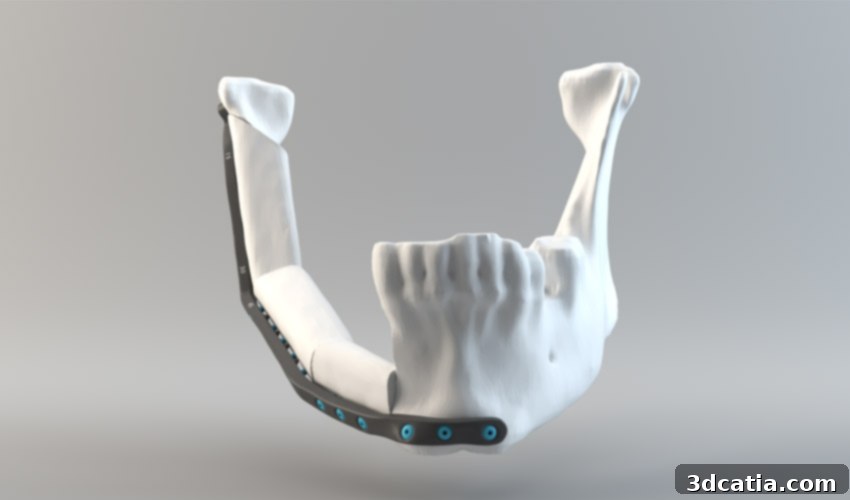
CRIQ Revolutionizes Medical Implants with Arcam EBM 3D Printing: Advancing Patient-Specific Jaw Solutions in Quebec
The Industrial Research Center of Quebec (CRIQ) has taken a significant leap forward in medical innovation with the recent acquisition of an Arcam EBM Q10plus 3D printer. This state-of-the-art industrial machine harnesses the power of electron beam melting (EBM) technology, marking a pivotal moment for the development of advanced medical implants. Specifically, this strategic investment is set to dramatically accelerate research and development efforts for lower jaw implants, fundamentally transforming their design and manufacturing to deliver highly tailored, patient-specific solutions with unprecedented ease and precision. The integration of this cutting-edge additive manufacturing technology positions CRIQ at the forefront of medical device innovation, promising a new era of personalized healthcare in Quebec and beyond.
For some time now, CRIQ has been engaged in a robust and fruitful collaboration with the CHU de Québec, working hand-in-hand with its esteemed cranio-maxillofacial surgeons. This partnership represents a powerful synergy between industrial research expertise and clinical medical needs. The Canadian government has underscored its commitment to this groundbreaking work by investing a substantial $3 million Canadian into CRIQ’s dedicated 3D printing center. Together, CRIQ and CHU de Québec are leveraging the full potential of 3D technologies to dramatically enhance the implant manufacturing process. This pioneering collaboration serves as yet another compelling testament to the fact that the medical sector consistently leads the charge in adopting and innovating with additive manufacturing. Stephan Zeidler from the Business Development Department at GE Additive, a parent company of Arcam, eloquently confirms this trend: “Additive manufacturing enables companies to manufacture patient-specific implants and customised devices in small batch production, but still in a cost-effective, industrial process. This way, the technology perfectly serves the trend for more individualised treatments in healthcare.” This statement encapsulates the core philosophy driving CRIQ’s latest acquisition and its collaborative efforts, emphasizing both the economic viability and profound clinical benefits of bespoke medical solutions.
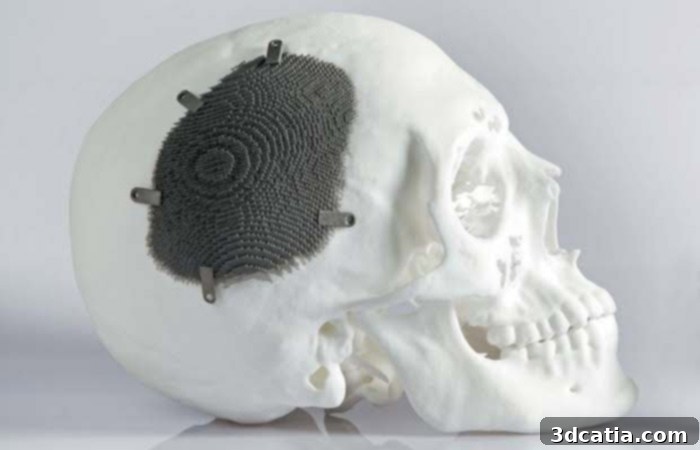
The medical sector makes a lot of use of additive manufacturing (photo credits: Arcam)
The Transformative Power of Electron Beam Melting (EBM) in Healthcare
The choice of Arcam’s EBM technology is no coincidence; it is specifically tailored for demanding medical applications. Electron Beam Melting is an additive manufacturing technique that uses an electron beam to melt metal powder layer by layer in a vacuum, building up a 3D object. This process is particularly advantageous for medical implants, especially those made from reactive metals like titanium alloys, which are highly biocompatible and offer excellent mechanical properties. Unlike other metal additive manufacturing processes, EBM operates at high temperatures, which helps to reduce residual stresses in the final parts. This results in components with isotropic mechanical properties and a microstructure that is highly suitable for direct integration into the human body, enhancing long-term durability and patient comfort. The vacuum environment further ensures high material purity, minimizing defects and improving the overall quality and safety of the implants. This precision and material integrity are paramount in applications such as lower jaw implants, where structural strength and biological compatibility are critical for successful patient outcomes and prolonged functionality.
Accelerating Innovation: The CRIQ and CHU de Québec Partnership
From Concept to Patient: Halving Development Time
The partnership between CRIQ and CHU de Quebec, which commenced in 2016, has already yielded impressive results. Through the strategic adoption of additive manufacturing, they have managed to slash the concept-to-validation process for an implant from a lengthy six weeks down to a mere three weeks. This drastic reduction in lead time signifies a monumental shift in efficiency, allowing for quicker iteration, faster deployment of new designs, and ultimately, a more agile response to patient needs. The EBM technology developed by Arcam, now a proud part of GE Additive, is unequivocally recognized as ideal for the medical sector, particularly in the intricate design and production of implants. Its benefits extend beyond mere speed, encompassing both significant cost efficiencies and superior long-term durability, which are critical considerations for life-enhancing medical devices. The Arcam EBM Q10plus, a dedicated medical system, has been strategically installed at the heart of the medical 3D printing center in Quebec, where it is poised to play an indispensable role in this ambitious project. With this advanced capability, CRIQ is now equipped to manage the entire additive manufacturing supply chain for these complex implants. This comprehensive oversight includes every critical stage, from initial design and precise printing to essential post-processing, thorough cleaning, and rigorous sterilization, ensuring the highest standards of quality, safety, and compliance are met at every step.
Strategic Investment and Long-Term Vision for Patient Care
CRIQ firmly believes that this meticulously planned and integrated approach to additive manufacturing will not only lead to substantial financial savings but, more importantly, will profoundly elevate the standard of patient care. François Gringas, CRIQ’s Equipment Manager, articulates this strategic vision with clarity: “The business case isn’t a part-to-part comparison. It needs to be justified through system-wide impact.” He further elaborates on the broader implications of their work, stating, “If a patient-specific implant can accelerate patient recovery, reduce risk, and lower overall healthcare costs for the Quebec Government, then we have a business case.” This perspective highlights the understanding that true value lies in the holistic benefits across the healthcare system – a faster recovery means less time in hospitals, reduced complications lead to fewer follow-up procedures, and improved outcomes contribute to a healthier, more productive population. These system-wide efficiencies translate directly into significant long-term savings for the government and a superior quality of life for patients. The journey towards validating these advanced medical devices began with the medical certification of 3D printed implants in 2017, a rigorous process essential for ensuring safety, efficacy, and regulatory compliance. This critical certification is anticipated to be completed by 2020, at which point the full potential and benefits of these innovative implants can be realized in clinical practice. The entire medical community, and indeed the patients of Quebec, eagerly await the first tangible results of this pioneering effort.
Ensuring Safety and Efficacy: The Medical Certification Journey
The certification process for medical implants is incredibly stringent, reflecting the paramount importance of patient safety and product reliability. It involves a multi-faceted evaluation, including rigorous testing of material properties, biocompatibility studies, mechanical performance assessments, and detailed clinical trials. For 3D printed implants, this also necessitates establishing robust quality control throughout the entire additive manufacturing workflow, from powder feedstock to post-processing. Regulators must be assured that the variability inherent in some manufacturing processes is tightly controlled, and that each patient-specific implant consistently meets the highest standards. The goal of completing this extensive certification by 2020 underscores the dedication of CRIQ and CHU de Québec to not only innovate but also to ensure these innovations are brought to market responsibly and ethically. This commitment to regulatory excellence is what will ultimately enable widespread adoption and deliver the promised benefits to patients. In the meantime, those interested in learning more about CRIQ’s broader initiatives and research can find additional information on their official website HERE.
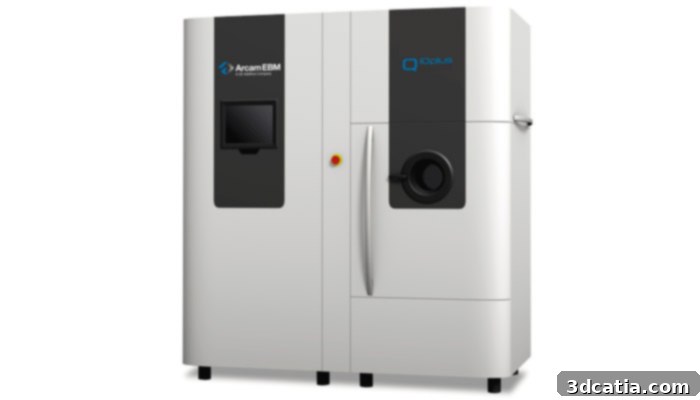
The machine installed in the CRIQ medical 3D printing center
The Future of Additive Manufacturing in Medical Devices: A Quebec Perspective
The acquisition of the Arcam EBM Q10plus by CRIQ and its collaborative efforts with CHU de Québec represent a significant milestone not just for Quebec, but for the global medical additive manufacturing landscape. This initiative is paving the way for more efficient, cost-effective, and highly personalized medical treatments, particularly for complex cranio-maxillofacial procedures. The ability to create patient-specific lower jaw implants with superior material properties and accelerated development times holds the promise of dramatically improving surgical outcomes, reducing recovery periods, and enhancing the overall quality of life for patients. This project also solidifies Quebec’s position as a hub for advanced manufacturing and medical technology, fostering innovation and attracting further investment in these critical sectors. The dedication to managing the entire supply chain, from initial design to final sterilization, showcases a comprehensive and forward-thinking approach to medical device production. As the medical certification process nears completion, the insights gained and the methodologies established by CRIQ and CHU de Québec will undoubtedly serve as a blueprint for other institutions looking to integrate additive manufacturing into their medical practices, inspiring a new wave of innovation across the healthcare industry. This initiative is more than just about 3D printing; it’s about redefining the standards of patient care through technology.
What do you envision as the future of additive manufacturing in the medical sector? We invite you to share your thoughts and predictions in the comments section below or join the conversation on our Facebook and Twitter pages! For all the latest news, breakthroughs, and developments in the exciting world of 3D printing, don’t forget to sign up for our free weekly Newsletter, delivered straight to your inbox.