
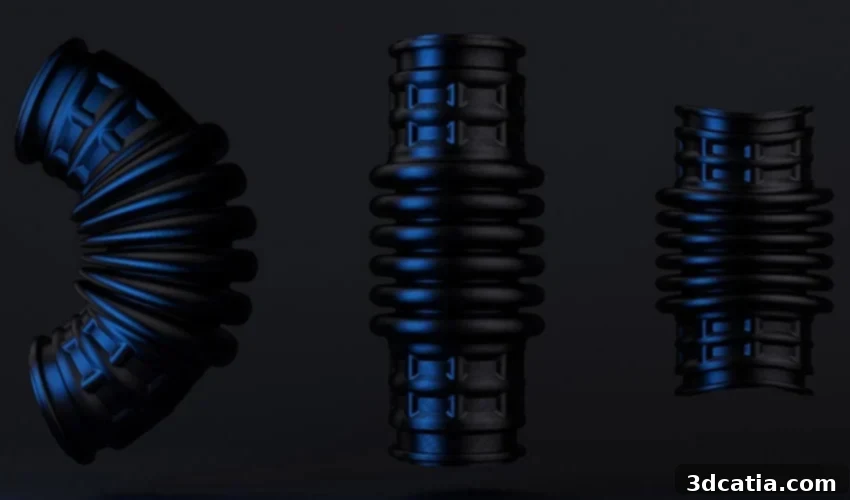
The Explosive Growth of Elastomers in 3D Printing: Unlocking a Multi-Billion Dollar Market
The landscape of additive manufacturing is continuously evolving, driven by innovations in materials and processes. A recent comprehensive study published by the American research organization Report Oceans highlights a particularly dynamic segment: the elastomers market within 3D printing. This insightful report projects an impressive trajectory, estimating that the global elastomers market for 3D printing will soar to a valuation of 1.389 billion dollars by 2030. This substantial growth represents a compound annual growth rate (CAGR) of 22.5% from 2022 to 2030, signaling a rapid expansion and increasing integration of these versatile materials across various industries.
Crucially, the study identifies two primary sectors as the major catalysts behind this anticipated surge: healthcare and the automotive industry. These sectors, known for their demanding requirements and relentless pursuit of innovation, find immense value in the unique properties that elastomers offer. The inherent characteristics of elastomers make them exceptionally well-suited for a wide array of specialized applications within these critical industries, driving both demand and technological advancement in 3D printing.
Understanding Elastomers: Properties Driving Innovation
Elastomers are a fascinating class of polymers, distinguished by their remarkable elasticity, often described as a rubber-like quality. What truly sets them apart is their extraordinary ability to undergo significant deformation under stress and then return to their original shape once the stress is removed. This reversible deformation is not only substantial but also critical for applications requiring flexibility and resilience. Unlike rigid plastics, elastomers can stretch, bend, and compress without permanent damage, making them invaluable in scenarios where conventional materials would fail.
These unique properties make elastomers the material of choice for products that must withstand severe mechanical stresses, such as repetitive shock or continuous vibration. A prime example is the ubiquitous car tire, where the material’s ability to absorb impacts and recover its form is fundamental to safety and performance. Beyond their elastic capabilities, elastomers also exhibit excellent incompressibility. This characteristic is particularly advantageous in the manufacturing of seals, gaskets, and O-rings, where maintaining a tight, leak-proof barrier under pressure is paramount. Their resistance to various chemicals, extreme temperatures, and environmental factors further enhances their utility, ensuring long-term durability and reliability in challenging conditions.
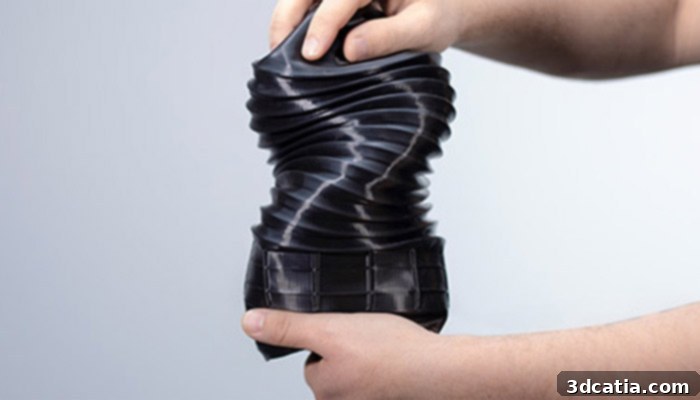
Photo Credits: Zortrax – Highlighting the flexibility and detail possible with 3D printed elastomers.
Elastomers and the Additive Manufacturing Revolution
The synergy between elastomers and additive manufacturing, often referred to as 3D printing, has opened up new frontiers in product design and functionality. Within the vast family of elastomers, thermoplastic elastomers (TPEs) stand out as particularly popular in additive manufacturing due to their ability to be repeatedly melted and reformed, making them suitable for various 3D printing processes. TPEs are widely embraced across numerous sectors, from medical and automotive applications to consumer products and sporting equipment, where their combination of elasticity and processability is highly valued.
The Report Oceans study specifically underlines the significant impact of the recent global health crisis on the expansion of the 3D printing elastomers market. The COVID-19 pandemic catalyzed an urgent demand for rapid prototyping and localized production of essential medical supplies. Elastomers proved instrumental in the quick design and manufacturing of critical items such as nasal swabs, comfortable and effective protective masks, and ventilator components. This unforeseen surge underscored the agility and adaptability of additive manufacturing with elastomeric materials, demonstrating their vital role in crisis response and reinforcing their potential for future medical device innovation.
Beyond TPEs, the report also emphasizes the growing prominence of silicone elastomers in additive manufacturing. Silicone elastomers offer a distinct set of advantages, including superior heat resistance, excellent biocompatibility, and remarkable flexibility, making them ideal for applications requiring extreme environmental stability or direct contact with human tissue. Their increasing evolution in 3D printing technologies points towards a future where highly specialized and high-performance elastomeric components can be rapidly produced with intricate geometries and customized properties for a broad range of high-value applications, from advanced medical implants to industrial sealing solutions.
Leading the Charge: Key Players and Market Dominance
The accelerating market for 3D printing elastomers is significantly shaped by key industry players who are pioneering material development and machine technology. Among these innovators, 3D Systems and Carbon have been identified as leading machine manufacturers poised to contribute substantially to the market’s expansion. These companies are not merely producing 3D printers; they are developing integrated ecosystems that include proprietary elastomeric resins and sophisticated printing processes, making complex designs and functional prototypes more accessible than ever before.
Carbon, for instance, has carved out a niche with its Digital Light Synthesis (DLS) technology, offering a range of advanced elastomer resins. These include materials engineered for specific performance requirements, such as a biocompatible material perfect for medical devices or consumer goods that require skin contact. A notable success story exemplifying Carbon’s impact is their collaboration with Adidas, where their elastomeric solutions are used in the production of high-performance shoe soles. This partnership demonstrates the capability of 3D printed elastomers to move beyond prototyping into mass customization and large-scale manufacturing of end-use products, delivering enhanced comfort, durability, and athletic performance.
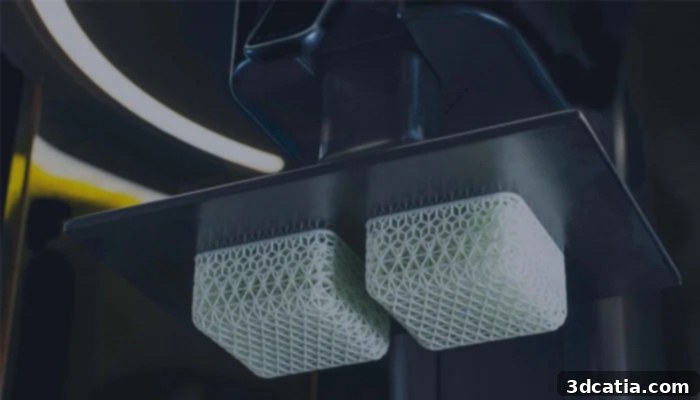
Carbon offers different elastomers for additive manufacturing, enabling innovative product designs (photo credits: Carbon)
Geographically, the study indicates that North America is positioned to capture the largest market share in the 3D printing elastomers sector. This dominance can be attributed to several factors, including a robust industrial base, significant investment in research and development, a high rate of technological adoption, and the presence of numerous key market players. The region’s strong healthcare and automotive industries, coupled with a supportive innovation ecosystem, provide fertile ground for the continued growth and commercialization of advanced elastomeric additive manufacturing solutions.
Challenges and the Path to Future Innovation
Despite the promising growth forecasts, the Report Oceans study also identifies potential hurdles, primarily the cost associated with elastomeric materials for 3D printing. The specialized nature of these materials, coupled with the precision required in their formulation and processing, can lead to higher material costs compared to traditional manufacturing inputs. Furthermore, the investment in advanced 3D printing equipment capable of handling these materials and the necessary post-processing steps can also contribute to the overall expenditure, potentially restraining wider adoption in certain cost-sensitive applications.
Nevertheless, the spirit of innovation within the market remains undeterred. Leading research institutions and companies are actively engaged in overcoming these challenges and pushing the boundaries of what elastomers can achieve. A compelling example is the ongoing research at Texas A&M University, where scientists have developed a groundbreaking recyclable and self-healing elastomer specifically designed for additive manufacturing. Such advancements address not only the cost factor through material reusability but also enhance the sustainability profile of 3D printing, reducing waste and extending product lifespans.
The future of elastomers in 3D printing appears bright, marked by continuous advancements in material science, printing technologies, and application development. As research progresses, new formulations will likely emerge, offering improved performance, lower costs, and enhanced functionalities like smart materials with embedded sensors or adaptive properties. This ongoing innovation will be key to unlocking even broader applications and further solidifying elastomers’ position as indispensable materials in the evolving landscape of additive manufacturing. For those interested in a deeper dive into this dynamic market, more comprehensive information on the 3D printing elastomer market can be accessed HERE.
What are your thoughts on Report Oceans’ prognosis for the growth of the elastomers market in 3D printing? We’d love to hear your perspective! Share your comments below or engage with us on our LinkedIn, Facebook, and Twitter pages! Don’t miss out on the latest 3D printing news – sign up for our free weekly Newsletter here, delivered straight to your inbox! You can also explore all our compelling videos on our YouTube channel.
*Cover Photo Credits: Stratasys