

Renishaw’s Revolutionary 3D Printed Neuroinfuse System: Transforming Parkinson’s Drug Delivery
Neurodegenerative conditions, such as Parkinson’s disease, represent some of the most challenging medical frontiers of our time. Affecting millions globally, Parkinson’s is a progressive disorder of the nervous system that primarily impacts movement. It manifests when dopamine-producing neurons in a specific area of the brain called the substantia nigra gradually break down, leading to a cascade of debilitating motor symptoms like involuntary tremors, muscle rigidity, bradykinesia (slowness of movement), and impaired balance and coordination. Beyond these visible motor challenges, patients often grapple with an array of non-motor symptoms including cognitive impairment, memory loss, depression, anxiety, and sleep disturbances, which can significantly diminish their quality of life. While existing medications can help manage some symptoms, they largely fail to halt or reverse disease progression, and comprehensive treatments addressing both motor and non-motor symptoms effectively remain elusive. The urgent need for innovative therapeutic strategies is undeniable.
In a significant leap forward, global engineering powerhouse and renowned 3D printer manufacturer, Renishaw, has developed a groundbreaking drug delivery system designed to revolutionize the treatment landscape for Parkinson’s and other complex neurological conditions. Their innovative neuroinfuse™ system offers a novel approach to delivering therapeutics directly to the brain, bypassing the formidable challenges posed by the blood-brain barrier. Following the successful completion of the main phase of a pivotal clinical trial, Renishaw has expressed strong confidence that their device holds the potential to play a critical, transformative role in the long-term management and treatment of Parkinson’s disease, ushering in new hope for patients worldwide.
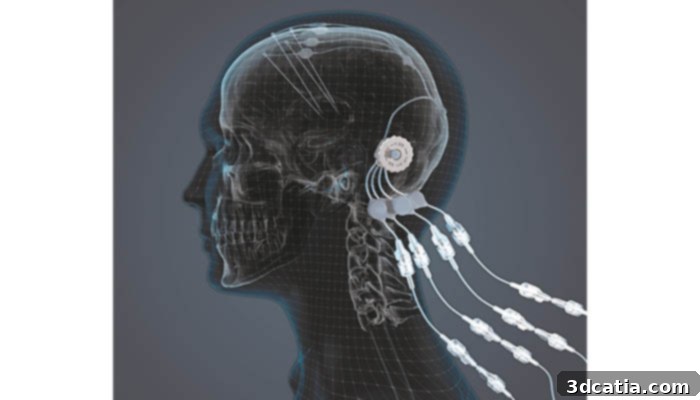
Credits: Chris Marshall Mint Motion
One of the most significant hurdles in treating neurological disorders is the blood-brain barrier (BBB). This highly selective semipermeable border of endothelial cells restricts the passage of substances from the bloodstream into the brain and cerebrospinal fluid, playing a vital protective role against pathogens and toxins. However, this natural defense mechanism inadvertently blocks approximately 98% of small-molecule drugs and nearly all large-molecule drugs from reaching their targets within the central nervous system. This biological fortress has historically rendered many promising drug candidates ineffective for brain-related conditions, necessitating alternative strategies for therapeutic delivery. Renishaw’s neuroinfuse™ system directly addresses this challenge through its advanced intraparenchymal drug delivery method, offering a practical and highly effective means of circumventing the BBB and ensuring that therapeutic agents reach the precise target areas deep within the brain.
The ingenious design of the neuroinfuse™ system centers around its ability to facilitate repeated, highly localized drug administration. The core components include up to four precision catheters, which are surgically implanted into specific, pre-determined target regions within the brain, guided by advanced imaging techniques. What truly sets this system apart is the innovative access mechanism: the catheters are connected to a 3D printed titanium transcutaneous port. This custom-designed port is discreetly implanted behind the patient’s ear, making it minimally invasive and aesthetically subtle. The use of additive manufacturing for this port is crucial; 3D printing allows for the creation of intricate geometries and patient-specific designs with exceptional precision, ensuring optimal fit and long-term biocompatibility for an implanted device. Titanium, known for its strength, lightness, and excellent biocompatibility, is an ideal material for such an application, reducing the risk of adverse reactions.
For each treatment session, drug-filled infusion lines are connected to this transcutaneous port using a specialized MRI-compatible application set. This application set is engineered to repeatedly and precisely locate onto the port, ensuring consistent and accurate connection every time. A key feature is the integration of retractable needles that extend through a self-sealing septum within the port. This mechanism enables therapeutics from the external infusion lines to be safely and effectively infused through the implanted catheters directly into the brain tissue. This sophisticated design allows patients to receive regular infusions without the need for repetitive invasive surgeries or the reimplantation of new catheters for each dose. This capability for a repeated, long-term infusion regimen is a unique and significant advancement in neurological drug delivery, offering unparalleled convenience and greatly improving the potential for sustained therapeutic effects.
The initial results stemming from Renishaw’s collaboration with Herantis Pharma plc on their clinical study have been overwhelmingly positive, demonstrating the robust performance and potential efficacy of the neuroinfuse™ device. Rupert Jones, Managing Director of Renishaw Medical, underscored the significance of these findings, stating, “The results of this trial and the performance of Renishaw’s drug delivery system are promising for the many people with Parkinson’s disease.” This statement reflects the profound impact such a system could have on a patient population desperately seeking effective long-term treatment options.
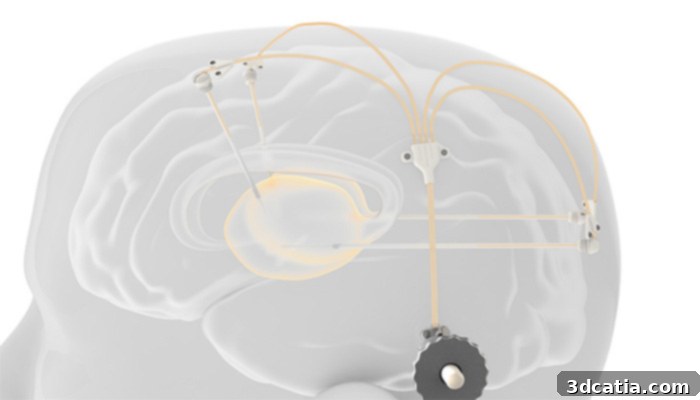
The catheters are accessed via a 3D printed titanium transcutaneous port implanted behind the patient’s ear | Credits: Renishaw
The clinical trial itself was meticulously designed to evaluate the safety and preliminary efficacy of the drug candidate delivered via the neuroinfuse™ system. Seventeen patients were carefully randomized into two groups for the initial six-month phase. One group received a monthly dose of a placebo, while the other received six increasing doses of Herantis Pharma plc’s novel drug candidate designed to target the disease mechanisms. After this crucial initial period, all participants transitioned into an additional six-month open-label study, where every patient received the active drug candidate. This design allows for a comprehensive assessment of both short-term and longer-term effects and safety profiles. The profound importance of this research has been recognized at a high level, with the clinical study receiving significant funding support from the European Union’s prestigious research and innovation program, Horizon 2020, highlighting its potential to address a major unmet medical need.
This pioneering application of 3D printing for advanced medical implants underscores a broader trend reshaping the healthcare industry. Additive manufacturing technologies offer unparalleled advantages in the creation of precise, complex, and highly customized medical devices. Unlike traditional manufacturing methods, 3D printing allows for the rapid prototyping and production of tailor-made implants that perfectly match a patient’s unique anatomy, leading to improved fit, enhanced functionality, and better clinical outcomes. In sectors ranging from orthopedics and dentistry to prosthetics and complex surgical guides, personalization is proving tremendously beneficial for patients. Experts widely predict that tailor-made medical devices will not only become commonplace but will establish themselves as the new standard of care in the foreseeable future. The neuroinfuse™ system is a prime example of how combining cutting-edge engineering with advanced manufacturing can unlock new possibilities for intractable diseases, fostering a future where personalized medicine is not just an aspiration but a tangible reality.
Renishaw’s commitment to advancing medical technology through innovative engineering and additive manufacturing continues to push the boundaries of what is possible in treating challenging conditions like Parkinson’s disease. The neuroinfuse™ system represents not merely a device but a beacon of hope for patients and their families, offering a pathway to potentially better symptom management and, ultimately, an improved quality of life. As research progresses and the system moves towards broader application, its impact on neurodegenerative disease treatment could be profound, setting a new benchmark for precision drug delivery in the brain. You can find more comprehensive information on Renishaw’s innovative study and the neuroinfuse™ system directly on their website HERE.
What are your thoughts on this groundbreaking development in drug delivery for neurological conditions? We invite you to share your perspectives and comments below. Join the conversation on our social media channels by finding us on Facebook and Twitter, where we regularly discuss the latest innovations in additive manufacturing and medical technology. Don’t miss out on future updates – sign up for our free weekly Newsletter to receive all the newest developments in 3D printing straight to your inbox!