
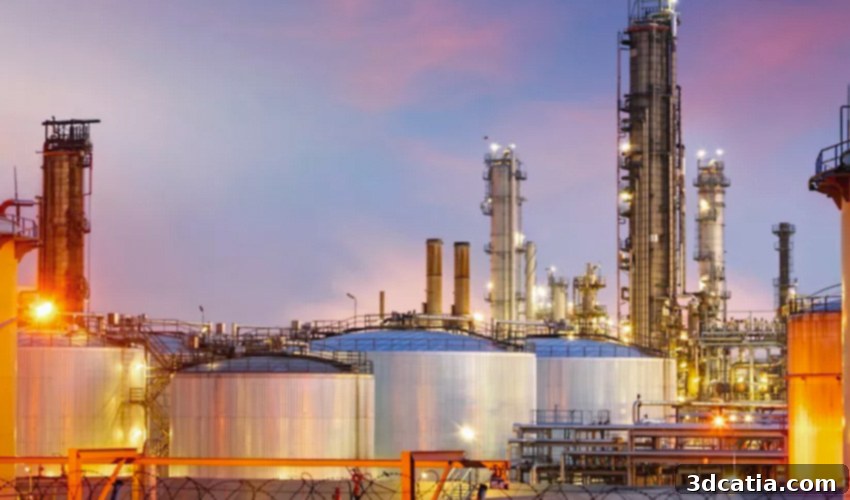
Driving Innovation: How 3D Printing is Revolutionizing the Oil & Gas Industry
The global oil and gas sector stands as one of the largest and most critical industries worldwide, serving as the backbone of the energy infrastructure. In 2021 alone, approximately 4.2 billion metric tons of oil were produced globally, underscoring its immense scale and importance. However, this vital industry is not without its challenges. Growing concerns over climate change, coupled with geopolitical instabilities and supply chain disruptions – such as those witnessed during the conflict in Ukraine – have intensified the search for more sustainable, efficient, and resilient energy solutions. Despite this shift towards alternatives, oil and gas remain the primary energy sources, particularly for heating and industrial processes. In this context, companies within the sector are actively seeking innovative ways to enhance operational efficiency, minimize waste, and prevent accidents stemming from equipment failures or leaks. A groundbreaking solution emerging in this pursuit is additive manufacturing, commonly known as 3D printing. A growing number of oil and gas companies are now leveraging 3D printing to produce geometrically complex, high-performance, and cost-effective parts, especially for critical replacements and spare components. This article delves into some of the most compelling examples of 3D printing applications transforming the oil and gas landscape.
Transforming Operations: Key Benefits of 3D Printing in Oil & Gas
Additive manufacturing offers a myriad of advantages that directly address the complex needs of the oil and gas industry. From accelerating lead times and reducing costs to enabling the creation of intricate designs that improve performance, 3D printing is proving to be a game-changer. It enhances supply chain resilience by allowing on-demand production of parts, reduces reliance on traditional manufacturing processes that often involve long lead times and high minimum order quantities, and significantly cuts down on material waste. Furthermore, the ability to produce lightweight, customized components can lead to substantial operational efficiencies and improved safety protocols. Let’s explore how leading companies are harnessing these benefits.
3D Metalforge and Shell Collaborate on Heat Exchanger Parts
Shell, a name synonymous with global energy, has actively embraced additive manufacturing to optimize its operations. Towards the end of 2021, 3D Metalforge announced a significant collaboration with Shell Jurong Island, a dedicated chemical manufacturing site in Singapore. The partnership focused on providing 3D printed heat exchanger parts, a crucial component for efficient thermal management within industrial processes. This one-time agreement was initiated by Shell Jurong Island’s engineers, who were looking to drastically reduce the lead time for manufacturing these essential heat exchanger tube components. Traditionally, such parts can take weeks or even months to produce through conventional methods. Thanks to the agility of 3D printing, the components were fabricated and delivered in a remarkable timeframe of just two weeks. Heat exchanger tube components are thin-walled tubes inserted into the inlet-end of condensers and heat exchangers, serving a vital role in transferring heat and preventing tube failures. Their rapid, cost-effective production through additive manufacturing allowed Shell Jurong Island to extend the operational lifespan of existing equipment, ensuring continuous and efficient functioning while minimizing downtime.
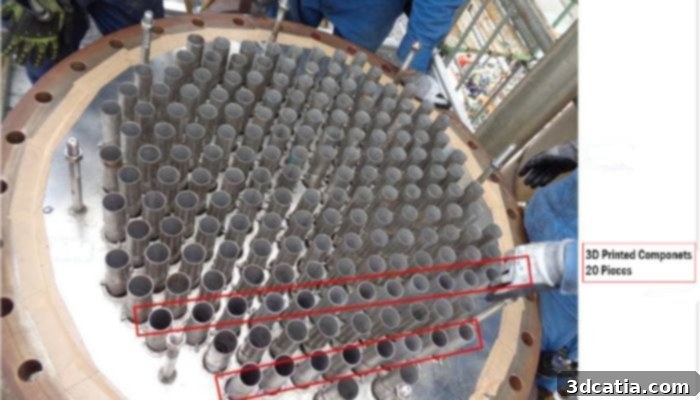
Photo Credits: 3D Metalforge
AML3D Innovates with a Large-Scale 3D Printed Pressure Vessel
AML3D, an Australian innovator in metal additive manufacturing, specializes in machines utilizing the Directed Energy Deposition (DED) process. In a notable development this summer, AML3D announced a groundbreaking project with the American oil giant ExxonMobil. This ambitious endeavor involves the design and production of an immense metal pressure vessel using 3D printing technology. Measuring 8 meters in length and 1.5 meters in diameter, with a total weight of 2000 lbs, this component is poised to be the largest commercially available 3D printed vessel of its kind in the market. The sheer scale and complexity of this part highlight the capabilities of advanced additive manufacturing. AML3D’s proprietary technology, which is compatible with a range of high-performance materials including aluminum, titanium, steel, and nickel alloys, is expected to enable the fabrication of this massive vessel in an impressive 12 weeks. This project exemplifies how 3D printing can revolutionize the production of large-scale, critical infrastructure components for the oil and gas industry, offering unprecedented speed and design flexibility.
AML3D Sets New Standards with the World’s Largest 3D Printed Oil & Gas Piping Component
AML3D continues to push the boundaries of large-scale metal additive manufacturing with its innovative Wire Additive Manufacturing (WAM®) process. Derived from DED, WAM® combines an electric arc with certified welding wire to build robust metal structures. In November 2021, the company achieved another significant milestone by creating what was verified as the largest metal oil and gas high-pressure piping component ever produced using a hybrid 3D printing approach. This achievement was not merely about size; it was driven by a strategic objective to mitigate environmental, human, and safety risks often associated with traditional manufacturing of such critical parts. It marked the first instance globally where this specific type of piping spool component was metal 3D printed and independently pressure tested, demonstrating the reliability and structural integrity possible with additive manufacturing. This successful application validates AM’s potential to enhance safety and efficiency in complex oil and gas infrastructure, providing a reliable alternative for essential piping elements.
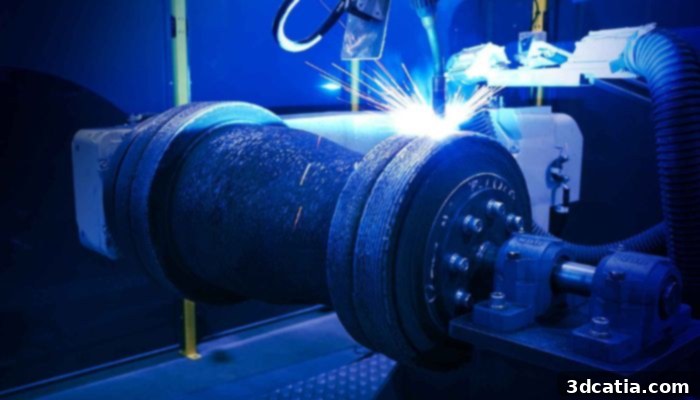
Photo Credits: AML3D
Chevron Leverages Additive Manufacturing for Supply Chain Resilience
Chevron, recognized as the world’s sixth-largest oil company, has also turned to 3D printing to address persistent challenges within its global supply chain. To bolster its operational resilience and ensure on-demand availability of critical components, the U.S.-based energy giant partnered with Lincoln Electric. Lincoln Electric is a well-known specialist in manufacturing production tools, offering expertise in welding, plasma cutting solutions, and advanced metal 3D printing technologies. Through this strategic collaboration, Chevron and Lincoln Electric successfully developed a streamlined process for on-demand production, fabricating eight essential parts made from a durable nickel alloy. This proactive approach using additive manufacturing effectively prevented potential delays in Chevron’s supply chain, ensuring that crucial operations could continue without interruption. This example underscores the value of 3D printing in creating a more agile and responsive supply chain, particularly for industries where unforeseen disruptions can have significant financial and operational impacts.
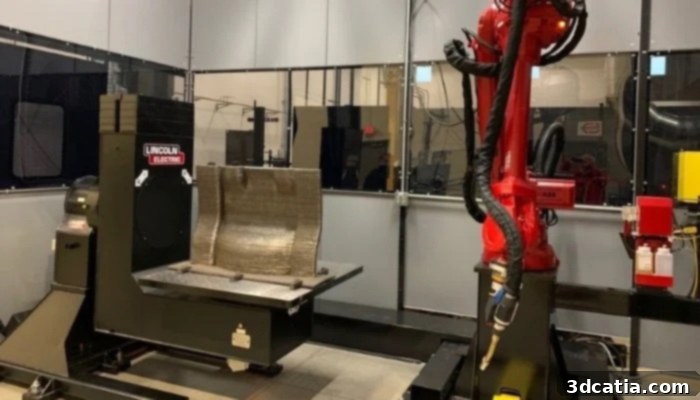
Photo Credits: Lincoln Electric
General Electric Achieves Record Efficiency with 3D Printed Gas Turbine
General Electric (GE), a pioneer in industrial innovation, embraced 3D printing for the oil and gas sector back in 2018, leading to a remarkable advancement in gas turbine technology. The American company successfully produced “Harriet,” which was lauded as the largest and arguably most efficient gas turbine of its time. This achievement resulted in an impressive increase in efficiency, reaching 64%. The unparalleled efficiency gains were largely attributed to the strategic application of additive manufacturing. By utilizing AM, General Electric was able to produce highly complex geometries that are impossible or extremely difficult to achieve with traditional manufacturing methods. This included intricate cooling paths meticulously embedded within the gas turbine’s blades and an optimized design for the engine’s combustion system, both realized through metal 3D printed parts. The ability to create these complex internal structures allowed engineers to significantly improve the premixing of air and fuel within the turbine, leading to more complete combustion and a substantial boost in overall efficiency. This case perfectly illustrates how 3D printing empowers engineers to unlock new levels of performance and sustainability in energy-generating equipment.
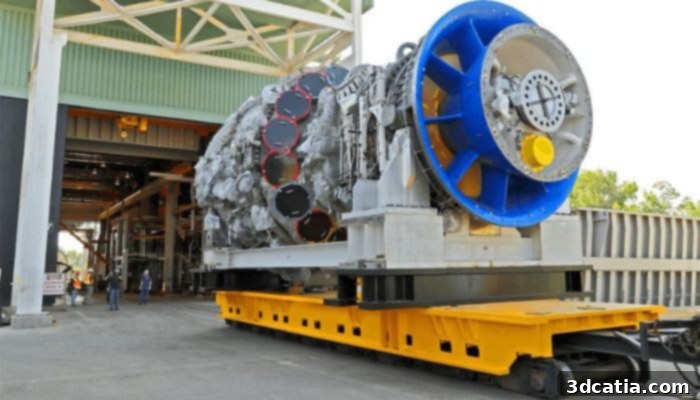
Photo Credits: GE
GKN Hydraulic Blocks: Significant Weight Savings with Additive Manufacturing
Ümit Aydin, Director of Business Development at GKN, a prominent global engineering group, reported astounding results from integrating additive manufacturing into their design practices. GKN achieved an impressive 80% weight reduction in hydraulic block subassemblies, specifically adapter blocks, through the strategic use of 3D printing. The application of additive manufacturing in hydraulic components offers a compelling alternative to traditional manufacturing methods, primarily due to the ability to produce significantly lighter and highly customizable parts. GKN’s additive manufacturing process, combined with their proprietary technology, has unlocked unparalleled freedom in geometric design, eliminating the constraints associated with overlapping bores that are common in conventionally machined blocks. This freedom allows for optimized internal channel designs that enhance fluid flow and overall performance. Additive manufacturing was specifically chosen for its flexibility; design adjustments can be made at any stage of the development process without incurring the prohibitive costs and delays of new tooling, which is a common requirement when changing orifice positions in traditional manufacturing to optimize oil flow. This highlights 3D printing’s power in iterative design and performance optimization.
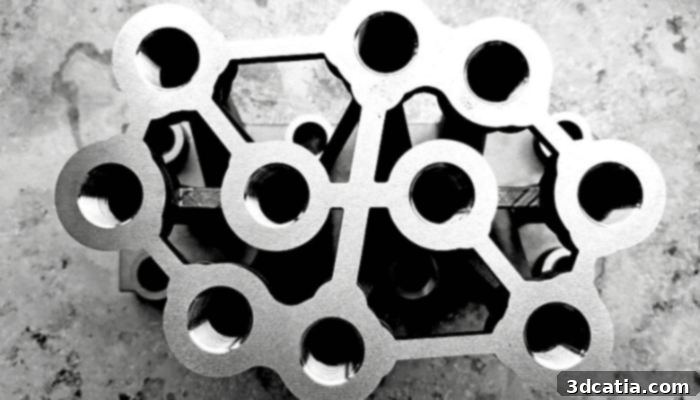
Photo Credits: GKN
Markforged Enables Cost-Effective Customization for Automated Handling
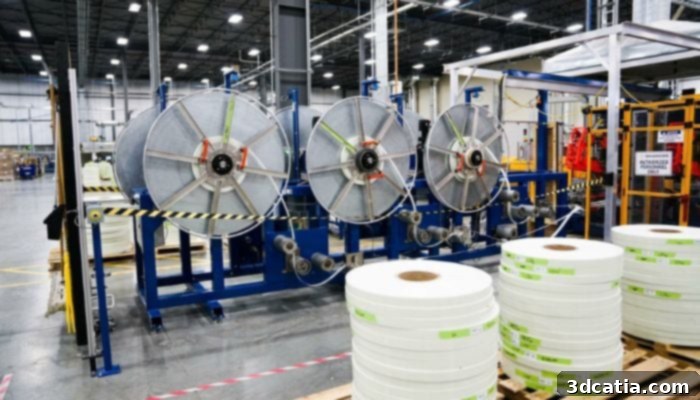
Beyond pipelines and core infrastructure, 3D printing also finds diverse applications in auxiliary operations within the oil and gas sector. A compelling case involves a Canadian integrated oil and gas company that sought assistance from Markforged to create components for an automated handling machine. The challenge centered around the manual handling of heavy glass reinforcement tape pads, which weighed between 115 lbs (52 kg) and 230 lbs (104 kg) – far too heavy for safe and efficient manual operation. While an automated handling machine was identified as a solution to increase plant throughput by an estimated 15%, the cost of producing such a specialized machine using traditional methods was deemed prohibitive. The company ingeniously turned to the Markforged Mark Two 3D printer and its continuous fiber 3D printing technology. This allowed them to produce customized, robust, and lightweight parts for the handling machine at a significantly lower cost. Ultimately, this innovative application of 3D printing resulted in substantial savings of $27,000 CAD, demonstrating the technology’s effectiveness in optimizing plant operations and safety, even for components not directly involved in hydrocarbon processing or transportation.
MX3D Develops a Robust 3D Printed Pipeline Clamp
Specializing in large-scale robotic additive manufacturing, the Dutch company MX3D made headlines in late 2021 with the development of a 3D-printed pipeline clamp specifically designed for the demanding conditions of the oil and gas industry. This innovative part was manufactured and rigorously tested through a collaborative effort involving MX3D, Team Industries, and TiaT. The project utilized a hybrid approach, incorporating MX3D’s advanced robotic Wire Arc Additive Manufacturing (WAAM) process. WAAM is particularly well-suited for producing large metal structures with excellent material properties. The resulting 3D-printed pipeline clamp has undergone extensive testing and received certification for its high level of safety and structural integrity. This success story powerfully illustrates how the WAAM process can be effectively deployed in the oil and gas sector to create critical, robust components that meet stringent industry standards, offering a rapid and flexible alternative to traditional fabrication methods for repairs or new installations.
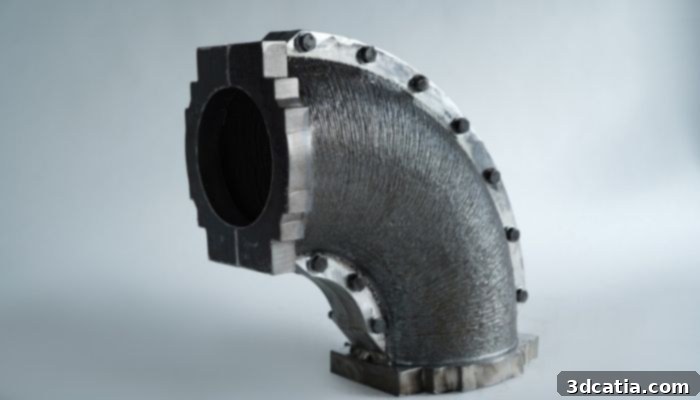
Photo Credits: MX3D
PGV Oil Tools Enhances Production with Desktop Metal
PGV Oil Tools, a manufacturing firm based in Karnes City, Texas, boasts over three decades of expertise in designing and building specialized downhole oil tools. Founded in 1983, the company serves a diverse range of sectors, including oil and gas, aerospace, and robotics and automation. While still utilizing established traditional manufacturing methods such as CNC machining, PGV Oil Tools made a strategic decision to integrate metal 3D printing into its production capabilities, embracing innovative additive manufacturing technologies. To optimize the production of its complex downhole tools, PGV selected the Desktop Metal Shop System. This binder jetting solution allows PGV to manufacture its tools more affordably and in significantly less time compared to conventional methods. Crucially, the adoption of 3D printing also contributes to a substantial reduction in material waste during the production process, aligning with modern sustainability goals. This partnership showcases how established manufacturers are successfully transitioning to hybrid production models, leveraging the strengths of both traditional and additive manufacturing to enhance efficiency and competitiveness.
Spare Parts 3D and Ocyan Accelerate AM Adoption in Offshore Oil & Gas
The partnership between Spare Parts 3D, a French company specializing in digital inventory management for additive manufacturing, and Ocyan, a Brazilian company offering comprehensive solutions for the offshore oil and gas industry, represents a strategic move to accelerate the adoption of AM. Ocyan turned to Spare Parts 3D to integrate its advanced DigiPART software into its spare parts supply chain. DigiPART is a powerful tool designed to identify and qualify spare parts for additive manufacturing, thereby reducing obsolescence, shortening lead times, lowering minimum order quantities, and optimizing inventory levels. This collaboration resulted in the successful 3D printing of Ocyan’s first spare part, establishing a critical common framework for developing a broader adoption pathway for additive manufacturing of spare parts within the company. The extensive work involved a thorough analysis of 17,000 parts from Ocyan’s existing inventory to assess their viability for additive manufacturing. This meticulous evaluation identified a significant 11% of the total analyzed parts as strong candidates for 3D printing, highlighting the immense potential for digital inventory and on-demand production to revolutionize spare part management in the demanding offshore oil and gas environment.
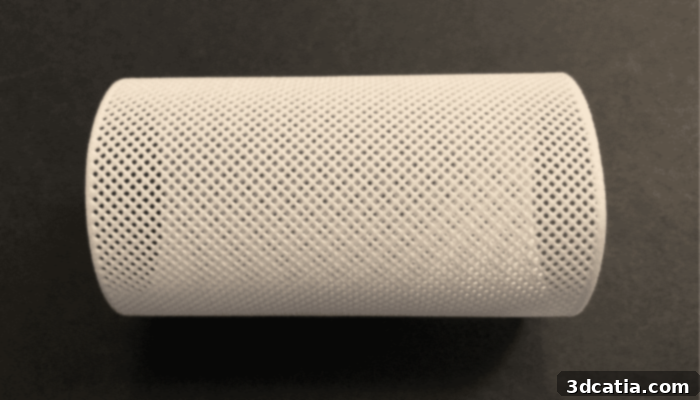
Photo Credits: Spare Parts 3D
Vallourec and Total Pioneer with a 3D Printed Offshore Component
In a significant achievement in May 2021, French industry leaders Vallourec and Total announced the successful installation of a 3D printed waterbushing in the challenging environment of the North Sea. A waterbushing is a vital component in the oil and gas drilling industry, specifically designed to prevent uncontrolled hydrocarbon surges from wells during their construction phase, thereby ensuring the safety of personnel on site. Recognizing its critical role, the two French groups opted for additive manufacturing, leveraging the Wire Arc Additive Manufacturing (WAAM) process, to design and produce this component. The 3D printed waterbushing, measuring 1.2 meters in height and weighing 220 kilograms, represented a remarkable 50% weight reduction compared to its conventionally manufactured counterparts. This substantial weight saving offers significant logistical and operational advantages in offshore environments. This pioneering effort demonstrates the capability of additive manufacturing to produce large-scale, safety-critical components for harsh offshore conditions, validating its potential to improve operational safety and efficiency in complex drilling operations.
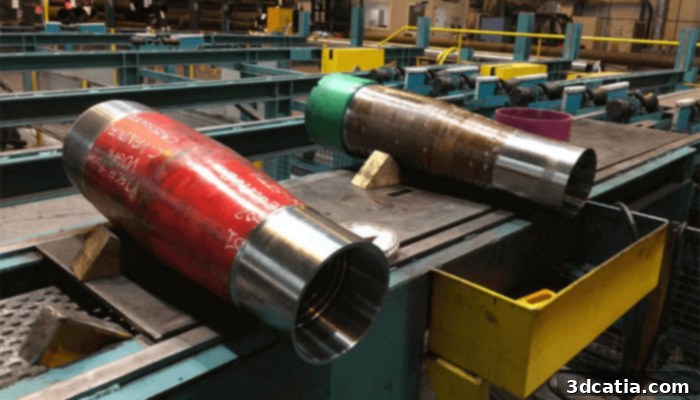
Traditionally designed waterbushes (photo credits: Vallourec)
Velo3D and Duncan Machine Products Partner for Advanced Oil & Gas Solutions
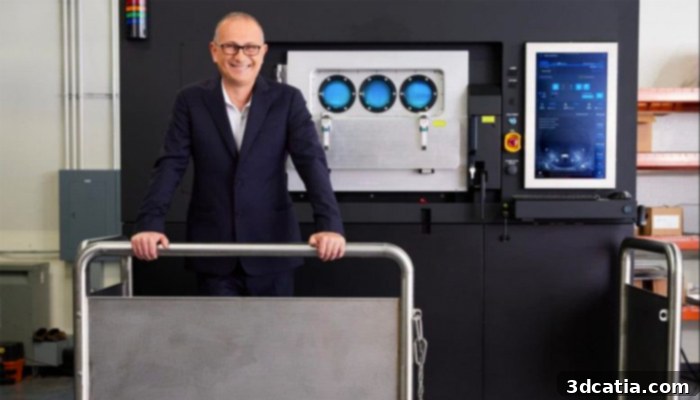
In 2020, Velo3D, a leading manufacturer of advanced additive manufacturing equipment, announced a strategic partnership with Duncan Machine Products (DMP), a key supplier to both the oil and gas and aerospace industries renowned for its high-precision machining services. This collaboration aimed to integrate Velo3D’s cutting-edge metal 3D printing technology into DMP’s operations. During the second quarter of 2020, DMP took delivery of a complete Velo3D system, which included their intuitive Flow™ prepress software, the powerful Sapphire® 3D printer, and the robust Assure™ quality management software. Benny Buller, CEO and founder of Velo3D, articulated the synergy, stating, “Metal additive manufacturing is a compatible process for the oil and gas industry, given the complex engineering requirements.” Through this advanced metal 3D printing solution, DMP’s objective is to effectively respond to the growing market demand for highly engineered components, significantly increase the yield of final parts, and substantially reduce production lead times. This partnership highlights the increasing adoption of sophisticated AM platforms to meet the rigorous demands for performance, reliability, and speed in critical industrial applications.
The Future of Additive Manufacturing in Oil & Gas
The examples above clearly demonstrate that 3D printing is more than just a novelty; it is a powerful force driving innovation and efficiency across the oil and gas industry. From large-scale infrastructure components to intricate spare parts and specialized tools, additive manufacturing offers solutions that enhance operational safety, reduce costs, accelerate production cycles, and enable the creation of previously impossible designs. As the industry continues to navigate environmental pressures, geopolitical complexities, and the relentless demand for energy, the role of technologies like 3D printing will only grow. The ability to produce on-demand, customize components for specific needs, and improve the performance of critical machinery positions additive manufacturing as an indispensable tool for a more resilient, sustainable, and efficient energy future. The ongoing advancements in materials science and printer technology promise even more transformative applications in the years to come, further embedding 3D printing into the core of oil and gas operations.
What are your thoughts on these innovative 3D printing applications in the oil & gas industry? We’d love to hear your insights in a comment below or join the conversation on ourLinkedIn,Facebook, andTwitter pages! Don’t forget to sign up for our free weeklyNewsletter here for the latest 3D printing news delivered straight to your inbox! You can also find all our videos and more content on ourYouTube channel.
*Cover Photo Credits: Ansys