
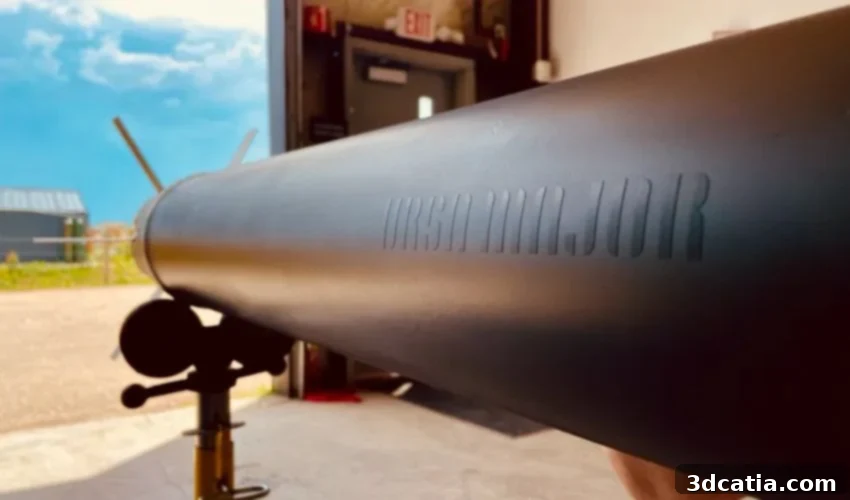
Ursa Major and US Navy Forge $25M Partnership to Propel Next-Gen Solid Rocket Motor Manufacturing with Lynx
Ursa Major, a trailblazer in advanced rocket propulsion, continues to make significant waves in the aerospace and defense sectors. Following the successful inaugural flight of their 3D-printed Hadley engine a few months prior, the Colorado-based company unveiled Lynx last November. Lynx represents a transformative manufacturing pathway for solid rocket motor (SRM) production, leveraging the power of additive manufacturing. In a pivotal development, Ursa Major has now announced a substantial $25 million joint investment with the U.S. Navy to further mature and scale the Lynx program. This landmark agreement not only underscores the critical importance of Ursa Major’s innovative technologies but also solidifies its growing relationship with the Department of Defense (DoD) as a key partner in national security endeavors. The collaborative effort brings together Ursa Major with the expertise of the Naval Air Weapons Center China Lake and the Naval Surface Warfare Center Indian Head Division, pooling resources and knowledge to drive this vital initiative forward.
Renowned as the nation’s leading privately funded rocket propulsion company, Ursa Major has consistently demonstrated its commitment to pushing the boundaries of what’s possible in aerospace manufacturing. The DoD recognized this pioneering spirit by selecting Ursa Major as a recipient of a $12.5 million investment from its Office of Strategic Capital (OSC). Demonstrating its profound belief in the Lynx program’s potential, Ursa Major is matching this investment dollar-for-dollar, resulting in a robust $25 million expansion of the company’s crucial SRM capabilities. This significant capital injection is earmarked for advancing cutting-edge manufacturing capabilities across several critical domains: propellant manufacturing, additive manufacturing techniques, and composite case winding. These advancements are specifically designed to bolster the production of SRMs, which are indispensable for a wide array of national security missions, from missile defense to space launch vehicles. The investment aims to create a more resilient, efficient, and scalable supply chain for these vital components.
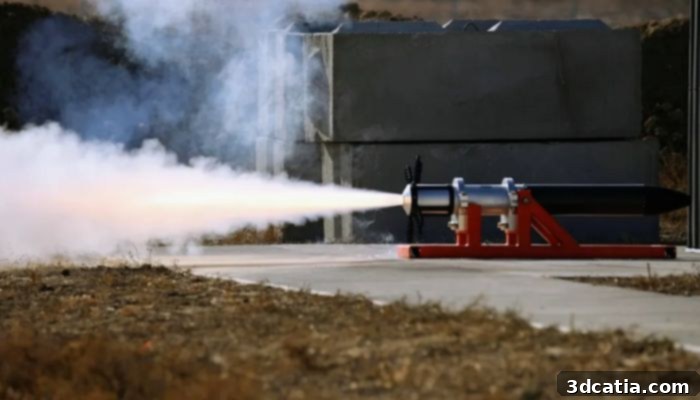
Solid rocket motor created with Ursa Major’s Lynx
The Office of Strategic Capital (OSC) plays a pivotal role in strengthening the nation’s defense industrial base by strategically increasing investments in critical technology areas that are vital for national security. Ursa Major’s innovative approach and manufacturing prowess perfectly align with the OSC’s overarching mission. Expressing his profound enthusiasm for this strategic partnership, Ursa Major CEO Dan Jablonsky remarked, “We are proud to work with OSC on their mandate for expanding the defense industrial base by bringing new innovations into the DoD ecosystem.” This sentiment highlights a shared vision between Ursa Major and the DoD: to cultivate a more robust, agile, and technologically advanced defense infrastructure capable of meeting future challenges. The ability to rapidly innovate and produce critical components like SRMs at scale is paramount in today’s evolving geopolitical landscape, making investments in technologies like Lynx indispensable.
Lynx: Pioneering an Advanced Manufacturing Pathfinder Program for National Security
The joint investment will enable Ursa Major to embark on an advanced manufacturing pathfinder program, a crucial step in the development and maturation of the Lynx technology. This program is meticulously designed to facilitate the comprehensive design, manufacturing, and rigorous testing of a Navy SRM prototype utilizing the Lynx platform. Ursa Major asserts that Lynx represents a groundbreaking, cost-effective manufacturing solution for Solid Rocket Motors, addressing long-standing challenges within the defense industrial base related to production efficiency and affordability. CEO Jablonsky further elaborated on the company’s visionary approach, stating, “Ursa Major is revolutionizing manufacturing approaches used in propulsion development in the United States, building flexibility of production and scalability into manufacturing for our defense customers.” This commitment to flexibility and scalability is particularly significant, as it allows the DoD to adapt quickly to changing mission requirements and ensures a reliable supply of critical propulsion systems.
At the heart of the Lynx process lies advanced metal 3D printing technology. This innovative approach offers a multitude of benefits, including a dramatic reduction in overall part count for complex components. By consolidating multiple parts into single, intricately designed 3D-printed structures, the system significantly streamlines assembly processes and enhances structural integrity. Furthermore, this method drastically shortens development timelines, enabling rapid design iterations and faster deployment of new rocket motor systems. The inherent agility of additive manufacturing allows for unparalleled design freedom, optimizing performance and efficiency in ways traditional manufacturing cannot. Beyond metal 3D printing, the Lynx system ingeniously incorporates other sophisticated advanced manufacturing methods. These methods are engineered to facilitate the production of diverse SRM systems on the same production line, eliminating the need for costly and time-consuming re-tooling procedures typically associated with manufacturing different variants. This operational flexibility also means a reduced reliance on an extensive, specialized workforce, translating directly into lower overhead costs. The synergy of fewer parts, streamlined assembly tasks, and adaptable production lines culminates in significantly reduced production costs without any compromise on the critical performance metrics of the solid rocket motors. Ursa Major envisions that as the Lynx program continues to evolve and mature, it will not only strengthen the company’s position as an industry leader but, more importantly, substantially enhance the defense capabilities of the United States and its allies, providing a strategic advantage in an increasingly complex global environment.
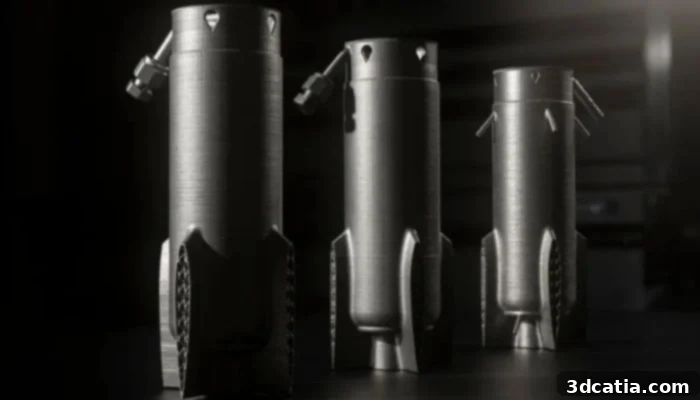
Ursa Major’s solid rocket motors designed for standard missiles
This substantial investment by the Navy in Ursa Major’s cutting-edge technology serves as a powerful testament to the Department of Defense’s enduring and expanding interest in additive manufacturing as a cornerstone of future defense capabilities. The partnership with Ursa Major is not an isolated event but rather part of a broader strategic embrace of 3D printing across various naval programs. Under a separate, ongoing award, Ursa Major is already making critical progress in developing a second source Mk104 Dual Thrust Rocket Motor (DTRM) for the Navy, addressing vital supply chain resilience and redundancy requirements for critical missile systems. This spring, the Navy further underscored its commitment to integrating advanced manufacturing by onboarding a 3D printer onto the USS San Diego, showcasing the potential for on-demand parts production at sea, a move that drastically enhances self-sufficiency and operational readiness. Concurrently, the Navy has also commissioned the production of 3D-printed submarine components, illustrating the technology’s applicability across diverse and demanding platforms. These initiatives collectively paint a clear picture of the Navy’s strategic pivot towards additive manufacturing to ensure technological superiority and operational flexibility. For a deeper dive into the specifics of the Navy’s investment in Ursa Major and the broader implications of this partnership, readers are encouraged to consult the official press release available here.
The Lynx approach and Ursa Major’s deepening partnership with the U.S. Navy mark a significant evolution in defense manufacturing, promising greater efficiency, resilience, and technological advancement. This collaboration not only accelerates the development of critical propulsion systems but also strategically positions the United States at the forefront of additive manufacturing for national security applications. The potential for cost savings, faster innovation cycles, and a more robust defense industrial base is immense. What are your thoughts on the groundbreaking Lynx approach and Ursa Major’s strategic partnership with the Navy? We invite you to share your perspectives in a comment below or join the discussion on our LinkedIn, Facebook, and Twitter pages! Don’t forget to sign up for our free weekly newsletter here for the latest 3D printing news delivered straight to your inbox! You can also explore all our videos on our YouTube channel.
*All Photo Credits: Ursa Major