
Exploring Cutting-Edge 3D Printing Innovations: Accessibility, Materials, Construction, and Personalization
The world of additive manufacturing is continuously evolving, pushing the boundaries of what’s possible across a myriad of industries. This week, we delve into five groundbreaking developments that highlight the transformative power of 3D printing, from enhancing human capabilities to revolutionizing construction, advancing material science, and shaping the future of customizable design. Join us as we explore how a French startup is empowering the visually impaired with a 3D printed device, witness a new material challenging traditional filaments, tour impressive 3D printed housing communities, uncover a smarter way to handle print supports, and gain insights into the future of personal fabrication from MIT’s leading minds. These innovations not only demonstrate the incredible versatility of 3D printing but also its profound potential to address real-world challenges and improve lives.
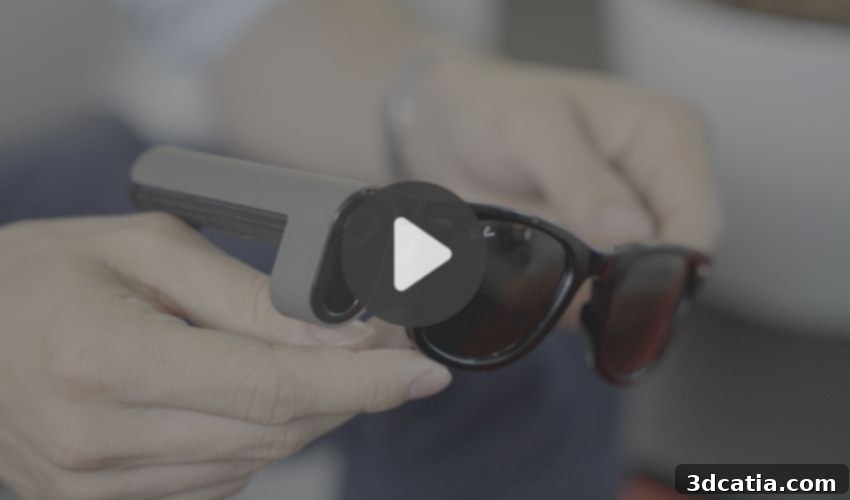
1. artha France: Empowering the Visually Impaired with 3D Printed Wearables
The core mission of artha is to foster a future where personal autonomy and sensory perception are no longer hindered by visual impairments. By providing a sophisticated yet user-friendly tool, the company aims to significantly boost independence, improve safety in navigating diverse environments, and grant greater freedom of movement. 3D printing plays a crucial role in the development and personalization of such assistive technologies, allowing for rapid prototyping, ergonomic customization to fit individual needs, and the production of lightweight, durable components essential for wearable devices. This commitment to innovation ensures that cutting-edge technology directly translates into tangible improvements in the daily lives of the visually impaired.
Discover the full story and the inspiration behind artha’s visionary work in the video below, showcasing how additive manufacturing is opening new doors to accessibility and independence.
2. Polymaker’s CoPE: A New Material Challenger Outperforming PLA
For years, PLA (Polylactic Acid) has been the go-to filament for FDM 3D printing, admired for its ease of use and good print quality. However, its limitations in terms of heat resistance, strength, and durability have often restricted its application to less demanding prototypes or decorative items. Enter Polymaker’s latest innovation: CoPE, a revolutionary co-polyester blend designed to not only mimic the best qualities of PLA but to significantly outperform it in critical areas. This new material represents a substantial leap forward in desktop 3D printing filaments.
Polymaker’s Panchroma CoPE filament stands out for its impressive ability to print with exceptional fine detail, handle deep overhangs, and create long, stable bridges—all while achieving a surface finish remarkably similar to that of high-quality PLA. What truly sets CoPE apart is its enhanced mechanical properties, offering superior strength, toughness, and improved heat deflection compared to standard PLA. This makes CoPE an ideal candidate for a wider range of applications, including functional prototypes, end-use parts, and consumer products that demand greater resilience and performance.
To demonstrate its capabilities, Polymaker conducted a high-speed print test, directly comparing PLA and CoPE under demanding conditions. The results were nothing short of astonishing, showcasing CoPE’s ability to maintain structural integrity and print quality even at increased speeds, hinting at significant productivity gains for users. This material promises to unlock new possibilities for hobbyists and professionals alike, offering a filament that delivers both printability and performance without compromise. Watch the video to witness firsthand what this game-changing material can offer to your 3D printing projects.
3. Building the Future: A Tour Inside 3D Printed Homes in Texas
The dream of affordable, sustainable, and rapidly constructed housing is rapidly becoming a reality, thanks to advancements in construction 3D printing. In a pioneering initiative, leading homebuilder Lennar teamed up with the innovative construction 3D printing company ICON to create a truly visionary housing community in Austin, Texas. This ambitious project features an entire neighborhood comprising 100 3D printed homes, setting a new benchmark for what future communities could look like globally. It addresses critical issues of housing shortages and the demand for more sustainable building practices.
The homes in this unique community were constructed using ICON’s state-of-the-art Vulcan 3D printer, a technology renowned for its efficiency, speed, and precision in extruding advanced cementitious materials layer by layer. This method significantly reduces construction time, minimizes waste, and lowers labor costs compared to traditional building techniques. Beyond the structural integrity provided by the 3D printing process, these modern residences are designed with energy efficiency at their core, featuring durable metal roofs and integrated solar panels to reduce utility costs and lessen their environmental footprint. The collaboration between Lennar and ICON showcases a powerful synergy between established industry players and cutting-edge technology providers, accelerating the adoption of additive construction on a grand scale.
A real estate agent’s video tour offers an exclusive look inside these remarkable properties, revealing not just the structural applications of 3D printing but also how the technology can be thoughtfully incorporated into the interior decor and design elements, creating unique aesthetic touches. These homes are not merely functional; they are designed to be comfortable, aesthetically pleasing, and built for modern living. This project serves as a powerful testament to the viability and promise of 3D printed housing. Would you consider living in a 3D printed home? Watch the video to get a comprehensive view of these innovative dwellings and envision the future of residential development.
4. Formlabs’ Bundled Supports: Streamlining 3D Print Post-Processing
One of the most common challenges in resin 3D printing is the often tedious and delicate process of removing support structures, which can be time-consuming, risk damaging the printed part, and frequently leave an imperfect surface finish requiring extensive post-processing. Formlabs, a leader in resin-based additive manufacturing, has addressed this pain point head-on with a clever innovation: the new bundled supports feature, integrated into their PreForm 3.44 update. This enhancement promises to significantly simplify the post-processing workflow for users.
The bundled supports feature intelligently groups individual support pillars together, forming stronger, more cohesive structures that are much easier to handle. This strategic grouping allows users to “grip and rip” supports from a printed part with greater ease and less effort, substantially reducing the time and frustration associated with support removal. Beyond the practical benefits of easier removal, bundled supports are also engineered to leave a finer, smoother surface finish on the printed part. This means less sanding, scraping, or additional finishing steps are required, leading to a higher quality end product with less manual labor.
The PreForm 3.44 update extends beyond just support enhancements, also incorporating valuable improvements such as expanded language preferences and a more streamlined method for uploading CAD files, reflecting Formlabs’ ongoing commitment to improving the overall user experience and workflow efficiency. These incremental yet impactful software updates underscore how continuous innovation in design and software can dramatically enhance the practical aspects of 3D printing. Learn more about these valuable features and see how bundled supports can revolutionize your resin 3D printing experience in the video demonstration provided by Formlabs.
5. The Future of Customizable 3D Printing and Sustainability at MIT
The paradigm of manufacturing is on the cusp of a profound transformation, driven by the increasing capabilities of customizable 3D printing. In the latest episode of Curiosity Unbounded, MIT President Sally Kornbluth engaged in a compelling discussion with Associate Professor Stefanie Mueller, delving deep into the future of personal fabrication and its monumental implications for industry and the environment. Mueller, who holds a joint appointment in MIT’s prestigious Electrical Engineering and Computer Science, and Mechanical Engineering departments, is at the forefront of this revolution.
Professor Mueller’s research is dedicated to developing novel hardware and software systems that push the boundaries of personal fabrication technologies. Her work focuses on making sophisticated manufacturing tools more accessible and intuitive, allowing individuals and small businesses to create highly customized products on demand. This shift towards personalized production promises to fundamentally alter traditional supply chains, reduce waste, and foster a new era of innovation where products are tailored precisely to individual needs and preferences rather than being mass-produced.
During their conversation, President Kornbluth and Professor Mueller explored two critical facets of this evolving technology: its potential for transforming manufacturing and its undeniable role in advancing sustainability. Customizable 3D printing can significantly reduce material waste by enabling on-demand production and optimizing designs for minimal material usage. It also facilitates the repair and recycling of components, extending product lifecycles and contributing to a circular economy. Furthermore, they discussed strategies for making these advanced fabrication technologies more widely accessible, democratizing the ability to design and create, and empowering a broader population with the tools for innovation. This visionary discussion from MIT highlights the academic and societal impact of embracing personalized additive manufacturing for a more efficient, sustainable, and equitable future.
From enhancing accessibility for the visually impaired to challenging established material norms, building sustainable communities, streamlining post-processing, and envisioning the future of personalized manufacturing, the innovations in 3D printing continue to inspire and amaze. Each of these developments underscores the incredible versatility and transformative potential of additive manufacturing across a wide array of sectors. What are your thoughts on artha’s ingenious 3D printed device? Are you excited about the performance of Polymaker’s new CoPE filament, or the prospect of living in a 3D printed home? Let us know your opinions and insights in the comments section below or join the conversation on our LinkedIn, Facebook, and Twitter pages! Don’t forget to sign up for our free weekly Newsletter here to receive the latest 3D printing news directly to your inbox. You can also find all our compelling videos and further content on our YouTube channel.