
The Evolving Landscape of Metal Additive Manufacturing: Navigating Post-Pandemic Challenges Towards Robust Growth
In recent years, the advanced field of metal additive manufacturing has consistently demonstrated a steeper growth trajectory compared to its plastic 3D printing counterparts, such as Fused Deposition Modeling (FDM) or Selective Laser Sintering (SLS). This transformative technology, initially finding its niche in the rapid production of prototypes, complex tooling, and specialized replacement parts, has increasingly moved beyond these foundational applications. The industry has witnessed a significant shift, with metal additive manufacturing now being leveraged for comprehensive production runs of critical, end-use components across various sectors. Its early and most pronounced successes were firmly established in highly demanding industrial segments, notably aerospace and defense, where precision, lightweighting, and material performance are paramount. Concurrently, the medical and dental sectors also embraced metal AM for custom implants, prosthetics, and surgical guides, driven by the unparalleled ability to create patient-specific solutions.
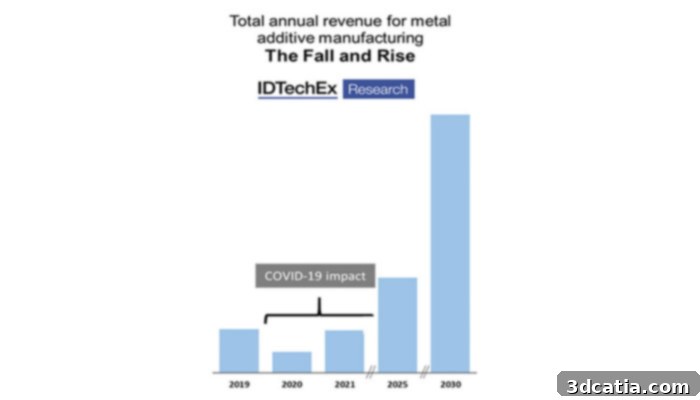
Prior to the global health crisis, industry experts and robust market studies projected a sustained period of vigorous expansion for the metal AM market over the subsequent years. The inherent advantages of additive manufacturing — including design freedom, material efficiency, and localized production capabilities — seemed to perfectly align with the evolving needs of modern manufacturing. However, the unprecedented challenges introduced by the COVID-19 pandemic have had a profound and undeniable impact, significantly altering the expected growth trajectory for the next two years. This unforeseen disruption forced a re-evaluation of market forecasts and highlighted both the resilience and vulnerabilities within the industrial landscape.
Assessing the Immediate Impact: Insights from IDTechEx
A comprehensive and timely study titled “Metal Additive Manufacturing 2020-2030”, recently published by the esteemed market research firm IDTechEx, offers crucial insights into the effects of the global COVID-19 pandemic on the broader additive manufacturing industry, with a particular focus on the metal segment. The report meticulously details that this specific segment experienced a considerable decline in the second half of 2020, with clear indications that “multiple years [would be] needed for recovery.” This assessment directly contradicted some of the more optimistic narratives circulating at the time regarding 3D printing’s immediate role in mitigating the crisis. Despite the evident downturn, IDTechEx’s study also presented compelling evidence that a significant portion of pre-arranged investments, crucial certifications, and existing orders managed to carry on, suggesting a foundational resilience within the sector, particularly for long-term projects and essential industries. Furthermore, there was a prevalent viewpoint that additive manufacturing, in general, gained increased importance during the pandemic, primarily due to its perceived ability to address vulnerabilities in global supply chains. While this might have held true for certain applications, particularly in plastic 3D printing for immediate emergency response like Personal Protective Equipment (PPE), media coverage often created an impression that the overall market impact for all of 3D printing, including the more capital-intensive metal AM, was effectively absorbed. However, the reality, as articulated by the IDTechEx report, clearly indicates that this was not the case for metal additive manufacturing.
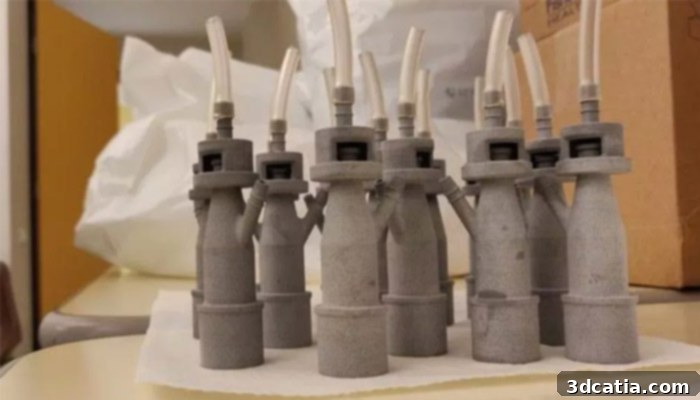
A 3D printed valve. AM manufacturers addressed vulnerabilities in their supply chain and capabilities were demonstrated in essential circumstances during the pandemic.
Profound Market Impact and Differentiated Recovery Trajectories
The IDTechEx report unequivocally highlights that the market impact was not merely a fleeting setback but a profound disruption, underscoring that the recovery process will be far from immediate. Dr. Richard Collins, a Principal Analyst at IDTechEx, elaborates on this point, stating: “The market has fallen in the immediate timeframe, as both internal and client operations ground to a halt for large parts of Q1 and Q2 2020. The short-to-mid-term recovery will differ for each sector with the longest recovery to be for civil aviation. The material demand is forecast to “spring back” faster, but the printer sales will take longer to recover, temporarily stagnating the total installed base.” This detailed analysis paints a picture of a complex recovery, where different segments of the metal AM ecosystem will experience varying recovery timelines and challenges. The widespread lockdowns and unprecedented restrictions on movement and business activity brought internal operations within manufacturing companies to a standstill, while client-side demand plummeted as industries grappled with uncertainty and reduced capital expenditure.
The differentiated recovery path outlined by Dr. Collins is particularly insightful. Civil aviation, a sector that had previously been a significant driver of metal AM adoption due to its demand for lightweight, high-performance components, is projected to face the most protracted recovery. This is largely attributable to the drastic reduction in air travel, the grounding of vast fleets, and the subsequent delays or cancellations of new aircraft orders. Furthermore, the stringent certification processes for AM parts in aerospace contribute to longer lead times for full market reintegration. In contrast, the demand for metal AM materials is anticipated to “spring back” at a faster rate. This phenomenon can be explained by the continued operation of the existing installed base of metal 3D printers, which still requires consumables to fulfill ongoing projects, maintenance, or smaller-scale production runs that perhaps did not require new printer investments. However, the recovery of printer sales, which represents a significant capital investment for companies, is expected to take considerably longer. This delay reflects a broader hesitance by businesses to commit to major expenditures amidst economic uncertainty, leading to a temporary stagnation in the total installed base of metal additive manufacturing systems. This stagnation, while temporary, could slow down the overall rate of technological adoption and expansion within the industry.
The Mid to Long-Term Horizon: Innovation and Diversification
Beyond the immediate two-year setback, the IDTechEx report offers a more expansive outlook, extending its analysis to cover the entirety of the next decade. Within this broader timeframe, a robust mid-to-long-term growth trajectory is still confidently anticipated for the metal additive manufacturing industry. This optimistic projection is underpinned by several key factors. A primary driver will be the gradual restoration of confidence among end-users regarding the intrinsic value and long-term benefits of investing in metal additive manufacturing again. As global economies stabilize and industries adapt to new operating paradigms, the strategic advantages of AM – such as enhanced supply chain resilience, on-demand production, and the ability to create highly customized, high-performance parts – will become increasingly evident and compelling.
The industry’s continuous state of innovation is another crucial catalyst for future growth. Metal AM is not a static technology; it is constantly evolving with ongoing research and development efforts. This means that the next generation of additive manufacturing technologies, encompassing advancements in printing processes (like multi-laser PBF, binder jetting, directed energy deposition), material science (new alloys, composites), and post-processing automation, will progressively gain more traction. These innovations promise to address current limitations, enhance efficiency, reduce costs, and expand the range of addressable applications. As a result, within the next decade, the industry is expected to witness the emergence of a significantly more diverse installation base. This diversification implies a broader adoption across a wider array of industries beyond the traditional aerospace and medical niches, potentially including automotive, energy, and consumer goods sectors. Furthermore, it suggests the integration of metal AM into the workflows of small and medium-sized enterprises (SMEs), not just large corporations, thereby democratizing access to this transformative manufacturing capability and fueling a more widespread industrial transformation.
Beyond the Hype: Critical Benchmarking and Market Opportunities
Beyond providing comprehensive market analysis and growth forecasts, the IDTechEx report also offers invaluable strategic insights by meticulously cutting through the often-complex marketing strategies employed by companies to differentiate their additive manufacturing technologies. The metal AM market is characterized by a multitude of processes, each with its unique strengths, weaknesses, and ideal applications. Without objective, third-party analysis, it can be challenging for potential adopters to discern genuine technological advantages from mere marketing rhetoric. Therefore, the report provides critical benchmarking studies of these diverse processes, offering an unbiased evaluation of their performance, cost-effectiveness, material compatibility, and suitability for various industrial applications.
This rigorous benchmarking is an essential process for identifying unaddressed gaps in the market and uncovering nascent opportunities for end-use applications. By highlighting where current technologies excel and where they fall short, the report empowers both technology developers to focus their R&D efforts and end-users to make informed investment decisions. Such detailed analysis is crucial for fostering sustainable growth and ensuring that the metal AM industry continues to innovate in areas that deliver genuine value. For those seeking deeper insights into specific material opportunities and a more granular understanding of metal end-use applications across various industries, further comprehensive information can be found HERE. We invite you to engage with this important topic: How do you believe the health pandemic has impacted and will continue to affect the metal additive manufacturing market? Share your valuable comments and perspectives below or connect with us on our Facebook and Twitter pages. Don’t miss out on the latest advancements and insights in 3D printing; remember to sign up for our free weekly Newsletter, delivering all the essential news directly to your inbox!