
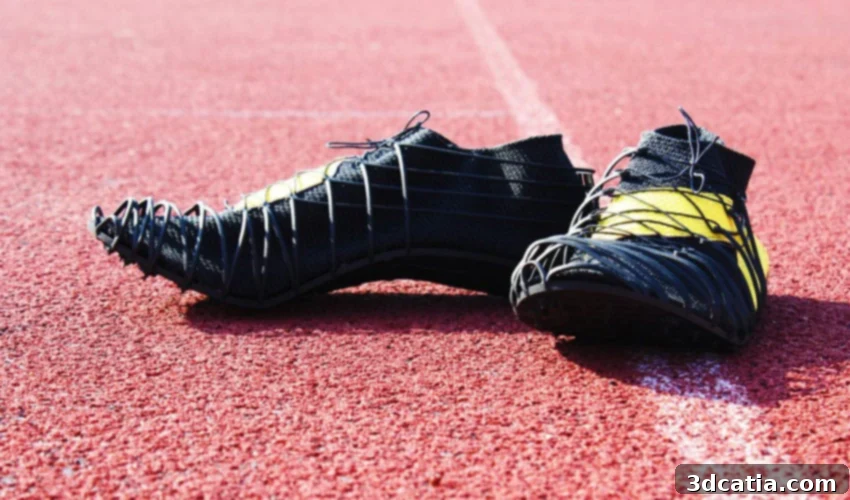
Pleko: Revolutionizing Athletic Performance with 3D Printed Custom Shoes
The world of athletic footwear is undergoing a profound transformation, driven by a relentless pursuit of peak performance, enhanced comfort, and more effective injury prevention strategies. Standing at the vanguard of this revolution is **Pleko**, an innovative line of athletic shoes that redefines what’s achievable through the intelligent integration of advanced manufacturing techniques and cutting-edge materials. Pleko shoes are predominantly crafted using state-of-the-art **3D printing**, specifically leveraging robust composite materials to create a truly bespoke and highly optimized running experience.
The foundational structural components of the Pleko shoe—which include the critical insole, responsive midsole, strategically placed spikes, and supportive ribs—are meticulously engineered and produced using high-performance carbon fiber composites. The manufacturing precision is achieved through Selective Laser Sintering (SLS). SLS is a highly advanced additive manufacturing process renowned for its capability to create complex, intricate geometries with exceptional material properties and high degrees of accuracy. This innovative combination of material and manufacturing technology results in an athletic shoe that offers unparalleled flexibility, extraordinary resistance to deformation even under the most extreme athletic stresses, and crucially, can be precisely customized to the unique biomechanical needs and anatomical structure of each individual athlete. This elevated level of personalization transcends conventional sizing, offering a tailored fit and a finely tuned performance profile that was previously unattainable with mass-produced footwear.
The visionary concept behind Pleko shoes is the brainchild of Miro Buroni, an accomplished Italian middle-distance runner. Buroni’s deep, personal understanding of the rigorous demands of athletic competition, combined with his fervent passion for innovative design, fueled his ambition to create a fundamentally superior running shoe. He aimed to bridge the significant gap between generic, off-the-shelf footwear and the highly specific, nuanced requirements of elite athletes. His ambitious journey was made possible through the support of two key collaborators: **Diadora**, a brand steeped in athletic heritage and renowned for its design expertise, provided invaluable assistance with historical analysis and critical design insights, ensuring that the Pleko concept was firmly grounded in decades of footwear innovation. Simultaneously, **CRP Technology**, a recognized leader in advanced additive manufacturing, was instrumental on the manufacturing front, contributing their unparalleled expertise in high-performance materials and sophisticated 3D printing processes to transform Buroni’s ambitious designs into tangible, high-performance products.
This powerful and synergistic collaboration culminated in the development of a shoe that is not only more comfortable and sustainable but also fundamentally biomechanically optimized, making it perfectly suited for serious athletes. The entire customization process for Pleko shoes commences with a highly detailed **3D scan of the athlete’s foot**. This initial, crucial step captures the precise anatomical structure, unique contours, and nuanced features of the individual’s foot with extreme accuracy, laying the essential foundation for true, individualized personalization. Once this high-resolution scanned data is acquired, sophisticated proprietary software takes over. This specialized program is capable of simulating the dynamic action of running, meticulously analyzing how the foot interacts with the ground, how forces are distributed across the foot, and the precise mechanics of movement throughout the entire stride cycle. Following this comprehensive simulation, an in-depth **biomechanical analysis** of the foot’s movement is generated. This thorough analysis provides a series of precise mathematical data points, which are then directly translated into the specific design parameters for the shoe. The ultimate and groundbreaking outcome is a **100% customized shoe**, engineered from the ground up to perfectly match the athlete’s unique physiology, running style, and performance aspirations.
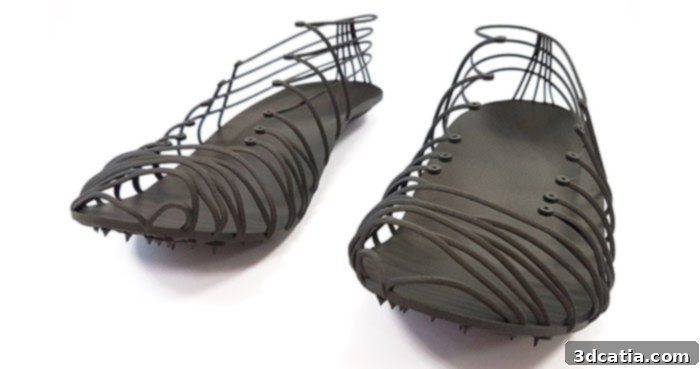
The manufacturing process begins with a detailed 3D scan of the athlete’s foot, crucial for creating a truly custom fit and personalized performance (photo credits: CRP Technology/Miro Buroni)
Miro Buroni articulates the profound impact and transformative advantages of this personalized approach: “With this highly detailed mapping, we are able to meticulously model the shoe precisely on the individual’s specific needs, both in terms of their unique foot structure and their athletic performance requirements. This capability extends far beyond conventional standard sizing, enabling us to make nuanced, precise adjustments that cater to specific arch types, varying foot volumes, and critical pressure points. Furthermore, the powerful combination of advanced 3D scanning and comprehensive biomechanical analysis provides us with critical, actionable insights. These insights allow us to determine the optimal placement of the shoe’s ‘traction system’ – specifically, the crucial ‘pins’ or spikes – underneath the outsole. This unparalleled precise placement ensures maximum grip, optimized energy return, and superior stability, all of which directly contribute to significantly improved athletic performance and a substantially reduced risk of injury for the athlete.”
Beyond the immediate benefits of individualized fit, the Italian designer meticulously re-evaluated the fundamental structural architecture of the running shoe. His focus was particularly on the critical interface between the various sole layers (outer, mid, and inner) and the upper part that securely wraps around the foot. Buroni envisioned a novel, profoundly integrated structure – a metaphorical “cage” – formed by a series of precisely engineered ribs that seamlessly arise from beneath the outsole and extend upwards to encompass and dynamically cradle the foot. This ingenious and integrated design fundamentally redefines how a shoe can provide support and interact harmoniously with the foot throughout the entire, dynamic phases of a race, from initial footstrike to powerful toe-off.
Miro further elucidates the significant functional advantages of this innovative cage structure: “This integrated cage provides dynamic, adaptive support to the foot in a manner that traditional, static shoe constructions simply cannot replicate. By conforming with extreme precision to the foot’s unique contours and responding intelligently to its movements during a stride, it actively works to improve an athlete’s running technique by promoting a more efficient footstrike and optimized propulsion. Crucially, this design allows for kinetic energy – the energy generated by the athlete’s movement – to be transmitted in a far more optimized and direct manner from the foot to the ground. This direct transmission translates into greater propulsive force and significantly reduced energy loss, which are vital for sustained performance. Ultimately, this means directly improved speed and endurance for the athlete, while simultaneously offering enhanced stability and robust protection against lateral movement, twisting, or other destabilizing forces.” This holistic and biomechanically informed design ensures that every ounce of an athlete’s effort is channeled with maximum efficiency, thereby maximizing their performance potential and safeguarding their well-being.
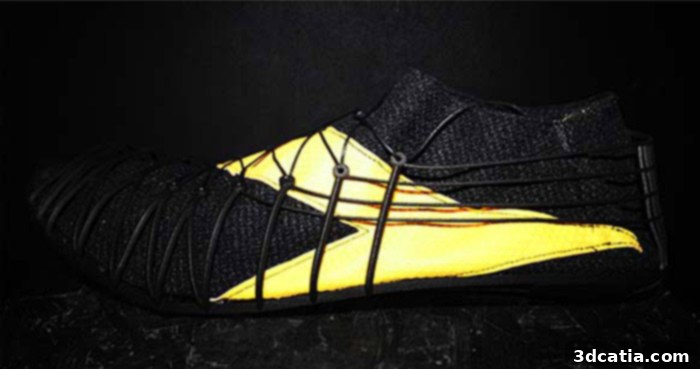
The intricately designed and precisely manufactured Pleko 3D printed shoe, showcasing its innovative, customized structure (photo credits: CRP Technology/Miro Buroni)
Additive manufacturing, universally known as 3D printing, quickly emerged as not merely a viable but indeed one of the only possible production methods capable of realizing such a complex, intricately customized, and performance-driven structure. The elaborate geometries of the “cage” design and the precise requirements for biomechanical optimization would be incredibly difficult, if not utterly impossible, to achieve with conventional, subtractive, or injection molding shoe manufacturing techniques. The designer’s primary requirement for the shoe’s various components was an exceptional balance of flexibility combined with robust structural integrity and long-term durability under strenuous conditions. This specific and demanding need led him decisively to select Selective Laser Sintering (SLS) as the preferred 3D printing technology, primarily due to its proven ability to process advanced, high-performance materials that inherently exhibit these desired characteristics. The material of choice for the critical structural components was **Windform® SP**, a high-performance **carbon fiber-reinforced polyamide** developed by CRP Technology, renowned globally for its superior mechanical properties, including high stiffness, strength, and impact resistance.
Buroni further elaborated on the strategic material selection: “Windform® SP guarantees excellent resistance and superior mechanical performance even when printed in incredibly thin thicknesses. This critical material feature has been instrumental in allowing me to successfully create a spike shoe with a truly perfect foot envelopment. The material’s unique ability to be precisely formed into intricate, thin-walled structures, without compromising strength, facilitates an unparalleled increase in comfort for the athlete, as the shoe effectively acts like a second skin, minimizing friction, eliminating pressure points, and reducing the risk of blistering. More importantly, this enhanced, anatomical envelopment directly contributes to the significant enhancement of the athlete’s performance by providing superior, dynamic support and optimizing kinetic energy transfer from the foot to the ground.” Thanks to the unparalleled design freedom and manufacturing precision offered by 3D printing, the individual spikes could be precisely placed, integrated, and oriented directly into the shoe’s outsole structure. This granular control over spike geometry, angle, and position ensures maximum traction, optimal grip, and unparalleled efficiency, all meticulously optimized for the athlete’s unique running biomechanics, ultimately delivering maximum results on the track or field in competitive scenarios.
The culmination of these extraordinary innovations is a sophisticated athletic shoe that is not only highly resistant to the rigorous stresses of competitive running and long-term deformation but also provides significant, measurable advantages in managing critical aspects of an athlete’s career and well-being. Pleko shoes offer comprehensive solutions to challenges related to **injury prevention**, by mitigating common stressors on the foot and lower leg and providing tailored, dynamic support that adapts to individual needs. They play a vital role in **rehabilitation** by offering custom-fitted solutions that precisely accommodate specific needs and sensitivities during the recovery process, aiding in a quicker and safer return to activity. Furthermore, they provide enhanced **protection** for the foot against impact and uneven terrain, significantly reducing the risk of new injuries. This holistic and athlete-centric approach ensures that individuals can train and compete with greater confidence, enhanced comfort, and superior safety, empowering them to push their limits while minimizing downtime. The seamless integration of advanced materials, ultra-precise 3D printing, and personalized biomechanical analysis firmly positions Pleko as a true game-changer and a leading innovator in the realm of high-performance sports footwear. For those interested in delving deeper into the technical specifications, design philosophy, and innovative aspects that make Pleko unique, more comprehensive information can be found HERE.
What are your thoughts on these revolutionary Pleko shoes and their potential to profoundly impact athletic performance and the future of footwear design? We encourage you to share your valuable insights and engage actively with the discussion in the comments section below. You can also connect with us and share your opinions on our vibrant social media channels: LinkedIn, Facebook, and Twitter pages. Don’t miss out on the very latest advancements and breaking news in additive manufacturing; sign up for our free weekly Newsletter here to receive the most current 3D printing news directly in your inbox! For dynamic visual content and more in-depth discussions on cutting-edge technologies, you can also find all our compelling videos on our YouTube channel, offering a vibrant and engaging perspective on the exciting future of 3D printing technologies and their diverse applications.