
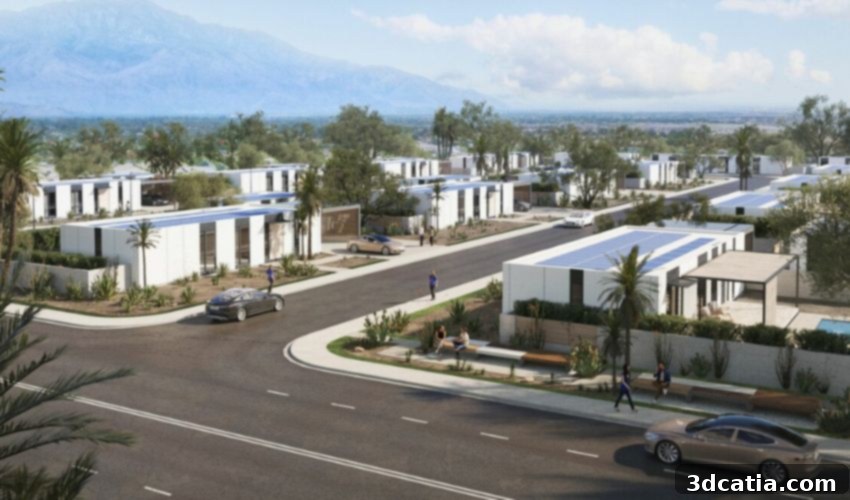
Pioneering Sustainable Living: Palari and SML Group Build California’s First 3D-Printed Net-Zero Energy Communities
In a world grappling with persistent housing shortages and the urgent need for more environmentally conscious construction methods, additive manufacturing is rapidly emerging as a transformative solution. This innovative technology offers a compelling pathway to address some of the most pressing challenges facing the global construction industry today. Recognizing its immense potential, an increasing number of forward-thinking companies are embracing 3D printing to revolutionize how we build. Leading this charge, Palari, a specialist in sustainable home construction, has forged a strategic partnership with the SML Group, a renowned Singapore-based real estate developer with a global footprint. Their ambitious collaboration aims to create a series of groundbreaking sustainable neighborhoods across California. This pioneering initiative will feature 3D-printed family homes, aptly named Palari Villas, and is projected to encompass approximately 200 homesites. Notably, this includes what the companies proudly announce as the “World’s First 3D-Printed Net-Zero Energy Community,” setting a new benchmark for eco-friendly residential development.
The Vision: Democratizing Zero-Energy Homes with 3D Printing
At the core of this innovative partnership lies a bold vision: to build the first truly zero-energy neighborhoods, thereby democratizing access to highly sustainable living. A zero-energy home is meticulously designed to produce as much renewable energy as it consumes over the course of a year, effectively neutralizing its carbon footprint. This ambitious goal transcends mere energy efficiency; it encompasses a holistic approach to sustainability, integrating advanced building techniques, smart technologies, and renewable energy sources. Palari and SML Group believe that by leveraging the efficiencies and environmental benefits of additive manufacturing, they can make these advanced, eco-friendly homes accessible to a wider demographic, challenging the perception that sustainable living is a luxury.
Michael Widjaja, CEO of SML Group in Indonesia, expressed profound enthusiasm for the partnership, highlighting its alignment with SML’s core values. “As a sustainable leader, SML has always focused on leveraging innovative and sustainable solutions within its development and continues to seek out like-minded partners to further this endeavor,” Widjaja commented. He emphasized the transformative nature of this collaboration, stating, “This partnership marks a big step towards a more sustainable future, harnessing modern construction methods to reduce our carbon footprint.” This sentiment underscores SML Group’s commitment to not only developing world-class real estate but also doing so with a deep sense of environmental responsibility, actively seeking out technologies and partnerships that push the boundaries of sustainable development.
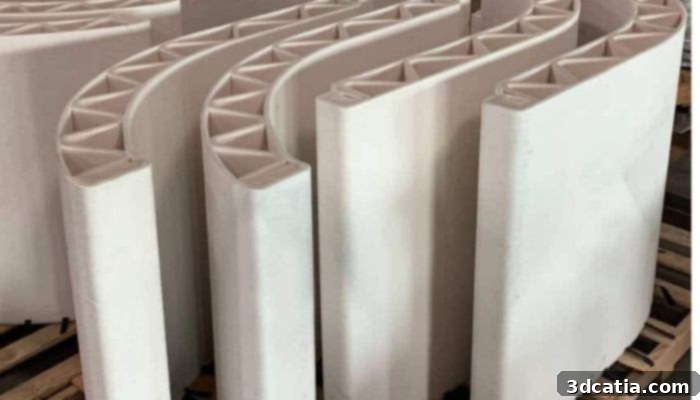
3D printed structural elements for the Palari Villas, designed to form the innovative eco-neighborhoods. (Photo credits: Palari)
SML and Palari: Advancing Responsible Housing Solutions
The collaboration between Palari and SML Group is strategically positioned to tackle two of the most pressing challenges in contemporary housing: affordability and environmental impact. By employing a sophisticated modular 3D printing system to construct homes in these eco-neighborhoods, the companies aim to streamline the building process significantly. The global housing crisis, exacerbated by escalating material costs and a pervasive shortage of skilled labor, has pushed housing prices to unprecedented levels, rendering homeownership unattainable for vast segments of the population. This scenario is particularly acute in regions like California, where demand consistently outstrips supply, leading to inflated property values.
Additive manufacturing offers a potent antidote to these challenges. Unlike traditional construction, which relies heavily on manual labor and a multitude of materials, 3D printing technology allows for rapid, automated construction using a limited palette of carefully selected materials. This reduction in material diversity and the inherent efficiency of the printing process translate directly into lower production costs. Furthermore, the automation inherent in 3D printing significantly mitigates the impact of labor shortages, reducing the need for large, specialized on-site crews. This approach mirrors successful initiatives seen elsewhere, such as projects in South Africa that have similarly turned to additive manufacturing to provide much-needed low-cost housing solutions, proving the global applicability and effectiveness of this technology in addressing affordability.
Building Green: 3D Printing’s Environmental Edge
While addressing housing affordability remains a paramount priority for Palari and SML, their commitment to environmental stewardship is equally fervent. The construction industry globally faces immense pressure to reduce its ecological footprint. Current estimates indicate that building construction is responsible for a staggering nearly 40% of global carbon emissions, alongside generating significant amounts of waste through conventional methods. This makes the sector a critical target for innovation aimed at sustainability. Traditional construction processes often involve extensive transportation of materials, energy-intensive manufacturing, and considerable on-site waste, contributing heavily to environmental degradation.
Palari and SML Group are leveraging the inherent advantages of additive manufacturing to design and build homes that are far more environmentally friendly than their conventionally constructed counterparts. Although the project’s specifics regarding the exact machines and materials remain undisclosed, the core principle is to capitalize on 3D printing’s capabilities for efficiency and waste reduction. For instance, 3D printing allows for highly precise material deposition, minimizing waste generation on-site to nearly zero, unlike traditional methods that often result in significant off-cuts and debris. Furthermore, the ability to use locally sourced or recycled materials, coupled with the potential for faster construction cycles, further reduces the embedded energy and carbon emissions associated with each home. This approach aligns with other pioneering efforts in the sector, such as ICON’s “House Zero” project, which also pushes the boundaries of sustainable 3D-printed architecture. The ambition is clear: to deliver 100% green housing solutions that not only meet but exceed contemporary environmental standards.
Beyond the immediate project, the strategic partnership reflects a broader ambition to redefine leadership in sustainable technology. As Basil Starr, CEO of Palari, articulates, the ultimate goal is to become the world’s leading developer of sustainable technology, leveraging the transformative power of 3D printing. This vision positions Palari and SML not merely as homebuilders but as innovators driving a paradigm shift in how we approach urban development and residential living. Their work could inspire widespread adoption of sustainable 3D printing techniques, fostering a greener, more resilient built environment for future generations. The integration of renewable energy systems, such as advanced solar panels and efficient energy storage solutions, is integral to achieving the net-zero energy goal for these communities. These homes are designed not just to be energy-efficient but to actively contribute to the local energy grid, creating a truly symbiotic relationship with their environment. The potential for such developments to serve as models for urban planning and policy-making worldwide is immense, demonstrating that sustainable, affordable, and technologically advanced housing is not just an aspiration but an achievable reality.
The Future of Housing: Affordability, Sustainability, and Innovation
The collaboration between Palari and SML Group represents a significant leap forward in the quest for truly sustainable and affordable housing. By integrating cutting-edge 3D printing technology with a deep commitment to environmental responsibility, they are not just building houses; they are constructing a blueprint for the future of residential development. The California communities, with their innovative Palari Villas and the distinction of featuring the “World’s First 3D-Printed Net-Zero Energy Community,” stand as a testament to what is possible when vision, technology, and sustainability converge. This initiative offers a tangible solution to the dual crises of housing scarcity and climate change, demonstrating that high-quality, eco-friendly homes can be delivered efficiently and at a lower cost.
This project underscores the immense potential of additive manufacturing to disrupt traditional construction paradigms, fostering a more sustainable, equitable, and technologically advanced housing market. As these communities take shape, they will serve as living laboratories, providing invaluable data and insights into the long-term performance and scalability of 3D-printed net-zero energy homes. The lessons learned here could pave the way for similar developments globally, accelerating the transition towards a built environment that is in harmony with our planet’s resources. The partnership between Palari and SML Group is more than just a business venture; it is a pioneering effort to redefine the very essence of home, making it synonymous with innovation, affordability, and unwavering sustainability for the generations to come.
For more detailed information on this groundbreaking initiative, please refer to the official press release HERE. What are your thoughts on Palari and SML Group’s pioneering efforts in developing sustainable 3D-printed communities? We encourage you to join the conversation and share your insights in a comment below or on our Linkedin, Facebook, and Twitter pages! Don’t forget to sign up for our free weekly Newsletter here to receive the latest 3D printing news straight to your inbox! You can also find all our videos, offering deeper dives into additive manufacturing advancements, on our YouTube channel.