
Unlocking High-Performance NEMS: The Power of 3D Printing for Nanoresonators
In our increasingly interconnected world, Micro-electro-mechanical systems (MEMS) have become indispensable components, seamlessly integrated into countless aspects of our daily lives. From the smartphones we carry to the intricate electronics powering medical devices and automotive systems, MEMS devices are silently at work, translating physical stimuli into electrical signals. The relentless pursuit of innovation in this field drives research toward reimagining traditionally bulky mechanical systems as miniature, high-performing, and mass-producible components.
This quest for miniaturization and enhanced performance has naturally led researchers to explore groundbreaking manufacturing technologies. Scientists at the Department of Applied Science and Technology (DISAT) and the Hebrew University of Jerusalem have turned to advanced 3D printing technology in their pioneering research on nanoresonators. Their goal: to create micrometer-scale electrical components at the even more minuscule nano-scale, pushing the boundaries of what’s possible in device fabrication. This nanoscale miniaturization of these devices, often referred to as Nano-electro-mechanical systems (NEMS), unlocks a vast realm of possibilities. It promises the development of inertial, mass, and force sensors with unprecedented sensitivity, capable of interacting with and detecting even singular molecules, opening doors to revolutionary applications in medicine, environmental monitoring, and fundamental scientific research.
Overcoming Traditional Manufacturing Hurdles for NEMS
The manufacturing landscape for NEMS sensors has historically been fraught with significant challenges. Much like many traditional fields, the production of these ultra-miniature devices has been constrained by the inherent complexities and exorbitant costs associated with existing silicon-based technologies. While silicon has been the backbone of the semiconductor industry for decades, its fabrication processes, particularly for the intricate geometries required at the nano-scale, are often rigid, multi-step, and demand highly specialized and expensive infrastructure. This translates directly into high manufacturing costs, which can hinder both research progress and the eventual mass adoption of advanced NEMS devices.
Furthermore, previous attempts to mass-produce NEMS sensors using conventional methods often resulted in compromises on performance. The delicate structures at the nanoscale are highly susceptible to defects and variations introduced during traditional manufacturing, leading to devices with suboptimal functionality, reduced sensitivity, and inconsistent quality. The intrinsic properties of silicon, while excellent for many applications, also present limitations when seeking novel functionalities or extreme performance characteristics in specific NEMS designs. These limitations have created a bottleneck, preventing the full potential of nanoscale sensing and actuation from being realized.
3D Printing: A Paradigm Shift for High-Performance Nanoresonators
The advent of advanced 3D printing technologies offers a compelling solution to these long-standing manufacturing dilemmas. Recent research has powerfully demonstrated that similar, and in some cases, superior NEMS structures can be produced at a significantly lower cost compared to silicon-based methods. This is largely due to the additive nature of 3D printing, which allows for the creation of complex geometries layer by layer, minimizing material waste and simplifying fabrication workflows. Beyond mere cost reduction, 3D printing also inherently advances the intrinsic functionalities of these devices. Its versatility allows for the use of novel materials and the integration of unique design features that are often impossible with subtractive or traditional planar manufacturing techniques.
This innovative approach has culminated in a breakthrough: a new research study has revealed the feasibility of producing high-quality mechanical nanoresonators using 3D printing, achieving mass sensitivity and strength comparable to, or even exceeding, that of state-of-the-art silicon resonators. This represents a significant leap forward, effectively dissolving the previous trade-off between mass production capabilities and high-performance output. The ability to create complex, functional nanoscale devices with precision and efficiency through additive manufacturing marks a pivotal moment for the field, promising to democratize access to advanced NEMS technology and accelerate its integration into various industries.
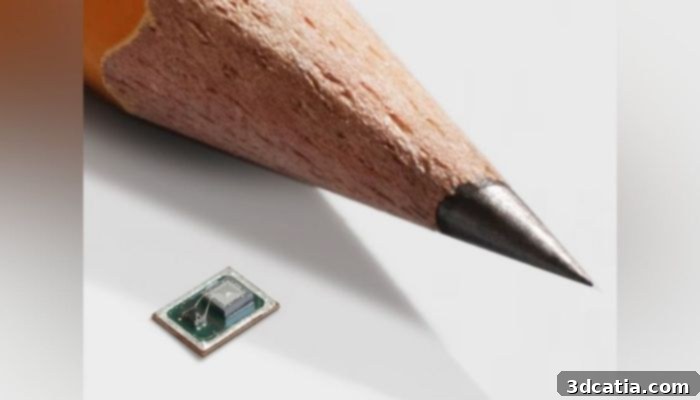
MEMS microphone (Photo Credit: Vesper)
The Groundbreaking Methodology Behind 3D-Printed Nanoresonators
MEMS devices are defined by their incredibly tiny components, typically ranging from 1 to 100 micrometers in size. To achieve the even finer nanoscale for NEMS, the researchers employed a sophisticated and multi-step fabrication process. The journey began with a technique known as two-photon polymerization, applied to innovative liquid compositions. Two-photon polymerization is a high-resolution 3D printing method that uses focused femtosecond lasers to solidify light-sensitive liquid resins with extreme precision, allowing for the creation of incredibly intricate three-dimensional structures at the micro and nano scales. This initial printing phase is crucial for defining the exact geometry of the nanoresonators.
Following this intricate printing step, a critical thermal process was applied. This process carefully removed the organic content from the printed structures, leading to the formation of a robust ceramic structure. The resulting ceramic material is highly desirable for nanoresonators due to its exceptional properties: high rigidity, which ensures structural integrity and stability at such small scales, and critically, low internal dissipation. Low internal dissipation means that the material wastes very little energy when it vibrates, allowing the nanoresonators to operate with higher quality factors (Q-factors) and thus greater sensitivity and precision. Stefano Stassi, a researcher from DISAT, eloquently explained the significance of this achievement: “The NEMS that we have fabricated and characterized have mechanical performances in line with current silicon devices, but they are obtained through a simpler, faster, and more versatile process, thanks to which it is also possible to add new chemical-physical functionalities. For example, the material used in the article is Nd: YAG, normally used as a solid-state laser source in the infrared range.” The utilization of Nd:YAG, a material known for its optical properties in laser technology, further highlights the potential for integrating diverse functionalities into these miniaturized devices, going beyond simple mechanical resonance to include optical or opto-mechanical capabilities.
Advanced Performance and Far-Reaching Implications
Through the meticulous application of 3D printing, specifically the advanced two-photon polymerization technique, a truly cost-effective and highly efficient manufacturing process for high-performing nanoresonators has been successfully realized. This innovative approach not only streamlines production but also opens avenues for creating devices with tailored properties. The ceramic nanoresonators fabricated by the researchers demonstrated mechanical performances that rivaled, and in some aspects, even surpassed, those of traditional silicon-based NEMS. Their comparable mass sensitivity and strength validate the efficacy of this new additive manufacturing paradigm, indicating that 3D printing is not just an alternative, but a superior method for specific nanoscale applications.
The implications of this research are profound and extend far beyond the laboratory. The “world of possibility” that nanoscale miniaturization (NEMS) opens up includes a new generation of inertial, mass, and force sensors with previously unattainable levels of sensitivity. Imagine sensors so precise that they can detect the presence of individual molecules, revolutionize diagnostics in medicine, enable unprecedented environmental monitoring, or facilitate fundamental discoveries in chemistry and biology. Such capabilities could lead to ultra-compact, highly integrated sensing platforms for precision medicine, advanced security systems, and next-generation communication devices.
Shlomo Magdassi, a researcher from the Hebrew University of Jerusalem, emphasized the broader impact: “The ability to fabricate complex and miniature devices that have performance similar to silicon ones by a quick and simple 3D printing process, brings new horizons to the field of additive manufacturing and rapid manufacturing.” This statement underscores the dual triumph of the research: not only does it deliver high-performance NEMS, but it also significantly advances the entire field of additive manufacturing. It demonstrates that 3D printing is now capable of producing functional components at a scale and with a precision previously thought to be exclusive to traditional microfabrication techniques. This rapid manufacturing capability means faster prototyping cycles, quicker iteration of designs, and ultimately, a more agile and responsive development pipeline for complex miniature devices.
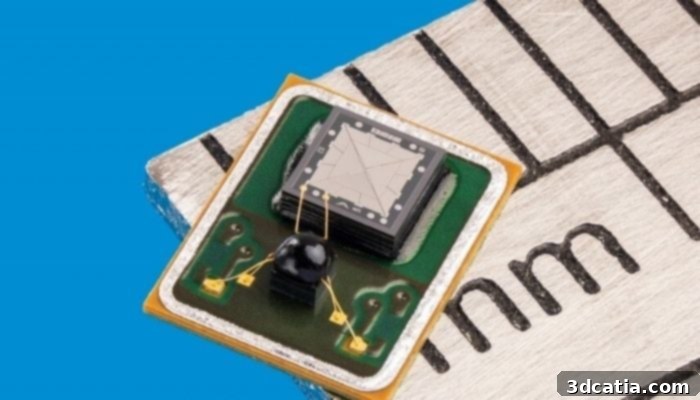
MEMS microphone (Photo Credit: Vesper)
The Future of NEMS and Additive Manufacturing
This groundbreaking work, detailed in the article “Reaching silicon-based NEMS performances with 3D printer nanomechanical resonators” published in Nature Communications, truly represents a pivotal moment for both NEMS development and the broader additive manufacturing industry. The successful creation of high-quality, high-performance nanoresonators using a simplified, faster, and more versatile 3D printing process has effectively removed critical barriers to innovation. By demonstrating that 3D-printed ceramic NEMS can match or even surpass the performance metrics of traditional silicon devices, this research paves the way for a new era of ultra-sensitive sensors and actuators.
The ability to integrate novel materials like Nd:YAG and introduce new chemical-physical functionalities through this advanced fabrication method promises to unlock unprecedented capabilities for miniature devices. We can anticipate future NEMS with integrated optical, electrical, and mechanical properties, leading to highly sophisticated and multifunctional platforms. This breakthrough not only promises to accelerate the miniaturization trend in electronics and sensing but also opens up exciting avenues for exploring fundamental physics at the nanoscale, developing new tools for biomedical research, and creating innovative solutions for a myriad of industrial applications. The fusion of nanotechnology and additive manufacturing is clearly driving us towards a future where complex, high-performance micro- and nano-devices are not only feasible but also cost-effective and widely accessible.
What are your thoughts on this pioneering nanoresonators research and the transformative potential of 3D printing? We invite you to share your insights in a comment below or connect with us on our Linkedin, Facebook, and Twitter pages! Don’t forget to sign up for our free weekly Newsletter here to receive the latest 3D printing news straight to your inbox! You can also find all our compelling videos on our YouTube channel.
Cover Photo Credit: Robin Glauser / Unsplash