

Revolutionizing Space Exploration: The CELLINK and Made In Space Bioprinting Partnership in Microgravity
A groundbreaking collaboration is poised to redefine the future of space exploration and medical science. Recently, CELLINK, a global leader in 3D bioprinting technology, announced an exciting partnership with Made In Space (MIS), a pioneering company in advanced space manufacturing. This alliance is dedicated to developing sophisticated bioprinting technology specifically engineered for the unique challenges and opportunities presented by the microgravity environment of space. Made In Space has long been at the forefront of designing and implementing state-of-the-art manufacturing solutions in orbit, actively supporting critical initiatives in space exploration, national security, and the long-term vision of sustainable space settlement. By pooling their distinct expertise, these two innovative companies aim to integrate MIS’s unparalleled knowledge in additive manufacturing within microgravity conditions with CELLINK’s cutting-edge bioprinting capabilities. The overarching goal of this strategic partnership is to harness the distinctive advantages of the microgravity environment to unlock novel applications, particularly in vital areas such as advanced drug screening and groundbreaking cancer research, ultimately bringing benefits both in space and back on Earth.
For several years, the microgravity environment has captivated scientists and innovators due to its profound potential to alter fundamental physical and chemical processes. This unique setting allows for the study of existing materials in unprecedented ways, facilitating the discovery of new properties and enabling the creation of novel materials with enhanced functionalities. Such advancements could, in turn, open up a vast array of new applications that would be impossible to achieve under terrestrial gravity, potentially revolutionizing industries on Earth. Many forward-thinkers believe that industrialization is on the cusp of reaching an entirely new level by strategically utilizing low Earth orbit as a fertile ground for innovation and technological breakthrough. Made In Space astutely recognized this immense opportunity over five years ago. Since then, it has steadfastly committed its mission to championing future space exploration through the continuous development of on-orbit manufacturing, sophisticated assembly processes, and the creation of advanced materials tailored for the space environment. This forward-thinking approach laid the foundation for collaborations like the one with CELLINK, pushing the boundaries of what’s possible beyond our planet.
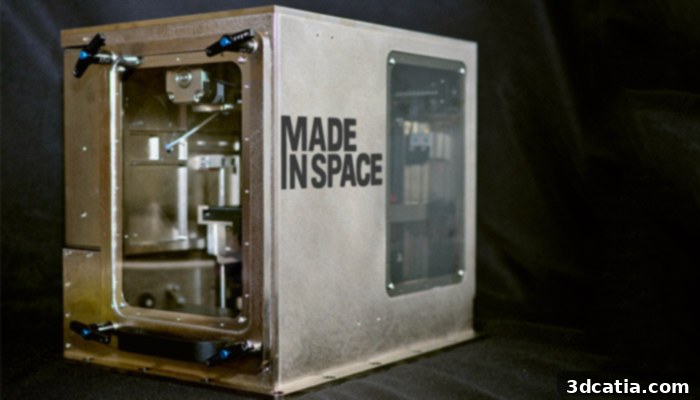
The first ISS 3D printer, a landmark achievement by Made In Space, demonstrating early capabilities in orbital manufacturing | Credits: Made In Space
Bioprinting in Space: A New Frontier for Medical Science and Exploration
The concept of bioprinting in space might sound like science fiction, but it is rapidly becoming a tangible reality. Erik Gatenholm, co-founder and CEO of CELLINK, expressed the profound excitement surrounding this venture: “We are incredibly excited to partner with Made In Space to refine bioprinting technologies that can support and enhance future missions in spaceflight and deep space exploration. This collaboration represents a critical step towards enabling sustainable human presence beyond Earth.” Both CELLINK and Made In Space are actively identifying and exploring new pathways for implementing these advanced technologies, with a particular focus on integrating them into existing infrastructure like the International Space Station (ISS) and future space platforms. This strategic placement will provide invaluable opportunities for research, development, and validation of bioprinting capabilities in a real-world space environment.
CELLINK’s Pioneering Role in Terrestrial and Orbital Bioprinting
CELLINK has firmly established itself as a global leader in the bioprinting sector. The company’s core expertise lies in the meticulous design and development of cutting-edge bioprinting technologies. These innovations enable the precise 3D printing of complex organs and tissues, finding diverse and critical applications across various industries, including pharmaceuticals, cosmetics, and regenerative medicine. A cornerstone of CELLINK’s success is its patent-pending bioink, a revolutionary material specifically engineered to support human cells as they grow and thrive in a manner that closely mimics their natural physiological environment. This bioink is crucial for creating viable and functional biological structures. Reflecting on the company’s origins, Erik Gatenholm shared insights into his entrepreneurial journey: “I knew this [3D printing technologies] was a market I always wanted to get into. The potential for transformative medical applications was immense. When I met my co-founder Hector Martinez, we quickly realized there was a significant gap in the market, particularly when it came to readily available and high-quality bioinks. Together with our dedicated founding team, we embarked on the mission to commercialize the first universal bioink. This initial success paved the way for us to expand our operations, leading to the manufacturing of advanced 3D bioprinters and other essential technologies integral to the entire bioprinting ecosystem.” This journey from identifying a market need to becoming a comprehensive provider of bioprinting solutions underscores CELLINK’s commitment to innovation and accessibility.
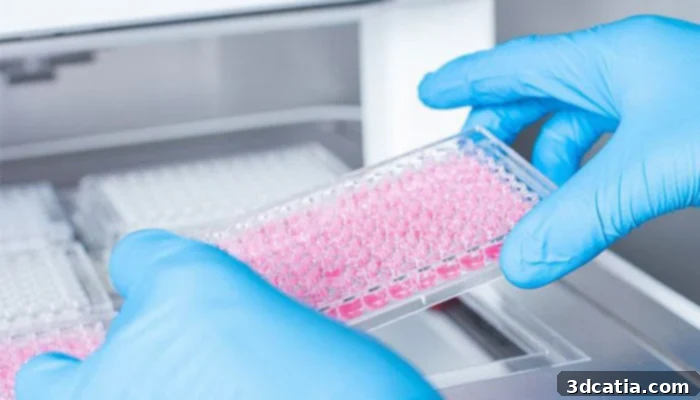
CELLINK in active collaboration with Made In Space, refining and advancing bioprinting technologies for future space applications | Credits: CELLINK
The Transformative Potential of Microgravity Bioprinting for Space Missions
The implications of bioprinting technology extending into the space environment are profound, especially when considering the health and safety of astronauts on long-duration missions. The company elucidates that optimized bioprinting capabilities could significantly mitigate crew health and safety risks in scenarios where access to standard medical facilities, common on Earth, is severely limited or entirely unavailable. Imagine astronauts on a multi-year journey to Mars, facing an injury or illness; conventional medical interventions are not always an option. In such critical situations, bioprinting capabilities, meticulously optimized to operate effectively within the unique conditions of space, could empower future crews to generate vital biological materials. This includes the on-demand development of skin grafts and bone patches, which would be instrumental in aiding wound healing and addressing injuries directly in space. This represents a monumental leap towards making deep-space missions safer, more sustainable, and truly self-sufficient.
Unlocking New Scientific Discoveries in Orbit
Beyond immediate medical applications for astronauts, the partnership between CELLINK and Made In Space aims to leverage microgravity for groundbreaking scientific research. The absence of gravity significantly alters cell behavior, tissue assembly, and even protein crystallization, offering an unparalleled environment for study. For drug screening, bioprinted tissues in microgravity can more accurately mimic complex 3D human physiology, leading to more predictive models for testing pharmaceutical compounds. This could accelerate drug discovery and development, reducing the reliance on animal testing and potentially creating more effective treatments for diseases affecting humans on Earth. Similarly, in cancer research, microgravity allows for the creation of more realistic 3D tumor models that more closely resemble in vivo tumor growth and metastasis than those grown in 2D cultures or even 3D cultures on Earth. This could provide critical insights into cancer progression and allow for more effective screening of anti-cancer therapies, ultimately contributing to the global fight against this devastating disease. The ability to conduct such advanced biomedical research in space opens entirely new avenues for understanding human biology and disease.
Driving Space Industrialization and Sustainable Habitation
The vision extends beyond scientific research and immediate astronaut welfare. Made In Space’s long-standing commitment to industrialization in low Earth orbit aligns perfectly with the advanced capabilities that CELLINK’s bioprinting technology brings. The ability to manufacture biological materials, tissues, and potentially even simplified organs in space contributes directly to the concept of sustainable space settlement. Future lunar bases or Martian colonies will require a degree of self-sufficiency not currently possible. On-demand bioprinting could reduce the need to transport critical medical supplies from Earth, lessening mission costs and increasing resilience. It paves the way for a future where space habitats can grow their own biological components, repair tissues, and even recycle biological waste more efficiently. This partnership represents a significant step towards enabling humanity’s long-term presence and thriving existence beyond the confines of Earth, fostering a new era of biological manufacturing in the cosmos.
The Road Ahead: Challenges and Bright Prospects
While the prospects are incredibly exciting, developing and deploying bioprinting technology in space comes with its own set of unique challenges. These include managing vibrations during launches, ensuring sterile environments, developing bioinks that perform optimally in microgravity, and designing robust, automated bioprinters that can operate reliably without constant human intervention. However, the combined expertise of CELLINK and Made In Space places them in an advantageous position to overcome these hurdles. Made In Space has a proven track record of successfully deploying and operating additive manufacturing systems on the International Space Station, demonstrating their capability to overcome the engineering complexities of space-based manufacturing. CELLINK’s deep understanding of biological processes and material science for bioprinting provides the crucial biological half of the equation. This synergy is critical for navigating the complexities and pushing the boundaries of what is scientifically and technically feasible.
In conclusion, the partnership between CELLINK and Made In Space represents a monumental step forward in the fields of bioprinting, space exploration, and medical science. By uniting their unique strengths, these two pioneering companies are not only developing technologies that will protect and sustain astronauts on future missions but are also creating an unparalleled research environment to accelerate drug discovery and cancer research, with profound implications for human health both in space and on Earth. This collaboration symbolizes humanity’s enduring drive to innovate, explore, and utilize every frontier, including the vastness of space, for the betterment of all.
You can find more information HERE.