
Desktop Metal Unveils H13 Tool Steel for Studio System: Revolutionizing Metal 3D Printing for High-Performance Applications
Desktop Metal, the pioneering American manufacturer at the forefront of additive manufacturing, has significantly expanded the capabilities of its acclaimed Studio System in Europe. Following its successful introduction of metal 3D printing solutions to the continent last July, the company is now broadening its range of compatible materials by adding H13 tool steel. This robust material is renowned for its exceptional properties, including outstanding hot hardness, superior abrasion resistance, and remarkable stability during heat treatment. H13 tool steel is a staple in various industrial sectors, extensively utilized in both hot and cold work applications due to its inherent high tenacity and strength, making it an indispensable choice for demanding tooling and component manufacturing.
With over $400 million successfully raised in funding, Desktop Metal continues its ambitious international expansion, building upon its profound success and established customer base in the United States. Esteemed clients such as Good Year, Google, and MIT have already leveraged Desktop Metal’s innovative technology, underscoring the company’s impact on industrial production. The core mission of Desktop Metal remains unwavering: to democratize metal additive manufacturing and make it as accessible as possible for engineers, designers, and manufacturers worldwide. The company’s flagship Studio System machine exemplifies this philosophy; it is a meticulously engineered, turnkey solution specifically designed to streamline the workflow and simplify the metal 3D printing process for users, eliminating the complexities often associated with traditional methods.
Prior to this significant addition, users of the Studio System could already produce high-quality metal parts using two versatile types of stainless steels: 316L and 17-4 PH. These materials have proven invaluable for a wide array of applications, from medical instruments to automotive components. The integration of H13 tool steel into the Studio System’s material portfolio represents a monumental leap forward, dramatically expanding the potential applications and enabling the creation of components that demand superior wear resistance and thermal stability. This strategic move reinforces Desktop Metal’s commitment to providing a comprehensive and evolving material ecosystem for its customers, further solidifying its position as a leader in the metal additive manufacturing landscape.
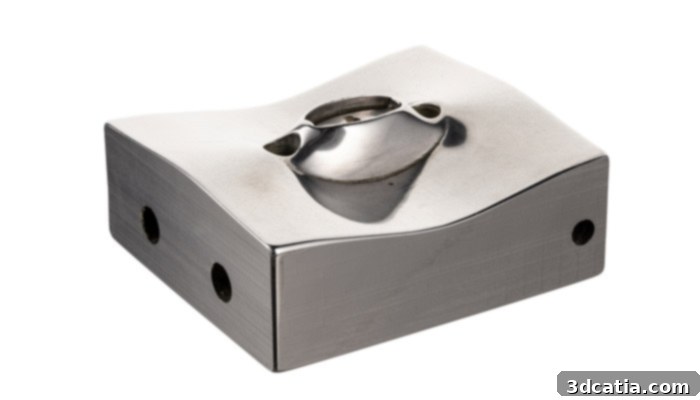
3D printed mold for mouthpieces | Image via Desktop Metal
Expanding Possibilities: H13 Tool Steel Applications with Desktop Metal
The introduction of H13 tool steel opens up an exciting new realm of possibilities for engineers and designers across various industries. This advanced material is perfectly suited for crafting high-performance components such as intricate mold inserts, robust extrusion and forging dies, and a diverse range of specialized tools, including those used for milling, bending, and embossing. These applications are typically characterized by extreme operating conditions, requiring materials that can withstand high temperatures, intense pressures, and significant abrasive forces. H13’s inherent properties make it an ideal candidate, promising enhanced durability and performance in these critical industrial contexts.
Ric Fulop, CEO of Desktop Metal, highlighted the strategic importance of this material expansion, stating, “This is an essential competitive advantage to enable rapid iteration and refinement of tools requiring H13, as well as reduced manufacturing times. The teams will also be able to produce complex geometries that are not possible with traditional manufacturing methods such as machining.” Fulop’s comments underscore the transformative potential of H13 within the Studio System. By leveraging additive manufacturing, companies can significantly accelerate their product development cycles, moving from design to functional prototype or final part with unprecedented speed. Furthermore, the ability to create complex internal geometries, such as conformal cooling channels, gives 3D printed H13 parts a distinct edge over their conventionally manufactured counterparts, leading to improved performance and extended tool life.
Real-World Impact: H13 in Medical and Manufacturing Tooling
Desktop Metal has already demonstrated the practical utility and superior performance of H13 tool steel through several compelling 3D printed applications. In the medical sector, for instance, this robust tool steel was instrumental in designing and producing injection molding molds specifically for the manufacturing of mouthpieces used in asthma inhalers. This particular application beautifully illustrates the revolutionary impact of metal additive manufacturing. Traditionally, cooling channels in injection molds are machined straight or drilled, limiting their proximity to the mold cavity and often resulting in inefficient cooling. This inefficiency can significantly prolong the cooling phase, which, for a mold of this type, can astonishingly account for up to 95% of the total cycle time.
However, by embracing 3D printing with H13 steel, engineers can integrate highly optimized, compliant cooling channels that precisely follow the intricate profile of the casting surfaces. This innovative design allows for an unprecedented level of control over temperature management within the mold. The direct proximity of these channels to the molten material dramatically increases the cooling rate of the mold, leading to a substantial reduction in the overall mold cycle time. The practical consequence of this technological advancement is profound: manufacturers can produce significantly more parts per hour, leading to increased production efficiency, lower per-part costs, and a faster time-to-market for critical medical devices.
Beyond the immediate benefits of faster cooling, the superior thermal stability and wear resistance of H13 tool steel ensure that these complex molds maintain their integrity and precision over extended production runs. This leads to a longer lifespan for the tooling, reducing the frequency of mold replacements and associated downtime. The ability to iterate quickly on mold designs, thanks to the agility of 3D printing, also allows for continuous optimization, ensuring that the mouthpiece designs are perfectly suited for their critical function in asthma inhalers, ultimately benefiting patient care through higher quality and more readily available medical devices.
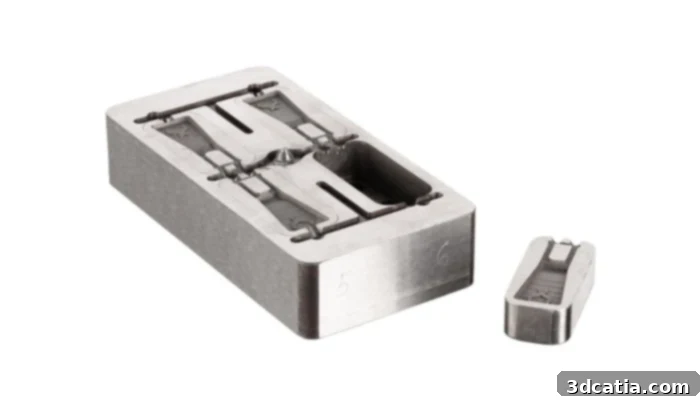
The zipper mold | Image via Desktop Metal
Enhancing Durability and Customization: The Zipper Mold Case Study
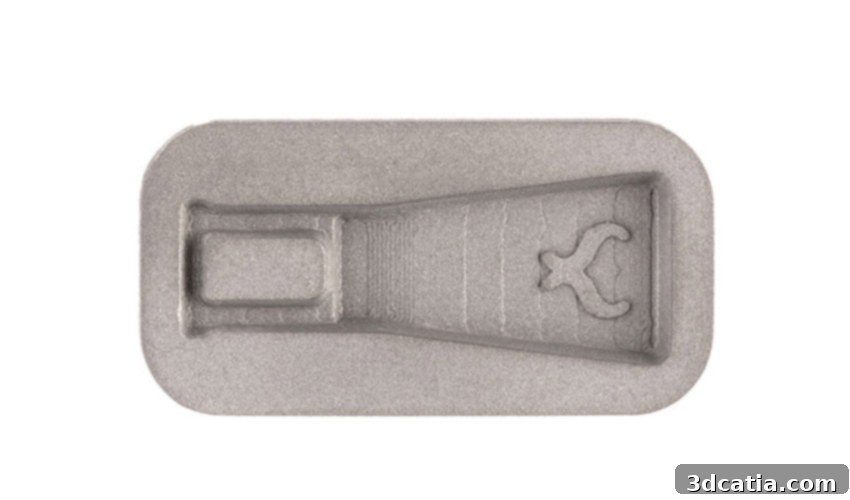
Another compelling application showcasing the versatility and strength of Desktop Metal’s H13 tool steel involves the 3D printing of molds for zipper manufacturing. Zippers are typically produced in massive quantities, a necessity often driven by the high upfront costs associated with traditional tooling methods. These conventional processes often involve significant investments in machinery and skilled labor, making small-batch or highly customized production economically unfeasible. This usually restricts manufacturers to producing standardized designs to amortize their tooling expenses over vast production volumes.
However, with the power of the Studio System 3D printer and its H13 material capability, manufacturers can dramatically reduce minimum order volumes while simultaneously unlocking unprecedented levels of customization. This breakthrough allows for the creation of bespoke molds that can incorporate incredibly precise details, such as intricate logos, unique textures, or specialized patterns directly onto the zipper components. The flexibility offered by 3D printing means that designers are no longer constrained by the limitations of conventional machining, opening doors to innovative product differentiation and niche market opportunities.
H13 tool steel is particularly well-suited for zipper mold applications due to the demanding thermal cycling involved in their production. Zipper molds are repeatedly heated to high temperatures and then rapidly cooled down. This relentless thermal stress can induce material fatigue and lead to the formation of cracks in less resilient materials, significantly shortening the lifespan of the tooling. H13, with its exceptional resistance to thermal shock and superb hot hardness, stands up to these punishing conditions, ensuring a considerably longer operational life cycle for the molds. This durability translates directly into reduced tooling costs, less downtime for maintenance and replacement, and consistently high-quality output over prolonged periods. The ability to create durable, customized molds efficiently transforms zipper manufacturing, making it more agile and responsive to market demands.
Desktop Metal’s Vision for Future Material Innovation
Desktop Metal’s commitment to advancing additive manufacturing extends far beyond the current material offerings. The company is actively investing in research and development to expand its material portfolio even further, addressing a broader spectrum of industrial requirements. Currently, Desktop Metal’s teams of material scientists and engineers are diligently working on the development of other high-performance metals. These include various nickel-based alloys, which are prized for their excellent corrosion resistance and strength at high temperatures, making them suitable for aerospace and energy applications. Additionally, copper, known for its outstanding electrical and thermal conductivity, is under development, promising to unlock new possibilities for heat exchangers and electronic components. Carbon steel, a foundational material in many industries, is also on the horizon, further broadening the Studio System’s appeal for general industrial tooling and structural parts. These future material introductions underscore Desktop Metal’s forward-thinking approach and its dedication to continuously pushing the boundaries of what is possible with metal 3D printing. For more comprehensive information and detailed specifications on Desktop Metal’s innovative solutions and material roadmap, interested parties are encouraged to visit the manufacturer’s official website HERE.
The continuous expansion of compatible materials, particularly with the addition of high-performance H13 tool steel, solidifies Desktop Metal’s position as a trailblazer in making metal additive manufacturing a truly viable and indispensable production technology for industries worldwide. By consistently delivering accessible, robust, and versatile solutions, Desktop Metal empowers manufacturers to innovate faster, produce more efficiently, and explore new design paradigms previously deemed impossible.
We’re eager to hear your thoughts on Desktop Metal’s latest material addition and its potential impact on metal additive manufacturing! Do you foresee H13 tool steel revolutionizing your industry or specific applications? Share your insights and comments below, or engage with us on our social media platforms. Join the conversation on our Facebook and Twitter pages to discuss the future of 3D printing. And don’t forget to sign up for our free weekly Newsletter to receive all the latest news, updates, and innovations in the rapidly evolving world of 3D printing directly in your inbox!