
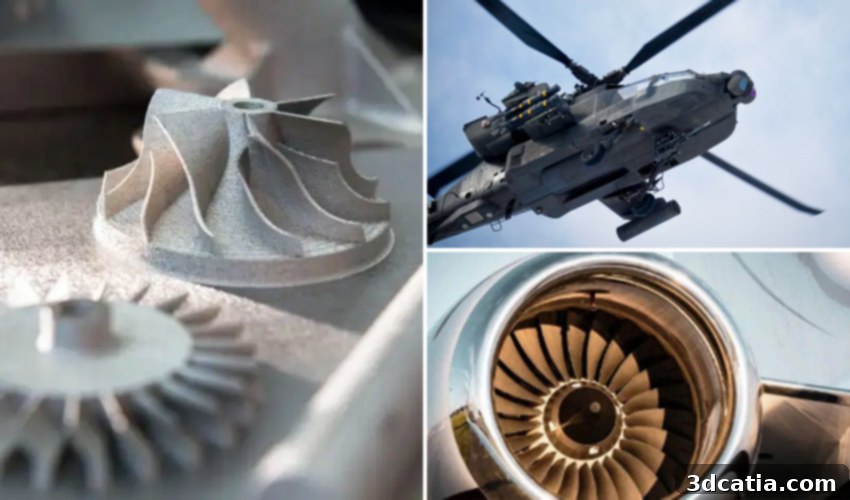
Soaring to New Heights: The Impact of 3D Printing in Modern Aviation
Additive manufacturing (AM), commonly known as 3D printing, is fundamentally transforming various industries due to its unparalleled ability to produce lightweight, incredibly strong, and geometrically complex parts. This makes the technology exceptionally valuable in the aeronautics sector, where optimizing strength-to-weight ratios and design flexibility are paramount for performance, safety, and efficiency. Aeronautics encompasses the science and practice of designing, building, and operating all types of aircraft that fly within the Earth’s atmosphere, excluding spacecraft.
The aviation industry was an early adopter of AM, initially leveraging it for rapid prototyping. This allowed engineers to quickly test and iterate on designs, significantly shortening development cycles. However, the scope of 3D printing in aeronautics has dramatically expanded beyond prototyping. Today, AM is extensively used for manufacturing certified end-use parts in a wide array of aerial vehicles, including commercial airplanes, military aircraft, helicopters, drones, and advanced urban air mobility solutions. This shift is driven by the technology’s capacity to create parts with intricate internal structures, consolidate multiple components into a single print, and utilize high-performance materials like titanium and advanced polymers.
The benefits of integrating 3D printing into aerospace manufacturing are multifaceted. It enables significant weight reduction, leading to improved fuel efficiency and reduced carbon emissions – crucial goals for a more sustainable future. The ability to produce complex geometries allows for innovative designs that enhance aerodynamic performance, optimize thermal management, and improve structural integrity. Furthermore, additive manufacturing streamlines supply chains, reduces material waste, and accelerates production timelines for both new aircraft and critical spare parts. To illustrate the transformative versatility and profound impact of 3D printing in this dynamic field, we have compiled a list of some of the most recent and remarkable applications of AM in aeronautics, showcasing how leading companies are pushing the boundaries of what’s possible in flight.
Norsk Titanium Supplies Parts for Boeing 787, Launches Supplier Partnership
Norsk Titanium US Inc., a recognized leader in titanium additive manufacturing for the aerospace industry, made headlines in 2021 by supplying critical parts for the Boeing 787 Dreamliner. The company is renowned for its proprietary Rapid Plasma Deposition® (RPD®) technology, an advanced directed energy deposition (DED) process. RPD® uses an electron beam to simultaneously heat multiple points of titanium wire, resulting in finished parts with superior strength and durability compared to traditional manufacturing methods. Among their groundbreaking achievements were 3D-printed titanium components that received certification from the FAA (Federal Aviation Administration), a testament to the reliability and safety of their process.
Building on this success, Norsk Titanium has now solidified its position in the aerospace supply chain by agreeing to supply volume production parts directly to The Boeing Company. This significant milestone marks the establishment of a direct supplier relationship, underscoring Boeing’s confidence in Norsk Titanium’s capabilities. The company anticipates delivering hundreds of structural titanium parts to Boeing by 2025, further integrating additive manufacturing into commercial aircraft production. Nick Mayer, VP of Commercial at Norsk Titanium, emphasized the strategic advantage of their technology: “Our RPD® technology and established material specifications position Norsk Titanium to react quickly to the demands of our customers.” This partnership not only highlights the maturity of AM in aerospace but also its potential to enhance manufacturing agility and robustness for critical components.
ITP Aero Obtains EASA Certification for 3D Components
ITP Aero, based in Vizcaya, Spain, has achieved a significant milestone in the aero engine industry by successfully obtaining certifications from both the European Aviation Safety Agency (EASA) and the Spanish Aviation Safety Agency (AESA) for its 3D-printed structural components. This accomplishment positions ITP Aero as the first company in the aero engine sector to receive such critical approvals for parts manufactured using selective laser sintering (SLS) technology. Specifically, these certifications apply to the rear blades of the powerful TP400 engine, a testament to the rigorous testing and validation undertaken.
The adoption of industrial additive manufacturing processes like SLS allows ITP Aero to create highly complex components with significantly reduced material consumption and energy expenditure. This not only contributes to the sector’s overarching sustainability goals but also opens avenues for innovative designs that were previously unachievable with traditional manufacturing methods. To ensure the highest standards, ITP Aero has also developed its own comprehensive additive manufacturing standards and specifications specifically tailored for high-temperature aero-engine components, demonstrating their commitment to quality and safety. Furthermore, the company operates a dedicated manufacturing cell for these advanced processes and is actively investing in the future by building the “ADMIRE” research center. This new facility is designed to further advance digital and sustainable manufacturing technologies, solidifying ITP Aero’s leadership in the integration of AM for critical aerospace applications.
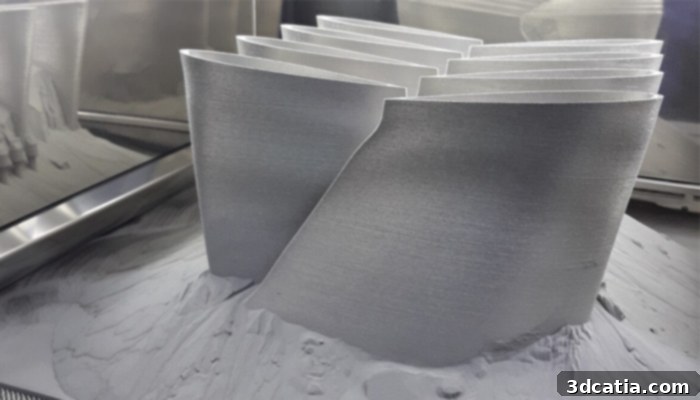
Photo Credits: ITP Aero
Safran Invests €80M for 3D Printing Campus
Safran, a prominent international high-tech group with significant operations in the aerospace, space, and defense sectors, has made a substantial commitment to additive manufacturing. The company invested a remarkable 80 million euros to establish a dedicated 3D printing campus in Le Haillan, strategically located near Bordeaux, France. This ambitious undertaking was conceived to create a large-scale center of excellence specifically for additive manufacturing, consolidating expertise and resources under one roof.
Spanning an impressive 12,500 square meters, the campus currently houses approximately 200 employees who specialize in various aspects of 3D printing. The facility is equipped with state-of-the-art technology, including at least eight advanced 3D printers utilizing powder bed fusion technologies, crucial for producing high-quality metal parts. Beyond the printers, the campus boasts comprehensive finishing equipment, two heat treatment furnaces for post-processing, a scanning electron microscope for detailed material analysis, and dedicated metallurgical and powder laboratories. These extensive capabilities enable Safran to control the entire additive manufacturing workflow, from material development to final part inspection.
Safran’s long-term vision is to significantly increase the integration of additive manufacturing within its engine components, aiming to boost the percentage from 1% to an ambitious 25%. To date, the company has already produced more than 1,000 3D-printed parts, demonstrating tangible progress toward this goal. This substantial investment by Safran represents a crucial step in strengthening collaboration among European companies, research institutes, and defense entities. It is also seen as a strategic move to narrow the gap with the massive investments made by the United States, which currently maintains a dominant position in this advanced manufacturing sector, thereby bolstering Europe’s competitive edge in aerospace innovation.
Photo Credits: Safran
Materialise Develops 3D Printed Cabin Solutions
Materialise, a global leader in 3D printing software and services, has significantly expanded its influence within the aerospace maintenance, repair, and overhaul (MRO) sector. The company has forged strategic partnerships with industry giants Proponent, the world’s largest aerospace distributor, and Stirling Dynamics, a leading EASA 21.J-certified design organization, to jointly develop innovative 3D-printed cabin solutions. This collaboration builds upon Materialise’s proven track record, including a previous successful partnership with Airbus and EOS, which led to the production of approximately 100 flame-retardant 3D-printed parts for the A350 aircraft, already in service.
The primary objective of this new, comprehensive partnership is to establish a robust framework for providing certified 3D-printed spare parts tailored for the aviation industry. In this collaborative effort, Stirling Dynamics will leverage its design expertise to focus on improving designs for a wide range of cabin interior parts, ensuring they meet rigorous aerospace standards for form, fit, and function. Concurrently, Materialise will utilize its extensive experience and certified production capabilities to manufacture these parts efficiently and reliably. Jurgen Laudus, Vice President of Materialise Manufacturing, articulated the power of this alliance: “By combining our respective expertise, we are creating a powerful alliance with the skills needed to lower AM adoption barriers in the aeronautics industry.”
This collaborative approach has already yielded tangible results, including the development of several effective cabin repair solutions designed to address specific, common problems encountered in aircraft cabins. Proponent, with its vast global distribution network and strong relationships with Original Equipment Manufacturers (OEMs), plays a crucial role in making these certified solutions accessible worldwide. This initiative not only enhances the efficiency and cost-effectiveness of MRO operations but also demonstrates the increasing maturity and acceptance of 3D printing for certified, flight-ready components within the aerospace industry.
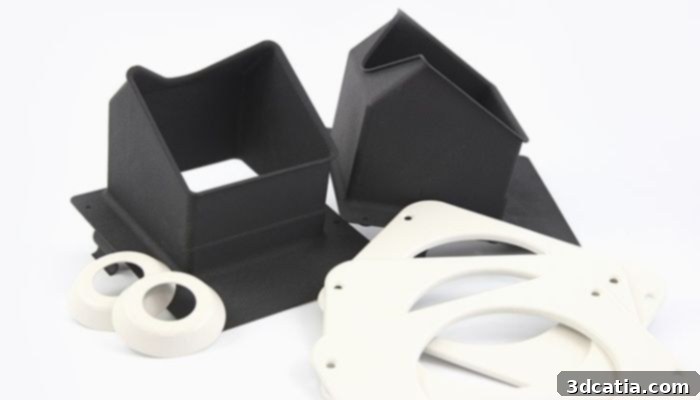
Airworthy parts made of flame-retardant PA 2241 FR material, which is offered by Materialise in Airbus-certified quality (Photo Credits: Materialise)
Lufthansa Uses 3D Printing to Create Cabin Parts for Planes
Lufthansa Technik, a leading global provider of comprehensive maintenance, repair, overhaul, and modification services for civil aircraft, is at the forefront of integrating additive manufacturing into its operations. The company is actively leveraging polymer additive manufacturing not only to redesign existing cabin parts for enhanced performance but also to efficiently reproduce conventional aircraft components and create customized interiors for VIP passenger cabins. This strategic adoption of AM allows Lufthansa Technik to overcome limitations of traditional manufacturing, offering greater flexibility and design freedom.
The core application of AM technology within Lufthansa Technik’s operations is to make conventional airliner cabin components stronger, lighter, and more durable. They have already successfully improved the functionality and aesthetic of critical cabin elements such as ventilation grilles, various clips, and protective covers across their aircraft fleet. The ability to customize and optimize these parts means better performance and a more comfortable passenger experience. Looking ahead, Lufthansa Technik has ambitious plans to increasingly utilize additive manufacturing, particularly for projects involving bionic design principles. Bionic design involves applying biological methods and forms to engineering challenges, enabling the creation of structures that are naturally optimized for strength, weight, and material efficiency, perfectly aligning with AM capabilities.
According to Lufthansa Technik, the adjustments to cabin design and the significant weight reduction achieved through additive manufacturing can contribute substantially to the aviation industry’s ongoing efforts towards greater sustainability and a reduced carbon footprint. Lighter aircraft consume less fuel, directly impacting operational costs and environmental impact. By embracing 3D printing, Lufthansa Technik is not just improving maintenance and customization but is actively contributing to a more ecologically responsible future for air travel, showcasing AM as a vital tool in achieving industry-wide environmental goals.
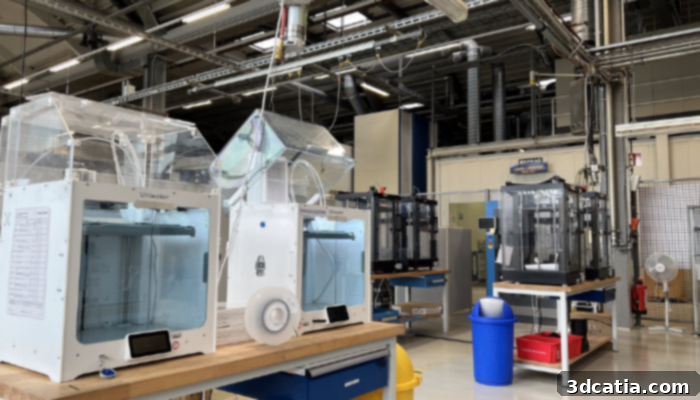
Photo Credits: Lufthansa Group
Airbus Helicopters’ 3D Printing Center
Airbus has long been a pioneer in integrating 3D-printed parts into its diverse range of aircraft, utilizing additive manufacturing for various applications over many years. While the company has often relied on outsourced AM services, a significant strategic shift occurred in late 2023 when Airbus Helicopters inaugurated its own dedicated 3D printing center. Located at its facility in Donauwörth, Germany, this new center represents a substantial expansion of Airbus Helicopters’ in-house additive manufacturing capabilities, allowing for greater control and innovation.
The state-of-the-art center is comprehensively equipped to handle a variety of materials and printing processes. It houses three advanced machines specifically designed for printing titanium parts, four machines dedicated to plastic components, and one for aluminum parts. This multi-material capability enables Airbus Helicopters to tackle a wide spectrum of manufacturing challenges. The technology is being utilized for a range of critical applications, including the creation of serial production parts that are directly integrated into their helicopters. Additionally, the center plays a crucial role in developing parts for cutting-edge prototypes, such as the CityAirbus NextGen eVTOL (electric Vertical Take-Off and Landing) aircraft and the high-speed Racer experimental compound helicopter, pushing the boundaries of future aerial mobility.
Stefan Thomé, Airbus Helicopters managing director for Germany, eloquently articulated the profound benefits of adopting additive manufacturing in their operations. “Among other advantages, 3D printing can reduce the weight of aircraft components, which leads to less fuel consumption,” Thomé stated. He further emphasized the dual impact, adding, “Such potential can bring financial benefits and contribute to reducing CO2 emissions during operations.” This investment underscores Airbus Helicopters’ commitment to innovation, sustainability, and efficiency, leveraging AM to design and build the next generation of lighter, more capable, and environmentally friendly rotorcraft.
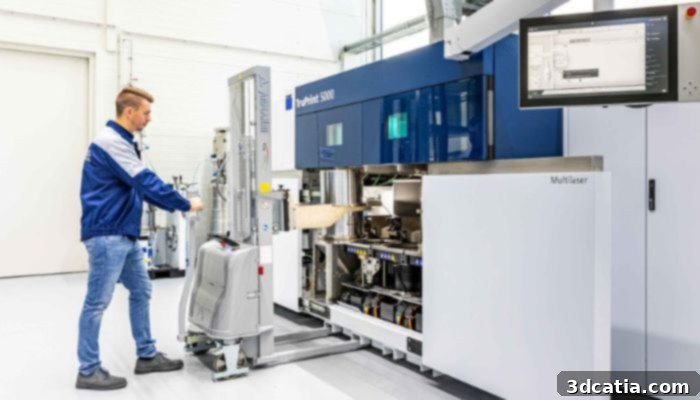
Photo Credits: Airbus Helicopters
3D Rotors for Boeing’s Apache Helicopters
In a groundbreaking move, Boeing has commenced testing a complete 3D-printed main rotor system for the formidable AH-64 Apache attack helicopter. This ambitious project signifies a major step toward revolutionizing aerospace manufacturing, with a clear objective to dramatically reduce lead times and enhance the robustness of supply chains for parts traditionally produced through complex forging processes. The implications for defense logistics and operational readiness are immense.
The initial reveal of this innovative approach took place at the Association of the U.S. Army’s annual conference, where Boeing and ASTRO America showcased their first significant 3D-printed component for the Apache: a main rotor linkage. This crucial part was fabricated using a large-format metal 3D printer, demonstrating the capability to produce substantial, flight-critical components with additive manufacturing. Government-funded ASTRO America has been instrumental in this effort, working under a substantial $95 million contract specifically aimed at developing advanced additive manufacturing capabilities for very large parts, including structures such as tank hulls.
One of the most compelling aspects of this project is the drastic reduction in production time. A 3D-printed component of the main rotor could be produced in just eight hours, a stark contrast to the typical year-long lead time required for traditionally forged parts. This unprecedented speed promises to significantly alleviate supply chain bottlenecks and accelerate maintenance and repair operations for the Apache fleet. Boeing plans to conduct extensive large-scale fatigue testing on these 3D-printed components to ensure their durability and reliability under extreme operational conditions. Successfully validating these parts could not only speed up aircraft repair processes but also profoundly optimize parts manufacturing for future defense platforms, ushering in a new era of agile and efficient production for vital military assets.
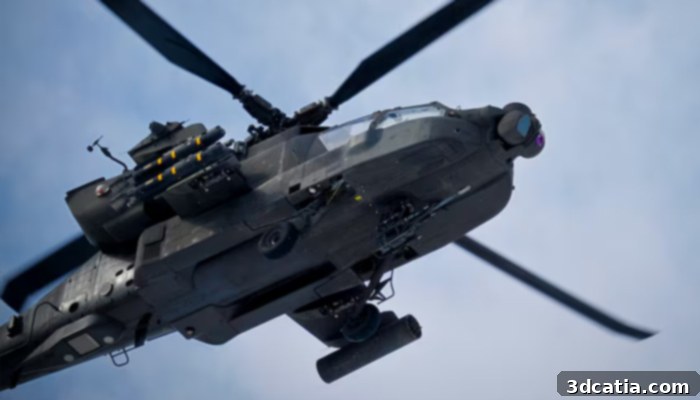
Photo Credits: Boeing
Finnair Uses 3D Printed Parts in A320 Planes
Many airlines are progressively phasing out older in-flight entertainment systems, particularly the heavy video panels often located overhead passenger seats. Finnish airline Finnair has embraced this trend, opting for a smart, lightweight alternative developed through additive manufacturing. The company recently replaced these cumbersome video players with 3D-printed blanking panels in the cabins of its Airbus A320 fleet. These panels are specifically designed to cover unused spaces, providing a sleek, modern look while significantly reducing overall aircraft weight.
The project was executed by AM Craft, an additive manufacturing specialist, which produced over 300 blanking panels. These panels were then used to upgrade 17 of Finnair’s A320 planes, demonstrating a scalable and efficient solution for cabin refurbishment. According to Finnair, leveraging 3D printing for these panels offered multiple strategic advantages. It notably helped to minimize excess inventory, as parts could be produced on-demand rather than stockpiled. Furthermore, it significantly reduced costs traditionally associated with the complex aerospace supply chain, including manufacturing, logistics, and storage.
Aviation Week reported an additional benefit: the blanking panels were ingeniously designed to seamlessly integrate with the existing mounting rails within the A320 cabins, ensuring quick and straightforward installation without requiring extensive modifications. This ease of integration is a critical factor for airline maintenance operations. What’s more, the potential impact of this 3D printing project extends beyond Finnair. Any airline operating Airbus A320 planes can potentially benefit from this innovative solution, as the blanking panels are readily available through AM Craft’s digital catalog, making it easy to order and implement these lightweight, cost-effective cabin upgrades across the global A320 fleet.
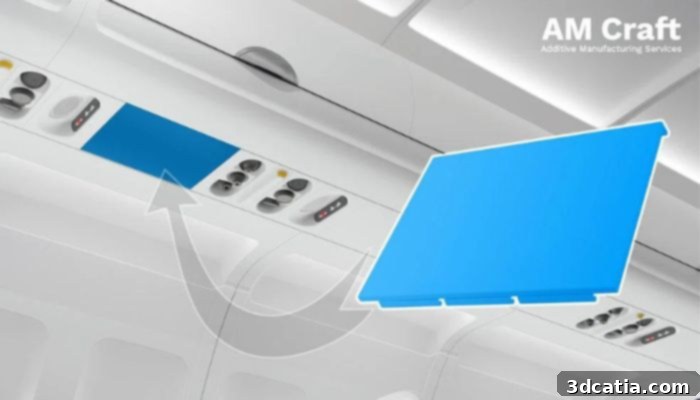
Photo Credits: AM Craft
Liebherr-Aerospace Lindenberg GmbH Produces 3D-printed Flexible Shaft
Liebherr-Aerospace Lindenberg GmbH, a renowned manufacturer of integrated systems for the aviation industry, has achieved a significant engineering feat by developing a flexible shaft for aviation applications using additive layer manufacturing (ALM), another term for 3D printing. Traditionally, such a critical component would consist of as many as seven individual parts, requiring complex assembly processes to join them together. The innovative application of 3D printing profoundly simplifies this manufacturing paradigm, reducing the part count to one, thereby inherently minimizing the need for maintenance and significantly streamlining the overall production complexity.
This pioneering flex shaft is 3D-printed from high-performance titanium powder, a material celebrated in aerospace for its strength-to-weight ratio and corrosion resistance. Crucially, this 3D-printed component has received full approval for series production from both Airbus and EASA (European Union Aviation Safety Agency), underscoring its compliance with the most stringent aviation safety and performance standards. The shaft is slated for integration into the differential gear of the flap system within the advanced Airbus A350 aircraft. Its function is vital: it accurately transmits rotational movements to a position sensor while simultaneously compensating for angular and axial errors that can occur between the gearbox and the sensor. This precision ensures the flap system operates smoothly and reliably, directly impacting aircraft control and safety.
The successful approval and implementation of the 3D-printed flex shaft serve as compelling evidence that additive manufacturing is not only a reliable technology but also a powerful tool for improving sustainability in aviation. By consolidating multiple parts into a single, optimized component, it reduces material waste, simplifies supply chains, and potentially lowers the overall carbon footprint associated with manufacturing. Svenja Pestotnik, Head of Additive Manufacturing at Liebherr-Aerospace Lindenberg GmbH, highlighted the innovation: “The flex shaft demonstrates how different functions can be efficiently integrated into one component. Extensive tests showed the reliability of this novel design approach, which opens the door for more complex and critical applications of AM in the future.” This achievement paves the way for even more sophisticated and critical AM applications across the aerospace industry, promising enhanced performance and sustainability.
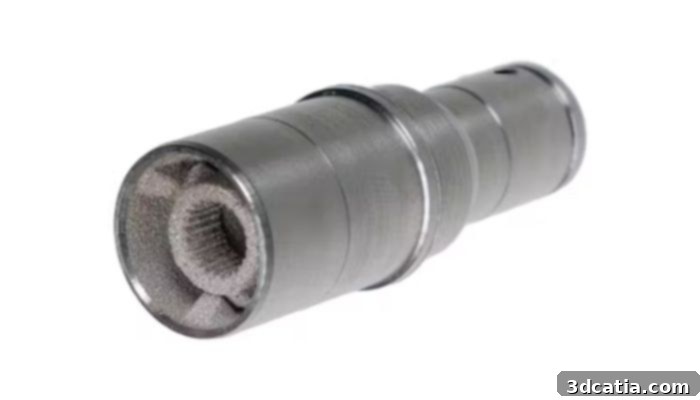
The flexible shaft from Liebherr-Aerospace has a more complex design and is produced from titanium powder using additive manufacturing technology. (Photo Credits: Liebherr-Aerospace Lindenberg GmbH)
LEAP and Additive Manufacturing
The LEAP engine is an undeniable highlight when discussing the intersection of aeronautics and 3D printing. Designed by CFM International, a highly successful joint venture between GE Aerospace and Safran Aircraft Engines, the LEAP is a cutting-edge propulsion system specifically developed for modern commercial aircraft, including widely used models such as the Airbus A320neo and Boeing 737 MAX. Launched into service in 2016, its foundational objectives were clear: to significantly reduce fuel consumption, lower CO2 emissions, and decrease noise levels, aligning with the industry’s evolving demands for efficiency and environmental responsibility.
On the eve of its 10th anniversary, the LEAP engine has reportedly lived up to its ambitious promises, according to CFM, delivering on its performance targets and contributing to more sustainable air travel. However, what truly sets the LEAP engine apart in the context of advanced manufacturing is its innovative use of 3D printing. From its inception, the propulsion system was partially designed and manufactured using additive manufacturing technologies, showcasing the practical application of AM in high-stakes aerospace components. Key components that benefited from this advanced production method include the turbine fairings, nozzle tips, and crucial fuel injectors.
For these critical parts, a laser fusion process on a powder bed was the chosen additive manufacturing technique. This method allows for the creation of incredibly intricate internal geometries that are impossible to achieve with traditional casting or machining, enabling superior performance, optimized airflow, and enhanced durability. The successful integration of 3D-printed components into the LEAP engine demonstrates how additive manufacturing is not merely a tool for prototyping, but a core manufacturing methodology that drives performance improvements, reduces weight, and contributes directly to the environmental and economic goals of the commercial aviation sector, setting a new benchmark for engine design and production.
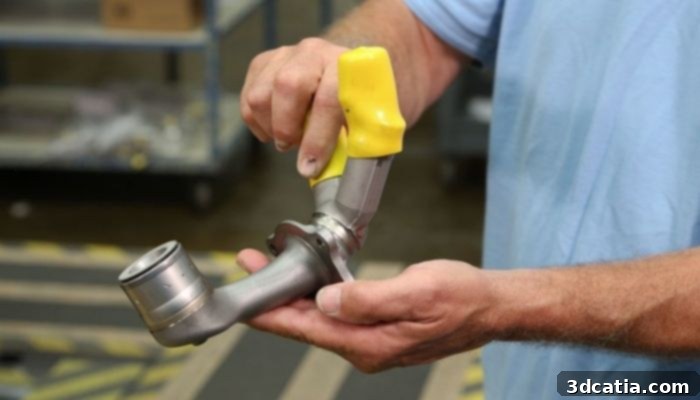
Photo Credits: GE
Marines Make Reamer Maintenance of F-35B Lightning II More Efficient
Marine Aviation Logistics Squadron 13 (MALS-13) is tasked with the vital mission of providing comprehensive logistical support, including personnel and critical spare parts, to the Marine Aircraft Group. This role is fundamental to ensuring the operational readiness of advanced aircraft like the F-35B Lightning II. In July 2024, MALS-13 faced a significant challenge: a critical shortage of reamers for the F-35B Lightning II squadrons. Reamers are indispensable precision-cutting tools essential for various aviation maintenance tasks, particularly for ensuring precise hole dimensions in aircraft components.
The traditional procurement methods for these conventional reamers presented substantial obstacles. They were not only expensive to acquire but MALS-13 also found itself with insufficient quantities due to notoriously long procurement times. This situation posed a direct threat to maintenance schedules and, consequently, to the readiness of the F-35B fleet. Recognizing the urgency and the limitations of traditional supply chains, MALS-13 turned to additive manufacturing to develop an innovative, on-demand solution: high-performance reamers produced in-house. This strategic shift enabled them to bypass the protracted procurement process and significantly reduce costs.
The results of this initiative were remarkable. By leveraging additive manufacturing, MALS-13 achieved a reduction in maintenance costs by more than 50 percent. More impressively, the procurement time for these critical parts was dramatically cut from an average of three months to being produced within the same day. To facilitate this in-house production capability, two Markforged X7 industrial 3D printers were acquired. These printers allowed MALS-13 to manufacture aerospace-grade reamers directly on-site, effectively eliminating their dependence on external suppliers and enhancing their self-sufficiency. This project exemplifies how 3D printing can bolster military readiness by providing rapid, cost-effective solutions for critical tooling and spare parts, ensuring that advanced aircraft like the F-35B Lightning II remain operational and mission-ready.
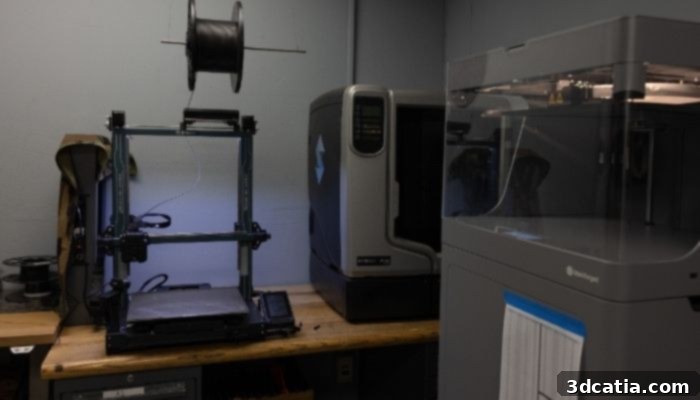
Photo Credits: Lance Cpl. Elizabeth Gallagher
The Titan Falcon Drone
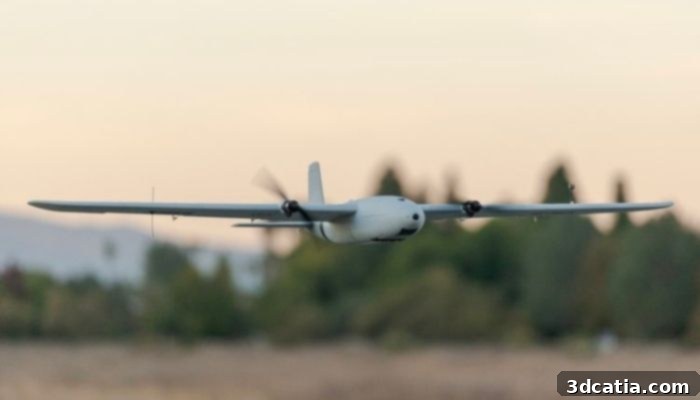
When discussing advancements in aeronautics, it’s impossible to overlook the growing significance of unmanned aerial vehicles (UAVs), more commonly known as drones. These versatile machines, whether employed for exploration, military operations, scientific research, or various commercial applications, are rapidly increasing in number and sophistication. A significant portion of their evolution is now being driven by the integration of 3D-printed parts, which allows for rapid prototyping, complex designs, and optimized performance. A prime example of this trend is the Titan Falcon drone, developed by Titan Dynamics.
The Titan Falcon is an impressive UAV, boasting an autonomy of 6 hours and an extensive range of 400 kilometers. These specifications enable it to cover vast areas efficiently, making it an ideal solution for prolonged surveillance and reconnaissance missions. Equipped with advanced camera systems, it has proven its capabilities in demanding scenarios, notably being utilized during the conflict between Ukraine and Russia for battlefield surveillance, where its endurance and range offer critical intelligence gathering advantages. While Titan Dynamics remains somewhat discreet regarding the specific materials and additive manufacturing technologies employed in the drone’s construction, the company has confirmed that 3D printing played a crucial role in its development.
The confirmed benefits of incorporating additive manufacturing include a dramatic reduction in lead times, significantly accelerating the design-to-flight cycle. Furthermore, 3D printing facilitated rapid iterations and design modifications, allowing engineers to quickly test and refine aerodynamic profiles, internal structures, and payload integrations. This agility in development is particularly valuable in fast-evolving fields like drone technology, where performance and adaptability are key. The Titan Falcon stands as a testament to how 3D printing is enabling the creation of more capable, responsive, and quickly deployable unmanned aerial systems, fundamentally changing how various tasks are performed from the sky.
Conflux Manufactures Heat Exchangers Using Metal 3D Printing
Conflux Technology is making substantial contributions to modern aviation by leveraging the power of metal 3D printing to ensure greater performance, reliability, and efficiency in critical aircraft systems. The company specializes in manufacturing advanced heat exchangers for aircraft, a component vital for managing thermal loads in various systems, from engines to avionics. By utilizing metal additive manufacturing, Conflux is able to produce heat exchangers with previously unattainable complex geometries, allowing for significant optimization of their thermal performance.
This advanced manufacturing approach directly translates into improved overall aircraft performance. On one hand, the ability to create intricate internal structures with minimal material leads to substantially lighter components. This weight reduction is a perennial goal in aerospace, as it directly impacts fuel efficiency, extends range, and increases payload capacity. On the other hand, the optimized internal geometries facilitate highly efficient heat management. This is crucial for maintaining optimal operating temperatures for sensitive electronics and engine components, which in turn enhances the reliability and longevity of the aircraft’s systems. Effective thermal management also has a direct and positive impact on an aircraft’s performance envelopes and overall operational range.
Conflux’s expertise in combining advanced thermal engineering with metal 3D printing positions them at the forefront of aerospace innovation. Their solutions address the increasing demand for high-performance, compact, and lightweight thermal management systems in modern aircraft, contributing to a more efficient, safer, and technologically advanced aviation industry. By pushing the boundaries of what is possible with heat exchanger design, Conflux is helping aircraft to fly further, faster, and more economically.
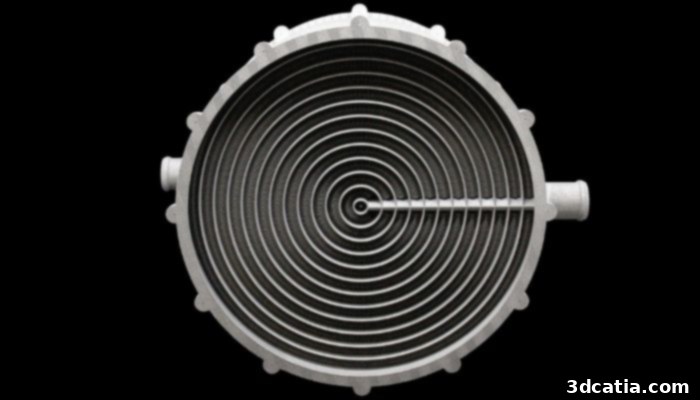
Photo Credits: Conflux
3D Printed Helicopter Cockpit For a Full-Flight Simulator
In 2024, Murtfeldt Additive Solutions undertook a remarkable project on behalf of Reiser Simulation and Training GmbH: the 3D printing of a modular helicopter cockpit designed for a full-flight simulator. To achieve the necessary scale and precision, Murtfeldt utilized several units of the large-format Queen 1 3D printer from Q.BIG 3D. The project leveraged the Variable Fused Granulate Fabrication (VFGF) process, an advanced technique that allows for the efficient printing of individual components using plastic pellets. These components could then be rapidly assembled to form the complete cockpit structure, demonstrating the advantages of modular additive manufacturing.
The efficiency of 3D printing was evident in the production timeline: the longest printing time for any single component was approximately 100 hours, yet the total production time for all cockpit parts was just over a month. This rapid turnaround significantly compresses traditional manufacturing schedules for such complex structures. The resulting cockpit, with substantial dimensions of 2,260 mm x 1,780 mm x 17.05 mm, showcases impressive lightweight construction, weighing only 200 kilograms. This light weight is crucial for flight simulators, allowing for dynamic movement and reducing the energy required for operation.
The choice of 3D printing with plastic pellets proved invaluable for this project, serving multiple benefits. Firstly, it inherently supports lightweight construction goals, which are paramount in both actual aircraft and high-fidelity simulators. Secondly, it enabled a much more economical production process compared to traditional methods. Conventional manufacturing of such a complex cockpit would typically necessitate a vast array of specialized tools and molds, driving up costs and lead times. By eliminating these requirements, 3D printing dramatically reduced overall production expenses. Furthermore, the cost-effectiveness of plastic pellets for large-format prints is considerably more attractive than that of traditional filament-based 3D printing materials, making it a highly viable solution for large-scale, intricate projects in the aerospace simulation industry.
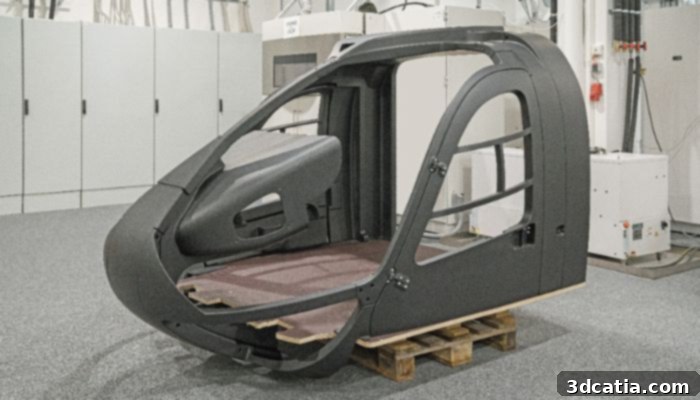
Photo Credits: Q.BIG 3D
BEAMIT and Leonardo Aircraft Partner for Additive Manufacturing Mass Production
The Italian Leonardo Group stands as one of the leading international players in developing technological capabilities across the aerospace, defense, and security sectors. As a trusted technology partner for governments, defense administrations, institutions, and private companies worldwide, Leonardo is deeply committed to innovation. The integration of additive manufacturing into Leonardo’s extensive range of activities has been a well-established strategy for many years, showcasing their foresight in adopting advanced production methods.
In recent years, the Aircraft division of Leonardo has particularly intensified its commitment to AM. This commitment is highlighted by the renewal of a crucial partnership with BEAMIT, a premier service provider specializing in additive manufacturing. This renewed collaboration focuses on the mass production of various metal components using advanced additive manufacturing technology, extending actively until at least 2028. This long-term agreement underscores the strategic importance and confidence Leonardo places in BEAMIT’s expertise and AM capabilities for critical aircraft parts. Through this enduring partnership, Leonardo Aircraft has, to date, successfully qualified more than 100 distinct 3D-printed parts with BEAMIT. These certified components are currently installed on key aircraft platforms within Leonardo’s fleet, including the M345, M346, and C27J. This extensive integration of AM components into operational aircraft demonstrates the maturity, reliability, and widespread acceptance of additive manufacturing for flight-critical applications within the aerospace industry, contributing to enhanced performance, reduced weight, and optimized supply chains for Leonardo’s advanced aircraft.
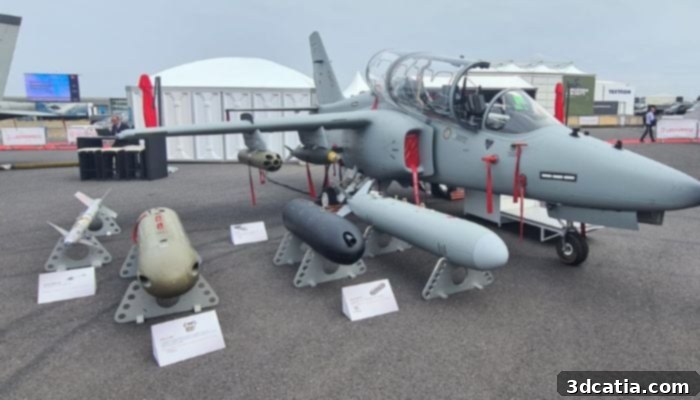
Leonardo M-345. (Photo Credit: Italia Vola)
MIMOSA Project Optimizes Aircraft with 3D Printing
The European MIMOSA project, launched in 2022 with the active participation of various European institutional and corporate partners, represents a highly ambitious initiative aimed at fundamentally transforming aircraft construction. Its core objective is to leverage the combined use of advanced 3D-printed composite materials and metals, developing novel multi-material structures. The project is strategically designed to support the next generations of aircraft, which will face stringent requirements for reduced environmental impact, lower reliance on raw materials, and enhanced overall sustainability throughout their lifecycle.
The groundbreaking study underpinning the MIMOSA project focuses on the realization of innovative multi-material structures. These structures seamlessly combine metal alloys and composite materials without the need for intermediate elements, achieving a direct integration that maximizes structural efficiency and performance. This is accomplished through a sophisticated process involving the precise integration of metal additive manufacturing, advanced plasma surface treatments, and high-performance carbon fibers. This holistic approach allows for the creation of components that are not only lighter and stronger but also inherently more versatile in design. Furthermore, a key sustainability aspect of MIMOSA technology is the lifecycle management of these advanced structures. At the end of their service life, structures made with MIMOSA technology can be regenerated through an “atomization” process. This innovative recycling method drastically reduces waste, as the components can be efficiently broken down and transformed into “secondary” raw material, which can then be directly fed back into the same additive manufacturing processes. This closed-loop system embodies circular economy principles, significantly contributing to a more sustainable and resource-efficient future for the aerospace industry.

The MIMOSA project team (Photo Credits: Polytechnic University of Turin)
The examples above clearly illustrate that additive manufacturing is no longer a futuristic concept but a vital, proven technology actively shaping the present and future of aeronautics. From creating ultra-lightweight, high-strength structural components to rapidly producing mission-critical spare parts and optimizing entire engine systems, 3D printing is driving unparalleled innovation across the entire aerospace value chain. It empowers engineers to design with unprecedented freedom, consolidates complex assemblies, shortens lead times, and significantly contributes to the industry’s sustainability goals by reducing waste and fuel consumption.
As the technology continues to evolve, with advancements in materials, machine capabilities, and process certifications, the role of 3D printing in aviation is only set to expand further. We can anticipate even more complex, multi-functional, and integrated components, further pushing the boundaries of aircraft performance, efficiency, and environmental responsibility. The ongoing investments by major players and collaborative research projects like MIMOSA underscore a collective commitment to leveraging additive manufacturing for a more innovative, agile, and sustainable future in the skies.
What do you think about the future of 3D printing in aeronautics? Let us know in a comment below or on our Facebook and Twitter pages! And, for more on additive manufacturing in aerospace, check out our dedicated page HERE. Don’t forget to sign up for our free weekly Newsletter, with all the latest news in 3D printing delivered straight to your inbox!