
Discover the Latest Innovations in 3D Printing: Top 5 Must-Watch Videos This Week
Welcome to our weekly dive into the dynamic world of additive manufacturing! As technology continues to evolve at an astonishing pace, 3D printing is constantly breaking new ground, offering innovative solutions across a multitude of industries. This week, we’ve curated a compelling selection of the top five 3D printing videos that showcase groundbreaking advancements, strategic expansions, and fascinating applications of this transformative technology. From the opening of a significant new European factory to the intricate production of large-scale components and life-changing medical devices, our compilation offers a comprehensive look at how 3D printing is shaping the future. Get ready to explore behind-the-scenes glimpses, detailed process explanations, and inspiring case studies that highlight the power and versatility of additive manufacturing. Join us as we explore these exciting developments and envision the future possibilities that 3D printing unlocks.
Top 1: Velo3D Expands Its Global Footprint with New European Factory
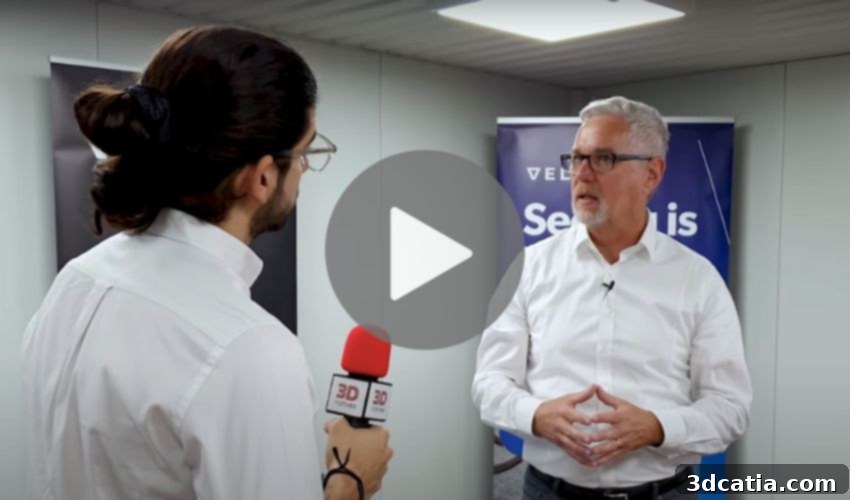
Our journey begins with an exclusive look inside Velo3D’s brand-new facility in Augsburg, Germany. This significant expansion marks a pivotal moment for the American metal 3D printer manufacturer, as it establishes its first dedicated location on European soil. Our team had the unique opportunity to visit this state-of-the-art factory, gaining valuable insights into Velo3D’s advanced manufacturing solutions and ambitious plans for the future. The strategic choice of Augsburg, a region renowned for its industrial prowess and technological innovation, underscores Europe’s growing importance in the global additive manufacturing landscape. This new facility is not merely a production site; it’s a hub designed to enhance customer support, streamline supply chains, and foster closer collaboration with European clients. By bringing its advanced Sapphire series of metal 3D printers and its comprehensive suite of software and services closer to its European market, Velo3D aims to accelerate the adoption of high-performance metal additive manufacturing for critical applications across aerospace, energy, and defense sectors. The expansion is a testament to the increasing demand for precision, repeatability, and robust part qualification in metal 3D printing, capabilities for which Velo3D has become well-known. Witness the impressive scale and sophisticated operations of this new European cornerstone in the video below.
Top 2: Revolutionizing Cycling with 3D Printed Bicycle Parts
The cycling industry has wholeheartedly embraced 3D printing, transforming everything from high-performance components to custom frames. The integration of additive manufacturing (AM) grants designers an unprecedented degree of freedom and flexibility, enabling the creation of bicycle models that were previously unimaginable with traditional manufacturing methods. This advanced capability allows for intricate geometries, optimized lattice structures, and organic shapes that significantly enhance both performance and aesthetics. Beyond the aesthetic appeal, 3D printed parts offer tangible benefits in terms of rider comfort and overall bicycle lightness. Through topology optimization, engineers can remove unnecessary material while maintaining or even increasing structural integrity, leading to lighter bikes that are more agile and efficient. Furthermore, 3D printing presents a remarkably sustainable alternative, minimizing material waste through precise deposition and enabling on-demand production. In this captivating video, AM pioneer Trumpf demonstrates three distinct examples of innovative bicycle parts produced using 3D printing technology. These examples underscore how AM is not just a manufacturing process but a catalyst for innovation, pushing the boundaries of what’s possible in bicycle design and performance, ultimately leading to a more customized, efficient, and enjoyable riding experience for enthusiasts and professionals alike.
Top 3: The Power of Wire Arc Additive Manufacturing (WAAM) in Action
Next, we delve into the world of Wire Arc Additive Manufacturing (WAAM), a large-format metal 3D printing technology renowned for its efficiency and ability to produce substantial parts. This video provides a fascinating time-lapse view of Vallourec’s production facilities, where safety-critical sealing rings are being fabricated using WAAM. WAAM operates by melting metal wire with an electric arc, depositing layers of material to build up a 3D object. This process offers significant advantages for large components, including high deposition rates, cost-effectiveness for certain metals, and the ability to work with a wide range of commercially available wires. The production of safety-critical components like sealing rings demands extreme precision, structural integrity, and material reliability – qualities that advanced WAAM processes can consistently deliver. The video prominently features a 100 kg component, highlighting the impressive scale achievable with this additive manufacturing technique. Furthermore, this particular sealing ring holds the distinction of being the first additive manufacturing component produced for EDF Hydro’s powerplant, a testament to the growing trust and integration of 3D printing in vital infrastructure and energy sectors. Observing the entire production process in time-lapse offers a unique and comprehensive understanding of how metal 3D printing works on an industrial scale, showcasing the meticulous layering and precision involved in creating robust, high-performance parts for demanding applications.
Top 4: Pioneering Large-Format Titanium Structures with Laser Metal Wire AM
Continuing our exploration of industrial-scale additive manufacturing, our fourth video shines a spotlight on Swedish company Tekniker and their innovative TITAN system. Tekniker has engineered and implemented a cutting-edge system that leverages advanced additive manufacturing technologies for the fabrication of large-format titanium structures. This groundbreaking approach combines laser technology with metal wire, a method often referred to as Directed Energy Deposition (DED) using wire. The TITAN system represents a significant leap forward in addressing the challenges associated with producing substantial metal parts, offering advantages such as high material deposition rates and reduced waste compared to traditional machining. Titanium, a material highly prized for its exceptional strength-to-weight ratio, excellent corrosion resistance, and biocompatibility, is notoriously difficult to process using conventional methods. However, with Tekniker’s TITAN technology, the production of large-scale titanium components becomes more efficient and economically viable. The versatility of the TITAN system has also been rigorously tested with other high-performance materials, including steel and nickel alloys, demonstrating its broad applicability across various industrial demands. This innovative manufacturing solution holds immense potential for sectors requiring large, high-strength, and lightweight components, such as aeronautics (for aircraft structural parts), naval (for marine and submersible components resistant to harsh environments), and wind power (for large turbine parts and specialized tooling). This video truly illustrates how specialized AM processes are enabling the creation of components that are critical for future engineering challenges.
Top 5: Transforming Orthotic and Prosthetic Applications with Additive Manufacturing
Our final video highlights one of the most impactful and human-centric applications of additive manufacturing: its revolutionary role in the orthotic and prosthetic (O&P) industry. Additive manufacturing, also known as 3D printing, is fundamentally changing the way orthotic and prosthetic devices are conceived, designed, and produced. By harnessing the power of advanced 3D printing technologies and a growing array of biocompatible materials, clinicians can now craft highly customized devices with unparalleled speed and cost-effectiveness, all without compromising on essential patient comfort and care. The ability to create tailor-made prostheses and orthoses allows for a perfect fit, which is crucial for maximizing patient mobility, reducing discomfort, and improving overall quality of life. Unlike traditional manufacturing methods that often involve laborious manual processes and limitations in design, 3D printing enables the creation of intricate geometries, lightweight lattice structures, and personalized aesthetic elements directly from patient scan data. This direct digital workflow significantly reduces production times, often from weeks to just days, and minimizes material waste. Moreover, the expanding portfolio of biocompatible materials ensures that these devices are safe, durable, and suitable for long-term use in direct contact with the human body. Ultimately, this integration of 3D printing empowers healthcare professionals to provide superior, patient-specific solutions, ushering in an era of enhanced treatment options and improved outcomes for individuals requiring orthotic and prosthetic support.
What an incredible array of advancements and applications showcased in this week’s selection of 3D printing videos! From strategic industrial expansions to life-changing medical innovations, these examples powerfully demonstrate the vast and growing potential of additive manufacturing across diverse sectors. We hope you found this compilation insightful and inspiring, offering a glimpse into the ongoing revolution in design, production, and technology. Your thoughts and perspectives are always valuable to us. Let us know what you think of this week’s selection by leaving a comment below or engaging with us on our LinkedIn, Facebook, and Twitter pages! For those eager to stay at the forefront of 3D printing news, don’t forget to sign up for our free weekly Newsletter here, delivering the latest industry updates directly to your inbox. You can also explore all our featured videos and more fascinating content on our dedicated YouTube channel. Stay curious, stay informed, and continue to explore the endless possibilities of 3D printing!