
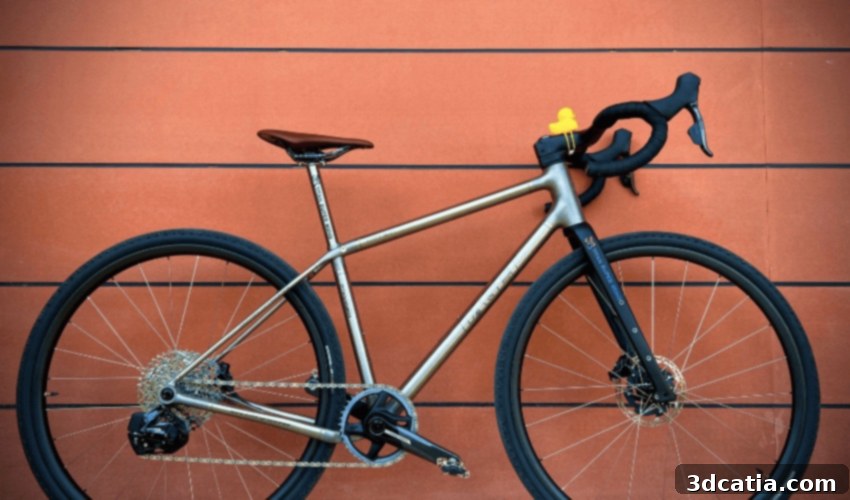
Revolutionizing Cycling: The First 3D Printed Titanium Bike Frame in Asia by TITAN SUPER BOND and BLT
The advent of 3D printing, also known as additive manufacturing, has ushered in a new era of industrial transformation across various sectors. This groundbreaking technology has fundamentally reshaped how products are designed, prototyped, and manufactured, offering unprecedented flexibility, speed, and complexity in production. From aerospace to medical devices, industries are leveraging its capabilities to innovate and optimize. The bicycle industry stands as a prime example, actively embracing these advancements to push the boundaries of conventional manufacturing techniques and redefine what’s possible for cyclists worldwide.
In a significant stride forward for advanced manufacturing in Asia, TITAN SUPER BOND, a leading specialist in high-performance titanium bicycle components, has partnered with BLT, a prominent Chinese enterprise renowned for its expertise in metal 3D printing. This strategic collaboration has culminated in the creation of a pioneering achievement: the very first 3D printed titanium bicycle frame produced not only in China but across the entire Asian continent. This landmark development highlights the growing maturity of additive manufacturing in the region and its profound implications for the future of cycling.
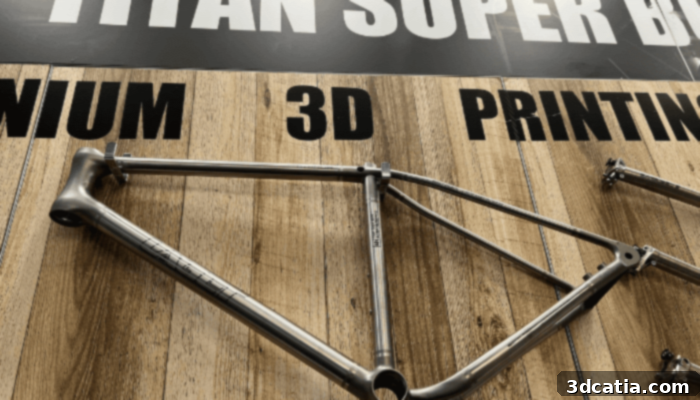
Overcoming Challenges with Metal Additive Manufacturing
The bicycle industry in China, much like many global sectors, has recently contended with considerable challenges. A primary concern has been widespread supply chain disruptions, particularly those triggered by the onset of the COVID-19 pandemic. These issues have impacted manufacturing across Asia, leading to delays, increased costs, and limitations in component availability. In this context, metal 3D printing has emerged as an exceptionally promising and potent solution. This innovative technology not only ensures high-quality production standards but also offers unparalleled flexibility in manufacturing. It provides the crucial capability to produce customized parts on demand, which is instrumental in significantly improving both bicycle performance and rider comfort. By enabling localized production and reducing reliance on complex global supply chains, metal 3D printing offers a resilient and efficient alternative for the modern bicycle industry.
The Power of Collaboration: TITAN SUPER BOND and BLT
The collaborative journey between TITAN SUPER BOND and BLT began in 2022, marking a pivotal moment for advanced bicycle manufacturing. TITAN SUPER BOND integrated BLT’s state-of-the-art BLT-A320 metal 3D printers into its production workflow, a move that immediately unlocked a host of innovative solutions. This partnership specifically focused on addressing critical manufacturing hurdles, such as precisely controlling the warping of complex geometric parts—a common challenge in metal additive manufacturing—and drastically reducing the overall weight of components without compromising structural integrity. The results have been remarkable: the components produced through this advanced process not only rigorously passed the stringent international ISO 4210 strength test, ensuring their safety and reliability under demanding cycling conditions, but they also established new benchmarks for lightweight design and manufacturing quality within the industry. The BLT-A320 3D printer, with its exceptional precision, inherent durability, and superior corrosion resistance, has proven to be an indispensable asset and the cornerstone in the successful creation of these high-performance titanium bicycle parts. Its robust capabilities make it an ideal choice for processing a diverse range of materials, extending its utility far beyond the specialized realm of bicycle manufacturing.
Titanium, as the material of choice for these pioneering bike frames, brings a suite of advantageous properties that are highly coveted in the cycling world. Renowned for its extraordinary strength-to-weight ratio, titanium allows for the creation of incredibly light yet remarkably robust frames, which is crucial for both competitive performance and everyday riding comfort. Its inherent corrosion resistance ensures longevity and durability, even in harsh weather conditions or challenging terrains, making titanium bikes a long-term investment for enthusiasts. Furthermore, titanium exhibits excellent fatigue resistance, meaning it can withstand repeated stress cycles without degradation, contributing to a smoother ride quality. The ability of BLT’s metal 3D printing technology to work with such a demanding material like titanium underscores its advanced capabilities, enabling the creation of intricate, optimized geometries that would be difficult, if not impossible, to achieve through traditional manufacturing methods. This combination of advanced material and cutting-edge process opens up new frontiers for bicycle design and engineering, promising enhanced performance, aesthetics, and user experience.
Transforming the Manufacturing Process and Maximizing Efficiency
This advanced metal 3D printing technology represents a genuine breakthrough, particularly in its ability to reinforce critical areas of bicycles where welds are traditionally subjected to immense stress. Unlike conventional welding, which can introduce weak points or require extensive post-processing, 3D printing allows for the creation of integrated, optimized structures that inherently manage stress distribution more effectively. This progress directly translates into a significant reduction in labor intensity, as complex assembly steps and meticulous welding procedures are either minimized or entirely eliminated. Concurrently, it delivers a considerable acceleration in the overall production timeline, streamlining the entire manufacturing workflow from design to finished product. The impact on manufacturing efficiency is profound.
Historically, bicycle manufacturing has been characterized by a complex, multi-stage process that typically spans up to 45 days for a single frame. This traditional approach involves numerous steps, including cutting, forming, welding, heat treatment, and extensive finishing, each contributing to a lengthy production cycle and considerable resource consumption. The strategic integration of metal 3D printing has radically simplified this intricate process. By enabling the direct fabrication of complex geometries and consolidating multiple parts into single, unified structures, 3D printing not only reduces the total production time by an impressive 30% but also dramatically limits material wastage by over 20%. This efficiency gain is achieved through precise material deposition, minimizing scrap and optimizing the use of valuable resources like titanium. The streamlined workflow translates into faster time-to-market, reduced operational costs, and a more agile manufacturing response to market demands, particularly in a competitive sector like high-performance cycling.
These substantial improvements in both process efficiency and material utilization have a direct and positive impact on the overall sustainability and cost-effectiveness of bicycle manufacturing. By cutting down on production time and reducing waste, manufacturers can operate more economically and minimize their environmental footprint. This unwavering commitment to simplifying and optimizing the manufacturing process through advanced technologies like 3D printing unlocks a wealth of new opportunities for bicycle manufacturers. This is particularly true within the rapidly evolving markets of China and across the wider Asian region, where there is a burgeoning demand for innovative, high-quality, and customizable cycling products. It positions these manufacturers at the forefront of technological adoption, enabling them to meet diverse consumer needs with unprecedented agility and precision.
Benefits for Riders and the Future of Cycling Innovation
Beyond the manufacturing efficiencies, the adoption of 3D printing for titanium bicycle frames brings significant advantages directly to the end-user – the rider. The inherent flexibility of additive manufacturing allows for an unprecedented level of customization. Frames can be precisely tailored to individual rider specifications, including body geometry, weight distribution, and preferred riding style, offering an ergonomic fit that enhances comfort and reduces the risk of injury. This bespoke approach leads to superior performance, as optimized frame designs can result in lighter, stronger, and more aerodynamically efficient bicycles. Furthermore, 3D printing enables the integration of unique design features, potentially including localized flex zones or damping elements, which can significantly improve ride comfort over varied terrains. The superior durability and longevity of 3D printed titanium frames also mean a more reliable and enduring investment for cyclists, enhancing their overall riding experience.
The successful collaboration between TITAN SUPER BOND and BLT in creating the first 3D printed titanium bicycle frame in Asia marks a significant milestone, not just for the bicycle industry but for the broader landscape of advanced manufacturing. This achievement signals a clear trajectory towards more innovative designs, personalized products, and sustainable production methods. Looking ahead, the potential applications of 3D printing extend far beyond bicycle frames, promising to revolutionize other segments of the sports equipment industry, from custom footwear to performance-enhancing gear. Continued innovation in materials science and additive manufacturing processes will further expand the horizons of what’s achievable. As a hub for technological advancement and manufacturing prowess, China is poised to play a crucial role in leading these innovations, solidifying its position at the forefront of the next generation of global industrial progress and pushing the boundaries of engineering excellence.
What are your thoughts on this groundbreaking TITAN SUPER BOND and BLT 3D printed titanium bike frame? We’d love to hear your perspective! Share your comments below or connect with us on our LinkedIn, Facebook, and Twitter pages! Don’t miss out on the latest 3D printing news—sign up for our free weekly Newsletter here to get updates directly in your inbox. You can also explore all our compelling videos on our YouTube channel.